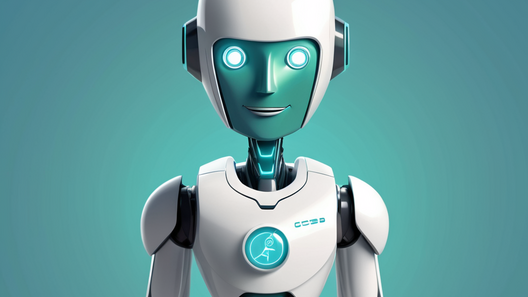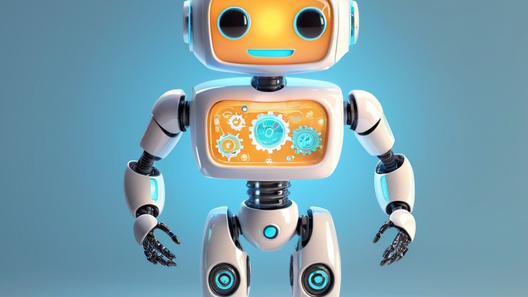








Manifested AI represents a fundamental paradigm shift in artificial intelligence, moving beyond the digital-only interfaces of chatbots and language models to create physical systems that can perceive, reason, and interact with the tangible world in real time. Unlike traditional software-based AI systems, manifested AI integrates advanced neural networks, computer vision, sensor fusion, and sophisticated control systems into robotic and autonomous platforms that operate with increasing autonomy across manufacturing, logistics, healthcare, and consumer spaces. This convergence of AI technologies with physical embodiment creates machines that can learn from real-world experiences, adapt to dynamic environments, and perform complex tasks traditionally reserved for human operators. The market opportunity for this technology is staggering, with estimates suggesting a potential multi-trillion-dollar industry by 2035, driven by companies like Tesla with its Optimus humanoid robot, Figure AI, 1X Technologies, and numerous other innovators racing to capture share in what many analysts describe as the next major technology wave.
Understanding Manifested AI: Definition and Conceptual Framework
The Core Definition and Distinction from Digital AI
Manifested AI fundamentally differs from generative AI and traditional artificial intelligence in that it exists as tangible, physical systems capable of autonomous operation within the material world. While generative AI systems like ChatGPT create text, images, and other digital content, and traditional AI analyzes data to make predictions and optimize processes, manifested AI enables machines to “see, move, and respond to their environment like a human,” as described by industry observers. The term itself emerged from the recognition that artificial intelligence is transitioning from abstract software to forms “that we will be able to easily interact with” and that are “beginning to manifest itself into forms that we will be able to easily interact with.” In essence, manifested AI represents intelligence you can literally “bump into”—it lifts, carries, cleans, inspects, navigates, and adapts based on continuous interaction with physical reality.
The critical distinction lies in the input and output characteristics of these systems. Whereas generative AI processes text prompts and produces digital outputs like documents or images, manifested AI accepts inputs from physical sensors including photons captured by cameras, depth maps from three-dimensional sensors, and force feedback from tactile sensors, then produces real-world outputs through movement and manipulation. This integration of physical agency with artificial intelligence creates a fundamentally different technological category that addresses what researchers call the “reality gap”—the persistent challenge of enabling systems to function effectively in unpredictable real-world environments rather than controlled laboratory conditions or simulated scenarios.
Key Characteristics and Operational Principles
Manifested AI systems operate according to several defining characteristics that distinguish them from their purely digital counterparts. First, these systems maintain continuous interaction with their environment through real-time sensing and decision-making, operating at millisecond latencies that allow for immediate responsiveness to changing conditions. A humanoid robot performing a task in a factory must sense obstacles, adjust grip force on objects, and modify its trajectory hundreds of times per second, making computational speed and edge processing critical. Second, manifested AI systems exhibit adaptive behavior rather than rigid programming, using neural networks trained on vast datasets of real-world experiences to generalize their understanding to novel situations. This represents a profound departure from twentieth-century industrial robotics, which relied on explicit programmed instructions executed in predetermined sequences.
Third, manifested AI systems engage in continuous learning loops where they collect data from their own operational experiences and use this information to improve their performance without human intervention. As long as these systems have power, they can theoretically “learn” and optimize their behaviors across extended periods, creating exponential performance improvements over time. A humanoid robot performing warehouse tasks might execute millions of pick operations across its operational lifetime, each one generating data that feeds back into its neural networks to refine its grasping strategies, movement efficiency, and object recognition capabilities. Fourth, these systems integrate multiple sensory modalities—vision, depth sensing, tactile feedback, acoustic input—into unified representations of their surroundings, creating what researchers call “multimodal learning.” This multimodal approach mirrors how humans understand the world through combined sensory inputs rather than relying on single modalities, enabling more robust and flexible behavior.
Core Technologies Enabling Manifested AI
Neural Network Architecture and Real-Time Decision Making
At the foundation of manifested AI lies advanced neural network architecture that enables machines to process sensory information and generate appropriate behavioral responses with human-like adaptability. Unlike traditional industrial robots that follow explicitly programmed code sequences, these neural networks can interpret dynamic, unstructured data in real time and make decisions based on probabilistic reasoning rather than deterministic logic. Tesla’s proprietary Full Self-Driving (FSD) neural networks exemplify this approach, having analyzed billions of miles of driving footage to detect pedestrians, traffic signs, road edges, and countless other environmental features with remarkable accuracy. These same architectural principles are being repurposed for humanoid robotics, where the networks must recognize objects in factory environments, identify safe grasping points on irregular items, and coordinate complex multi-step manipulation sequences.
The training of these neural networks represents a critical advantage for companies with access to massive real-world datasets. Tesla’s billions of miles of autonomous driving video provide unprecedented training material for vision-based AI systems, creating what researchers describe as a “seed” for robotics applications. When Tesla’s engineers adapted their autonomous driving software for Optimus humanoid robots, they were essentially transferring learned representations from highways and streets to factory floors and warehouses, dramatically accelerating development timelines. The networks trained on highway scenarios could recognize human figures, distinguish between manipulable and fixed objects, and navigate dynamic environments—skills directly transferable to indoor robotic applications, though requiring domain-specific fine-tuning.
Computer Vision and Multimodal Sensor Fusion
Computer vision represents the “eyes” of manifested AI systems, enabling robots to perceive their environments with sufficient fidelity to make real-world decisions. Advanced imaging sensors that have been upgraded to “see four times farther than competitors” now power humanoid robots, representing a critical enabling technology mentioned by technology analysts as essential to the robotics revolution. These vision systems must perform multiple complex tasks simultaneously: object detection and classification, spatial mapping and localization, obstacle identification, target tracking, and hand-eye coordination for manipulation tasks.
The integration of multiple sensory modalities creates what researchers call sensor fusion, where data from different sources is combined into a coherent understanding of the physical world. A humanoid robot performing warehouse tasks might simultaneously process visual data from multiple cameras, depth information from LIDAR or RGB-D sensors, proximity detection from ultrasonic sensors, tactile feedback from force-sensitive fingers, and occasionally acoustic information from microphones. This multimodal integration overcomes limitations of single-modality sensing: vision alone can be fooled by reflections or occlusions, while depth sensing alone cannot identify object types or detect small hazards. Together, these modalities create a rich, robust representation of the environment that supports safe and effective autonomous operation.
One critical innovation enabling manifested AI is the development of vision-language-action (VLA) models that combine computer vision capabilities with natural language processing and motor control. These models allow robots to understand instructions expressed in natural language, relate those instructions to visual scenes they perceive, and execute appropriate physical actions. A robot that understands “pick up the red box and place it on the shelf” must connect the linguistic concept of “red” with visual representations of color, identify relevant objects in its visual field, grasp the correct item, and execute precise placement—a multi-step process requiring integrated vision, language, and control capabilities.
Edge Computing and Onboard AI Processing
The processing of sensory information and generation of motor commands must occur with minimal latency to ensure safe real-world operation, making on-device computing critical to manifested AI systems. Cloud-based processing introduces unacceptable delays: a one-hundred-millisecond communication latency becomes catastrophic for a humanoid robot carrying fragile items or working near humans, where reaction times must be measured in milliseconds. Consequently, leading robotics companies have invested in developing custom AI inference chips and edge processing units designed specifically for rapid neural network computation.
Tesla has developed its D1 chip, originally created for the Dojo supercomputer training infrastructure but now integrated into Optimus robots for real-time inference and decision-making. These custom silicon designs represent a critical competitive advantage, enabling real-time perception, motion planning, and behavioral decision-making directly on the robotic platform without cloud dependency. The trade-off between computational power and energy efficiency becomes crucial in mobile robots operating on battery power, making algorithm optimization and hardware-software co-design essential engineering challenges.
Locomotion, Dexterity, and Mechanical Integration
Creating humanoid robots that can move fluidly through spaces designed for humans represents an extraordinary engineering challenge spanning mechanics, materials science, and control theory. Tesla’s Optimus and competing systems like Figure AI’s Figure 03, Boston Dynamics’ Electric Atlas, and 1X’s NEO must solve problems of dynamic balance, joint control, and safe force application simultaneously. Unlike wheeled robots or traditional industrial arms that operate in controlled spaces, bipedal humanoids must maintain stability on uneven surfaces, recover from unexpected perturbations, and coordinate dozens of degrees of freedom across legs, torso, and arms.
The mechanical approach employed by leading robotics companies emphasizes designing custom actuators optimized for the required tasks rather than using off-the-shelf components. Figure AI designed its own actuators to be approximately half the size of commercially available alternatives, enabling greater dexterity and more human-like proportions. These actuators integrate motors, gearboxes, sensing circuits, and drive electronics into sealed, repeatable units that can be mass-manufactured while maintaining high precision and reliability. The combination of lightweight composite materials, high-frequency feedback loops, and advanced control algorithms enables humanoids to perform movements that approximate human motion while maintaining safety margins for operation alongside or near human workers.
Robotic dexterity—the ability to manipulate objects with precision and adaptability—remains a critical frontier where most competitors struggle. A humanoid robot must grasp objects of widely varying shapes, sizes, weights, and material properties with sufficient force to perform meaningful work but not so much force as to damage fragile items. This requires integrating pressure sensing, force feedback, and sophisticated control algorithms that allow the robot to learn appropriate grasping strategies through experience. Recent advances in soft robotics and compliant actuators are improving this capability, but dexterous manipulation in unstructured environments remains more challenging than most other robotic capabilities.
The Reality Gap and the Path to General-Purpose Robots
Understanding the Reality Gap Problem
The “reality gap” represents one of the most persistent challenges in robotics and manifested AI development—the challenge of creating systems that perform effectively in unpredictable real-world environments after being trained in simulation or controlled laboratory conditions. A robot trained to pick objects in a perfectly lit, precisely organized warehouse might fail completely when introduced to a messier real-world facility with variable lighting, unexpected clutter, and items in unfamiliar configurations. This gap between simulation and reality stems from subtle but consequential differences: reflections and shadows that cameras perceive differently, sensor noise and calibration drift, the friction properties of real materials, unexpected object deformations, and countless other physical phenomena that simulations approximate but never perfectly capture.
Tesla’s vision-based approach to autonomous driving specifically addresses the reality gap through massive collection of real-world driving data. Rather than relying primarily on sensor modalities like LIDAR that work well in simulation but face degradation in real-world conditions, vision-based systems trained on billions of hours of actual highway footage learn to handle the messy complexity of real perception environments. This approach directly transfers to humanoid robotics, where robots equipped with high-resolution cameras trained on real-world video data develop more robust understanding than robots trained primarily in simulation.
Multi-Pronged Solutions to Reality Gap
Leading robotics companies employ several complementary strategies to narrow the reality gap and enable meaningful real-world deployment. The first involves domain randomization in simulation—deliberately varying simulation parameters to create diverse training scenarios that teach robots to be robust to variability rather than specialized for specific conditions. A simulated object-picking task might randomize lighting conditions, object shapes, surface frictions, and camera positions thousands of times, training the neural network to perform effectively across the resulting distribution of scenarios.
The second approach combines simulation-based training with real-world fine-tuning, using synthetic data for initial learning and then using collected real-world data to adapt the system. This hybrid approach accelerates training (since simulation is faster than real-world data collection) while avoiding the brittleness that pure simulation training can produce. The third strategy involves deploying systems in real environments and continuously collecting data that feeds back into retraining loops, creating virtuous cycles where each deployment generates data that improves the next generation of robots.
Manifested AI Applications and Industry Deployment

Warehouse and Logistics Operations
Warehousing and logistics represent the primary near-term deployment environment for manifested AI systems, driven by chronic labor shortages, high labor costs, and clearly defined ROI calculations. Tasks like autonomous picking, dynamic slotting, dock loading, and package movement in dense, structured warehouse environments create repeatable edge cases where manifested AI can deliver substantial value. Agility Robotics’ Digit humanoid has performed real work in warehouse environments, moving boxes onto conveyor belts in fulfillment operations for major retailers, with deployments generating data on real-world performance. The “dense, structured spaces” of warehouses “create repeatable edge cases,” enabling robots to learn effectively from relatively constrained scenarios before expanding to more complex environments.
The economic drivers for warehouse automation remain compelling even in 2026: labor turnover in logistics exceeds forty percent annually in many facilities, creating chronic workforce instability and training costs. Humanoid robots that can be deployed, trained once, and operated continuously across multiple shifts without fatigue or benefits represent attractive alternatives for labor-intensive operations, particularly for the least desirable tasks. Companies like American Eagle and Dollar General highlighted at industry conferences how AI-driven supply chain optimization—combining forecasting, inventory management, logistics coordination, and orchestration layers—is driving efficiency gains and supporting better inventory decisions across their operations.
Retail and Consumer-Facing Applications
Retail environments present more complex manifested AI applications than warehouses, requiring navigation through narrow aisles, interaction with variable shelf configurations, and occasionally direct customer engagement. Retail-facing tasks like restocking shelves, price checking, and inventory management combine mobility requirements with fine dexterity challenges. The labor economics in retail remain challenging: shelf-stocking represents high-cost, physically demanding work that creates high injury rates and turnover, making automation attractive to large retailers. However, retail environments introduce variability and safety concerns absent from warehouses: customers occupy the same spaces as robots, items are frequently moved to unexpected locations, and the consequences of robotic errors are more visible and potentially damaging to brand reputation.
Healthcare and Assisted Living
Healthcare represents a particularly compelling application domain for manifested AI, driven by severe, persistent nursing shortages in most developed economies and the routine nature of many patient care tasks. Routine physical tasks like patient lifting, mobility assistance, cleaning, and specimen handling could be augmented or partially automated through humanoid robots, reducing strain injuries among healthcare workers and improving patient care quality. The prospect of patients remaining in home environments supported by humanoid robots that can provide mobility assistance and report patient status to remote physicians represents a transformative potential benefit, particularly for aging populations. However, healthcare applications also require the highest safety standards, liability clarity, and regulatory approval, meaning deployment timelines extend beyond warehouses or retail despite the compelling economics.
Manufacturing and Industrial Assembly
Manufacturing represents the classic deployment domain for robotics, and manifested AI promises to extend automation into assembly and process work previously requiring human flexibility. Traditional industrial robots excel at repetitive, precisely programmed tasks in controlled factory environments but struggle with variability, changeovers between product types, and novel situations. Humanoid robots with advanced visual perception, adaptive control, and learning capabilities could handle assembly tasks requiring frequent product changes, inspection procedures, or adaptation to component variations. BMW and Mercedes-Benz have initiated pilot programs testing humanoid robots in automotive manufacturing, beginning with intrafactory logistics and component movement before expanding to assembly work.
Market Size and Economic Projections
The Trillion-Dollar Opportunity
Barclays Research projects that the physical AI market could grow to approximately one trillion dollars by 2035, driven by the convergence of autonomous vehicles, humanoid robots, advanced automation, and autonomous drones. This projection, representing roughly ten times the current market valuation, reflects expectations that manifested AI will penetrate across industrial and service sectors at accelerating rates throughout the late 2020s and early 2030s. The projection breaks down into several key categories: autonomous vehicles are expected to represent approximately five hundred billion dollars of the total market by 2045, reflecting the established timeline and existing customer adoption; humanoid robots, advanced industrial automation, and autonomous drones comprise the remaining market opportunity.
Some industry analysts project even larger opportunities, suggesting a potential $25 trillion market for humanoid robots alone if systems achieve the predicted performance levels and deployment rates. This analysis assumes demand for at least one billion humanoid robots at an average price of $25,000 per unit, based on labor market requirements across manufacturing, healthcare, logistics, and consumer sectors. Conservative market analysts consider this projection optimistic given current technological and manufacturing constraints, but even more modest penetration scenarios suggest multi-trillion-dollar markets by mid-century.
Capital Investment and Infrastructure Requirements
The scale of AI infrastructure capital investment supports the multi-trillion-dollar market projections for manifested AI. Consensus estimates among Wall Street analysts project that AI hyperscaler companies will invest $527 billion in capital expenditures during 2026 alone, up from $465 billion at the beginning of the year. This investment trajectory reflects confidence in continued adoption of AI across industries, though the capital intensity of manifested AI—requiring investment in robotics hardware, manufacturing infrastructure, and real-world data collection—suggests capital spending on physical systems will continue rising in subsequent years.
These investment levels reflect recognition that manifested AI represents a genuine generational technology shift comparable to previous computing revolutions. The race to develop and deploy humanoid robots has attracted capital from leading technology companies, venture investors, and strategic industrial players, with funding rounds for robotics companies reaching multi-billion-dollar valuations by 2025-2026. Figure AI has raised $2.34 billion, 1X Technologies has emerged as a serious player through partnerships with leading AI companies including OpenAI, and Tesla has made humanoid robotics a central strategic focus.
The Competitive Landscape: Leading Companies and Systems
Tesla and the Optimus Platform
Tesla’s Optimus humanoid robot platform represents arguably the most advanced and well-resourced manifested AI effort globally, combining software capabilities developed through autonomous vehicle research, custom silicon design experience, mass manufacturing expertise, and substantial capital resources. Introduced as a prototype in 2023, Optimus Gen 3 was scheduled to enter mass production by mid-2025, leveraging Tesla’s manufacturing infrastructure that produces 2.3 million vehicles annually and has scaled 4680 battery production from 450,000 to 100 million units annually. The advantage Tesla possesses stems from having billions of miles of real-world driving data encoded in its Full Self-Driving neural networks, creating what analysts describe as a “seed” for robotic intelligence that compresses development timelines compared to competitors developing vision-based systems from scratch.
Optimus Gen 3 specifications indicate an ambitious system: standing 5’8″ to 5’10” tall, weighing 130-160 pounds, capable of carrying forty-five-pound payloads, operating for four to six hours on battery charge, and incorporating twenty-eight or more degrees of freedom enabling complex manipulation. The robot integrates WiFi and Bluetooth connectivity with fallback mesh networking, touchscreen and voice control interfaces, redundant safety systems, and sophisticated force-sensing capabilities enabling safe human-robot interaction. Tesla’s manufacturing capabilities and vertical integration across hardware, software, energy systems, and distribution create competitive advantages that many analysts consider decisive, though competitors argue about the timeline to commercial viability at scale.
Figure AI and the Figure Platform
Figure AI has emerged as a serious competitor to Tesla, having raised $2.34 billion in funding and having moved from initial concept in January 2022 to functional prototypes in less than two years. CEO Brett Adcock explicitly frames humanoid robots as “the ultimate deployment vector for AGI,” positioning the company’s ambitions beyond narrow robotics applications toward general-purpose intelligence embodied in physical form. Figure 03, the company’s latest generation system, is designed for household tasks like laundry, cleaning, and dishwashing, representing an expansion beyond warehouse-focused deployments toward consumer applications. Figure’s design philosophy, similar to Tesla’s, emphasizes custom actuators, neural network-based control, and proprietary hardware rather than relying on commercial off-the-shelf components.
Boston Dynamics and Advanced Robotics
Boston Dynamics, owned by Hyundai, released an all-electric version of its Atlas humanoid robot at CES 2026, marking a significant transition from research demonstrations toward commercial deployment focus. The Electric Atlas incorporates lessons from decades of Boston Dynamics research into dynamic locomotion, balance recovery, and acrobatic movement, but with strategic repositioning toward practical industrial tasks like part sequencing and order fulfillment. Boston Dynamics’ extensive experience in bipedal locomotion and balance control represents a substantial competitive advantage in creating humanoids that can operate safely in unstructured environments, though the company has historically focused more on demonstration capabilities than commercial deployment pathways.
Emerging Global Competitors
Chinese robotics companies including UBTech, Fourier Intelligence, and various state-backed initiatives are deploying humanoid robots at significant scale, with estimates suggesting that approximately eighty-five percent of the fifteen thousand humanoid robots deployed globally in 2025 were installed in China. This concentration reflects China’s manufacturing advantages, access to component supply chains, and government support for robotics development and deployment. Unitree Robotics has developed the G1 platform focused on practical applications and operational efficiency, 1X Technologies (backed by OpenAI) has begun taking pre-orders for its NEO domestic robot at $20,000 with 2026 US availability, and Apptronik’s Apollo platform addresses heavy-duty industrial applications.
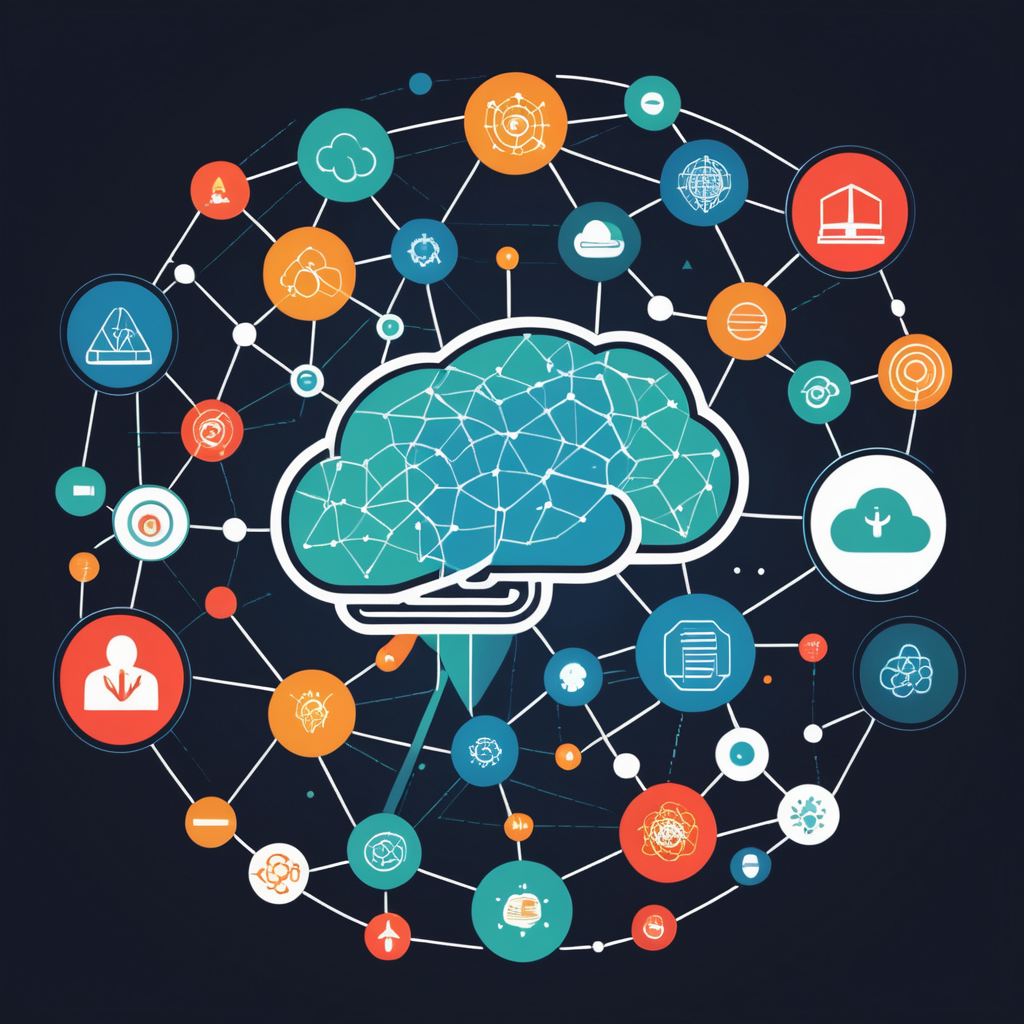
Differentiation between Manifested AI and Related Technology Categories
Manifested AI versus Generative AI
While both manifested AI and generative AI represent major technology trends and receive substantial capital investment, they serve fundamentally different purposes and exhibit different technical characteristics. Generative AI systems like ChatGPT, DALL-E, and similar models operate entirely within digital domains, accepting text, image, or other digital inputs and producing new digital outputs like documents, images, code, or media content. These systems excel at creative tasks, content generation, and knowledge synthesis, but they operate through statistical pattern completion rather than understanding physical causality or interacting with real environments.
Manifested AI systems, conversely, operate as embedded intelligence within physical systems that directly perceive and manipulate the material world. The core bottlenecks differ substantially: generative AI struggles with reasoning fidelity and hallucinations (generating plausible-sounding but false information), while manifested AI struggles with perception in messy reality, safety assurance, and reliability at scale. The business impact also differs: generative AI primarily delivers productivity benefits for knowledge workers through content creation and analysis, while manifested AI enables labor substitution and margin expansion in operations through physical task automation. Deployment environments differ markedly: generative AI applications appear first in documents, customer support, marketing assets, and prototyping, while manifested AI appears first in warehouses, retail restocking, healthcare logistics, and transportation operations.
However, the technologies represent complementary rather than competing approaches to AI advancement, with leading companies pursuing both paths. OpenAI, which leads in generative AI with ChatGPT and GPT-4, has recognized that to achieve artificial general intelligence (AGI), it requires massive amounts of real-world physical data that can only be collected through deployed physical systems—hence its recent entry into robotics and manifested AI development. Tesla similarly applies its generative AI capabilities (like in-vehicle entertainment and customer service applications) alongside its manifested AI focus through Optimus robotics.
Manifested AI versus Traditional AI Systems
Traditional artificial intelligence systems developed over decades in academia, industry, and government applications emphasize predefined logic, structured data analysis, and explicit programming of system behavior. A traditional AI fraud detection system analyzes financial transactions against manually programmed rules and statistical thresholds, flagging anomalies through explicit algorithms rather than learned representations. These systems typically operate with high transparency (you can understand why they made specific decisions), high interpretability (their decision processes can be explained), and relatively modest computational requirements.
Manifested AI systems, by contrast, learn their representations directly from data through deep neural networks that process high-dimensional sensory information and generate outputs through learned probability distributions rather than explicit rules. While traditional AI systems typically require smaller, curated datasets and perform well on narrowly defined tasks within their training domain, manifested AI systems require vast quantities of diverse real-world data and can generalize across broader task categories. Traditional AI prioritizes interpretability—you can point to specific rules and thresholds that generated decisions—while manifested AI systems operate somewhat as “black boxes” where interpretability remains limited despite increasingly sophisticated explanation techniques.
The practical implication is that traditional AI remains superior for well-defined, high-stakes decisions in regulated domains where interpretability is non-negotiable (like medical diagnosis or loan approval), while manifested AI excels at adaptive physical tasks in less formally constrained environments. Most sophisticated modern systems employ hybrid architectures combining both approaches: using traditional rule-based systems for high-level policy decisions and safety constraints, with neural network-based learned components for perception and real-time adaptation within those constraints.
Timeline and Phased Deployment Strategy
Near-Term Deployment Phase (2025-2027)
Current industry analysis indicates that the initial deployment phase for manifested AI focuses heavily on warehouse and logistics automation, taking advantage of structured environments where robots can achieve reliable performance with current technology. This strategy deliberately avoids the liability and safety uncertainty of public spaces or mixed human-robot environments during early deployments, while generating billions of hours of operational data that feeds back into training loops to improve system capabilities. Companies like Agility Robotics and Tesla are deploying systems in controlled industrial settings where performance failures carry lower consequences and where the economic benefits are clearest, establishing proving grounds for technology maturation.
Medium-Term Expansion Phase (2027-2032)
As robotic systems accumulate real-world operational experience, demonstrable safety records, and refined capabilities, deployment is expected to expand into more complex environments including healthcare, hospitality, light manufacturing, and consumer-facing applications. Healthcare deployment, while economically compelling given severe nursing shortages, proceeds slowly due to regulatory requirements, liability frameworks, and safety standards that demand extremely high reliability before autonomous robots assist with patient care. Hotels, restaurants, and retail establishments present less regulated but still complex environments requiring navigation through areas occupied by humans, communication capabilities, and graceful failure modes that don’t disrupt customer experience.
Long-Term Consumer Phase (2032 onward)
Full consumer adoption of household robots for personal assistance, elderly companionship, child monitoring, home automation, and in-home rehabilitation represents the ultimate vision underlying much of the robotics investment, though this phase remains furthest from current reality. Consumer applications require unprecedented levels of reliability, safety, cost-effectiveness, and seamless human interaction that current systems do not yet approach. However, the potential market—billions of households globally with willingness to pay for capable home robots—justifies the massive investment and patient capital supporting robotics development.
Societal and Economic Implications
Labor Market Transformation and Job Displacement
The large-scale deployment of manifested AI systems will inevitably displace workers in physical, routine, and repetitive jobs across manufacturing, warehousing, retail, and service sectors. However, historical precedent from previous technology revolutions suggests that while specific job categories disappear, new employment categories emerge in roles like robot maintenance, AI training and oversight, human-robot interface design, ethical regulation and safety testing, logistics engineering, and quality assurance. The challenge lies in the speed of transition and the geographic concentration of disruption: workers in manufacturing-dependent regions may experience severe dislocation if job creation in new categories doesn’t materialize at comparable pace and location.
Research on AI-driven job displacement among information technology professionals in India reveals substantial psychological and emotional impacts beyond simple economic loss, including identity disruption, organizational betrayal, and difficulty reorienting careers and self-understanding. These findings suggest that policy responses should extend beyond simple retraining programs to address the psychological and social dimensions of technological displacement, including mental health support and community integration measures. The transition from manufacturing and logistics work to robot maintenance and AI oversight work also represents a significant skills and educational gap, suggesting substantial need for educational system adaptation and lifelong learning infrastructure.
National Competitiveness and Geopolitical Implications
The distribution of manifested AI capabilities and manufacturing across geographies carries profound geopolitical implications comparable to previous technology races. China’s current dominance in humanoid robot deployment (with eighty-five percent of deployed robots installed in China as of 2025) combined with Chinese dominance in critical mineral supply chains and component manufacturing suggests that China may capture disproportionate economic benefits from the initial wave of robotics deployment. However, Western companies and governments have recognized the strategic importance of robotics and are mobilizing capital, talent, and regulatory frameworks to support competitive capability development, with the United States and European Union actively investing in robotics research and manufacturing capacity.
Governments may increasingly offer robotics deployment incentives, support research infrastructure, establish regulatory frameworks, and implement tax structures designed to accelerate domestic robotics development and deployment, mirroring past competition patterns in semiconductors, aerospace, and artificial intelligence. Nations establishing early leadership in manifested AI may gain comparable advantages to those that led in computing, telecommunications, and other foundational technologies, making this competition consequential for long-term economic and geopolitical positioning.
Safety, Reliability, and Regulatory Challenges
The Safety-Reliability Challenge
Manifested AI systems must achieve extraordinary levels of safety and reliability before widespread deployment in public or semi-public environments, creating substantial engineering and liability challenges. Unlike software systems where failures result in corrupted data or crashed applications, failures in autonomous robots can result in physical injury to humans, property damage, and liability exposure for manufacturers and operators. Current systems achieve reasonable safety for well-controlled warehouse environments but would face unacceptable risk levels in crowded public spaces or directly assisting vulnerable populations like elderly patients or hospitalized individuals.
Achieving the necessary reliability improvements requires both technological advancement and experimentation with deployed systems, creating a catch-22 where companies need real-world deployment to gather data enabling safety improvements, but cannot deploy systems until they achieve adequate safety. Regulatory frameworks that enable controlled, monitored deployment while maintaining safety standards represent critical infrastructure that must develop in parallel with the technology itself.
Explainability and Interpretability in Physical Contexts
The opacity of neural network-based decision-making creates particular challenges for manifested AI systems, where the consequences of decisions manifest in physical consequences potentially involving human harm. When a humanoid robot encounters an unexpected person in a factory environment, its decision to continue operating, slow down, or stop completely emerges from complex neural network activations influenced by billions of training examples—a decision-making process that operators and regulators cannot easily explain or predict in advance. This opacity creates liability and ethical concerns: how should responsibility be allocated when an autonomous system causes harm? Who bears liability—the manufacturer, the operator, or the owner? Can stakeholders be held accountable for decisions they cannot explain?
Developing explanation techniques that illuminate why autonomous systems make specific decisions without imposing such computational overhead as to render real-time operation infeasible remains an active research area. Some approaches employ post-hoc explanation methods like LIME and SHAP that approximate model decisions locally, while others attempt to build interpretability into models through architectural choices emphasizing attention mechanisms or concept-based reasoning. However, no approach yet provides complete transparency into complex neural networks operating at the performance levels required for real-world manifested AI applications.
The Unfolding Reality of Manifested AI
Manifested AI represents a fundamental inflection point in artificial intelligence development, transitioning AI from purely digital domains into physical embodiment with real-world autonomy and consequences. The convergence of maturing neural network architectures, advanced computer vision systems, custom silicon enabling edge processing, sophisticated mechanical design, and accumulated real-world data from autonomous vehicle development has created conditions enabling deployment of genuinely capable humanoid and specialized robots at meaningful scale for the first time in history. Unlike previous robotics waves that focused on single-task automation in highly controlled environments, manifested AI aspires to create general-purpose systems capable of operating across diverse tasks and environments while learning continuously from real-world experience.
The market opportunity is genuinely enormous, with conservative projections suggesting trillion-dollar markets by 2035 and optimistic analyses suggesting five-to-twenty-five-trillion-dollar opportunities if technical challenges are overcome and deployment accelerates. The competitive landscape features Tesla leveraging autonomous driving data and manufacturing scale, Figure AI pursuing rapid development cycles with substantial capital, Boston Dynamics contributing decades of locomotion research, Chinese competitors deploying at scale, and numerous specialized companies addressing vertical applications in healthcare, construction, agriculture, and other domains. Major AI companies including OpenAI are belatedly recognizing that achieving artificial general intelligence requires embodied physical systems capable of collecting real-world data at scale, accelerating investment in robotics and manifested AI.
However, manifested AI faces substantial technical, regulatory, social, and economic challenges before realizing its transformative potential. Safety and reliability standards for autonomous systems operating in human environments remain inadequately developed, liability frameworks are ambiguous, and explanability of autonomous decision-making remains limited. The psychological and social dimensions of labor displacement from manufacturing and service sectors require policy responses beyond simple retraining, and the concentration of manufacturing and talent in specific geographies creates risk of unequal distribution of benefits. Nevertheless, the fundamental technical feasibility of manifested AI appears increasingly established, substantial capital is committed to development and deployment, and industry actors across the spectrum are mobilizing to capture share in what many regard as the next defining technological frontier. The manifested AI revolution is not a distant future prospect—it is beginning now, with prototypes operating in real warehouses, field deployments expanding across industrial sectors, and the technical capabilities improving visibly across multiple dimensions simultaneously.
Frequently Asked Questions
What is the core definition of Manifested AI?
Manifested AI refers to AI systems designed to achieve specific, observable, and measurable outcomes in the real world. Unlike theoretical AI, Manifested AI focuses on practical applications where its intelligence is demonstrated through tangible actions and results. It emphasizes the direct impact and functional embodiment of AI capabilities in solving concrete problems, rather than just abstract computation or data analysis.
How does Manifested AI differ from generative AI and traditional AI?
Manifested AI differs from generative AI, which creates new content, and traditional AI, often focused on specific rule-based or predictive tasks. While generative AI produces outputs like text or images, Manifested AI emphasizes the *implementation* and *real-world impact* of AI’s intelligence. It’s about AI’s intelligence becoming evident through its actions and effects in a tangible environment, combining perception, reasoning, and action.
What are the key operational principles of Manifested AI systems?
Key operational principles of Manifested AI systems include observability, measurability, and direct action. These systems are designed to perform tasks where their intelligence can be clearly seen and evaluated through their effects. They often involve sensing the environment, making decisions, and executing physical or digital actions that lead to a desired, quantifiable outcome, demonstrating their intelligence through their ‘manifested’ behavior.