



Artificial intelligence has emerged as one of the most transformative technologies of the contemporary era, reshaping industries, scientific discovery, and daily human experience. Yet beneath the headlines about impressive capabilities and dramatic breakthroughs lies a fundamental question that deserves careful examination: What is the actual purpose of AI? The answer is neither simple nor singular. The purpose of artificial intelligence encompasses multiple layers of intention, from the immediate technical objectives embedded in individual systems to the broader aspirations that guide its development at the societal level. At its core, AI exists to simulate and augment human intelligence across diverse domains, enabling machines to learn from data, make informed decisions, solve complex problems, and automate tasks in ways that enhance productivity, accelerate discovery, and address humanity’s most pressing challenges. However, this overarching purpose manifests in numerous ways: from automating routine operational tasks to discovering new scientific knowledge, from personalizing human experiences to improving decision-making capabilities in critical domains like healthcare and climate science. Understanding the purpose of AI requires examining both what AI systems are designed to accomplish in technical terms and what role human societies envision for these systems in solving real-world problems, advancing knowledge, and improving quality of life. This comprehensive analysis explores the multifaceted purposes of artificial intelligence, examining the goals that drive its development, the practical applications through which purpose is realized, the transformative potential it offers, the challenges that must be addressed to ensure alignment with human values, and the future directions toward which AI’s purpose continues to evolve.
Foundational Understanding of AI’s Purpose: From Simulation to Autonomy
The primary purpose of artificial intelligence, in its most fundamental sense, is to enable computers and machines to simulate human-like intelligence in ways that were previously impossible or impractical. This foundational goal emerged from early conceptualizations of AI that viewed the challenge as one of replication: could machines be taught to perceive their environment, comprehend information, reason through problems, and make decisions in manners comparable to human cognition? This question, famously articulated by Alan Turing in his 1950 paper “Computing Machinery and Intelligence,” established the philosophical and technical framework that continues to guide AI development today. The Turing test itself represented an early attempt to operationalize AI’s purpose—if a machine could engage in conversation indistinguishable from a human, then arguably it had achieved intelligence worthy of the name.
However, the purpose of AI has evolved substantially beyond merely replicating human intelligence. Contemporary AI systems are not simply programmed to mimic human thinking; they are designed to extend, augment, and in some cases surpass human capabilities in specific domains. This represents a crucial shift in understanding AI’s purpose. Rather than viewing AI as a quest to build thinking machines identical to humans, modern AI development recognizes that machines can achieve valuable outcomes through fundamentally different mechanisms than biological brains employ. A deep learning neural network does not “think” in the way humans think, yet it can identify patterns in medical imaging data with accuracy that rivals or exceeds trained radiologists. This gap between how AI achieves results and how humans do so is not a shortcoming but rather an expression of AI’s true purpose: to create computational tools that leverage machine capabilities—vast storage capacity, rapid processing, pattern recognition across massive datasets—to accomplish goals that matter to human society.
The foundation of AI’s purpose rests on enabling machines to learn from experience and data without explicit programming for every scenario. Machine learning, the subset of AI that has proven most practically useful, reflects this core purpose: algorithms that improve through exposure to data, that identify relationships humans might miss in complex information, and that adapt their behavior based on outcomes. This capacity for machines to learn—to extract patterns from experience and apply them to new situations—represents a fundamentally different approach to automation than earlier computational systems. Where traditional computer programs required humans to explicitly specify every decision rule and contingency, learning systems can discover rules from data and generalize from examples to new contexts. This distinction is essential to understanding AI’s purpose: it is not merely to execute predetermined procedures more quickly than humans, but to enable systems that can identify relevant patterns in new environments and respond adaptively.
Beyond the technical purpose of pattern recognition and learning, AI serves a deeper instrumental purpose: to free humans from tedious, dangerous, or cognitively demanding tasks so that human effort can be directed toward activities that require creativity, judgment, ethical consideration, and emotional intelligence. This purpose reflects a recognition that not all valuable work is equally suited to human engagement. Humans are capable of extraordinary creative achievements, yet they also struggle with monotony, fatigue, and the limitations of working memory. AI systems excel at tasks that are routine, repetitive, or that require processing vast quantities of data with consistency. When AI automates such tasks, the purpose being served is not the elimination of human work but rather the liberation of human potential for higher-value activities. This becomes particularly important in knowledge work, where AI can handle data processing, preliminary analysis, and routine decision support, freeing skilled professionals to focus on complex judgment calls, client relationships, and strategic thinking.
Core Objectives and Goals of AI Systems Across Domains
The specific purposes that drive AI development vary significantly depending on the domain and application context, yet several core objectives emerge consistently across different fields. The first and most fundamental objective is problem-solving and enhanced decision-making. AI systems are increasingly designed to analyze complex datasets, identify patterns that humans might overlook, and generate recommendations or predictions that support better decision-making. In business contexts, this means AI that analyzes transaction patterns to detect fraud, predicts customer preferences, or optimizes supply chains. In healthcare, it means AI systems that analyze medical images to detect tumors at earlier stages, predict which patients are at highest risk for particular conditions, or recommend treatment protocols personalized to individual genetic profiles. In scientific research, it means AI that can process massive datasets to identify new molecules worth investigating, predict how proteins will fold in three dimensions, or forecast climate patterns. Across all these applications, the shared purpose is to augment human decision-making by providing faster, more accurate information and insights that were previously inaccessible or would have required prohibitive amounts of human analytical effort.
A closely related objective is the automation of complex cognitive and physical tasks. Unlike earlier automation, which was limited to relatively simple, repetitive motions or calculations, modern AI can automate tasks that require reasoning and judgment. Generative AI systems can draft documents, write code, create images, and synthesize information from multiple sources—tasks that were thought to require creative human cognition. Robotics enhanced by AI can navigate novel environments, manipulate objects with precision, and adapt to unexpected obstacles. Customer service AI can understand nuanced natural language queries and provide contextually appropriate responses. The purpose underlying this automation is not job elimination but rather efficiency gains and the ability to scale services and capabilities beyond what human labor alone could achieve. A hospital might use AI to automate routine aspects of patient intake and record-keeping, enabling human staff to spend more time on direct patient care and complex clinical decision-making. A manufacturing facility might use AI-guided robotics to handle dangerous tasks like working with hazardous materials or in extreme temperatures, protecting human workers from injury.
Scientific discovery and acceleration of research represent another core objective. AI has demonstrated remarkable capacity to identify patterns in scientific data that lead to novel hypotheses, to predict the outcomes of experiments before they are conducted, and to analyze literature across vast fields to identify gaps in knowledge or unexpected connections between disciplines. DeepMind’s AlphaFold system, which solved the protein-folding problem that had challenged biologists for decades, exemplifies this purpose: AI systems that can make fundamental scientific breakthroughs and open entirely new research pathways. The purpose here is fundamentally transformative—not merely to help scientists work faster, but to enable discoveries that would have been practically impossible through unaided human effort. This has profound implications for drug discovery, materials science, understanding climate systems, and countless other domains where scientific progress is rate-limited by the difficulty of analyzing vast datasets and identifying novel patterns.
The objective of personalization and customization reflects another key purpose of AI in contemporary applications. Retail companies use AI to provide personalized product recommendations. Educational platforms use AI to adapt learning content to individual student needs and learning styles. Healthcare systems use AI to tailor treatment recommendations based on individual patient characteristics, genetics, and health history. Marketing systems use AI to generate personalized messaging and offers. The purpose underlying these applications is to improve the relevance and effectiveness of services and products by accounting for individual variation and preferences. Rather than offering one-size-fits-all solutions, AI enables customization at scale—something that would be impractical if it required individual human attention for each customer, student, or patient.
Addressing major societal challenges represents an increasingly prominent purpose of AI development. Organizations and researchers explicitly recognize AI as a tool for tackling climate change, through better weather forecasting, optimization of renewable energy systems, monitoring of deforestation, and discovering new materials for sustainable energy and construction. AI is being deployed to improve healthcare access and outcomes, particularly in underserved populations, through diagnostic support, analysis of large epidemiological datasets, and acceleration of drug discovery. AI is being used to monitor biodiversity, detect environmental threats, and support conservation efforts. In education, AI is being leveraged to personalize learning and extend quality educational resources to populations that lack access to human teachers. These applications reflect a purpose that extends beyond commercial efficiency: they represent a deliberate effort to use AI’s capabilities to address problems of profound human and environmental importance.
The Purpose of AI in Economic and Business Contexts
Within business and economic contexts, the purposes that drive AI adoption are diverse but center on several key themes. Productivity enhancement and operational efficiency represent the most frequently cited business objectives. AI systems automate routine processes, reducing the labor required for data entry, document processing, basic analysis, and other tasks that are tedious and error-prone when handled manually. This automation allows organizations to accomplish more work with existing staff or to reduce staffing costs. However, the economic purpose of AI extends beyond simple labor reduction. Organizations that successfully integrate AI report not just cost savings but also revenue growth, market share gains, and competitive differentiation. This suggests that AI’s economic purpose is better understood as enabling organizations to be more productive, responsive, and innovative, creating value that can be captured through growth and improved competitive position rather than purely through cost reduction.
The purpose of AI in driving innovation and creating new products and services has become increasingly prominent. AI enables new capabilities that were not previously possible: real-time translation that breaks down language barriers, image generation systems that accelerate creative work, conversational interfaces that make technology accessible to non-technical users, and autonomous systems that could eventually transform transportation and logistics. Organizations that leverage AI for innovation are better positioned to create new market categories, serve new customer segments, and build competitive advantages that are difficult for competitors to replicate. This purpose reflects a recognition that in increasingly competitive markets, the ability to innovate faster than competitors is crucial for long-term success, and AI capabilities can significantly accelerate innovation cycles.
Risk management and fraud detection represent important business purposes that serve both the organization and its stakeholders. AI systems that analyze transaction patterns can detect fraudulent activities far more rapidly than human analysis, protecting both companies and customers. In financial services, AI-driven risk assessment can more accurately predict loan defaults, evaluate insurance claims, and identify systemic risks to financial stability. In cybersecurity, AI systems can detect anomalous network behavior that indicates potential attacks. These applications serve the purpose of protecting assets, maintaining customer trust, and enabling organizations to operate with confidence in increasingly digital and interconnected environments.
The purpose of AI in enabling data-driven decision-making across all levels of an organization cannot be overstated. Rather than relying on intuition, past experience, or limited information, organizations can use AI to analyze comprehensive datasets and generate insights that inform strategic decisions about resource allocation, market entry, product development, and organizational structure. This purpose is particularly important in complex, rapidly changing environments where the mental models humans develop based on past experience may be inadequate for understanding present conditions.
The Purpose of AI in Augmenting and Enhancing Human Capabilities
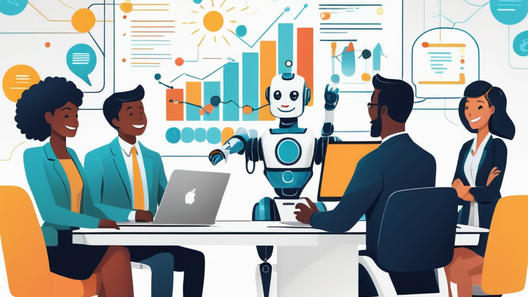
A crucial understanding of AI’s purpose emerges from recognizing that in many domains, the goal is not to replace human expertise and judgment but rather to augment and enhance human capabilities. This represents a significant reframing of AI’s purpose from a competitive relationship (humans versus machines) to a collaborative one (humans working with machines to achieve outcomes neither could accomplish alone). Research on human-AI collaboration demonstrates that in many tasks, humans and AI systems working together achieve better outcomes than either would achieve separately. An expert human radiologist working with an AI diagnostic system identifies more cancers than either the human or the system alone; a creative team using generative AI tools produces more novel and higher-quality ideas than teams without such tools; a scientist analyzing data with AI assistance makes faster progress than one working without computational support.
This collaborative purpose reflects a recognition of complementary strengths: humans excel at creative thinking, understanding context and nuance, making ethical judgments, and recognizing when standard approaches are inadequate for novel situations. AI systems excel at processing large quantities of data, identifying patterns across vast datasets, performing routine cognitive tasks with consistency, and working at speeds and scales impossible for humans. When AI’s purpose is understood as augmentation rather than replacement, the design of AI systems changes. Rather than trying to eliminate human involvement, systems are designed to make human experts more effective by handling information processing and preliminary analysis, freeing experts to focus on judgment and decision-making.
The purpose of AI in supporting learning and skill development represents another dimension of human augmentation. Intelligent tutoring systems analyze student performance and adapt educational content to individual needs, helping learners progress more effectively. AI-powered tools can provide immediate feedback, explain concepts in different ways, and identify specific areas where students are struggling. In professional contexts, AI can support skill development by providing practice opportunities, analyzing performance, and offering targeted feedback. This purpose reflects a recognition that individual differences in learning style and pace are significant barriers to educational access and effectiveness; by personalizing education, AI can help more people achieve learning goals.
The purpose of AI in supporting creativity and innovation has emerged as increasingly important. Rather than viewing AI as a substitute for human creativity, researchers and practitioners are exploring how AI tools can enhance creative capacity. Generative AI systems can rapidly generate multiple variations on themes, helping creative professionals explore a wider design space. AI can synthesize information from across disciplines, suggesting novel combinations that humans might not naturally consider. By automating routine aspects of creative work, AI can free humans to focus on high-level conceptual and strategic decisions. This purpose is particularly relevant in fields like design, writing, music composition, and scientific research, where the combination of human vision and AI capability can produce outcomes that exceed what either could achieve alone.

AI’s Purpose in Addressing Fundamental Human Values and Challenges
Beyond technical objectives and commercial purposes, AI is increasingly understood as a tool for addressing challenges that relate to fundamental human values. Fairness and equity represent an important purpose area, as recognition grows that AI systems can either perpetuate existing biases or, if properly designed and implemented, help identify and mitigate discrimination. AI systems trained on historical data naturally learn from that data’s biases; if historical hiring decisions systematically favored male candidates, AI trained on that data will recommend male candidates. However, this same capacity to learn from data can be leveraged to identify where bias exists and design systems that explicitly counter discrimination. This purpose—using AI to create fairer systems and reduce structural inequities—represents an important application of AI technology to promoting human values.
Improving healthcare access and outcomes stands as a prominent purpose, particularly given healthcare’s profound importance to human well-being. AI can help extend quality medical care to underserved populations by providing diagnostic support in areas without specialist physicians. AI systems that can interpret medical images can identify diseases at earlier, more treatable stages. AI can accelerate drug discovery and development, reducing the time and cost required to bring new treatments to patients. By personalizing treatment recommendations based on individual characteristics, AI can improve treatment efficacy and reduce adverse effects. The purpose here encompasses both efficiency (providing care more cost-effectively) and equity (extending quality care to populations that lack access to specialists).
The purpose of AI in environmental protection and sustainability has become increasingly explicit in recent years. AI systems can monitor deforestation in real time and help enforcement authorities target limited resources effectively. AI can optimize energy consumption in buildings and industrial processes, reducing waste. AI can improve renewable energy systems by predicting generation and optimizing grid management. AI can help identify new materials for sustainable energy and construction. AI can support precision agriculture that reduces water use, pesticide application, and environmental impact. The purpose underlying these applications reflects recognition that addressing climate change and environmental degradation will require deploying all available tools effectively, and AI offers capabilities that could significantly accelerate progress toward sustainability.
Enhancing human autonomy and agency represents a purpose that is somewhat countintuitive in a discussion of powerful automated systems: the goal of ensuring that as AI systems become more capable, they genuinely serve human purposes and remain aligned with human values rather than imposing system-determined outcomes on humans. This purpose becomes critical as AI systems become more autonomous and make more significant decisions. The risk is that if AI systems are designed with purposes that diverge from human values, or if humans lose understanding of how AI systems make decisions, these systems could shape outcomes in ways contrary to human flourishing. This purpose—ensuring value alignment, maintaining human oversight, preserving human agency—is increasingly recognized as fundamental to responsible AI development.
The Purpose of AI in Scientific Discovery and Knowledge Creation
Perhaps no domain more clearly illustrates AI’s transformative purpose than scientific research and discovery. Accelerating the pace of scientific progress has emerged as a central motivation for integrating AI into research workflows. Traditional scientific methods involve hypothesis formation, experiment design, data collection, analysis, and publication—a cycle that typically takes months or years from initial idea to validated finding. AI systems can dramatically accelerate certain steps in this cycle. Analyzing literature across millions of papers, identifying gaps in current understanding, and suggesting novel research directions—tasks that would take human scientists months or years—can be accomplished by AI systems in hours. Conducting computational experiments and simulations that would require vast computational resources and months of human effort can be completed in days.
Beyond acceleration, AI serves the purpose of enabling fundamentally new modes of discovery. DeepMind’s AlphaFold system did not simply speed up protein structure prediction; it solved a problem that had resisted human effort for decades, discovering solutions that no human researcher had previously identified. This suggests that AI’s purpose in science includes not just doing what humans do faster, but identifying solutions in computational spaces too large for humans to search exhaustively. Similarly, AI systems can identify patterns in vast datasets that are invisible to human analysis. When researchers analyzing gene expression data use machine learning to identify which genes are most predictive of disease progression, they often discover genes that human experts would never have suspected based on their existing understanding.
The purpose of democratizing scientific capability through AI has received explicit attention, with initiatives like the National AI Research Resource intended to provide researchers, including those at under-resourced institutions, access to cutting-edge AI tools. If advanced AI systems are accessible only to well-funded institutions, scientific progress will be concentrated among privileged populations, and many talented researchers will be unable to leverage AI’s capabilities. Making AI tools broadly available serves the purpose of accelerating progress across all research institutions and enabling researchers from diverse backgrounds to contribute to scientific advancement.
The Purpose of AI in Creating More Adaptive and Resilient Systems
An emerging purpose of AI relates to creating systems that can adapt to changing conditions and maintain effectiveness in dynamic environments. Traditional engineered systems are designed for specific conditions and fail when those conditions change significantly. Climate change is altering weather patterns in ways that invalidate assumptions built into infrastructure designed decades ago. Supply chains face increasingly frequent disruptions. Organizations must operate in markets that are transforming rapidly due to technological change. AI systems that can adapt—that learn from new data, recognize when conditions have shifted, and adjust their behavior accordingly—serve the purpose of enabling human systems to remain resilient and effective despite uncertainty and change.
Multi-objective AI represents a particular development in this direction. Traditional optimization systems are designed to maximize or minimize a single objective—minimize cost, maximize efficiency, maximize accuracy. However, real-world problems typically involve multiple competing objectives. A water management system must balance urban water demand, agricultural needs, environmental flows, and flood risk. A traffic system must balance congestion minimization with safety and environmental goals. An energy system must balance cost, reliability, and environmental impact. Multi-objective AI is designed to explore the space of possible solutions, understanding the trade-offs between different objectives and helping human decision-makers understand the consequences of choosing different priorities. The purpose here is to create decision support systems that are adequate to the complexity of real-world challenges.
The Purpose of AI in Maintaining Human Values and Responsible Development
As AI systems have become more capable and more integrated into critical domains, explicit attention to ensuring that AI serves human values has become increasingly central to its purpose. This reflects recognition of a fundamental challenge: the purpose of AI must not be merely to accomplish technical objectives, but to do so in ways that align with human values, that respect human rights, that maintain fairness and transparency, and that preserve meaningful human agency.
Value alignment—ensuring that AI systems behave in ways consistent with human values, ethical principles, and societal norms—has emerged as a critical purpose in its own right. The challenge is that values are complex, sometimes contradictory, and vary across cultures and individuals. Different people have different priorities regarding privacy, autonomy, fairness, and security. AI systems must be designed not to impose a single vision of human values but to accommodate diversity of values and involve affected populations in decisions about how AI systems should behave.
Transparency and interpretability serve important purposes related to accountability and trust. When AI systems make decisions that significantly affect people—determining loan eligibility, recommending medical treatments, allocating resources—those people deserve to understand how the decision was made and to have recourse if the decision was unfair or incorrect. However, many advanced AI systems, particularly deep learning systems, are “black boxes” whose decision-making processes are opaque even to their developers. Creating more interpretable AI serves the purpose of maintaining accountability: if a system’s logic can be explained, humans can evaluate whether it is appropriate, identify biases or errors, and correct them.
The purpose of ensuring AI safety as systems become more capable and autonomous has become increasingly important. Current AI systems generally operate within carefully circumscribed domains and under human oversight. However, if future AI systems become more generally capable and more autonomous, the consequences of mistakes could be more severe, and the ability of humans to maintain oversight could become more challenging. Research on AI safety seeks to develop methods for ensuring that even highly capable AI systems remain aligned with human values and beneficial in their effects.
Democratizing access to AI serves the important purpose of ensuring that AI’s benefits are distributed equitably rather than concentrated among wealthy individuals and nations. If advanced AI is available only to large corporations and wealthy nations, it will exacerbate existing inequalities in wealth and power. Open-source AI initiatives and efforts to democratize access to AI tools serve the purpose of enabling broader participation in AI-driven innovation and ensuring that more people can benefit from AI’s capabilities.
The Purpose of AI in the Workforce and Economic Transformation
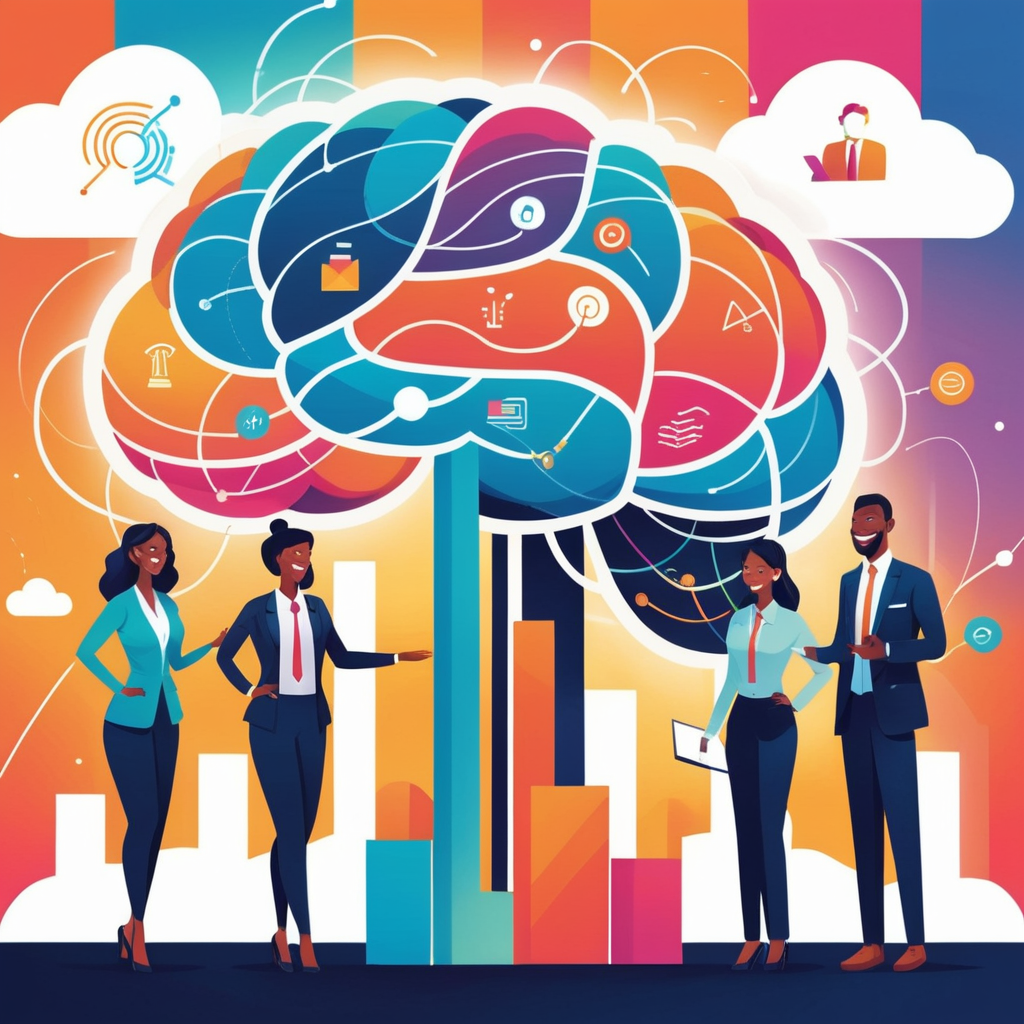
The relationship between AI and work represents a complex purpose area with significant implications for human flourishing. Enhancing worker productivity and creating opportunities for more rewarding work represents the aspirational purpose of AI in employment contexts. Rather than simply replacing workers, AI can augment their capabilities, handling routine and data-intensive aspects of work and freeing workers to focus on activities that are more creative, complex, interpersonal, or strategic—activities that typically find more meaningful and rewarding. A customer service representative working with an AI system that provides suggested responses and relevant information can handle more complex customer issues and build more satisfying relationships with customers. A software engineer working with AI code generation tools can focus on architecture and strategy rather than routine coding.
However, the purpose of AI in labor markets includes challenges that must be honestly acknowledged. Displaced workers and unequal distribution of benefits represent real risks as AI automation progresses. Workers in roles where AI can automate most of the work face potential job loss, while workers with skills that complement AI—such as ability to use AI tools effectively, to interpret AI outputs, to perform tasks AI cannot automate—may see increased demand and wages. This creates potential for increasing inequality within the workforce unless deliberate policy and educational interventions ensure that workers displaced by automation have opportunities to transition to new roles.
The purpose of workforce development and reskilling becomes increasingly important in an AI-augmented economy. If AI automation is advancing faster than workers can acquire new skills, unemployment and underemployment will increase, creating social problems and wasting human potential. Educational institutions and employers have the shared purpose of ensuring that workers have opportunities to learn skills that remain valuable as AI transforms work. Research suggests that analytical thinking, complex problem-solving, creativity, emotional intelligence, and the ability to work effectively with others are becoming increasingly valuable—skills that are less readily automated than routine analytical or clerical work.
The Purpose of AI in Future Technological and Societal Transformation
Looking toward the future, the purpose of AI continues to evolve as the technology becomes more capable and its potential applications expand. The development toward artificial general intelligence (AGI)—AI systems capable of understanding and learning any intellectual task that humans can perform—represents both a stated goal and a purpose that generates significant discussion within the AI research community. If AGI is achieved, its purpose would presumably be to serve as a general-purpose problem-solving tool applicable to any domain where human intelligence is relevant. However, many researchers emphasize that the development of AGI, if it occurs, must be guided by clear purposes centered on benefiting humanity rather than causing harm.
Expanding the boundaries of human capability and achievement represents a broader purpose that encompasses both narrow technical objectives and aspirational goals. AI systems that help scientists discover new medicines, help engineers design more efficient structures, help artists create new forms of expression, help educators reach more students, and help policymakers better understand the consequences of different policies all serve this overarching purpose of expanding what humans can accomplish. As AI capabilities expand, this purpose becomes increasingly important: rather than viewing AI narrowly as a tool for accomplishing specific tasks more cheaply or quickly, the broader purpose is to expand the frontier of human achievement and to address challenges that were previously intractable.
Creating a sustainable and equitable future represents an increasingly explicit purpose for AI development, particularly as awareness of climate change and resource constraints grows. AI could play important roles in transitioning to renewable energy, designing sustainable materials, optimizing resource use, and monitoring environmental systems. However, realizing this purpose requires deliberate choices about how AI is developed and deployed; the same AI capabilities that could accelerate the transition to sustainability could also be used in wasteful or environmentally harmful ways.
The Purpose of AI in Collective Decision-Making and Governance
An emerging purpose of AI relates to supporting collective decision-making and governance. Complex societal challenges like climate change, pandemic prevention, and resource management require integrating inputs from diverse stakeholders with different values, knowledge, and interests. AI systems that can model the impacts of different policy choices, simulate how populations might respond to different interventions, or help identify compromise solutions that balance different objectives could serve important purposes in democratic governance. Research on AI agents that can simulate individual decision-making with high accuracy suggests potential for using AI as a tool for policymakers to test the potential consequences of proposed policies before implementation.
However, this purpose also carries significant risks and challenges. AI systems used in governance could reinforce the biases of their designers, could lack transparency in ways that undermine democratic accountability, or could be manipulated by those with power to serve narrow interests rather than public good. The purpose of using AI to support governance must be carefully thought through to ensure that it genuinely enhances democratic decision-making rather than undermining it.
AI’s Purpose: The Path Ahead
The purpose of artificial intelligence cannot be captured in a single statement or reduced to a single objective. Rather, AI serves multiple, sometimes overlapping, sometimes potentially conflicting purposes across different domains and contexts. At the most fundamental level, AI exists to simulate and augment human intelligence, enabling machines to perceive, learn, reason, and act in ways that were previously impossible or impractical. This foundational purpose manifests in diverse applications: automating routine tasks to free human effort for higher-value work; accelerating scientific discovery by processing vast datasets and identifying novel patterns; personalizing services and experiences to individual needs; addressing societal challenges in health, environment, and education; enhancing productivity and enabling innovation in business and industry; and supporting more informed decision-making at individual and collective levels.
However, understanding AI’s purpose comprehensively requires recognizing that how AI is developed and deployed matters as much as what it is designed to accomplish. The purpose of creating intelligent systems is hollow if those systems operate without transparency, if they reinforce rather than mitigate unfairness, if they concentrate power among elites rather than serving broad populations, or if they are used in ways that undermine human autonomy and dignity. Increasingly, the purpose of AI research and development includes explicit commitments to ensuring that AI is developed and deployed responsibly, with attention to ethics, fairness, transparency, and alignment with human values.
Looking forward, the purpose of AI will likely continue to evolve as the technology becomes more capable, as its applications expand into new domains, and as society develops clearer understandings of how AI can best serve human flourishing. The development of more capable AI systems that can operate more autonomously will require increasingly sophisticated approaches to ensuring value alignment and maintaining human oversight. The expansion of AI into more consequential domains—such as healthcare, justice, education, and governance—will require more rigorous attention to fairness, transparency, and accountability. The recognition of AI’s potential to address societal challenges like climate change and disease will require deliberate choices about directing AI development toward these goals. And the recognition that AI’s benefits and risks are unequally distributed will require explicit efforts to democratize access to AI tools and ensure that AI serves broad populations rather than narrow elites.
In synthesis, the purpose of AI is ultimately a human purpose: to create tools and systems that help humanity understand the world better, solve problems more effectively, achieve goals that matter, and build a future that is sustainable, equitable, and supportive of human flourishing. The technical capability to build intelligent machines is necessary but insufficient to realize this purpose. Equally important is wisdom about how these capabilities should be developed and deployed, commitment to ensuring that AI serves human values and not merely technical objectives, and ongoing dialogue among researchers, policymakers, and affected populations about how AI can best contribute to human good. The next decade will likely determine whether AI becomes a tool that broadly elevates human capability and addresses pressing challenges, or one that exacerbates existing inequalities and concentrates power in fewer hands. That determination depends not on the technology itself but on the purposes we collectively choose to pursue and the values we insist guide its development.
Frequently Asked Questions
What is the fundamental purpose of artificial intelligence?
The fundamental purpose of artificial intelligence is to enable machines to perform tasks that typically require human intelligence. This includes learning, problem-solving, decision-making, pattern recognition, and understanding natural language. Ultimately, AI aims to automate complex processes, enhance human capabilities, and create systems that can adapt and operate autonomously in various environments.
How has the purpose of AI evolved beyond simply replicating human intelligence?
The purpose of AI has evolved beyond mere replication to augmenting human capabilities and solving problems at scales impossible for humans. Modern AI focuses on optimizing complex systems, processing vast datasets, discovering new patterns in science and medicine, and automating mundane tasks. It now aims to create intelligent systems that complement, rather than just mimic, human thought and action.
What role does machine learning play in achieving AI’s purpose?
Machine learning (ML) is crucial for achieving AI’s purpose by enabling systems to learn from data without explicit programming. ML algorithms allow AI to identify patterns, make predictions, and adapt its behavior over time, which is essential for tasks like image recognition, natural language processing, and autonomous decision-making. It’s the primary method for AI to acquire and improve intelligence.