


Artificial intelligence has fundamentally transformed how organizations monitor, measure, and report progress across virtually every domain of work. Rather than relying on manual status updates, periodic reviews, and fragmented data sources, modern AI-powered progress tracking tools automate the collection, analysis, and synthesis of progress data in real time. These systems leverage computer vision, natural language processing, machine learning, and predictive analytics to deliver continuous visibility into project status, team performance, and operational metrics without requiring additional manual data entry from users. The result is a shift from reactive, delayed reporting to proactive, data-driven insight that enables teams to identify risks early, optimize resource allocation, and maintain accountability across complex initiatives. This report examines the landscape of AI-powered progress tracking tools across multiple industries and use cases, analyzing how these systems work, their key capabilities, and their impact on organizational efficiency and decision-making.
AI-Powered Progress Tracking in Construction and Project-Based Industries
Visual Intelligence for Construction Progress
Construction represents one of the most visible use cases for AI-powered progress tracking, where automated systems have begun transforming how project managers monitor work completion without adding manual burden to field teams. Modern AI construction software processes imagery captured from drones and 360-degree cameras to automatically identify installed work by trade type, compare progress against project schedules, and generate detailed progress reports. Rather than requiring manual site walks with clipboards or time-consuming data compilation, construction teams now upload site imagery, which AI systems analyze within hours to produce structured reports comparing planned versus actual progress.
The process begins with regular site captures—typically weekly or as-needed—using existing drone or camera programs that teams are already running. The AI platform ingests this imagery and applies visual intelligence trained specifically on construction jobsite conditions to identify what has been installed, where it is located, and when it was completed. A typical workflow shows capture occurring on Tuesday, with imagery processing within a few hours and structured progress reports available before scheduled owner-architect-contractor meetings. This eliminates the need for manual percent-complete updates, complex BIM model imports, or spreadsheet cross-referencing that traditionally consumed hours of project management time.
Construction AI systems track multiple dimensions simultaneously. OpenSpace Progress Tracking, for example, can monitor over 700 visual components across more than 200 schedule tasks, allowing teams to track everything from framing and mechanical-electrical-plumbing rough-ins to drywall and finishing work. The system integrates directly with scheduling software including Primavera P6, Microsoft Project, Asta Powerproject, and Excel, allowing progress data to flow automatically into the tools teams already use. Rather than creating yet another data silo, construction AI platforms position themselves as extensions of existing workflows that add intelligence without requiring behavioral change.
Safety and Financial Applications in Construction
Beyond basic progress tracking, construction AI systems apply computer vision to identify safety hazards in real time. The same imagery that documents installed work also reveals safety risks—missing guardrails, exposed edges, personal protective equipment compliance issues—that can be flagged and addressed immediately. This dual capability transforms site imagery into a comprehensive record that serves multiple purposes: documenting work for billing and payment applications, identifying schedule risks early, ensuring quality and installation completeness, and providing visual evidence for safety compliance.
Financial applications are equally important. Many construction disputes and billing delays stem from disagreement about what work has actually been completed. By establishing an objective, timestamped visual record of progress, AI-powered documentation provides the ground truth needed for accurate pay applications and reduces disputes over billable work. Project teams report that early detection of productivity problems—sometimes as early as 10% completion rather than 50% completion—enables them to identify cost overrun risks while there is still time to implement corrective measures.
Task Management and Project Planning with AI Automation
Intelligent Task Scheduling and Prioritization
AI task managers represent a different approach to progress tracking, focusing on the organization and completion of individual work items rather than large construction projects. These platforms use machine learning to understand work patterns, automatically schedule tasks based on deadlines and availability, and track progress through natural language processing that allows users to simply describe their work without formal data entry. Motion, identified as the leading AI task manager for its prioritization and calendar integration capabilities, exemplifies how modern tools approach progress tracking.
Rather than requiring users to manually organize their work or make constant decisions about what to do next, AI task managers analyze user behavior patterns, identify task dependencies, and automatically schedule work at optimal times. This reduces cognitive load—described by users as one of the most valuable benefits—since the system handles the repetitive decision-making about task sequencing and time blocking. Users can focus on execution while the system manages the meta-level work of organizing and tracking that execution.
Task prioritization powered by artificial intelligence operates differently than traditional to-do list systems. Rather than users manually ranking items by importance, AI systems analyze multiple factors: deadline urgency, task dependencies, team member availability, historical completion patterns, and business priority. When a user adds a new task or an existing task’s context changes, the system automatically adjusts recommendations, ensuring that at any moment the user is working on what actually matters most. This dynamic adjustment proves especially valuable in fast-moving environments where priorities shift frequently and manual updates fall behind reality.
Integration with Calendar and Workflow Systems
Modern AI task management platforms recognize that progress tracking cannot exist in isolation from a user’s broader work context. These systems integrate directly with calendar systems—checking real availability, not just theoretical availability—and synchronize with email, communication platforms, and existing project management tools. This integration creates what these platforms call a “unified workspace” where task information, calendar blocks, and communication all flow through a single interface.
The practical impact is substantial. Instead of task managers showing that someone is available at 2 PM when they are actually in a meeting, or recommending that work be done at a time that conflicts with recurring commitments, AI systems have real-time visibility into actual availability. Time blocking—allocating specific calendar slots for specific work—becomes automatic rather than something users must maintain manually. Team members receive calendar invitations for blocked work time, and the system routes tasks accordingly. Progress tracking becomes visible not just in the task system but across the calendar, providing complete visibility into what work is scheduled and what has been completed.
Real-Time Progress Dashboards and Analytics
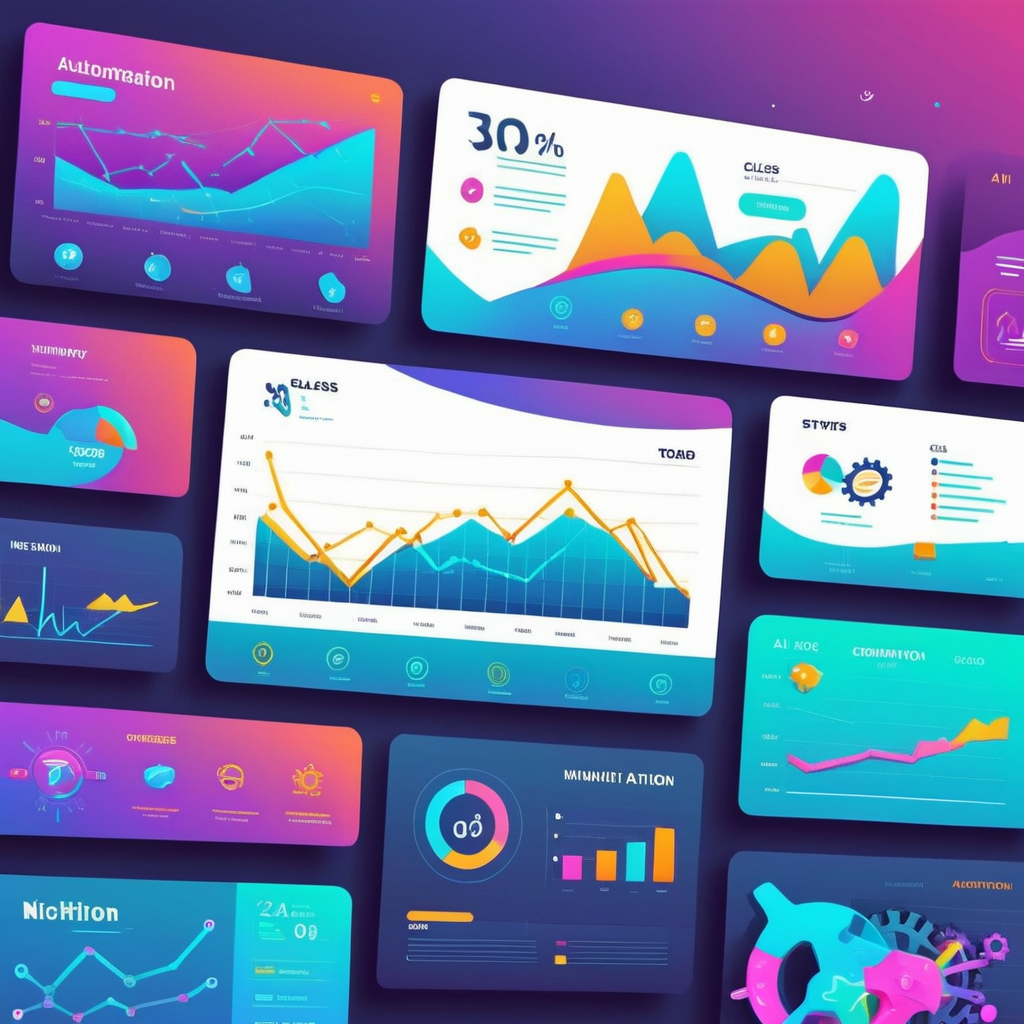
AI-powered task management platforms provide visual dashboards that show progress at multiple levels of granularity. Individual users see their task progression and work-in-progress; managers see team-wide capacity, workload distribution, and project-level status; executives see portfolio-level progress and resource utilization. These dashboards update continuously as work progresses, rather than requiring manual status meetings to aggregate information.
ClickUp’s AI integration, described as providing “one converged workspace,” exemplifies this approach. The platform integrates habit tracking, task management, project planning, and progress visualization into a single interface, where an AI agent can handle routine updates (like marking tasks complete, sending reminders, or generating summaries) while humans focus on decision-making. This human-in-the-loop approach—where AI handles automation and humans provide judgment—represents the emerging standard for how these tools handle progress tracking.
Machine Learning and AI Model Experiment Tracking
The Challenge of Tracking ML Development
Machine learning development presents unique progress tracking challenges that differ fundamentally from traditional software or project management. Machine learning systems are not deterministic; small changes to hyperparameters, training data, or model architecture can produce significant behavioral differences without clear predictability. Machine learning engineers cannot simply compare two code versions to understand what changed in model behavior; they must track metadata about experiments, including hyperparameters, training data versions, model performance metrics, hardware resource consumption, and numerous other dimensions that influence outcomes.
Progress in machine learning is measured through iterative experimentation where each run generates insights that inform the next experiment. Teams need to track not just the final performance metric but the entire history of parameter variations, accuracy measurements, loss functions, and other indicators that show whether the model is moving in the right direction. Traditional version control systems designed for code are insufficient because ML engineers need to track data versions, model versions, and experiment metadata simultaneously. This is the fundamental challenge that specialized ML experiment tracking tools solve.
Dedicated ML Experiment Tracking Platforms
Platforms like MLFlow, CometML, Neptune, Weights & Biases, and Verta.ai provide centralized experiment tracking designed specifically for machine learning workflows. These systems automatically capture hyperparameters when integrated with ML frameworks like TensorFlow and PyTorch, record performance metrics as models train, track dataset versions and lineage, and provide visualization tools that make it easy to compare experiments and understand what changed between runs.
The core capability these tools provide is what practitioners call reproducibility—the ability to understand exactly what inputs, parameters, and data produced a specific model output, enabling researchers to reproduce results or understand why one experiment outperformed another. This requires capturing far more metadata than traditional progress tracking systems; an ML experiment tracking system must record learning rates, batch sizes, dropout rates, numbers of layers, activation functions, loss functions, optimization algorithms, numbers of epochs, and often dozens of domain-specific parameters. The system must also track which specific data samples were used in training, allowing data scientists to understand if performance differences stem from different data or different parameters.
Modern ML experiment tracking tools also provide dashboards and comparison views that let data scientists visualize performance across multiple dimensions. Rather than scrolling through experiment logs, practitioners can see charts showing how accuracy changed as they varied different parameters, making patterns visible that might be missed in raw data. Custom reporting capabilities allow teams to create visualizations specific to their particular problems and metrics.
Workflow Automation and Business Process Automation
Intelligent Process Automation Foundations
Process automation has evolved through multiple phases, beginning with task automation in the 2010s, moving to intelligent automation that incorporates machine learning and NLP in the 2018-2022 period, and now entering an era of agentic automation where AI systems can handle complex, end-to-end workflows independently. This evolution in automation capability directly impacts how progress is tracked, since more sophisticated automation requires more sophisticated monitoring and progress visibility.
Robotic process automation (RPA) systems automate high-volume, repetitive, rule-based tasks by programmatically controlling applications and systems the same way human users would. A typical RPA use case might involve automating data entry, file transfers, system integrations, or routine document processing. Modern RPA platforms like UiPath integrate AI capabilities including computer vision (for document understanding), natural language processing (for email classification), and machine learning (for decision-making) to handle increasingly complex workflows.
Progress tracking in process automation environments requires monitoring multiple dimensions simultaneously: whether processes are executing correctly, how long processes take to complete, how much error correction is required, and whether the automated processes are achieving their intended business outcomes. Unlike traditional project management where progress is tracked against a predetermined schedule, process automation progress must account for variable volume, changing business rules, and the need to tune automation parameters based on actual performance.
Workflow Platforms and Intelligent Orchestration
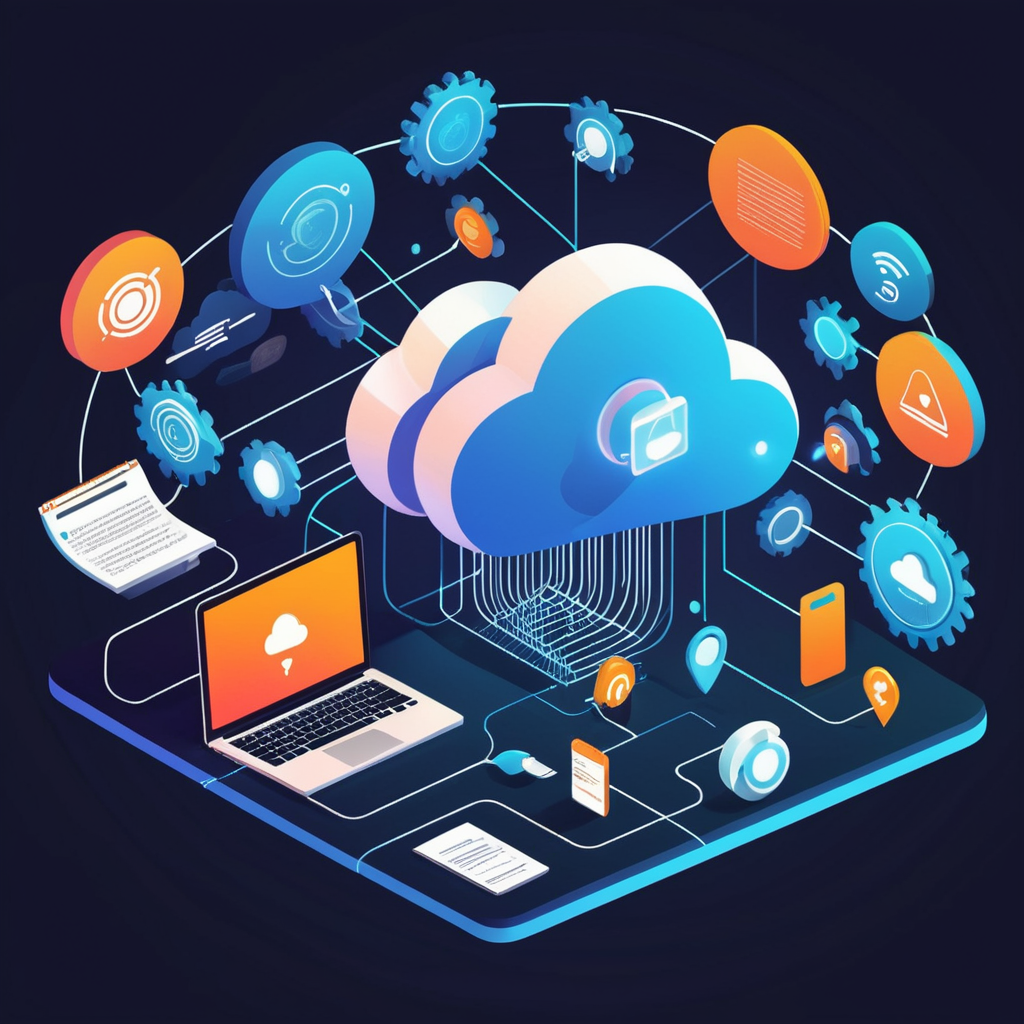
Modern workflow automation platforms like Zapier, Gumloop, and Make provide visual interfaces for designing automation workflows that connect multiple applications and services. These platforms use AI to help users design workflows by understanding natural language descriptions of desired outcomes and suggesting appropriate steps. Progress tracking in these environments means monitoring whether workflows execute as designed, identifying when workflows need human intervention, and continuously optimizing workflow performance.
Advanced platforms now incorporate what is called “intelligent orchestration,” which uses AI to coordinate multiple automation agents and robots across complex business processes, automatically handling dependencies, exceptions, and optimization. This represents a significant advance in progress tracking capability because the system must not only monitor whether individual steps complete successfully but also understand the interdependencies between steps, recognize when conditions have changed that require adaptation, and route work to the appropriate automation or human resource. Progress becomes multi-dimensional: tracking not just whether work completes but whether it completes optimally given current conditions and constraints.
Employee and Workforce Analytics and Monitoring
Continuous Activity Tracking and Productivity Analysis
Employee monitoring and productivity tracking using AI represents one of the most technically mature applications of progress monitoring, with platforms like ActivTrak, We360.ai, and Timely providing continuous visibility into workforce activity. These systems capture employee activity including hours worked, schedule adherence, application and website usage, and location (for mobile workers), then apply machine learning to identify productivity patterns, detect burnout risk, and optimize workload distribution.
The foundational capability is activity capture, which these platforms accomplish through background monitoring without requiring user input. Rather than employees manually logging time spent on tasks or projects, these systems automatically track which applications are active, which websites are visited, and which systems are being used. This creates continuous, objective data about work activity that eliminates the time-tracking friction that causes incomplete or inaccurate logging. Timely’s approach exemplifies this; the platform captures work activity automatically and uses AI to generate accurate timesheets with one click, allowing employees to review and approve rather than manually create.
AI analysis transforms raw activity data into actionable insights about productivity and performance. Rather than just showing hours worked, these systems identify patterns: which types of work take longest, which times of day particular individuals are most productive, where bottlenecks occur in workflows, and what factors correlate with high-quality output. We360.ai’s machine learning models analyze behavioral patterns, application usage, and workflows to deliver insights into team productivity trends and operational bottlenecks. This level of analysis enables managers to make data-driven decisions about how to optimize team performance, allocate work, and address inefficiencies.
Predictive Analytics for Employee Wellbeing
Beyond basic productivity tracking, modern AI employee monitoring platforms incorporate predictive analytics that identify burnout risk, disengagement, and attrition risk before these problems escalate. Machine learning models analyze work patterns—including overtime trends, unusual schedules, rapid changes in productivity—to identify employees showing signs of stress or burnout. This enables managers to intervene proactively with workload adjustments, support resources, or schedule changes before valuable employees leave.
We360.ai incorporates predictive models trained on behavioral data to forecast employee disengagement and burnout, allowing HR and operations teams to intervene strategically. Similarly, ActivTrak provides tools for monitoring employee engagement and detecting burnout by assessing utilization and workload balance. This represents a significant evolution in progress tracking from simple activity measurement to predictive modeling that identifies organizational risks and opportunities for intervention.
Integration with Business Outcomes
The most advanced employee monitoring platforms attempt to connect activity and productivity metrics to actual business outcomes, creating end-to-end progress visibility. Rather than simply tracking how much time employees spend working, these systems aim to show how productivity changes impact project delivery, customer satisfaction, revenue, and other business metrics. This requires integration with project management systems, CRM systems, and financial systems, allowing the platform to correlate employee productivity changes with changes in business metrics.
Educational Progress Monitoring with AI
Automated Detection of Learning Patterns
AI-powered progress monitoring for education, exemplified by Panorama Solara and similar platforms, represents an application where AI directly enhances human expertise rather than replacing it. These systems analyze student data across multiple dimensions—grades, assignment submissions, assessment scores, attendance, engagement metrics—to surface patterns that teachers might miss in day-to-day classroom work. Rather than teachers spending hours cross-referencing gradebooks and attendance records, AI tools surface meaningful patterns automatically.
The core capability is pattern detection across multiple data sources. A teacher might notice that one student’s assignment quality has declined but not consciously connect that to the same student’s attendance dropping or changed participation patterns. AI systems make these connections automatically, flagging when performance trends change or when concerning patterns emerge. An assignment quality decline that coincides with increased absences might be flagged as a student at risk of falling further behind. Engagement metrics showing reduced participation might indicate a student losing interest before it becomes visible in grade drops.
Early Intervention and Personalized Support
The practical impact of AI-powered educational progress tracking is measurable: teachers can intervene earlier in student struggles, often within days or weeks rather than waiting for grades to reflect the underlying problem. Because the system surfaces early warning signs, teachers can provide support and adjust instruction before students fall far behind. Personalized learning insights allow teachers to see which specific subjects or types of assignments challenge particular students, enabling more targeted support.
Teachers remain in control of the system; they review AI-generated insights and decide whether and how to act on them. AI handles the time-consuming work of data analysis and pattern detection, while teachers provide pedagogical expertise and personal relationships with students. This human-in-the-loop design proves especially important in education, where decisions about student support require nuanced understanding of individual circumstances that AI systems cannot fully capture.
Business Analytics and Data Intelligence Platforms
Real-Time Analytics and Anomaly Detection
Business intelligence and analytics platforms have incorporated AI to transform progress tracking from historical reporting to real-time insight with predictive capabilities. Rather than dashboards showing what happened last month, modern AI analytics platforms provide current status, identify anomalies and risks emerging in real time, and forecast future trends. This shift from retrospective to prospective progress tracking fundamentally changes how organizations make decisions.
Real-time dashboards provide teams with continuous visibility into key metrics and business operations. Rather than waiting for scheduled reports, stakeholders can monitor performance continuously through dashboards that update as new data arrives. AI augments these dashboards by automatically flagging anomalies—deviations from expected patterns that might indicate problems or opportunities. Instead of humans scrolling through hundreds of metrics looking for unusual changes, AI highlights what changed and why, surfacing relationships and root causes that would be time-consuming to investigate manually.
Databricks AI/BI dashboards exemplify this approach, providing AI-assisted business intelligence where users can ask questions using natural language and receive instant visualizations and insights. Rather than requiring technical skills to query databases or create custom reports, business users can ask questions like “which products have highest revenue?” and receive immediate answers with supporting visualizations. This democratizes analytics, enabling broader organizational participation in data-driven decision making.
Predictive Analytics for Business Planning
Beyond real-time reporting, AI analytics platforms incorporate predictive models that forecast future performance based on historical patterns and current trends. Predictive analytics helps organizations anticipate demand, forecast revenue, identify risks, and plan resource allocation with greater accuracy than human intuition or simple trending. These systems analyze multiple factors simultaneously to understand complex relationships between business variables.
Google Cloud’s framework for measuring AI success identifies several categories of predictive analytics KPIs that organizations track: demand forecasting accuracy, customer churn prediction, equipment failure prediction, and outcome probability estimates. These metrics allow organizations to evaluate whether predictive models are delivering value and whether organizational decisions informed by predictions actually produce better outcomes. Progress tracking in analytics-driven organizations increasingly means measuring whether AI-generated insights lead to better decisions and improved business results.
Agile and Software Development Progress Tracking
Sprint Planning and Burndown Tracking
Agile development teams use specialized AI-powered progress tracking tools to monitor sprint progress, identify risks, and optimize team capacity. Traditional Agile practices rely on burndown charts—visual representations of remaining work versus time remaining in a sprint—to track progress. AI systems enhance burndown tracking by predicting whether the team will complete sprint goals, identifying which specific tasks are at risk, and automatically surfacing blockers that slow progress.
Burndown charts remain fundamental to Agile progress tracking, but AI enhancement makes them more predictive and actionable. Rather than simply showing that work is behind ideal pace, AI-powered burndown systems can forecast whether the current velocity will allow completing all sprint goals and suggest specific adjustments—task reassignments, priority changes, or capacity adjustments—needed to get back on track. For QA and testing teams, AI can track the burndown of test cases and automation, showing progress through test execution and identifying automation bottlenecks.
AI-Assisted Sprint Planning
Advanced sprint planning tools like Zenhub and Forecast incorporate AI to recommend realistic sprint goals, automatically estimate task effort based on historical data, and optimize sprint composition to balance workload. These systems analyze past sprints to identify patterns: how long similar types of work actually take, which team members excel at specific types of tasks, what factors tend to cause delays. This historical data enables more accurate planning than traditional estimation meetings where team members guess about effort.
Zenhub’s AI features include automatic effort estimation using historical completion data, intelligent sprint composition recommendations, and natural-language ticket summarization that ensures everyone understands work requirements. Forecast takes a similar approach with AI-driven time and budget estimation and sprint optimization for balanced workloads. These tools claim that AI-assisted planning can reduce estimation meetings by up to 60%, save 2-3 hours per sprint on refinement, and improve on-time delivery by 25%. This represents substantial progress tracking improvement: not just tracking whether work completes on schedule but optimizing how work is planned to increase likelihood of on-time completion.
Risk Detection and Predictive Alerts
AI-powered sprint planning tools incorporate risk prediction that identifies patterns historically associated with sprint failures. Machine learning models analyze which factors correlate with sprints that go over schedule: types of dependencies, team composition, task complexity distribution, and many others. When current sprints show patterns similar to historically problematic sprints, the system alerts teams proactively. This enables teams to take corrective action mid-sprint rather than discovering at the end that goals will not be met.
Jira with Atlassian Intelligence demonstrates this capability through intelligent backlog grooming suggestions, automated issue descriptions, and sprint composition recommendations. Microsoft’s Azure DevOps Boards includes AI-based sprint analytics and forecasting using machine learning for effort estimation and risk prediction for sprint commitments. These capabilities represent the frontier of AI progress tracking in software development: not just measuring what happened but predicting what will happen and recommending proactive interventions.
Deployment and Infrastructure Progress Tracking
AI-Assisted Deployment Verification
Modern continuous integration and deployment pipelines incorporate AI for automated deployment verification and rollback decisions. Rather than requiring manual verification that deployments are successful, AI systems automatically analyze deployment metrics and logs to detect regressions and quality issues. Harness AI Assisted Deployment Verification exemplifies this approach by automatically detecting variance in metrics and logs after deployment and executing rollback if regression is detected.
The technical challenge is distinguishing between benign metric variations that happen naturally and genuine problems that require rollback. Traditional monitoring requires manually defining thousands of rules and thresholds, which becomes impractical at scale. AI systems learn expected baseline behavior from historical data and detect statistically significant deviations that likely indicate problems. This enables automated response—rolling back problematic deployments without human intervention—that significantly reduces time to resolution for deployment issues.
Observability and AI for System Monitoring
New Relic AI Monitoring and similar observability platforms provide full-stack visibility into AI-powered applications and infrastructure, tracking performance metrics that traditional monitoring might miss. As applications become more complex, with multiple AI agents, microservices, and distributed systems, progress tracking requires understanding not just whether systems are up but whether they are performing correctly and delivering expected business value.
AI observability platforms track metrics specific to AI systems: token usage, model latency, response quality, hallucination rates, and cost per model call. These metrics are required to assess whether AI systems are performing as expected and delivering business value. New Relic’s platform includes specialized integrations for LLMs, vector databases, and AI frameworks, automatically capturing and visualizing complex call flows across AI agents. This represents progress tracking at the frontier of technology, where organizations need visibility into AI system behavior that traditional monitoring was not designed to provide.
Specialized Domain Applications of AI Progress Tracking
Legal and Case Management
Legal case management represents a specialized domain where AI progress tracking helps attorneys organize complex evidence, track case developments, and prepare for litigation. Casefleet combines document management, fact extraction, timeline creation, and AI-assisted search to provide attorneys with comprehensive case progress visibility. Rather than manually reading through thousands of documents searching for relevant evidence, attorneys use AI to identify key facts, automatically extract information, and organize evidence into chronologies.
The progress being tracked in legal contexts differs from traditional project management: tracking case development, evidence discovery, witness preparation, and litigation readiness rather than task completion. AI progress tracking in this domain means automatically surfacing key facts and evidence as they emerge, maintaining updated case timelines, and providing search capabilities that help attorneys find relevant information quickly. This directly improves attorney productivity and case preparation quality.
Healthcare and Patient Progress Monitoring
Guava Health’s Provider Dashboard demonstrates how AI progress tracking applies to patient health monitoring, combining data from electronic health records, wearable devices, lab tests, and patient-reported information into unified longitudinal health timelines. Rather than patients and physicians manually tracking health information across multiple systems, AI automatically integrates data sources and surfaces meaningful trends and changes.
The progress being tracked is patient health progression over time, with AI highlighting concerning changes that physicians should address proactively. Auto-generated health updates surface meaningful changes like out-of-range labs, new symptoms, changes in vitals, and medication changes—information scattered across multiple sources that would be time-consuming to manually aggregate. This enables more proactive, personalized medicine where physicians can intervene early based on emerging patterns rather than waiting for scheduled appointments to discover problems.
Compliance and Regulatory Monitoring
Regology demonstrates AI progress tracking applied to regulatory compliance, monitoring changing laws and regulations, tracking organizational compliance status, and automating compliance reporting. Rather than compliance teams manually tracking regulatory changes and manually assessing organizational compliance, AI systems continuously monitor regulatory sources, extract relevant changes, and automatically assess impact. This enables compliance teams to stay ahead of regulatory changes rather than discovering violations after they have already occurred.
Progress tracking in compliance contexts means monitoring the organization’s regulatory status across multiple jurisdictions and regulatory frameworks, identifying gaps where organization is not yet compliant, and tracking progress toward compliance. AI systems reduce the manual work of regulatory research and compliance assessment, allowing compliance teams to focus on strategic compliance planning rather than routine monitoring.
Supply Chain and Inventory Optimization
AI inventory management systems track progress toward optimal inventory levels by using machine learning to forecast demand, predict supplier performance, detect anomalies indicating theft or supply chain disruption, and optimize replenishment. Rather than inventory managers manually reordering based on rules of thumb or intuition, AI systems analyze demand patterns, supplier reliability, and cost dynamics to recommend optimal inventory decisions. Progress in inventory management means moving toward inventory levels that balance service level with carrying costs.
The Path Forward: Intelligent Progress with AI Automation
The transformation of progress tracking through artificial intelligence represents a fundamental shift in organizational visibility and decision-making capability. What began as manual status reports and periodic reviews has evolved into continuous, automated progress monitoring where AI systems capture data, detect patterns, surface risks, and provide actionable recommendations. This evolution spans virtually every domain of work: construction, software development, business operations, healthcare, education, and regulatory compliance.
The core pattern across all AI progress tracking applications is consistent: automation of routine data collection and analysis, with humans retaining control over decisions and strategic direction. Rather than replacing human judgment, AI augments it by handling the tedious work of organizing data, identifying patterns, and surfacing what deserves attention. Teams can focus on decision-making and execution rather than on gathering and organizing information.
As AI tools mature, progress tracking becomes increasingly predictive rather than simply historical. Organizations can move from asking “what happened?” to asking “what is likely to happen?” and “what should we do about it?”. This shift from retrospective to prospective progress tracking fundamentally changes how organizations anticipate and manage risks, optimize performance, and achieve objectives. The continued evolution of these capabilities—incorporating more sophisticated machine learning, expanding to new domains, and improving human-AI collaboration—will likely make AI-powered progress tracking increasingly central to how organizations operate and make decisions in coming years.