



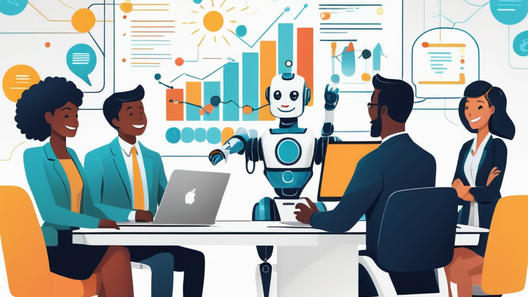

Generative Pre-trained Transformers, commonly abbreviated as GPT, represent a fundamental transformation in artificial intelligence that has reshaped how machines understand and generate human language. These large language models have emerged as a cornerstone technology of the modern AI revolution, enabling machines to perform tasks ranging from answering complex questions to writing code, generating creative content, and assisting with scientific research. Since the introduction of GPT-1 in 2018, the evolution of these models has been marked by exponential improvements in capabilities, from basic text prediction to sophisticated reasoning and multimodal understanding that encompasses text, images, and audio. The emergence of GPT represents more than just an incremental advance in natural language processing; it constitutes a paradigm shift in how artificial intelligence systems are built and deployed, with profound implications for productivity, economic growth, and the future trajectory of artificial intelligence development itself. This comprehensive analysis explores the technical foundations, evolution, applications, and future implications of GPT AI systems in an increasingly interconnected and AI-driven world.
The Fundamental Nature and Architecture of Generative Pre-trained Transformers
Defining GPT and Its Core Characteristics
Generative Pre-trained Transformers are fundamentally neural network-based language prediction models built on the transformer architecture, a breakthrough innovation in deep learning introduced by Google researchers in 2017. The term “generative” refers to the models’ ability to create new content, including text, images, music, and code, based on patterns learned during training. The term “pre-trained” indicates that these models are first trained on vast amounts of unlabeled data to learn general language patterns, grammar, facts, and reasoning abilities, rather than being trained from scratch for specific tasks. This pre-training approach represents a departure from traditional machine learning, which often required carefully labeled datasets for each specific application. At their essence, GPT models operate as statistical models that predict the next token in a sequence based on the tokens that have come before it, much like an incredibly sophisticated autocomplete system that has learned patterns from hundreds of billions of parameters interacting across vast datasets. Unlike traditional rule-based or symbolic AI systems, GPT models do not explicitly program logic or rules; instead, they learn implicit representations of language and reasoning through the process of predicting text during pre-training.
The significance of GPT models extends beyond their technical capabilities to their practical utility across virtually every domain of human endeavor. Organizations across industries now employ GPT models for question-and-answer systems, text summarization, content generation, search optimization, code assistance, and countless other applications. The transformative nature of these models lies in their versatility—a single pre-trained GPT model can be adapted to perform diverse tasks with minimal additional training, demonstrating what researchers call “few-shot” and “zero-shot” learning capabilities. This adaptability has made GPT models economically attractive for enterprises, as they eliminate the need to build and maintain separate specialized models for different applications. The rise of GPT models marks an inflection point in the widespread adoption of machine learning because the technology can now be applied to automate and improve an extraordinarily broad set of tasks, from language translation and document summarization to creative writing and complex reasoning.
The Transformer Architecture: The Foundation of GPT
The transformer architecture, which forms the foundation of all GPT models, represents one of the most important innovations in deep learning history and solved many of the performance limitations associated with previous approaches like recurrent neural networks. Unlike recurrent neural networks (RNNs) that process input sequentially, one word or token at a time, transformers process entire sequences of text simultaneously in parallel, dramatically improving both the efficiency and effectiveness of learning from language data. This parallelization is crucial because it allows transformers to train much more quickly on larger datasets and to capture long-range dependencies in text that RNNs struggle with. The key innovation that enables this parallelization is the self-attention mechanism, a mathematical approach that allows the model to weigh the importance of each word in relation to all other words in a sequence, regardless of how far apart they are in the text.
The transformer architecture consists of two main modules: an encoder that processes input text and creates contextualized representations, and a decoder that generates output predictions. For GPT models specifically, which are generative models, the architecture relies primarily on the decoder component, which uses self-attention mechanisms to focus on different parts of the input during each processing step. The self-attention mechanism works through a mathematical operation called scaled dot-product attention, where each token computes query, key, and value representations, and then the model calculates attention weights by taking the dot product of query vectors with key vectors, scaling by the square root of the dimension to stabilize gradients, and applying a softmax function to create normalized attention weights. These attention weights determine how much each token should “attend to” or focus on other tokens when generating its representation.
Rather than having a single attention mechanism, modern transformers employ multi-head attention, where multiple sets of query, key, and value weight matrices are learned, allowing different “heads” to attend to different aspects of the input simultaneously. For example, some attention heads might focus primarily on the next word in a sentence, while others attend to verbs and their direct objects, or pronouns and their antecedents. The outputs from all attention heads are concatenated and projected again to produce the final attention output, which then passes through feed-forward neural networks before moving to the next layer. This multi-head approach allows the transformer to capture diverse types of relationships and patterns within the text, contributing significantly to its reasoning and language understanding capabilities.
The transformer architecture also incorporates several additional components critical to its functioning, including positional encoding that adds information about the position of tokens within the sequence, since the self-attention mechanism itself is position-invariant. Residual connections and layer normalization throughout the architecture improve numerical stability and training dynamics. The stacking of multiple transformer blocks, each containing self-attention and feed-forward sublayers, creates a deep neural network architecture that can capture increasingly abstract and sophisticated patterns as information flows through successive layers.
Evolution and Historical Development of GPT Models
From GPT-1 to the Modern Era of Large Language Models
The journey of GPT development began in June 2018 when OpenAI released GPT-1, a groundbreaking yet modest model by today’s standards that contained approximately 117 million parameters and was trained on the BooksCorpus dataset of over 7,000 unpublished books. GPT-1 demonstrated that pre-training on large text corpora followed by supervised fine-tuning could outperform traditional machine learning models on natural language processing benchmarks, establishing the foundational approach that would guide all subsequent GPT development. However, GPT-1’s capabilities were limited compared to modern standards, exhibiting repetitive and sometimes nonsensical outputs, requiring extensive fine-tuning for specific tasks, and lacking any mechanisms for preventing harmful content generation. Despite these limitations, GPT-1 proved the fundamental concept that scaling deep learning architectures and pre-training approaches could yield significant performance gains.
GPT-2, released in February 2019 and scaling to 1.5 billion parameters trained on the WebText dataset of 8 million high-quality web pages, represented an order-of-magnitude leap in capability that stunned the AI research community. GPT-2 demonstrated dramatically improved text fluency and showed strong generative abilities, being capable of generating coherent passages of text spanning multiple sentences with remarkable coherence. The capabilities of GPT-2 were sufficiently impressive that OpenAI initially withheld the full model from public release due to concerns about potential misuse in creating misleading content or deepfakes, making it the first AI model to spark global debate about responsible release strategies. When the full GPT-2 model was eventually released in November 2019, it catalyzed both research and practical applications across industry and academia.
The release of GPT-3 in June 2020 marked a watershed moment in the history of artificial intelligence, introducing a model with 175 billion parameters trained on a diverse mixture of Common Crawl, WebText, books, and Wikipedia data totaling over 45 terabytes of text. GPT-3 represented a paradigm shift in large language models by demonstrating remarkable few-shot and zero-shot learning capabilities, meaning it could generalize from minimal examples or no examples at all to perform new tasks it had never explicitly been trained on. This capability emerged unexpectedly from the sheer scale of the model rather than from explicit architectural changes, representing one of the first clear examples of “emergent abilities” in neural networks—capabilities that appear suddenly when a critical scale threshold is reached. GPT-3 demonstrated exceptional performance across writing, coding, translation, summarization, question answering, and numerous other tasks, and its release through an API made advanced language AI accessible to thousands of organizations worldwide.
The introduction of GPT-3.5 in March 2022 served as a crucial bridge between GPT-3 and GPT-4, incorporating reinforcement learning from human feedback (RLHF) to align model outputs more closely with human preferences and values. This training methodology, which involves collecting human judgments about which model outputs are better and using these preferences to optimize the model’s behavior, proved transformative in improving instruction-following, factual accuracy, and the refusal of inappropriate requests. The first public release of ChatGPT in November 2022, powered by GPT-3.5, achieved unprecedented adoption, reaching 100 million users in just two months and fundamentally changing public perception of artificial intelligence capabilities.
GPT-4, introduced in March 2023, remained largely mysterious in its technical details, with OpenAI revealing only that the model likely contains approximately one trillion parameters (though exact figures were never disclosed) and is trained using next-token prediction with reinforcement learning from human feedback. Despite the information scarcity, GPT-4 demonstrated clear improvements over GPT-3 in reasoning capabilities, broader contextual understanding, and performance on standardized academic tests. The model’s ability to process longer context windows (up to 128,000 tokens for input, compared to 4,000 for some earlier versions) enabled it to reason over much longer documents and maintain consistency across extended interactions.
GPT-4.1, launched in April 2025, introduced variants optimized for different performance and cost profiles, including mini and nano versions that offer dramatically reduced computational requirements while maintaining respectable performance. Most recently, GPT-5 was released in August 2025, representing another significant capability leap with the introduction of an intelligent router that automatically selects whether to use a faster model or a more computationally intensive reasoning model based on the complexity of the task. GPT-5 achieved state-of-the-art performance on mathematics benchmarks (94.6% on AIME 2025 without tools), coding benchmarks (74.9% on SWE-bench Verified), multimodal understanding (84.2% on MMMU), and significantly reduced hallucinations by approximately 45% compared to GPT-4o. In December 2025, GPT-5.2 was introduced as a further refinement, specifically optimized for professional knowledge workers and lengthy agentic tasks, with a 30% reduction in hallucinations on customer data and enhanced capabilities for interactive coding, code reviews, and bug finding.
How GPT Models Function: The Training and Prediction Process
Tokenization and the Building Blocks of Understanding
GPT models do not process raw text directly; instead, they break text down into smaller units called tokens, which can be individual words, subwords, or even punctuation marks, depending on the tokenization scheme used. This tokenization process is essential because it allows the model to handle vocabulary more flexibly—instead of having separate tokens for every possible word and all inflected forms, the model can represent words as combinations of common subwords. For example, the word “unhappy” might be tokenized as three separate tokens: “un,” “happ,” and “y.” Each token is then converted into a dense vector representation called an embedding, a numerical representation that captures semantic meaning and relationships with other words in high-dimensional space. These embeddings are learned during training and adjusted iteratively to improve the model’s performance on prediction tasks.
The tokenization and embedding process is critical to GPT’s functioning because it transforms human language into a numerical form that neural networks can process. The quality of the tokenization scheme and the dimensionality of embeddings affect model performance and efficiency. Once tokens are embedded, the transformer architecture processes these embeddings through multiple layers of self-attention and feed-forward networks, progressively refining the representations to incorporate context from the entire input sequence.
The Prediction Mechanism: Next-Token Prediction at Scale
At its core, GPT operates through an elegant but computationally sophisticated process of next-token prediction. Given a sequence of tokens, the model learns to predict the probability distribution over all possible next tokens based on patterns learned during training. For example, given the sequence “The quick brown fox jumps over the lazy,” GPT calculates the probability of every word in its vocabulary being the next token and selects one based on those probabilities—typically choosing “dog” because in its training data, “dog” very frequently followed this exact phrase. This process repeats iteratively, with each newly generated token becoming input for predicting the next token, allowing the model to generate sequences of arbitrary length.
The prediction process is inherently probabilistic rather than deterministic, operating through what researchers call temperature settings that control the balance between confidence and randomness in token selection. A lower temperature (closer to 0) makes the model more confident and conservative in its choices, selecting tokens with the highest probability and producing more predictable, coherent, and focused outputs. A higher temperature (closer to 1 or above) introduces more randomness and allows the model to select less likely tokens, producing more creative and varied outputs but at the risk of generating less typical or occasionally nonsensical responses. For tasks requiring factual accuracy like data analysis, lower temperatures are typically appropriate, while creative tasks like poetry writing might benefit from higher temperatures.
Training Methodology: From Pre-training to Fine-tuning
The training of GPT models follows a sophisticated multi-stage process that begins with self-supervised pre-training on massive unlabeled datasets. During pre-training, the model is fed vast amounts of text data and tasked with predicting the next token in each sequence, learning to recognize patterns, understand grammar, absorb facts, and develop reasoning capabilities through this repetitive prediction task. Pre-training is the most computationally expensive phase, requiring thousands of hours of GPU computing on specialized hardware. The scale of training data is enormous—GPT-3 was trained on over 45 terabytes of text data from diverse sources including books, web pages, and Wikipedia, exposing the model to the breadth and diversity of human knowledge and language.
Following pre-training, the models undergo supervised fine-tuning (SFT), where human experts create labeled examples of the format (prompt, ideal response) demonstrating how the model should respond to various types of queries. These high-quality demonstration examples, often created by carefully screened, highly educated labelers (approximately 90% with college degrees and more than one-third with master’s degrees for InstructGPT), teach the model to follow instructions and produce appropriate responses across diverse use cases. Supervised fine-tuning is less computationally expensive than pre-training but requires careful curation of demonstration data to avoid introducing biases or poor examples.
The most significant innovation in recent GPT training has been the incorporation of Reinforcement Learning from Human Feedback (RLHF), a technique that dramatically improves model alignment with human preferences. In RLHF, human evaluators compare pairs of model outputs for the same prompt and indicate which response is better, establishing a reward signal that reflects human preferences. These human preference judgments are used to train a reward model that learns to predict which outputs humans will prefer, functioning as a proxy for human judgment when human feedback is expensive or infeasible to obtain at scale. Subsequently, the language model is fine-tuned using reinforcement learning algorithms (typically Proximal Policy Optimization or PPO) to generate outputs that maximize the predicted reward while being constrained from diverging too far from the supervised fine-tuned model through a KL divergence penalty. This constraint is crucial because the reward model has only been trained on a limited set of examples, and unconstrained optimization would exploit weaknesses in the reward model by generating novel outputs the reward model hasn’t seen before and thus makes incorrect predictions about.
The effectiveness of RLHF in improving model quality has been remarkable—research showed that a 1.3 billion parameter InstructGPT model fine-tuned with RLHF produced outputs preferred to the 175 billion parameter GPT-3 model by human raters. This finding demonstrated that alignment with human preferences through RLHF could compensate for dramatically smaller model size, suggesting that training methodology and alignment are as important as raw model scale. With GPT-4, OpenAI reported that RLHF doubled accuracy on adversarial questions designed to probe model robustness.
Applications and Real-World Impact Across Industries
Content Creation and Marketing Applications
One of the most widespread applications of GPT models has emerged in content creation and marketing, where organizations leverage these tools to generate blog posts, social media content, product descriptions, email campaigns, and creative copywriting at unprecedented scale. Organizations can use GPT to draft content quickly, providing a foundation that human editors refine, dramatically accelerating the content production cycle. For marketing specifically, GPT models can generate variations of marketing messages, optimize copy for different audience segments, create engaging headlines, and analyze market trends from unstructured data sources. The economic implications are substantial—McKinsey research estimates that applying generative AI to marketing could increase productivity by 1-2% of function costs across retail and consumer packaged goods companies, with an estimated $400-660 billion in potential annual value creation in retail alone.
Beyond simple content generation, GPT models assist with more sophisticated marketing tasks including SEO optimization, content analysis, and campaign planning. The ability to generate multiple content variations rapidly allows organizations to conduct A/B testing at scale, testing different messaging approaches to identify what resonates with specific customer segments. Educational content creation is another important application, where GPT helps develop personalized learning materials, generates quiz questions, creates explanatory content at different reading levels, and assists with curriculum development.
Customer Support and Service Automation
Customer service represents one of the earliest and most successful domains for GPT deployment, with organizations implementing AI-powered chatbots to handle inquiries, provide 24/7 support, and reduce reliance on human support staff. These systems can understand customer intent, provide relevant information from knowledge bases, and escalate complex issues to human agents, all while maintaining conversational naturalness. The economic impact is significant—some organizations have reported that GPT-powered support tools have reduced customer call center volume by 40% while maintaining or improving customer satisfaction metrics. Octopus Energy, a British energy provider, integrated GPT into customer service platforms and now manages 44% of customer queries through AI, with the implementation performing tasks equivalent to 250 human employees and achieving better customer satisfaction scores than human representatives.
Beyond simple chatbots, GPT enables more sophisticated customer service capabilities including sentiment analysis that identifies frustrated customers for immediate human attention, proactive issue resolution that predicts problems before they escalate, knowledge base generation that dynamically creates answers from internal documentation, and CRM integration that provides agents with instant access to customer history and preferences. The application of these technologies in customer support has been particularly successful because the domain involves relatively well-structured interactions, clear success metrics, and significant cost pressures that motivate adoption.
Software Development and Code Generation
GPT models have proven remarkably capable at programming tasks, including writing code from natural language descriptions, explaining existing code, debugging and fixing errors, generating test cases, and creating documentation. These capabilities emerge from the model’s training on vast amounts of source code and technical documentation, allowing it to understand programming concepts, syntax across multiple languages, and common patterns in software engineering. Developers report that GPT-powered code generation tools accelerate their work significantly—the ability to generate boilerplate code, automate routine programming tasks, and provide coding suggestions in real time has transformed the development workflow for many practitioners.
The applications of GPT in software development extend beyond simple code generation. GPT can assist with architectural decisions, help junior developers learn programming concepts, automate test case generation, and perform sophisticated code analysis and refactoring. For organizations, this capability represents significant productivity gains—McKinsey estimates that applying generative AI to software development could increase productivity by substantial margins in this sector. Advanced reasoning models like GPT-5 and o-series models achieve state-of-the-art performance on coding benchmarks (74.9% on SWE-bench Verified for GPT-5), suggesting that AI-assisted development will become increasingly capable at complex programming tasks.

Scientific Research Acceleration
GPT models have begun playing valuable roles in scientific research, assisting with literature review, hypothesis generation, data analysis, and manuscript writing across multiple scientific disciplines. Researchers can use GPT to quickly summarize large volumes of scientific literature, identify emerging trends, extract information from research papers, and discover connections between seemingly unrelated work. The model’s ability to conduct “deep literature search” that focuses on conceptual similarity rather than keyword matching has proven particularly valuable for interdisciplinary research, helping discover forgotten or hard-to-find connections between disparate fields.
In active research collaboration, GPT-5 has demonstrated the ability to contribute novel scientific insights. Case studies documented in OpenAI’s early science acceleration experiments show GPT-5 independently rediscovering known results at the research frontier in mathematics, physics, and biology, and in several cases producing genuinely novel research-level contributions—including four new results in mathematics that were carefully verified by human researchers. For example, GPT-5 Pro identified previously overlooked symmetries in differential equations central to black hole physics, helped interpret complex flow cytometry data and correctly predicted immunotherapy effects, and contributed novel mathematical insights that advanced ongoing research programs. These examples suggest that frontier AI models can function as genuine intellectual partners in scientific research, dramatically accelerating the pace from idea to publishable result when properly scaffolded and guided by expert researchers.
Capabilities, Limitations, and Fundamental Challenges
Strengths and Emergent Abilities
GPT models possess remarkable capabilities that extend well beyond simple text completion, exhibiting what researchers term “emergent abilities”—capabilities that were not explicitly trained for but that appear when models reach sufficient scale. These emergent abilities include advanced reasoning through chain-of-thought prompting, where models can work through multi-step problems by first generating intermediate reasoning steps before arriving at final answers. Few-shot and zero-shot learning represent particularly important emergent abilities, allowing models to generalize to new tasks from minimal or no examples. The theoretical understanding of why these emergent abilities occur remains incomplete, but research suggests they arise from complex scaling dynamics where certain threshold points are crossed, leading to sudden performance jumps rather than smooth improvement.
GPT models demonstrate exceptional performance on diverse benchmarks measuring knowledge and reasoning capabilities. For example, GPT-5 achieves 94.6% accuracy on AIME 2025 mathematics competition problems, outperforming GPT-4o’s 17% accuracy. On reasoning benchmarks, GPT-5 (with extended thinking) achieves 88.4% accuracy on GPQA Diamond, a benchmark where PhD experts achieve only 65% accuracy, with skilled non-experts reaching just 34% despite having web access. The multimodal capabilities of recent GPT models allow them to reason over images, videos, and other non-text modalities with increasing sophistication. The contextual understanding of GPT models has expanded dramatically, with current models capable of processing context windows of millions of tokens, enabling reasoning over entire documents, code repositories, and conversation histories without fragmenting information.
Hallucinations and Factual Accuracy Challenges
Despite their remarkable capabilities, GPT models are prone to hallucinations—generating confident but false or nonsensical information when they lack knowledge about a topic. Hallucinations occur because GPT models are fundamentally designed to generate plausible-sounding text based on statistical patterns rather than to verify factual accuracy. A model might invent citations to academic papers that don’t exist, describe historical events that never occurred, or provide incorrect information about current events with the same confidence it uses for accurate information. The problem is particularly acute for information beyond the model’s training data cutoff date and for specialized domains where patterns in the training data are sparse.
The causes of hallucinations are multifaceted. First, the training objective of predicting the next token optimizes for plausibility rather than truth—a model learns that certain word sequences are statistically likely given the context, not whether those sequences are factually correct. Second, the training data itself may contain false or misleading information, teaching the model to reproduce misinformation. Third, when models encounter questions about topics they haven’t seen during training, they may extrapolate beyond their actual knowledge, generating confident-sounding but fabricated responses rather than admitting uncertainty. The famous legal case Mata v. Avianca, where an attorney relied on ChatGPT’s research and the model generated entirely fictitious case citations that it claimed were in major legal databases, exemplifies the real-world consequences of hallucinations.
Recent advances have substantially reduced but not eliminated hallucinations. GPT-5 with web search enabled is approximately 45% less likely to contain factual errors than GPT-4o on anonymized ChatGPT production traffic, and when using extended reasoning capabilities, GPT-5 is approximately 80% less likely to contain factual errors than o3. These improvements come through multiple mechanisms: more accurate training data, RLHF training that penalizes confident false statements, integration with information retrieval systems that allow models to look up facts, and reasoning models that verify claims before finalizing responses.
Bias and Fairness Challenges
GPT models reflect and sometimes amplify biases present in their training data, which comes from internet text containing societal prejudices and stereotypes. Research has demonstrated that text-based GPT models generate biased content related to gender, race, political affiliation, and other protected characteristics. For example, analysis found that GPT models may produce content that is sexist, racist, or otherwise discriminatory, and may exhibit systematic biases in tasks involving gender, race, or other demographic characteristics.
Multimodal GPT models that can generate images exhibit similar or even more severe bias problems. A 2023 analysis of over 5,000 images created with Stable Diffusion found that it simultaneously amplifies both gender and racial stereotypes, with systematic patterns where certain demographic groups are underrepresented in professional contexts while being overrepresented in stereotypical roles. These generative AI biases can have real-world consequences—biased AI used in policing “virtual sketch artist” software could “put already over-targeted populations at an even increased risk of harm ranging from physical injury to unlawful imprisonment.”
The origins of these biases are complex and multifaceted. Training data inherently reflects societal biases, and models learn to reproduce these patterns. The fine-tuning process can inadvertently amplify certain biases if the human feedback comes from a narrow demographic group, leading models to encode the biases of that particular group. Additionally, the sheer scale of these models and their training on internet data means they absorb the full spectrum of human bias present online.
Mathematical and Reasoning Limitations
While GPT models have made remarkable progress on reasoning tasks, they still struggle with certain categories of problems, particularly those requiring precise mathematical computation or multi-step logical reasoning. GPT models often perform poorly on arithmetic problems, especially those involving long chains of calculations or reasoning about precise quantities. The reason likely relates to how tokenization and pattern matching interact with mathematics—mathematical operations require precise symbolic manipulation, whereas GPT models operate through probabilistic pattern completion.
Few-shot prompting, a technique where examples are provided in the prompt to guide the model’s behavior, has limitations when dealing with complex reasoning tasks. For problems requiring sophisticated reasoning chains, providing examples alone may be insufficient to guide the model toward correct solutions. However, more advanced prompting techniques like chain-of-thought prompting, where models are encouraged to generate intermediate reasoning steps, substantially improve performance on reasoning tasks. Moreover, reasoning models like o3 that allocate additional computation time for analyzing problems before generating responses have dramatically improved performance on mathematics and physics problems, suggesting that reasoning improvements require either architectural changes or training methodologies that prioritize step-by-step analysis.
Knowledge Cutoff and Real-Time Information Limitations
GPT models are trained on data up to a specific cutoff date and lack real-time knowledge of current events, recent discoveries, or the latest information. For example, GPT-4o’s training data includes information only through October 2023, making the model unaware of events, products, or developments after that date. This knowledge cutoff limitation has significant implications for use cases requiring current information—financial market analysis, breaking news, medical research, and other domains where information changes rapidly.
Organizations and developers have developed techniques to work around knowledge cutoffs, particularly Retrieval-Augmented Generation (RAG), where current information is retrieved from knowledge bases or the internet and provided to the model as part of the prompt. This approach allows models to answer questions about recent information while retaining the reasoning capabilities of the base language model. However, RAG requires additional tokens in the prompt and introduces complexity in the application architecture. Some organizations are now using GPT models with web search capabilities enabled, allowing the model to retrieve information in real time and answer questions about current events.
Economic Impact and Productivity Implications
Quantified Productivity Gains and Labor Market Effects
The economic impact of generative AI and GPT models has become increasingly measurable through both academic research and real-world deployment data. McKinsey’s analysis of generative AI’s potential economic contribution estimates that the technology could add $2.6 trillion to $4.4 trillion annually across 63 analyzed use cases, with estimates potentially doubling if embedding generative AI into broader software applications is considered. This represents a substantial increase to the economic impact of artificial intelligence overall, raising the total AI contribution by 15-40%. In the United States context, a Wharton research project projects that AI will increase productivity and GDP by 1.5% by 2035, nearly 3% by 2055, and 3.7% by 2075, with the strongest productivity boost occurring in the early 2030s as adoption accelerates.
At the individual worker level, surveys conducted in late 2024 found that workers using generative AI reported saving an average of 5.4% of their work hours in the previous week, equivalent to 2.2 hours per week for someone working 40 hours. More intensive users report even greater savings, with those using generative AI daily in the previous week reporting that it saved them four or more hours in 33.5% of cases, compared to only 11.5% of those using it just one day per week. When these individual time savings are aggregated across the working population, the research suggests that generative AI is contributing approximately a 1.1% increase in aggregate productivity when accounting for broader labor effects and redeployment of workers to higher-value tasks.
The distribution of impact across occupations reveals that technology workers and analysts have experienced the largest productivity gains, with workers in computer and mathematics occupations using generative AI in nearly 12% of their work hours and reporting this saved them 2.5% of work time, compared to workers in personal service occupations using the technology in only 1.3% of hours with only 0.4% time savings. This disparity reflects both the cognitive nature of knowledge work and the explicit design of GPT models for language-based tasks. Information services industries have experienced the largest productivity gains, with the largest share of work hours spent using generative AI (14.0%) and the highest reported time savings (2.6%).
Industry-Specific Economic Potential
Different industries experience substantially different economic benefits from generative AI deployment, based on the applicability of language AI to core business processes. In the banking industry, generative AI could potentially deliver value equal to an additional $200-340 billion annually if use cases were fully implemented, representing 2.8-4.7% of the industry’s annual revenues. These gains come from applications including automated customer support, fraud detection, personalized investment suggestions, and financial reporting automation. High-tech companies could capture substantial value from AI’s ability to dramatically accelerate software development, with gains potentially reaching hundreds of billions of dollars annually. In retail and consumer packaged goods, the potential impact is estimated at $400-660 billion annually (1.2-2.0% of revenues), with value creation coming from marketing automation, customer service enhancement, inventory optimization, and personalized customer engagement.
Specific use cases demonstrate the magnitude of economic impact. Applying generative AI to customer care functions could increase productivity by 30-45% of current function costs in many organizations. Marketing functions could achieve significant improvements in content generation, customer research, and campaign optimization. Supply chain and operations functions could benefit from demand forecasting, inventory optimization, and logistics coordination improvements. In professional services—including legal, consulting, and accounting firms—generative AI enables rapid document analysis, research, and report generation, substantially reducing time spent on foundational work and allowing professionals to focus on higher-value strategic and creative activities.
Training Customization and Optimization Techniques
Fine-Tuning: Adapting Models to Specific Domains
While pre-trained GPT models are remarkably capable across diverse domains, organizations often benefit from fine-tuning these models on their specific datasets to improve performance on proprietary tasks or domains. Fine-tuning involves further training a pre-trained model on a curated dataset of examples relevant to the specific use case, adjusting the model’s weights to better suit the task at hand. Fine-tuning can be substantially more efficient than training models from scratch—the computational resources required for fine-tuning are typically a fraction of pre-training costs, and high-quality fine-tuned models often outperform much larger general-purpose models on specific tasks.
There are multiple approaches to fine-tuning, each suited to different objectives. Supervised fine-tuning (SFT) involves providing pairs of inputs and ideal outputs, teaching the model to behave consistently with the demonstrated examples. This approach works well for tasks where a clear, correct output is readily defined, such as classification, specific format generation, or domain-specific instruction following. Direct Preference Optimization (DPO) provides pairs of correct and incorrect responses for the same prompt, allowing the model to learn preference directly without explicitly training a separate reward model. This approach can be more efficient than RLHF and has shown comparable effectiveness in recent research.
The quality and quantity of fine-tuning data critically affects results. Research suggests that even 50-100 well-crafted examples can improve model performance for specific tasks, though more substantial improvements typically require hundreds to thousands of examples depending on task complexity. Careful data curation is essential—the fine-tuning examples should be representative of real-world inputs the model will encounter, and mislabeled or poor-quality examples can degrade rather than improve model performance. There is also a significant risk of catastrophic forgetting, where fine-tuning causes a model to forget capabilities learned during pre-training, particularly if the fine-tuning data is too narrow or small.
Prompt Engineering and Few-Shot Learning
Rather than fine-tuning, many organizations optimize GPT model performance through careful prompt engineering—crafting specific instructions and examples that guide models toward desired outputs. Prompt engineering has emerged as a critical skill in the AI era, with research demonstrating that the difference between a poorly crafted prompt and an optimized one can be dramatic. Zero-shot learning involves providing instructions without any examples, relying entirely on the model’s pre-trained knowledge. This approach minimizes tokens used and is appropriate for straightforward tasks where instructions alone provide sufficient guidance, particularly for models that have been fine-tuned on instruction-following tasks.
Few-shot learning provides examples of the desired behavior within the prompt, allowing the model to infer patterns from concrete demonstrations rather than abstract descriptions. Few-shot learning typically involves 2-5 examples showing the desired input-output behavior, enabling the model to adapt to new patterns quickly. Research has demonstrated that few-shot learning can substantially improve model performance on novel tasks without requiring fine-tuning, though effectiveness varies depending on task difficulty and example quality. Interestingly, the label distribution and format of examples often matter more than the semantic correctness of individual examples—providing structured examples with correct format and label distribution can improve model performance even when specific labels are incorrect.
Chain-of-thought (CoT) prompting, where models are encouraged to generate intermediate reasoning steps before arriving at final answers, has proven remarkably effective for improving performance on reasoning tasks. CoT prompting works by providing examples where the model shows step-by-step reasoning, thereby encouraging similar reasoning in new problems. Variants like self-consistency, where multiple reasoning chains are generated and the model selects the most consistent answer, further improve reliability on complex problems.

Privacy, Security, and Regulatory Considerations
Privacy and Data Protection Concerns
The use of GPT models raises significant privacy concerns because all text entered into these systems is processed and stored on OpenAI’s or other providers’ servers. For consumer users of free ChatGPT, conversations are, by default, used to improve and train future models, meaning that human reviewers may access and annotate conversation snippets for training purposes, and prompts may be retained indefinitely. Even with identifiers removed, the context of conversations can potentially reveal sensitive information. This reality has led many organizations and professionals to develop strict policies against sharing personal information, financial data, health information, passwords, or proprietary business data in public ChatGPT interfaces.
For business and enterprise versions of ChatGPT, substantially greater privacy protections are available. ChatGPT Enterprise and Business versions exclude prompts from model training by default, meaning conversations are not used to improve future models. Organizations retain control over their data and can choose data residency in specific countries (US, Europe, UK, Japan, Canada, South Korea, Singapore, Australia, India, and the UAE) to comply with local sovereignty requirements. For particularly sensitive use cases in healthcare, finance, and legal services, specialized deployments or open-source models may provide better alignment with regulatory requirements.
The challenge of maintaining privacy while training effective models has prompted research into Reinforcement Learning from AI Feedback (RLAIF), where other language models evaluate model responses instead of human annotators, potentially reducing privacy risks from human review while maintaining alignment improvements. However, this approach trades one set of privacy concerns for another, and meaningful human oversight of model behavior remains important for safety and alignment.
Regulatory Landscape and Compliance Requirements
The regulatory environment for generative AI has been rapidly evolving, with different jurisdictions taking varied approaches to governance. The EU AI Act, which came into force in August 2025, implements a risk-based approach where AI systems are categorized as presenting unacceptable risk, high risk, limited risk, or minimal risk, with corresponding compliance obligations. High-risk AI systems must implement risk management systems throughout their lifecycle, establish data governance practices, ensure human oversight, and meet accuracy, robustness, and cybersecurity requirements. Non-compliance can result in fines up to €30 million or 6% of annual worldwide turnover, creating substantial incentives for compliance.
In the United States, regulation has been more fragmented, with states rather than the federal government implementing AI governance frameworks. Colorado’s Artificial Intelligence Act (CAIA), effective June 30, 2026, represents the most comprehensive U.S. AI law to date, requiring deployers of high-risk AI systems to conduct documented risk assessments, implement risk management programs, provide consumer disclosures for adverse decisions, and ensure ongoing monitoring for algorithmic discrimination. Critically, CAIA provides a safe harbor for organizations that align their AI governance programs with the NIST AI Risk Management Framework or ISO/IEC 42001, creating an off-ramp for compliance demonstrating “reasonable care.” Similar safe harbor provisions have been adopted in Texas (Responsible AI Governance Act, effective January 1, 2026) and California (Senate Bill 942, 53, and Assembly Bill 2013, all effective January 1, 2026).
Organizations must carefully consider HIPAA compliance for healthcare applications and GDPR compliance for European data subjects, as neither free ChatGPT nor plus versions are inherently HIPAA- or GDPR-compliant. Only specialized enterprise agreements with signed Business Associate Agreements (for HIPAA) or Data Processing Addendums (for GDPR) can meet these regulatory requirements. The emerging importance of NIST AI RMF alignment across multiple states suggests that organizations deploying high-risk AI systems should prioritize this framework regardless of current jurisdictional requirements, as it appears to be a reasonable bet for future-proofing against regulatory requirements.
Environmental Impact and Sustainability Concerns
Energy Consumption and Carbon Footprint
The training and operation of large-scale language models like GPT consumes substantial amounts of electrical energy, raising significant environmental concerns. Training a model like GPT-3 required approximately 1,287 megawatt hours of electricity, equivalent to powering about 120 average U.S. homes for a year, while generating approximately 552 tons of carbon dioxide. However, this represents only the training phase—the ongoing inference costs of serving billions of users querying these models may ultimately exceed training costs.
ChatGPT inference is particularly energy-intensive, with estimates suggesting that a typical ChatGPT query consumes about five times more electricity than a simple web search. As usage scales from millions to billions of queries daily, the cumulative environmental impact becomes enormous. Estimates suggest that ChatGPT, across all its users globally, emits approximately 8.4 tons of carbon dioxide annually—more than twice the amount emitted by an individual, which averages 4 tons per year. These figures highlight that generative AI’s environmental impact extends far beyond the one-time cost of training.
The challenge is compounded by the power density of generative AI workloads, which is fundamentally different from traditional computing. According to MIT researchers, generative AI training clusters consume seven to eight times more energy than typical computing workloads, requiring specialized cooling infrastructure and pushing power grid infrastructure to its limits. The rapid deployment of data centers to support AI inference is outpacing the ability to connect these facilities to renewable energy sources, meaning most new data center capacity is powered by fossil fuel-based power plants.
Water Usage and Ecosystem Impact
Water consumption represents another critical environmental concern from large-scale AI model training and operation. A study by researchers at UC Riverside revealed that Microsoft used approximately 700,000 liters of freshwater during GPT-3’s training in its data centers—equivalent to the water needed to produce 370 BMW cars or 320 Tesla vehicles. This water is primarily used for cooling the massive computational infrastructure required for training, as the intense processing generates enormous heat that must be dissipated.
Ongoing inference operations continue consuming substantial water. For a typical ChatGPT conversation consisting of 20-50 questions and answers, the water consumption is equivalent to a 500-milliliter bottle, translating to substantial total consumption given billions of users. As language models grow larger and usage expands, water consumption will increase proportionally, potentially stressing local water supplies and ecosystems in regions where major data centers are located. This water footprint has direct implications for environmental justice, as data centers often draw from water supplies that also serve surrounding communities, and large-scale AI deployment can compete with agricultural and municipal water needs.
Mitigation Strategies and Sustainability Efforts
Addressing the environmental impact of generative AI requires multi-faceted approaches including technical optimization, responsible disclosure practices, and policy advocacy. Researchers have developed frameworks and tools for measuring and reporting energy and carbon usage in AI systems, promoting accountability and enabling comparisons across different training runs and models. OpenAI has stated that it takes sustainability concerns “very seriously” and works with Microsoft and other partners to improve efficiency and reduce environmental footprints.
Technical approaches to reducing environmental impact include algorithmic efficiency improvements that achieve better performance with less compute, quantization that reduces the precision of model parameters to reduce memory and computational requirements, and specialized hardware designed specifically for AI workloads that achieves better energy efficiency than general-purpose processors. Some organizations are pursuing on-device deployment of smaller models or open-source alternatives that can run locally without reliance on massive cloud data centers, though this trades centralized environmental costs for distributed hardware and electricity costs.
The tension between advancing AI capabilities and environmental sustainability remains unresolved, and future policies may need to balance innovation incentives with environmental constraints as AI deployment accelerates. Some researchers advocate for mandatory carbon and energy reporting similar to financial reporting, which could enable better tracking of AI’s true environmental impact and inform policy decisions.
The Road Ahead: Future Developments and AGI Implications
Emerging Capabilities and Reasoning Models
The trajectory of GPT development suggests continued capability improvements across multiple dimensions, with particular emphasis on enhanced reasoning, reduced hallucinations, and deeper multimodal understanding. The recent emergence of reasoning models like OpenAI’s o1, o3, and o4-mini represents a significant architectural shift where models allocate substantial additional computation time for analyzing problems before generating responses, dramatically improving performance on mathematics, physics, and other reasoning-intensive domains. GPT-5, released in August 2025, employs an intelligent router that automatically allocates between fast and deep reasoning modes based on task complexity, achieving near-human performance on mathematical reasoning (94.6% on AIME), coding (74.9% on SWE-bench), and multimodal understanding (84.2% on MMMU) while reducing hallucinations by 45-80% depending on reasoning intensity.
Multimodal AI has evolved beyond early vision-language models toward deeply integrated systems where text, vision, audio, and video are processed by unified architectures. GPT-4o and subsequent models treat all modalities as first-class components with equivalent capability, moving beyond the “text engine with attachments” model that characterized earlier approaches. This evolution suggests that future foundation models will be truly multimodal world models capable of reasoning across diverse input types with integrated understanding.
Agent AI and Autonomous Systems
Beyond improving conversational interfaces, the AI field is transitioning toward agentic AI systems that can operate autonomously on complex, multi-step tasks with minimal human intervention. These systems combine language understanding with tool use, planning, and memory to execute sequences of actions directed toward explicit goals, fundamentally different from chatbots that respond to individual queries. An agent might be tasked with researching a business opportunity, gathering relevant information, analyzing competitive landscapes, evaluating market size, and generating a detailed investment recommendation—all without human intervention except for final review.
The development of robust agent systems requires solving challenging technical problems including long-horizon planning where decisions made early affect later outcomes, tool use where agents must understand which external tools or APIs to invoke and how to use them effectively, error recovery where agents must recognize and correct mistakes in their reasoning or execution, and learning and adaptation where agents improve through experience. Organizations are already deploying agent systems for customer service, lead generation, competitor research, and complex administrative workflows, with companies like Octopus Energy and others reporting substantial productivity gains from agentic deployments.
By 2026, the dominant metric for enterprise AI success is expected to shift from “tokens generated” to “tasks completed autonomously,” with widespread deployment of multi-agent systems where specialized agents collaborate toward shared goals without human intervention. These digital employees will be capable of negotiating with other agents, managing operational workflows, and executing complex sequences like supply chain reordering or full-stack code deployment.
Artificial General Intelligence Timeline and Implications
The achievement of Artificial General Intelligence (AGI)—AI systems capable of understanding and performing any intellectual task that humans can perform—remains a topic of intense debate within the research community, with dramatically shortened timelines compared to predictions just a few years ago. Expert predictions have compressed from earlier estimates of 50+ years to a median timeline of AGI achievement by 2047, with some industry leaders like Sam Altman predicting 2035 and Anthropic’s Dario Amodei suggesting even 2026, though significant uncertainty remains.
The rapid progress in recent years supports more optimistic timelines, with models like OpenAI’s o3 achieving 87.5% accuracy on the ARC-AGI benchmark in December 2024, surpassing the 85% human baseline for the first time and representing dramatic improvement from GPT-4o’s 5% just months earlier. GPT-5 and subsequent models continue improving across mathematical reasoning (94.6% on AIME mathematics), coding (74.9% on SWE-bench), and multimodal reasoning, suggesting continued progress toward AGI-level capabilities.
However, expert opinion remains divided on what AGI truly means and when it will be achieved. Jakob Nielsen, a prominent AI researcher, has noted that AGI depends critically on how it is defined—with loose definitions, AGI might already have been achieved by current systems capable of exceeding humans on specific tasks, while strict definitions requiring general intelligence across all possible human tasks remain distant. Nielsen predicts that superintelligence (AI exceeding humans at all tasks) may arrive around 2030 under capability-based definitions, while true general intelligence might not emerge until 2035 or later.
The societal implications of advanced AI systems are profound and warrant serious consideration. If AI achieves human-level or superhuman performance across intellectual domains, the implications for employment, economic structure, education, and governance are transformational. A Science magazine paper estimated that roughly 1.8% of jobs could have over half their tasks affected by current general GPT models, but when accounting for future software developments complementing LLM capabilities, this share jumps to 46% of jobs. This suggests massive labor market disruption unless policy and education systems adapt rapidly.
Continued Model Competition and Ecosystem Consolidation
The landscape of large language models has become increasingly competitive, with multiple organizations developing frontier-scale systems. OpenAI’s GPT models remain market leaders in terms of capability and adoption, but Claude (Anthropic), Gemini (Google), and emerging competitors like DeepSeek have demonstrated competitive capabilities on various benchmarks. The consensus among observers is that the gap between the best and second-best models in late 2026 will be minimal, with leads unlikely to persist beyond a few months as the pace of improvement accelerates.
Open-source alternatives like Llama 3 (Meta), Mixtral (Mistral AI), and other models offer developers cost-effective alternatives with full model control, local deployment options, and unrestricted customization. For organizations with data privacy concerns, strict budget constraints, or requirements for complete control over model fine-tuning and deployment, open-source options are increasingly compelling, even if they don’t match frontier proprietary models on raw capability benchmarks.
The consolidation of AI infrastructure reflects the enormous capital requirements to train frontier models—estimates suggest training costs of $100+ million for competitive large-scale models, with some estimates reaching into the hundreds of millions or billions for the largest systems. This capital intensity favors large technology companies and well-funded startups, potentially leading to concentration in AI development, though open-source alternatives and smaller specialized models serve important roles in the broader ecosystem.
GPT AI: Deciphered
Generative Pre-trained Transformers represent a transformative technology that has fundamentally altered the landscape of artificial intelligence and will continue shaping the future of work, learning, scientific discovery, and human-computer interaction. The journey from GPT-1’s modest 117-million-parameter proof of concept to GPT-5’s trillion-scale models with sophisticated reasoning capabilities has demonstrated the profound impact of scaling laws, improved training methodologies like RLHF, and architectural innovations in the transformer design. These models exhibit remarkable capabilities across language understanding, code generation, scientific reasoning, and creative expression, yet remain limited by hallucinations, factual errors, reasoning challenges, and knowledge cutoffs that must be carefully managed in production deployments.
The economic implications of GPT technology are substantial and measurable, with research suggesting 1-1.1% aggregate productivity improvements from current generative AI deployment, potentially scaling to much larger impacts as agentic systems mature and deployment broadens. Industry-specific applications demonstrate significant value creation potential, with estimates ranging from hundreds of billions of dollars annually across retail, finance, healthcare, and technology sectors. Organizations successfully deploying GPT-powered solutions report substantial improvements in customer satisfaction, operational efficiency, and workforce productivity, though integration challenges and the need for careful prompt engineering and fine-tuning remain relevant.
The responsible deployment of these powerful systems requires careful attention to privacy protection through appropriate data governance policies and the selection of business or enterprise versions that exclude conversations from model training. Regulatory compliance frameworks like NIST AI Risk Management Framework, ISO 42001, and emerging legal requirements in Colorado, Texas, California, and the EU provide necessary guardrails while remaining relatively flexible and adaptable to rapid technological change. Environmental sustainability remains a critical concern, with training and inference of large models consuming substantial electrical energy and water, necessitating technical improvements in efficiency, responsible disclosure of environmental impact, and policy initiatives to align AI advancement with climate goals.
The trajectory toward artificial general intelligence appears accelerated compared to historical predictions, with expert timelines converging on the 2030s-2040s range for AGI achievement, contingent on continued progress in reasoning capabilities, reduced hallucinations, and increasingly sophisticated agentic autonomy. Whether these timelines prove accurate remains uncertain, but the direction of progress is undeniable, warranting serious societal preparation for the implications of highly capable AI systems that can perform intellectual work approaching or exceeding human capability levels.
Looking forward, the key considerations for organizations and society are ensuring equitable access to these powerful technologies, developing robust governance frameworks that remain effective as capabilities improve, investing in education and workforce adaptation to thrive in an AI-augmented world, and maintaining meaningful human oversight of critical decisions while appropriately delegating routine and well-defined tasks to AI systems. The next several years of GPT development promise continued capability improvements, broader multimodal understanding, more sophisticated autonomous agents, and increasingly integrated AI systems that deeply embed themselves in economic and social processes, requiring proactive management to ensure these systems remain beneficial, safe, and aligned with human values.