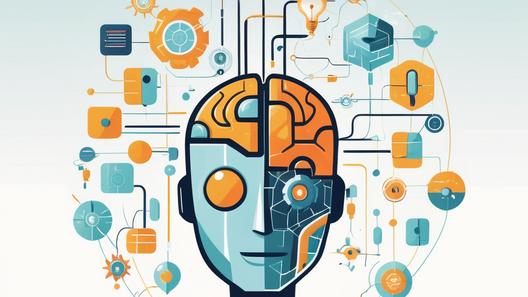






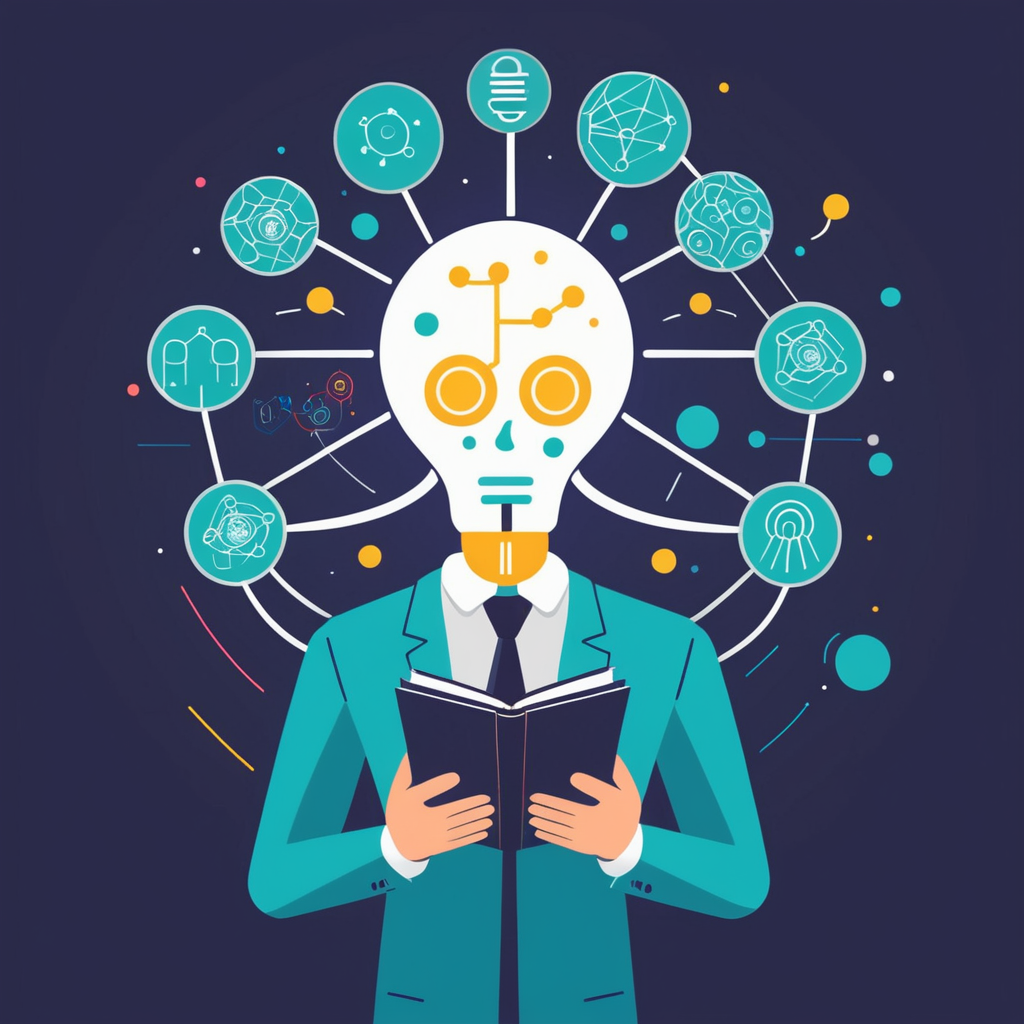
Artificial intelligence has transitioned from a specialized technical field into a pervasive force reshaping nearly every aspect of modern society, from healthcare and finance to education and governance. As AI systems increasingly influence decisions that affect billions of people daily, a fundamental question has emerged at the forefront of educational discourse: What does it mean to be AI literate, and why has this concept become so urgently important? AI literacy refers to the comprehensive set of knowledge, skills, attitudes, and dispositions that enable individuals to critically understand, evaluate, and responsibly use artificial intelligence systems and tools in an increasingly digital world. This foundational competency extends far beyond technical programming knowledge, encompassing critical thinking about AI’s capabilities and limitations, awareness of ethical implications, and the practical ability to collaborate effectively with AI-powered systems. Unlike previous technological shifts that primarily affected specialized professional communities, AI literacy has emerged as an essential capability for everyone—students preparing for uncertain futures, educators adapting their teaching practices, workers navigating changing labor markets, and citizens participating in democratic processes that increasingly involve AI-related policy decisions. The urgency of developing widespread AI literacy reflects both the transformative potential of these technologies and the significant risks they pose when deployed without adequate understanding or safeguards. This comprehensive report examines AI literacy from multiple perspectives, exploring its definition, core components, implementation approaches across educational contexts, assessment mechanisms, and the strategic importance of building AI literacy capacity at scale.
Defining AI Literacy: Multiple Perspectives and Evolving Frameworks
The definition of AI literacy has evolved considerably as researchers, educators, and policymakers have grappled with articulating what this new competency should encompass. Rather than representing a single, monolithic definition, AI literacy has emerged as a multifaceted concept understood differently across various contexts and stakeholder groups. At its most fundamental level, AI literacy can be understood as the knowledge and skills that enable humans to critically understand, evaluate, and use AI systems and tools to safely and ethically participate in an increasingly digital world. This foundational understanding recognizes that AI literacy is not primarily about building artificial intelligence systems but rather about understanding how they work and how they function within society.
The distinction between AI literacy and AI competency, while sometimes conflated, proves important for comprehensive understanding. AI literacy refers to a foundational conceptual understanding of AI that focuses on knowledge, critical thinking, and ethical awareness rather than technical skill, while AI competency represents the skillful application and optimization of that knowledge. To use an instructive analogy, AI literacy asks the question “What does this AI do?” while AI competency asks “How can I make this AI work better?” An AI-literate individual can explain what AI systems are, such as machine learning and neural networks, identify their real-world applications like recommendation engines or facial recognition, and discuss the broader societal implications including bias, privacy risks, or economic disruption. AI competency, by contrast, involves the ability to use AI tools to complete specific tasks ethically, healthily, responsibly, and productively in professional and academic contexts.
The relationship between these two concepts proves hierarchical and interdependent. AI competency fundamentally depends on AI literacy; you cannot effectively optimize or troubleshoot an AI system without first understanding its core functions and constraints. This means that literacy serves as the foundation upon which competency can be developed. An individual cannot meaningfully engage with how to make an AI system work better if they lack basic understanding of what the system does, how it processes information, or what its limitations might be. This sequential relationship has important implications for educational design and curriculum development across all learning levels.
Different institutional and organizational contexts have generated varying frameworks for understanding AI literacy. According to Digital Promise, AI literacy encompasses three modes of engagement: understand, evaluate, and use, underpinned by core values such as human judgment and centering justice, with specific practices focusing on data privacy, security, and information handling. National University’s approach emphasizes that AI literacy includes competencies such as identifying problem types that AI excels at versus problems that are more challenging for AI, thereby enabling informed decisions about when to use AI versus when to leverage human skills. The OECD framework, which has gained international prominence, structures AI literacy around four interaction domains: engaging with AI through recognizing its use and critically evaluating outputs; creating with AI through collaboration for ideation and problem-solving; managing AI through strategic delegation to enhance human work; and designing AI through understanding principles even without building AI products.
For higher education specifically, the EDUCAUSE framework defines AI Literacy in Teaching and Learning (ALTL) as involving understanding the fundamentals of how AI works, critically evaluating the application of AI tools in teaching and scholarship, maintaining vigilance in evaluating tools to protect against bias and misuse, and demonstrating commitment to ethical usage with transparency and awareness of societal impacts. This definition explicitly recognizes the particular context of academic institutions and the need to think about how AI affects both teaching and learning processes as well as research activities. The framework breaks down into four areas of concern: technical understanding of how AI works, evaluative capacity for critically assessing AI tool applications and outputs, practical ability to effectively apply and integrate AI tools, and ethical grounding to safeguard against biases and misapplication.
Core Components and Dimensions of AI Literacy
To develop effective approaches to building AI literacy, educators and researchers have increasingly identified the core components and dimensions that constitute this competency. These components operate across multiple levels and dimensions, ranging from foundational conceptual understanding to advanced ethical reasoning. Understanding these dimensions is essential for designing comprehensive curricula and assessment approaches that can meaningfully develop AI literacy across diverse populations.
Technical and Conceptual Understanding
The technical dimension of AI literacy encompasses foundational knowledge about what artificial intelligence actually is and how it functions at a basic level. Students and individuals should be able to define key terms such as “artificial intelligence,” “machine learning,” “large language models,” and “neural networks,” and recognize the benefits and limitations of AI tools. This foundational terminology provides the vocabulary necessary to participate in informed discussions about AI. Beyond simple definitions, technical understanding involves grasping how AI systems actually work at a conceptual level. Most generative AI tools use predictive modeling where text-based AI models learn patterns from large amounts of data to assign statistical meaning to words based on context, enabling them to calculate meaning by considering how words appear together and to generate plausible content based on observed patterns.
This understanding of how AI generates outputs proves crucial for recognizing why these systems sometimes produce inaccurate content. AI systems function like advanced autocomplete tools designed to predict the next word or sequence based on observed patterns, with their goal being to generate plausible content rather than verify truth, meaning any accuracy in their outputs is often coincidental. This foundational grasp of how AI systems work helps individuals avoid the mistaken belief that AI is an all-knowing, infallible force and instead recognizes it as probabilistic technology prone to errors and biases.
Technical understanding also involves recognizing the different types of AI and their varying capabilities. Students should be able to identify and explain differences between various types of AI as defined by their capabilities and computational mechanisms, understand the distinction between artificial narrow intelligence, artificial general intelligence, and artificial super intelligence, and recognize reactive machines, limited memory systems, theory of mind approaches, and self-aware systems. This categorization helps individuals understand that today’s AI systems, while powerful in specific domains, remain fundamentally limited in scope compared to human intelligence across diverse contexts.
Critical Evaluation and Analytical Capacity
Perhaps the most essential dimension of AI literacy involves developing the capacity to critically evaluate AI outputs and systems. AI literacy empowers individuals to interact with AI responsibly by questioning outputs, recognizing limitations, and making informed decisions as consumers, citizens, or professionals. This dimension extends beyond passive consumption of AI outputs to active, skeptical engagement. Users must approach AI outputs with critical thinking, recognizing that AI systems do not have the ability to think or form beliefs but rather operate algorithmically based on training data without inherent capacity for reasoning or reflection, and therefore users must evaluate AI outputs with human judgment.
Critical evaluation capacity encompasses the ability to recognize when AI systems produce hallucinations or fabricated information. AI hallucinations are inaccurate outputs generated by AI tools that appear plausible but contain fabricated or inaccurate information, emerging from AI systems without deliberate human intent to deceive, unlike traditional misinformation which emerges from human communicators. Individuals with strong AI literacy can recognize that hallucinations result from the fundamental design of language models, which predict the next most likely word based on statistical patterns in training data rather than verifying factual accuracy. The technical vulnerabilities producing hallucinations include training data containing biases, omissions, or inconsistencies; alignment trade-offs in model training; knowledge gaps in training data; and system opacity that makes hallucinations difficult to trace.
Critical evaluation also requires understanding and recognizing bias in AI systems. AI systems trained on vast datasets often incorporate the biases and stereotypes embedded in those datasets, with biases well-documented in terms of race, sex, gender, age, socioeconomic status, and ableism that undermine principles of justice and fairness and can amplify discrimination at a speed and scale far beyond traditional discriminatory practices. Individuals with AI literacy should understand that biases in AI systems can have the range of ethical implications forming the acronym IBATA: injustice, bad output/outcome, loss of autonomy, transformation of basic concepts and values, and loss of accountability.
Ethical and Responsible Engagement
The ethical dimension of AI literacy represents a critical but often underdeveloped component. AI literacy requires maintaining awareness of ethical considerations including data privacy, misinformation, bias, transparency, accountability, and the societal implications of AI deployment across different contexts. Beyond simply being aware of these issues, individuals with strong AI literacy should actively engage with ethical questions about AI development and deployment. AI-literate individuals can identify and describe different perspectives on key ethical issues surrounding AI including privacy, employment, misinformation, the singularity, ethical decision-making, diversity, bias, transparency, and accountability.
Ethical engagement with AI extends to understanding concepts of human responsibility and accountability. Member States should ensure that AI systems do not displace ultimate human responsibility and accountability, as AI technologies should be assessed against their impacts with individuals maintaining human oversight and control. This principle recognizes that as AI systems become more sophisticated, the temptation to defer decision-making entirely to machines increases. However, meaningful human oversight remains essential, particularly in high-stakes contexts like healthcare, criminal justice, and financial lending where AI decisions have profound impacts on human lives.
Students and professionals developing AI literacy should understand responsible use principles that guide ethical deployment. Teaching students to think critically about AI outputs involves encouraging skepticism where they question, verify, and analyze everything an AI tool produces, comparing AI-generated content with credible sources to prevent the spread of misinformation and promote critical thinking. This approach frames ethical engagement as an active, ongoing practice rather than a set of passive principles. Teachers can support this by demonstrating how verification tools work and reinforcing the importance of transparency, accountability, and originality in digital work.
Interdisciplinary Foundations Supporting AI Literacy
A crucial insight emerging from recent AI literacy research emphasizes that AI literacy cannot be developed in isolation from other foundational literacies. AI literacy is not merely adding a new technical skill but developing an integrated perspective that requires weaving together threads of understanding from computation, mathematics, statistics, data handling, language, visual perception, ethics, critical thinking, human cognition, and specific application domains. Gaps in any of these foundational literacies create vulnerabilities in overall AI understanding.
Mathematical and Data Literacy Foundations
Mathematics provides essential foundations for understanding how AI systems work. AI, particularly machine learning, relies heavily on mathematical frameworks where linear algebra underpins data representation and transformations in neural networks, calculus is crucial for optimization algorithms that train models like gradient descent, and probability theory is fundamental for reasoning under uncertainty and evaluating model confidence. Without mathematical literacy, the core concepts underlying machine learning remain abstract and impenetrable, limiting individuals’ ability to understand how AI systems arrive at their conclusions and why they might fail in particular contexts.
Data literacy proves equally critical since AI systems are fundamentally data-driven, and data literacy encompassing understanding data types, sources, collection methods, cleaning, manipulation, visualization, and fundamental analysis is paramount, enabling individuals to critically assess the quality of data feeding AI, understand biases inherent in datasets, interpret the results AI produces, and recognize limitations of data-driven conclusions. An AI-literate individual understands that the quality and characteristics of training data profoundly shape AI system outputs. If an AI system is trained on data that lacks diversity, reflects historical biases, or contains inaccuracies, the resulting AI outputs will inevitably reflect and potentially amplify these problems. Understanding how training examples provided in an initial dataset can affect the results of an algorithm represents a crucial element of data literacy that directly supports AI literacy.
Scientific, Computational, and Linguistic Literacy
Scientific literacy provides crucial foundations for AI literacy development. Scientific literacy, the ability to understand, evaluate, and apply scientific knowledge, directly supports AI literacy by enabling critical engagement with AI concepts like machine learning, data ethics, and algorithmic bias, both requiring evidence-based reasoning, skepticism of unverified claims, and ethical reflection. The scientific method’s emphasis on hypothesis testing, evidence evaluation, and rigorous skepticism translates directly to appropriate approaches for evaluating AI systems and their claims.
Computational literacy establishes understanding of fundamental computing concepts. Understanding fundamental computing concepts including algorithms, logic, hardware/software interaction, and complexity is essential to grasp how AI systems process information and execute tasks, demystifying the “black box” at a basic level by explaining sequential processing and decision-making structures inherent in AI models. Computational thinking supports AI literacy by developing understanding of how complex problems can be broken down into manageable components through processes of decomposition and abstraction.
Linguistic literacy has become increasingly important as natural language processing has become central to modern AI. Natural language processing is a cornerstone of modern AI including chatbots, translation, and sentiment analysis, with linguistic literacy providing understanding of syntax, semantics, pragmatics, morphology, and phonology that allows AI to parse, generate, and manipulate human language, making it crucial for understanding how large language models work, the nuances of prompt engineering, and the challenges AI faces with ambiguity, sarcasm, or cultural context. As generative AI systems that process and produce natural language become ubiquitous, understanding how language works and its complexities becomes essential for AI literacy.
Design Literacy and Visual Understanding
Design literacy increasingly aligns with AI literacy requirements. Design literacy, the ability to understand and apply design principles, aligns closely with AI literacy, both involving critical thinking, problem-solving, and evaluating choices whether in design or AI systems, with design thinking’s iterative, user-centered approach mirroring AI literacy’s focus on ethical, effective AI use and development. Recognizing design principles in AI interfaces, such as usability considerations and bias mitigation approaches, enhances overall AI literacy. Conversely, AI literacy expands design literacy by incorporating data-driven decision-making.
Visual literacy has gained prominence as AI systems increasingly generate, manipulate, and interpret visual content. Individuals need to understand that images and videos can be generated or manipulated to persuade, deceive, or evoke emotion, and examining visual clues to determine whether an image or video is real has become a frontline defense when it comes to AI, making visual literacy a civic necessity no longer optional. As AI-generated images and deepfakes become increasingly difficult to distinguish from authentic content, visual literacy supporting skepticism and critical analysis proves essential.
Implementation of AI Literacy Across Educational Levels
Recognizing that AI literacy must be developed across all age groups and educational contexts, educators and policymakers have begun implementing AI literacy initiatives at the K-12 level, in higher education, and through adult learning and workforce development programs. Each educational level requires tailored approaches appropriate to learners’ developmental stages and contexts.
K-12 AI Literacy Education and Early Exposure
Early exposure to AI concepts, even in primary education, has emerged as an important priority. Even preschool-aged children ages 3-8 can meaningfully engage with foundational AI concepts through age-appropriate, play-based learning tools including PopBots, Zhorai, and Teachable Machine, with these activities fostering inquiry skills such as creative, emotional, and collaborative skills. Rather than viewing AI education as appropriate only for advanced students, educators increasingly recognize that early childhood education represents a promising site for cultivating AI-related dispositions such as curiosity, collaboration, and digital inquiry through constructivist, experiential learning.
In primary and secondary education, AI literacy teaching has taken multiple forms. K-12 AI literacy must move beyond coding toward nurturing responsible, critical, and participatory engagement with AI systems from the earliest stages of learning, using constructivist and project-based pedagogies often mediated through intelligent agents or unplugged activities that help children interact and collaborate with AI while recognizing ethical and social implications. One prominent framework guiding this work is the AILit Framework developed jointly by the European Commission and OECD. The AILit Framework, currently in draft form and supporting primary and secondary education, defines AI literacy as a blend of knowledge, skills and attitudes enabling learners to engage with AI responsibly and effectively, organized around four practical domains including engaging with AI, creating with AI, managing AI, and designing AI, with 23 competencies supported by classroom-ready learning scenarios making the framework both aspirational and actionable.
Practical implementation in K-12 classrooms has taken diverse forms. Students can learn how machines perceive the world by discussing speech-recognition technology, sensors, and machine vision and understanding how they work, and they can consider ethical questions such as whether all states should ban facial-recognition software until it becomes more accurate or whether it could be used for some purposes but not others. Other approaches emphasize prompt engineering as a critical new literacy skill. Prompt engineering, the ability to craft precise, thoughtful inputs for AI tools to produce effective outputs, is quickly becoming an essential skill in modern education, with specificity driving output in a way that must be ingrained and practiced iteratively from early stages. Teachers have found that teaching students to write increasingly specific and well-structured prompts develops not just AI skills but also metacognitive awareness and clearer thinking more broadly.
Higher Education AI Literacy Development
Higher education institutions have begun implementing diverse approaches to AI literacy education. At the higher education level, AI literacy competencies tend to be more advanced and specialized, with learners at this stage expected to possess not only foundational understanding but also application capabilities within their discipline-specific contexts. Rather than developing a single monolithic curriculum, many universities have embedded AI-related content into existing courses across disciplines including computer science, data science, education, and health sciences, emphasizing awareness-raising activities, seminars, and interdisciplinary workshops rather than intensive programming or technical training.
The EDUCAUSE framework specifically designed for higher education outlines a comprehensive approach. The framework breaks AI literacy into four levels: Understand AI covering basic terms and concepts, Use and Apply AI where users can use tools like ChatGPT to achieve goals and know prompt engineering techniques, Analyze and Evaluate AI examining AI in broader context bringing disciplinary knowledge, and Create AI where users can engage at creator level building on open APIs or leveraging AI to develop new systems. This pyramid structure recognizes that not all learners need to reach the highest levels but that each level builds upon previous understanding. Most programming at many institutions has focused on levels one and two, building foundational understanding and practical application skills, recognizing that this remains rapidly evolving technology where significant unfamiliarity persists.
Higher education has also seen development of specialized programs. The Managing AI Systems Graduate Certificate is designed for non-technical professionals with passion for identifying and solving organizational problems, using a systems-thinking approach allowing leaders to think beyond technical considerations across the entire organization, helping managers without technical backgrounds quickly gain AI knowledge in ways specifically designed for their needs starting with AI basics through implementation considerations and ethical considerations. These specialized programs recognize that different career paths require different emphases within AI literacy frameworks.
Adult and Workforce AI Literacy Development
As AI adoption accelerates across industries, adult learning and workforce development have become critical venues for AI literacy building. AI literacy represents the technical knowledge, durable skills, and future-ready attitudes required to thrive in a world influenced by AI, enabling learners to engage, create with, manage, and design AI while critically evaluating its benefits, risks and ethical implications. The urgency of this need has intensified as organizations attempt to integrate AI into operations. According to recent research, only 10% of organizations have successfully integrated generative AI into their workflows at scale, gaining significant advantage over competitors in danger of falling behind, while AI-driven companies have strong competitive advantage in their markets and are ahead in scaling AI predictive solutions, future-proofing their business.
Workforce development frameworks emphasize practical skills relevant across diverse roles. For non-tech professionals, must-have AI skills include prompt engineering (crafting the right prompts), AI tool literacy (knowing which tools apply to one’s role), critical thinking about AI outputs, data fluency (not spreadsheets-from-hell level but understanding how data flows), and change management and adaptability as technology evolves rapidly. These skills recognize that most emerging opportunities don’t require becoming programmers but rather developing strategic understanding of how AI can be applied within specific professional contexts.
The stakes for workforce AI literacy have become exceptionally high. The Future of Jobs Report 2025 projects that nearly 40% of the skills required by the global workforce will change within five years, with the No. 1 skill employers are demanding today being AI literacy according to 2025 Human Progress Report data. Without adequate AI literacy development, workers face displacement and diminished economic prospects. AI is expected to disrupt nearly every industry, shifting the skillsets required across global labor markets, with AI’s most significant influence lying in how we access, process and apply information, fundamentally redefining education and the way we acquire knowledge.
Global Policy Initiatives and Regulatory Frameworks
The recognition of AI literacy’s critical importance has led to policy initiatives and regulatory frameworks worldwide establishing AI literacy as an educational priority. These policy developments reflect growing awareness that AI literacy cannot remain optional but must become fundamental educational competency.
European and International Policy Developments
The European Union’s approach to AI literacy has been particularly comprehensive. The European Union’s Artificial Intelligence Act, which entered into force in February 2025, represents the world’s first comprehensive regulation of AI, with one clause standing out for every business and employer: organizations must now ensure their teams are AI-literate, not just aware of tools but confident in using, evaluating, and documenting AI use responsibly. This regulatory requirement represents a watershed moment, transforming AI literacy from an educational aspiration to a legal requirement for EU organizations.
The OECD, working with the European Commission, has developed the influential AI Literacy Framework. A new AI Literacy Framework (AILit) aims to empower learners to navigate an AI-integrated world with confidence and purpose, with education systems needing to go beyond digital literacy and embrace AI literacy as a core educational priority through building foundations of competencies enabling learners to navigate AI-integrated worlds with confidence and purpose, emphasizing building competencies that empower learners to engage with AI critically, creatively and ethically. This framework represents coordinated international action recognizing AI literacy as essential across all educational systems.
United States Federal Policy
The United States has moved decisively to establish AI literacy as a national priority. President Trump signed an executive order in April 2025, Advancing Artificial Intelligence Education for American Youth, designed to promote AI literacy and proficiency among K-12 students and teachers, ensuring America’s youth gain early exposure to AI and positioning the nation to remain a global leader in this transformative technology. This federal action has significant implications, creating the White House Task Force on Artificial Intelligence Education implementing policy and coordinating federal efforts related to AI education.
The U.S. Department of Education has provided specific guidance. The U.S. Department of Education issued guidance addressing the use of formula and discretionary grant funds to support improved outcomes for learners through responsible integration of AI, with guidance emphasizing principles for responsible adoption of AI including attention to user privacy issues and importance of teaching about appropriate AI use in social media context. The Department also proposed supplemental priority on AI emphasizing key areas for expanding responsible AI education including integrating AI literacy into teaching practices to improve student outcomes, expanding AI and computer science education in K-12 schools and higher education institutions, supporting professional development for educators on teaching AI fundamentals, and using AI to personalize learning and support differentiated instruction.
Global South and Emerging Initiatives
AI literacy initiatives are not limited to wealthy nations. The UAE introduced mandatory AI education in all public schools from 2025, while Singapore, France, and Saudi Arabia are embedding AI readiness in national reskilling and digital transformation strategies. China has launched significant initiatives. China has offered AI literacy to students of all ages, with initiatives including seniors learning courses called ‘AI Empowers Elderly People’s Livelihood’ at Tsinghua University in Beijing. These global developments reflect universal recognition that AI literacy represents an essential capability for all populations.
Challenges and Barriers to AI Literacy Development
Despite growing recognition of AI literacy’s importance, significant barriers and challenges impede its widespread development and implementation. Understanding these obstacles proves essential for designing effective strategies to overcome them.
Lack of Teacher Knowledge and Professional Development
One of the most significant barriers emerges at the teacher level. A lack of teachers’ AI knowledge, skills, and confidence, combined with lack of curriculum design and lack of teaching guidelines represent critical challenges in AI literacy education. Even though most teachers and students are already using AI, support for developing AI literacy remains inadequate. Less than half of teachers (48%) have participated in any training or professional development on AI provided by their schools or districts, and less than half of students (48%) said someone at their school provided information on how to use AI for schoolwork or personal use. To make matters worse, when training is provided, it often lacks essential components. Less than a third of teachers say their training included guidance on how to use AI tools effectively (29%), what AI is and how it works (25%), and how to monitor and check AI systems (17%).
The challenge extends to higher education as well. At universities, a lack of AI literacy among educators and central office leaders represents an immediate barrier to adoption, with many district leaders overwhelmed by the flood of AI tools and conflicting narratives about their risks and benefits, limiting their use of AI to the simplest applications rather than leveraging its full potential. Many educators harbor legitimate concerns but lack frameworks to address them constructively. Without adequate AI literacy, educators concerned about privacy, bias, and job displacement often default to skepticism or outright resistance, leading some districts to ban AI tools preemptively rather than adopting them thoughtfully.
Standardization and Assessment Challenges
A critical gap involves the lack of consistent frameworks for measuring AI literacy. While definitions of artificial intelligence literacy are starting to emerge, we still lack a consistent, measurable framework to know whether someone is truly ready to use AI effectively and responsibly. This measurement challenge has significant implications. Without a way to measure AI literacy, we can’t identify who needs support, we can’t track progress, and we risk letting a new kind of unfairness take root in which some communities build real capacity with AI while others are left with shallow exposure and no feedback.
The absence of standardized assessment creates practical problems for educators and institutions. The lack of a standardized assessment for measuring AI literacy has been reported as a ubiquitous issue in AI literacy education, with assessment development representing a complex technical challenge requiring careful consideration of what meaningful proficiency actually looks like across diverse contexts. Different districts and institutions define AI literacy differently, creating uneven preparation. Without consistent measurements and standards, one district may see AI literacy as just using ChatGPT while another defines it far more broadly, leaving students unevenly ready for the next generation of jobs.
Access and Equity Concerns
The digital divide that has plagued educational equity efforts threatens to create an AI literacy gap. The digital divide disproportionately impacts students of color, low-income, and rural students, with an April 2020 Pew Research Center poll finding that nearly half of all parents with lower incomes said they lacked reliable internet connectivity at home and it was likely their children would need to complete school work on a cell phone. Without reliable internet access and devices, meaningful AI literacy development remains impossible. In 2021, a staggering 35% of low-income California households still didn’t have reliable internet access, and 38% of Black residents in the rural south lack broadband access while 43% of Black residents in Mississippi lack access to both broadband and a laptop.
Even where infrastructure exists, resources often do not. Even if underserved students have proper infrastructure for AI usage, they often do not have adequate educational resources to support AI literacy such as qualified teachers or high-quality curriculum, with discrepancies in AI usage potentially leading to expansion of achievement and opportunity gaps in education rather than closure of those gaps. The risk emerges that AI literacy could become a luxury available only to privileged populations, exacerbating existing educational inequities.
Cognitive and Pedagogical Challenges
Over-reliance on AI tools risks undermining the very cognitive and critical thinking skills that AI literacy aims to develop. Over-reliance on AI for brainstorming, recall, and analysis can erode independent reasoning and long-term knowledge retention, creating intellectual dependency that undermines learners’ confidence in autonomous thinking. Research indicates concerning trends. Studies regarding generative AI’s cognitive implications suggest that over-reliance on AI tools can lead to reduced engagement with material, potentially diminishing the critical and analytical skills necessary for academic and professional success, with 70% of teachers worried that AI weakens critical thinking and research skills.
A particular concern involves what researchers call cognitive offloading. If AI users do not apply critical thinking skills to evaluation of AI output, users might internalize AI hallucinations or AI-enabled misinformation and eventually reiterate inaccurate information. The challenge for educators involves designing AI integration approaches that develop rather than undermine critical thinking. By using AI tools to reinforce understanding of a topic, learners avoid delegating cognitive work and instead start to engage with information interactively, indicating AI’s potential to help develop critical thinking rather than hinder it.
Practical AI Literacy Skills and Competencies
Moving beyond conceptual understanding, meaningful AI literacy development requires specific practical skills and competencies that enable individuals to actually work effectively with AI systems. These skills represent the bridge between understanding and application.
Prompt Engineering as Foundational Skill
Prompt engineering, the ability to craft precise, thoughtful inputs for AI tools to produce effective outputs, is quickly becoming an essential skill in modern education representing a pedagogical shift rather than just a technical trick. Effective prompt engineering depends on understanding that specificity drives output, a core idea that must be ingrained and done so as early as possible, with iteration and practice tied to big gains, so this cannot be one-and-done lesson. Teachers have found success through structured approaches. Model and scaffold prompt construction through Tier 1 using teacher-created prompts, Tier 2 revising prompts together, Tier 3 where students generate prompts based on goals such as ‘Help me outline a DBQ essay with four body paragraphs each tied to a primary source.’
The development of prompt engineering skills also develops broader competencies. With prompt engineering and AI we have an opportunity to course correct by embedding validity assessment as a part of each AI-related endeavor, helping students develop the ability to filter actively rather than passively accept AI results without critique or question. This approach frames prompt engineering not as a narrow technical skill but as a gateway to developing critical thinking and digital fluency more broadly.

Data and Information Literacy Integration
AI literacy requires practical understanding of how data functions within AI systems. Users must learn to distinguish between technological artifacts that use and do not use AI and critically engage and understand one’s own limitations in the ability to make these distinctions, understanding when, why, and where uses of AI might be deployed without transparency or acknowledgement of AI generation. This practical data literacy enables individuals to understand AI’s inputs, processes, and limitations. Understanding that data cannot be taken at face-value and requires interpretation, with training examples provided in an initial dataset affecting algorithm results represents essential practical knowledge
AI Tool Selection and Appropriate Use
Practical AI literacy involves knowing which tools are appropriate for particular tasks. Identifying problem types that AI excels at and problems that are more challenging for AI enables informed decisions about whether to use AI and when to leverage human skills, with this reasoning extending across multiple platforms and scenarios including personal uses of AI technologies. This practical judgment represents a key distinguishing feature of AI literacy compared to mere tool familiarity. An AI-literate individual can recognize when AI might help solve a problem more effectively than other approaches and when human expertise or alternative methods represent better choices.
Assessment and Measurement of AI Literacy
Developing meaningful assessment approaches for AI literacy remains an evolving challenge, with implications for understanding whether AI literacy initiatives actually produce the intended learning outcomes. Multiple assessment approaches are emerging across different contexts.
Framework-Based Assessment Approaches
Research efforts have successfully developed validated assessment instruments for measuring AI literacy. An AI literacy assessment was successfully developed encompassing a total of 32 objective assessment items thoughtfully designed to encompass true/false statements, multiple-choice questions, and sorting inquiries, with content validity testing yielding an overall IIOC index of .920 exceeding the predefined criterion of .750, affirming appropriateness of content validity in the developed assessment. This development process involved multiple phases of expert review and validation, suggesting that meaningful measurement of AI literacy is technically feasible despite earlier challenges.
Institutional Proficiency Models
Many institutions have developed frameworks for understanding AI literacy proficiency levels. The BARNARD framework provides a structure for learning to use AI including explanations of key AI concepts and questions to consider when using AI, breaking AI literacy into four levels: Understand AI, Use and Apply AI, Analyze and Evaluate AI, and Create AI, meeting people where they are and scaffolding upon their current AI literacy level. This scaffolded approach recognizes that individuals progress through stages of understanding and application rather than suddenly becoming “AI literate.”
Perception and Reality Gaps
An important finding from assessment research involves the gap between perception and actual competency. Some 55 percent of managers believe their employees are AI-proficient, while only 43 percent of employees share that confidence, according to 2025 ETS Human Progress Report data. This gap suggests that many organizations and individuals overestimate existing AI literacy levels, creating risks where inadequate understanding guides AI adoption decisions.
Future Directions and Recommendations for AI Literacy Development
As AI continues to advance and permeate society, several strategic priorities and future directions for AI literacy development have emerged from research and practice.
Building Comprehensive, Interdisciplinary Approaches
Effective AI literacy development requires integrated approaches addressing multiple foundational literacies simultaneously. Gaps in any of the foundational literacies create vulnerabilities—misunderstanding capabilities, misinterpreting outputs, overlooking biases, or failing to grasp societal consequences. Educational systems should design curricula explicitly addressing how mathematical, data, ethical, media, computational, linguistic, visual, and domain-specific literacies interconnect and support AI literacy development. Rather than siloed instruction in each area, integrated approaches helping learners see connections prove more effective.
Developing Equitable Access and Culturally Responsive Approaches
Addressing AI literacy equity requires deliberate action at multiple levels. UNESCO calls for equitable access to AI education that reflects diverse cultural and linguistic contexts, recognizing that generic approaches will not meet all communities’ needs. Organizations like IBM have expanded SkillsBuild platforms providing free training in AI-related topics offering resources in multiple languages to reach underserved communities. However, access alone proves insufficient. Without adequate educational resources supporting AI literacy such as qualified teachers or high-quality curriculum, discrepancies in AI usage potentially lead to expansion of achievement and opportunity gaps in education.
Fostering Critical Thinking as Central Priority
AI literacy development should prioritize critical thinking as a central objective rather than treating it as secondary. Critical thinking and human judgment are keys to harnessing AI’s potential, with research finding that using AI tools to help with revision can increase brain engagement and support critical thinking development. Educational approaches should position AI as a thinking partner that challenges learners to engage more rigorously rather than as a tool that provides answers. When implemented strategically, AI can transform from a simple answer-generating tool into a sophisticated thinking partner that challenges learners to develop stronger reasoning skills.
Supporting Educators as Central to Success
Teachers represent the critical link in scaling AI literacy development. Early adopters recognize that AI adoption won’t gain traction if educators are fearful or misinformed, creating structured but flexible environments where teachers can explore AI tools without risk through safe spaces where educators test AI under clear guidelines while seeing practical benefits. District leaders have found success through multiple approaches including sharing success stories through internal communications, using superintendent-led initiatives and collaborative AI task forces including teachers, administrators, and technology leaders to foster collaboration building confidence and literacy at all levels.
Districts working effectively with AI integration have expanded technology teams to include dedicated AI or technology coaches. Many districts are expanding their technology teams to include dedicated AI or technology coaches providing on-the-ground support to educators, responding to concerns and helping integrate AI tools effectively while ensuring AI adoption aligns with district-wide priorities, positioning AI as collaborative effort between schools and district offices creating more cohesive approach to AI integration. These coaching roles prove particularly valuable for translating abstract AI concepts into practical classroom applications.
Continuous Learning and Adaptation
Recognizing AI’s rapid evolution, AI literacy development must support continuous learning. AI also will continue to advance, so building and maintaining AI literacy will require fostering a culture of lifelong learning that is rooted in community. This principle applies across all educational levels and contexts. Educational systems and organizations should create structures supporting ongoing professional development and learning communities where educators and workers can share experiences, learn from peers, and stay current with emerging tools and approaches.

Integration of Ethical Frameworks
AI literacy development should consistently integrate ethical reasoning and responsible use principles. Anchor this process in ethical integration maintaining transparency, auditing for bias, and preserving human judgment, as competency emerges when AI application becomes intentional, adaptive, and ethically embedded, turning literacy into measurable, context-aware excellence driving superior outcomes. Rather than treating ethics as an add-on topic, ethical frameworks should be woven throughout all AI literacy instruction, ensuring learners understand the profound implications of their AI use decisions.
Building Your AI Literacy for the Road Ahead
The emergence of artificial intelligence as a transformative force affecting nearly every domain of human activity has created an educational imperative to develop widespread AI literacy across all populations. AI literacy is not about turning everyone into an AI specialist but equipping individuals with knowledge and skills to understand, use, and interact with AI responsibly and effectively, enabling people to make informed decisions about AI technologies, understand their implications, and navigate the ethical considerations they present. The comprehensive analysis presented in this report demonstrates that AI literacy represents far more than technical knowledge or tool familiarity. Instead, it encompasses a rich integration of foundational literacies including mathematical, data, scientific, computational, linguistic, visual, and ethical understanding, combined with critical thinking capacities, practical skills, and responsible engagement orientations.
The frameworks and definitions emerging from international organizations, educational institutions, and research initiatives provide increasingly clear guidance about what AI literacy should encompass. The OECD framework’s emphasis on engaging with, creating with, managing, and designing AI, combined with the EDUCAUSE framework’s attention to technical, evaluative, practical, and ethical dimensions, offers robust foundations for educational design. However, significant challenges remain. Teachers lack adequate preparation and support, assessment frameworks remain incomplete, and equity concerns threaten to create new forms of educational inequality. The gap between stated importance and actual implementation remains stark, with fewer than half of teachers and students reporting they have received any training or information about AI from their educational institutions despite the ubiquity of AI use.
The urgency of this work cannot be overstated. The future workforce is already relying on AI in their education, and it is critical that businesses and public sector organizations remain top of mind for the job market of the present and the future. Students graduating without AI literacy will face significant disadvantages in labor markets where AI competency has become essential. Moreover, citizens without AI literacy will struggle to participate meaningfully in democratic processes involving AI governance and policy decisions affecting everyone.
Moving forward, progress requires coordinated action across multiple levels. Educational systems from early childhood through adult learning must integrate AI literacy intentionally and comprehensively. Teachers and educators need substantial professional development support and access to resources enabling confident instruction. Policy frameworks must establish AI literacy as a requirement while also providing the funding and resources necessary for implementation. Equity must be centered throughout AI literacy development, ensuring that privileged populations do not monopolize AI literacy while others remain excluded. Crucially, ethical considerations must be woven throughout all AI literacy instruction, ensuring learners understand not just how to use AI but how to use it responsibly in ways respecting human rights, promoting justice, and supporting human flourishing.
Artificial intelligence represents one of the most significant technological developments in human history, with potential to address critical challenges and generate immense value—but also potential to cause profound harm if deployed without adequate understanding or safeguards. By fostering AI competency, we will equip our students with foundational knowledge and skills necessary to adapt to and thrive in an increasingly digital society, with early learning and exposure to AI concepts demystifying this powerful technology while sparking curiosity and creativity and preparing students to become active and responsible participants in the workforce of the future.** The work of building widespread AI literacy represents an investment in human capacity and societal resilience that will shape outcomes for generations to come. The comprehensive frameworks, proven practices, and emerging policy initiatives documented in this report provide foundations upon which this essential educational work can be built.
Frequently Asked Questions
What is the definition of AI literacy?
AI literacy is the ability to understand artificial intelligence concepts, identify AI applications, and critically evaluate their implications. It involves comprehending how AI works, its capabilities, limitations, and ethical considerations. An AI-literate individual can interact effectively with AI systems and make informed decisions about AI’s role in society and their daily lives.
What is the difference between AI literacy and AI competency?
AI literacy focuses on understanding AI concepts, its societal impact, and ethical implications, enabling informed interaction with AI. AI competency, conversely, refers to the practical skills required to design, develop, implement, or manage AI systems. While literacy is about understanding, competency is about hands-on ability and technical proficiency in AI development or application.
Why is AI literacy considered an essential capability for everyone today?
AI literacy is essential today because AI increasingly permeates daily life, influencing information consumption, work, and decision-making. Understanding AI empowers individuals to navigate a technology-driven world, critically assess AI-generated content, protect privacy, and participate in ethical discussions. It ensures people can adapt to evolving job markets and leverage AI responsibly.