









AI infrastructure represents the integrated combination of hardware, software, networking, and storage systems specifically designed to support artificial intelligence and machine learning workloads. A well-architected AI infrastructure enables organizations to efficiently build, train, deploy, and manage machine learning models while maintaining scalability, reliability, and cost-effectiveness. As organizations increasingly move from experimental AI pilots to production-grade deployments, understanding the comprehensive nature of AI infrastructure has become essential for technical leaders, data scientists, and business decision-makers. This report examines the multifaceted components, architectural patterns, deployment strategies, and operational considerations that define modern AI infrastructure in 2026 and beyond.
The Fundamental Architecture and Layered Approach to AI Infrastructure
Understanding the Three-Layer Model
AI infrastructure operates through a well-defined three-layer architecture that separates concerns and enables modular design patterns. The model layer sits at the top, encompassing the actual artificial intelligence products and applications that end users interact with. This layer includes three distinct AI categories: General AI, which mimics the human brain’s ability to think and make decisions similar to applications like ChatGPT and DALL-E; Specific AI, which uses targeted data to generate precise results for tasks like generating ad copy or song lyrics; and Hyperlocal AI, which achieves the highest levels of accuracy and relevance for specialized domains such as scientific article writing or interior design mockups.
The infrastructure layer occupies the middle position and includes both the hardware and software components necessary to build, train, and deploy models. This layer encompasses specialized processors like GPUs and TPUs, alongside optimization and deployment tools. Cloud computing services form an integral part of this infrastructure layer, providing scalability and computational power on demand. The underlying physical infrastructure—data centers, networking equipment, and storage systems—provides the foundation upon which both the infrastructure and model layers operate. This layered approach reflects decades of software architecture evolution, allowing organizations to manage complexity through separation of concerns while maintaining tight integration between layers.
Data Management and Storage Foundations
AI infrastructure critically depends on robust data management systems that support the complete lifecycle of data from ingestion through analysis to model serving. Data storage, the collection and retention of digital information including application data, network protocols, documents, media, and user preferences, forms the bedrock of AI operations. The scale of data required for AI training is unprecedented—machine learning models require massive datasets to identify patterns and make accurate predictions, necessitating storage architectures fundamentally different from traditional enterprise systems.
Modern AI infrastructure typically employs multiple storage tiers to optimize cost and performance. Object storage serves as the most common medium for AI workloads, capable of holding massive amounts of structured and unstructured data while remaining easily scalable and cost-efficient. Block storage provides faster, more efficient access for transactional data and frequently retrieved files, making it ideal for databases and virtual machines, though at higher cost. Data lakes, centralized repositories using object storage and open formats, have become essential for AI infrastructure by processing all data types—including unstructured and semi-structured data such as images, video, audio, and documents. This multi-tier storage strategy prevents data bottlenecks that could otherwise constrain AI model training and inference operations.
Hardware Acceleration: The Computational Engine of AI Infrastructure
Graphics Processing Units and Tensor Processing Units
The choice between computational hardware fundamentally shapes AI infrastructure capabilities and economics. Graphics Processing Units, originally designed for rendering graphics, have evolved into essential components for AI workloads due to their parallel processing architecture. GPUs consist of thousands of small, efficient cores designed for parallel processing, enabling them to execute multiple tasks simultaneously—making them highly effective for matrix operations prevalent in neural network computations. A GPU’s memory bandwidth dramatically exceeds that of traditional CPUs, with GPU bandwidth reaching 2000 GBps compared to CPU bandwidth of only 90 GBps, allowing significantly faster loading of models and data into the processing unit.
Tensor Processing Units, developed by Google specifically for neural network operations, represent a different architectural philosophy. TPUs are engineered specifically for tensor operations, which are fundamental to deep learning algorithms. Their custom architecture optimized for matrix multiplication—a key operation in neural networks—enables them to excel at processing large volumes of data and executing complex neural networks efficiently, providing fast training and inference times. While TPUs may not possess as many cores as GPUs, their specialized architecture enables them to outperform GPUs in specific types of AI tasks, particularly those heavily relying on tensor operations.
The performance comparison between GPUs and TPUs reveals important trade-offs. For example, processing a batch of 128 sequences with a BERT model takes 3.8 milliseconds on a V100 GPU compared to 1.7 milliseconds on a TPU v3, demonstrating TPU superiority for specific optimized tasks. However, TPUs generally offer less flexibility than GPUs and typically carry higher hourly costs for on-demand cloud computing. Yet TPUs often deliver faster performance, which can reduce total computation time required for large-scale machine learning tasks, potentially yielding overall cost savings despite higher hourly rates. Google’s Cloud TPU v5e exemplifies modern TPU capabilities, delivering up to 2.5x more throughput performance per dollar and up to 1.7x speedup over Cloud TPU v4, with each TPU v5e chip providing up to 393 trillion int8 operations per second.
Multi-GPU and Distributed Training Infrastructure
As model complexity and dataset sizes have exploded, single-GPU training has become insufficient for many contemporary AI workloads. Modern training infrastructure often requires multiple GPUs to operate in concert, necessitating careful consideration of data movement and synchronization patterns. The fastest method for moving data between multiple GPUs on the same system typically involves the PCIe bus. For distributed training across multiple machines, the network becomes critical—the data fabric between machines must be wider than traditional server networking to avoid becoming a bottleneck.
Large-scale model training systems often employ InfiniBand technology, a high-performance interconnect standard that enables efficient data transfer between computing nodes. NVIDIA cards take advantage of GPU remote memory direct access (RDMA) to move data directly over PCIe to an InfiniBand NIC, transferring data without requiring intermediate copying to CPU memory. These specialized high-bandwidth connections remain exclusive to training clusters, separated from standard management and network interfaces. Organizations implementing distributed training must account for these architectural requirements when planning infrastructure investment. Toolkits including Distributed TensorFlow, Torch.Distributed, and Horovod facilitate distributing work among multiple machines, though optimal performance demands careful attention to network design.
Software Frameworks, MLOps, and the ML Development Lifecycle
Machine Learning Frameworks and Development Tools
The software layer of AI infrastructure provides the tools and abstractions that enable data scientists and machine learning engineers to build and deploy models efficiently. PyTorch and TensorFlow have emerged as the dominant machine learning frameworks, though they represent fundamentally different design philosophies. PyTorch employs dynamic computation graphs using “define-by-run” semantics, creating the graph on-the-fly during each model iteration. This flexibility makes PyTorch ideal for research and prototyping, particularly for tasks with variable sequence lengths or conditional operations like recurrent neural networks where the graph structure changes based on input. The dynamic approach sacrifices some optimization potential for development agility.
TensorFlow, by contrast, traditionally uses static computation graphs with “define-and-run” semantics, requiring developers to specify the entire computation graph upfront before execution. This structured approach enables more aggressive optimization techniques that can lead to faster execution and more efficient deployment in production environments. TensorFlow 2.0 introduced Eager Execution mode to provide dynamic computation, partially closing the philosophical gap between the two frameworks. For deployment and production environments, TensorFlow’s static graph approach offers advantages, particularly for large-scale machine learning projects requiring optimization and resource management. In practice, TensorFlow maintains a broader ecosystem with more extensive deployment tools, while PyTorch has rapidly gained traction in the research community and increasingly in production environments.
MLOps: Automating the Machine Learning Lifecycle
Machine Learning Operations represents a critical evolution in AI infrastructure, unifying ML application development with ML system deployment and operations. MLOps embodies an ML culture and practice that automates and standardizes processes across the entire ML lifecycle, including model development, testing, integration, release, and infrastructure management. This practice addresses a fundamental challenge in AI infrastructure: maintaining model performance and reliability throughout the model’s operational lifetime, not just during initial training.
The implementation of MLOps follows a maturity progression. Level 0 represents organizations that deploy a trained model to production without automation, typically involving manual handoffs between data scientists and operations teams. MLOps Level 1 automates the ML pipeline for continuous training by automating the complete pipeline from data ingestion through model validation. Organizations at level 1 achieve rapid ML experiment execution with significant automation, deploy training pipelines that run recurrently to serve trained models, and maintain identical pipeline implementations across development, preproduction, and production environments. This maturity level requires engineering teams to collaborate with data scientists to create modularized code components that are reusable, composable, and shareable across pipelines, along with establishing a centralized feature store for standardized feature storage, access, and definition.
MLOps Level 2 scales the approach by deploying multiple ML pipelines in production. This level requires all components of Level 1 plus an ML pipeline orchestrator and a model registry for tracking multiple models. The workflow repeats across three stages at scale: building the pipeline through iterative modeling and algorithm experimentation, deploying the pipeline through source code building and testing, and serving the pipeline as a prediction service. Continuous integration, continuous delivery, and continuous training form the operational backbone, ensuring that models remain current and continue delivering business value.
Feature Stores and Data Infrastructure
Feature stores have emerged as essential components of modern AI infrastructure, serving as “the interface between models and data”. Feature stores address a critical challenge in ML operations: the consistent and efficient management of features across development, training, and production environments. A feature store provides a centralized hub for feature data and metadata across an ML project’s lifecycle, enabling reuse and consistency. When a feature is registered in a feature store, it becomes immediately available for reuse by other models across the organization, reducing duplication of data engineering efforts and allowing new ML projects to bootstrap with curated, production-ready features.
Modern feature stores typically comprise five primary components. The transformation component runs data pipelines that convert raw data into feature values. The storage layer manages both offline stores, containing historical data for batch scoring and model training often persisted in data warehouses or data lakes, and online stores for low-latency lookup during inference, typically implemented with key-value stores like DynamoDB, Redis, or Cassandra. The serving component delivers features consistently for training and inference purposes. The monitoring component provides visibility into feature pipeline health and identifies data quality issues. The registry component serves as a central catalog of feature definitions and related metadata, enabling discovery and collaboration. This comprehensive approach ensures consistency between training and serving, promotes collaboration across teams, monitors lineage and versioning for data drifts and training skews, and seamlessly integrates with other MLOps tools.
Containerization and Orchestration: Managing Complexity at Scale
Docker and Kubernetes Fundamentals
Containerization through Docker has become foundational to modern AI infrastructure, enabling consistent deployment across diverse environments. Docker containers package applications with their dependencies into isolated units that run consistently regardless of the underlying system, addressing the classic “works on my machine” problem. For AI applications, containers enable data scientists to define their computational environment explicitly, ensuring reproducibility and simplifying deployment. Containers share the host operating system kernel, making them more lightweight and efficient than traditional virtual machines while maintaining isolation between applications.
Kubernetes has emerged as the de facto standard for orchestrating containerized AI workloads at scale. Kubernetes automates deployment, scaling, and management of containerized applications across clusters of machines, implementing self-healing capabilities that automatically restart failed containers and replace them when needed. The platform provides load balancing that distributes traffic across multiple containers, rolling updates that enable seamless application updates without downtime, and automatic scaling based on demand. For AI infrastructure, Kubernetes enables efficient resource utilization by automatically scheduling containers based on available resources and requirements, scaling GPU-intensive training workloads up or down based on demand, and managing the complex interdependencies between data pipelines, model serving, and supporting services.
When combined, Docker and Kubernetes create a powerful infrastructure pattern for AI workloads. Docker containers package the complete AI application environment, including frameworks, libraries, and model code. Kubernetes orchestrates these containers across potentially hundreds of machines, managing resource allocation, handling failures, and scaling based on computational demands. This combination enables organizations to treat AI infrastructure as a managed service, abstracting away underlying hardware complexity and enabling development teams to focus on model quality rather than infrastructure management. Container technologies integrate seamlessly into CI/CD workflows, enabling automated testing, validation, and deployment of both model code and supporting applications.
Deployment Architectures: Training, Inference, and Real-Time Serving
Distinguishing Training and Inference Infrastructure
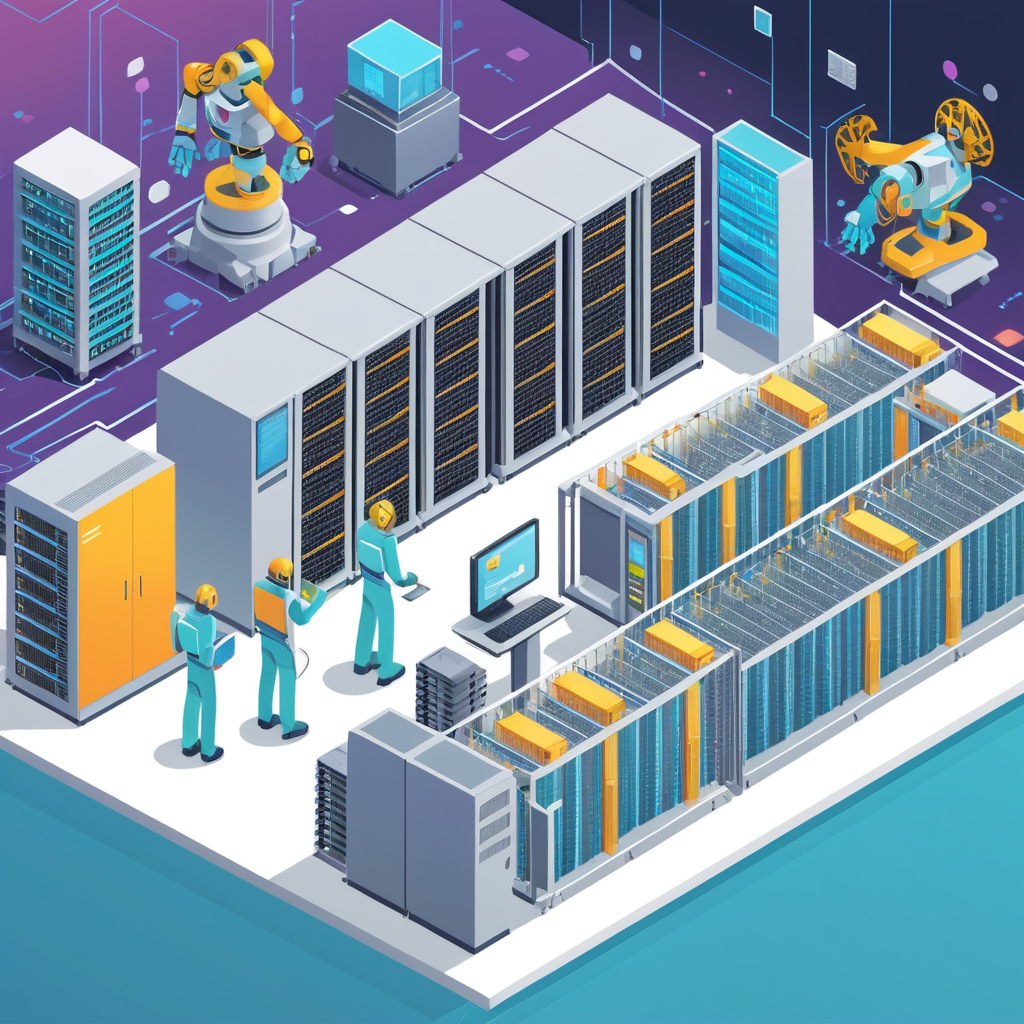
AI infrastructure must support fundamentally different workload characteristics for model training versus inference, requiring distinct architectural approaches. Training involves feeding massive datasets into models to learn patterns and relationships, with the primary goal of achieving maximum accuracy through comprehensive exposure to training data. Training infrastructure prioritizes raw computational power and data throughput, requiring as much compute capacity as budgets permit, preferably implemented through multi-core processors and GPUs. Because accurate model training requires clean, well-structured data maintained in consistent formats, training datasets typically cannot be shared with other workloads, requiring dedicated resources optimized for training rather than general-purpose compute.
Inference, by contrast, occurs when trained models produce predictions on new data, representing the operational phase where models generate business value. Inference infrastructure prioritizes performance and efficiency differently than training—emphasis shifts to minimizing latency while maintaining accuracy. The infrastructure should provide simpler hardware with less power than training clusters but with the lowest latency possible to deliver responsive user experiences. Throughput remains critical for inference, requiring high I/O bandwidth and sufficient memory to hold both model weights and input data without requiring calls back to storage systems. Unlike training, which operates batch-oriented and can tolerate latency measured in minutes, inference often requires response times measured in milliseconds for interactive applications.
The infrastructure economics differ substantially between training and inference. Training represents a largely one-time expense—once a model reaches satisfactory accuracy, retraining may be infrequent. Inference, however, is ongoing and continuous; if a model is actively in use, it constantly applies its training to new data and generates inferences, consuming significant compute resources continuously. This distinction explains why organizations often train models in centralized, GPU-rich data centers where massive computational power justifies the cost, then deploy trained models to more distributed inference infrastructure closer to users and data sources.
Real-Time Model Serving and Optimization
Real-time model serving requires specialized infrastructure optimizations to deliver predictions within latency budgets acceptable to end users and applications. Dynamic batching represents a critical optimization technique, processing multiple inference requests together to improve GPU utilization. Processing model inference requests one-by-one severely underutilizes powerful parallel GPUs, leading to wasted computation cycles and unnecessary queuing. By batching multiple requests, GPUs can process many inputs in nearly the same time as one request alone, dramatically improving utilization and accelerating individual request processing.
Advanced serving systems implement request pipelining to eliminate idle time, ensuring a request is always buffered at the inference worker. This approach enables workers to immediately process the next request upon finishing the current one, avoiding delays waiting for the controller to push a new batch. Under higher concurrency with many simultaneous clients, pipelining provides substantial improvements over simple batching. Performance benchmarks demonstrate that Snowflake’s optimized inference engine achieves up to 10x faster inference latency than legacy cloud providers for production-grade decision tree models, maintaining sub-200ms response times even with 100+ concurrent clients where competing solutions experience severe performance degradation.
The separation of CPU and GPU workloads represents another critical optimization pattern. CPU-bound operations including request handling, serialization, deserialization, and batching contrast sharply with GPU-bound model inference. Combining these distinct workload types on a single computational unit causes performance degradation and complicates optimal resource allocation. By implementing these operations natively in the control plane rather than in the inference engine running on GPUs, infrastructure can achieve superior performance while maintaining flexibility.
Network Infrastructure and Bandwidth Requirements
The Critical Role of Network Architecture in AI
AI workloads generate fundamentally different network demands than traditional applications, creating bottlenecks that have nothing to do with internet speed. Training a single large language model can require moving petabytes of data between GPU clusters, with bandwidth demands growing 330% year-over-year. Most enterprise networks were designed for north-south traffic patterns—client to server communication—rather than the east-west GPU-to-GPU communication demanded by AI training. This architectural mismatch manifests as underutilized GPUs that sit idle not from compute limitations but from data starvation, waiting on network transfers while expensive hardware remains blocked.
The scale of this challenge has grown dramatically as model sizes have expanded. Forty-two percent of organizations currently use high-performance networking including dedicated high-bandwidth links for AI workloads. InfiniBand, NVLink, or 400G/1.6T optical interconnects deliver the under-one-microsecond latency required for distributed AI infrastructure. Organizations implementing AI infrastructure should implement AI-specific load balancing, with 38 percent utilizing application delivery controllers tuned for AI traffic patterns rather than traditional request-response patterns. Rather than treating AI traffic like web applications, these controllers optimize for batch processing characteristics, recognizing that AI workloads operate fundamentally differently.
Separating AI traffic from general enterprise networks prevents AI workloads from saturating business services. This isolation can be implemented through VLANs, dedicated physical networks, or software-defined networking. The crucial aspect is preventing shared network fabric from becoming a bottleneck during peak AI operations. Many organizations adopt hybrid architectures, placing latency-sensitive inference operations on-premises for predictable performance while maintaining flexible training workloads in cloud environments where abundant bandwidth accommodates intense data movement. This strategic placement approach requires network architecture aligned to workload characteristics rather than generic one-size-fits-all approaches.
Latency Considerations for Real-Time Applications
Low latency proves crucial for AI applications requiring real-time data analysis, such as autonomous vehicles, financial trading algorithms, and instantaneous fraud detection systems. Network latency—the delay between user action and system response—becomes critical for applications where milliseconds determine business outcomes. Techniques to reduce latency include deploying edge computing strategies where data processing occurs closer to data generation sources. Ultra-fast fiber connectivity helps ensure AI applications have the speed needed to process data in milliseconds. Organizations must evaluate current bandwidth usage and anticipate future needs, considering exponential growth in data generated by AI applications.
Power and Thermal Infrastructure: The Physical Foundation
Unprecedented Power Density Requirements
Modern AI data centers face unprecedented power density challenges that traditional cooling and power distribution systems cannot accommodate. Modern AI chips consume between 700W to 1200W per processor, compared to 150W-200W for traditional server CPUs. When deployed in typical configurations with eight GPUs per server blade and ten blades per rack, a single AI rack can demand up to 80kW of sustained power. This represents a fundamental shift from traditional data center architectures designed for variable loads; AI training requires continuous 24/7 operation at maximum power consumption.
AI data center design must shift to “power-first” methodologies that size all infrastructure based on maximum sustained AI workload requirements rather than average consumption. This approach ensures adequate capacity for peak training operations while providing headroom for future growth. Understanding these power requirements informs decisions about power distribution systems, cooling infrastructure, and backup systems necessary to support continuous maximum load operation. Average rack power requirements have escalated from traditional 8-15kW to 30-80kW for AI workloads, with projections suggesting rack requirements will climb to 600kW as AI adoption intensifies.
Cooling as a Critical Infrastructure Component
Cooling represents one of the most significant infrastructure challenges for AI data centers, accounting for 35-40% of total power consumption. Traditional air-based cooling, adequate for older standard workloads, reaches its limits as racks climb to ever-increasing temperatures. Hyperscale data centers packed with power-hungry GPUs and CPUs generate heat at scales requiring advanced cooling strategies. Liquid cooling systems have emerged as essential solutions, with liquids four times more effective at carrying heat than air. Delivering coolant directly to servers can reduce energy consumption associated with cooling by up to 30% compared to air cooling.
Direct-to-chip liquid cooling represents one of the most popular cooling methods, circulating non-conductive dielectric fluid through cold plates on heat-generating equipment such as CPUs and GPUs. The cooling plates transfer heat to the liquid, which travels through a heat exchanger to cool before recycling and returning through the cycle. While immersion cooling submerges entire servers in dielectric fluids for superior heat removal, these approaches may not see widespread adoption within the next two years despite their promise. Advanced data centers increasingly implement heat capture technologies that convert waste heat into reusable resources for absorption chillers, reducing reliance on conventional air conditioning systems and electric chillers while improving overall facility efficiency.
Cloud, On-Premises, and Hybrid Deployment Strategies
Strategic Hybrid Infrastructure Approaches
The choice between cloud-based, on-premises, and hybrid AI infrastructure represents one of the most significant strategic decisions organizations face. Cloud-based AI infrastructure offers flexibility and elasticity for dynamic workloads, enabling rapid scaling without massive capital investment in hardware. Organizations can access scalable resources for running complex AI models without investing in costly on-premises infrastructure, leveraging cloud platforms’ abundant compute capacity and avoiding the burden of infrastructure management. Cloud computing forms a critical element of modern AI infrastructure, offering computational power, flexibility, and cost-effectiveness required to support cutting-edge systems.
On-premises deployments provide greater control over data security and compliance, appealing to organizations with stringent privacy requirements or data sovereignty constraints. On-premises infrastructure enables complete control over model intellectual property, training data, and inference operations, eliminating concerns about data transmission to external cloud services. Organizations can maintain consistent performance characteristics and avoid variability introduced by shared cloud resources.
Many enterprises now recognize that the optimal strategy combines both approaches in a hybrid model. Hybrid AI infrastructure allows teams to train models in the cloud where compute resources are abundant and cost-effective for large-scale operations, then perform inference or sensitive data processing on-premises. This approach gives organizations agility without sacrificing control or cost efficiency. Over 96 percent of surveyed organizations expect their AI infrastructure distribution to change over five years. More than half plan substantial expansions in physical infrastructure as on-premises workloads grow, while 43 percent still expect to increase their reliance on cloud for AI workloads. This pattern confirms that the future represents not choosing between cloud and physical infrastructure but strategically combining both.
Geographic Distribution and Data Sovereignty
A particularly striking finding in recent infrastructure planning suggests that 76 percent of organizations expect their infrastructure to expand geographically over the next five years. This geographic dispersion addresses multiple needs simultaneously: compliance with data sovereignty requirements enables organizations to store and process data within specific countries or jurisdictions, while performance optimization reduces latency for real-time AI applications like autonomous vehicles and smart city sensors. Geographic distribution allows organizations to deploy inference capabilities closer to end users and data sources, minimizing latency while ensuring compliance with local regulations.
The geographic distribution strategy reveals a distinct pattern: training tends toward centralization while inference disperses geographically. Seventy-three percent of respondents anticipate that “training will be centralized while inference will be more distributed“. This split reflects technical realities—training requires massive computational power best concentrated in large, GPU-rich data centers, while inference needs geographic proximity to minimize latency and meet local compliance requirements. This emerging architecture represents a fundamental shift from the cloud-first, centralized approaches of previous years toward a more thoughtfully distributed model.
Edge Computing and Distributed AI Deployment
Deploying AI at the Network Edge
Edge computing brings computational power closer to data sources, enabling analysis in real time while reducing latency and bandwidth usage. This approach proves particularly useful for applications requiring real-time decision-making, such as autonomous vehicles, industrial IoT, and smart cities, where processing data at the edge enhances response times and optimizes resource usage. Edge AI infrastructure, referring to the use of edge infrastructure for AI development and deployment, possesses the ability to provide substantial speed and reliability improvements, low latency for mission-critical applications, and cost-effective solutions.
The choice between CPUs and GPUs for edge deployments reflects different optimization priorities. CPUs, most commonly used in edge infrastructure deployments today, prove suitable across a multitude of use cases and compute requirements. However, CPUs may struggle with heavier workloads, especially in demanding AI applications, prompting discussions about a potential shift toward increased GPU usage. GPUs gain traction because of their ability to handle intensive workloads, particularly in applications like computer vision-driven video analytics and deep training of AI models. Yet GPUs come at higher cost compared to general-purpose CPUs, making them challenging to deploy at scale across numerous edge locations.
Survey data reveals the market remains split on edge acceleration hardware, with 43 percent believing GPUs will serve AI/ML workloads at the edge while 39 percent favor CPUs for these tasks. This apparent division reflects the nuanced reality that the choice depends on specific application requirements—applications demanding lower power consumption and versatility favor CPUs for cost-effectiveness, while applications requiring high-performance AI processing favor GPUs. Recent advances by major chipset players like Intel in producing AI-specific CPUs capable of handling high compute power at the edge have begun blurring the fundamental differences between CPU and GPU performance for certain AI workloads.
Model Optimization, Deployment, and Lifecycle Management
Techniques for Reducing Model Size and Latency
Deploying AI models efficiently requires optimization techniques that maintain performance while reducing computational requirements. Model size directly impacts deployment feasibility, inference latency, and memory requirements. Large language models can reach sizes of tens of gigabytes, making them impractical for resource-constrained environments without optimization. Quantization represents the most popular approach for reducing model size, working by reducing the precision of weights and truncating the length of digits, drastically reducing memory footprint and computational requirements.
Two primary quantization approaches serve different needs. Post-training quantization occurs after model training completes and is easier to implement, using general techniques to reduce CPU and hardware accelerator latency, processing, power, and model size with minimal accuracy degradation. Quantization-aware training occurs during the training process, creating models that downstream deployment tools can optimize into quantized models using lower precision, typically yielding better accuracy outcomes. Model pruning, the technique of removing neurons within neural networks that do not improve model performance, reduces inference times and memory usage while potentially improving accuracy by eliminating redundant parameters. However, pruning requires caution—removing too many weights or connections can result in accuracy loss, particularly for complex models.
Model compilation optimizes models for specific hardware platforms after training, and typically occurs after quantization and pruning. During compilation, models are optimized for the specific hardware platform, leading to improved performance, reduced inference latency, and decreased memory usage. Different frameworks support compilation differently—PyTorch uses Just-in-Time compilation to optimize kernels at runtime, while ONNX Runtime and Apache TVM enable cross-platform compilation.
Model Versioning and Registry Systems
Managing multiple model versions throughout the development and production lifecycle requires systematic approaches to versioning, tracking, and rollback. Model versioning addresses the fundamental challenge that machine learning models are binary files that evolve over time with improved parameters, architectures, and training data. Establishing versioning strategies early ensures consistency and enables teams to track performance differences between versions. Model registries provide centralized catalogs for storing feature definitions and maintaining single sources of truth for model artifacts, enabling discovery and collaboration.
Effective versioning captures multiple dimensions of model evolution. Dependency monitoring tracks multiple versions of datasets including training, assessment, and development sets alongside model hyperparameter variations. Version control systems enable teams to build branches for each feature, parameter, and hyperparameter they intend to update, running parallel analyses while maintaining all updates to the same model in single repositories. Rollback capabilities prove essential—when model updates break functionality, version control systems provide changelogs enabling rollback to stable versions.
Implementing automated versioning processes through CI/CD pipelines ensures reproducibility and traceability. Automation reduces human error likelihood and increases effectiveness, automatically tracking and versioning models and associated metadata to ensure reproducibility and traceability. Configuration files specifying offline and online stores, dependency specifications, and deployment environment details should be version-controlled alongside model artifacts. When combined with infrastructure-as-code practices, comprehensive versioning enables teams to reproduce exact training conditions and redeploy previous models when needed.
Governance, Compliance, and Responsible AI Infrastructure
AI Governance Frameworks and Standards
As AI adoption accelerates, governance frameworks have evolved to address the unique risks and compliance requirements of AI systems. AI governance establishes systematic frameworks for responsible AI development, deployment, and monitoring across enterprise environments. Global standards including the EU AI Act, NIST AI Risk Management Framework, and ISO 42001 drive mandatory compliance requirements for enterprise AI systems. These frameworks provide actionable guidance for identifying AI risks, implementing controls, and maintaining continuous oversight throughout the model lifecycle.
The NIST AI Risk Management Framework serves as the foundational standard for US organizations, emphasizing four core functions: Govern, which establishes policies and oversight structures; Map, which identifies AI risks and impacts; Measure, which assesses and monitors AI performance; and Manage, which implements controls and mitigation strategies. ISO 42001 establishes requirements for developing, implementing, and maintaining AI governance frameworks that align organizational objectives while managing AI-related risks. The EU AI Act introduces legally binding requirements for high-risk AI systems, including mandatory conformity assessments, risk management systems, and post-market monitoring obligations.
Cross-functional collaboration proves essential for effective AI governance. Chief Information Security Officers bear primary responsibility for AI security governance, including threat modeling, vulnerability management, and incident response procedures specific to AI systems. Chief Compliance Officers oversee regulatory alignment and policy implementation, coordinating with legal teams to interpret requirements and translate them into operational controls. Risk management functions develop new capabilities for assessing AI-specific risks including algorithmic bias, model drift, and adversarial attacks.
Model Monitoring, Drift Detection, and Operational Excellence
Model drift represents a critical operational challenge, where model performance degrades due to changes in data or relationships between input and output variables. Models rarely fail suddenly; instead, they drift gradually, affecting accuracy and trust. Predictions that previously performed well begin to miss targets, first slightly then progressively worse. Traffic shifts, data pipeline variations, and changing user behavior patterns all contribute to model degradation. Left unchecked, drift erodes accuracy and undermines stakeholder trust in AI systems.
Understanding model drift requires distinguishing between different drift types. Input or feature drift occurs when the distribution of input features shifts from what the model observed during training. Output or prediction drift manifests as shifts in model outputs, hinting at unstable decisions or miscalibrated thresholds. Not all drift necessarily hurts performance—engineers have documented instances where raw input drift proves insufficient as a signal for actionable intervention. This insight highlights the importance of tying drift signals to actual business outcomes rather than pursuing every detected statistical change.
Effective drift detection requires AI observability that maintains signals tied to business reality. Monitoring input drift and output changes in tandem, supported by practical tactics, provides more reliable signals than examining changes in isolation. For large language models, practitioners inspect traces and prompts to detect drift hidden in chain-of-thought or retrieval changes. Anchoring alerts to business outcomes through health checks provides more meaningful guidance than accuracy metrics alone. Distribution shifts can erode model robustness silently while downstream accuracy measures appear stable, requiring multi-dimensional monitoring approaches.
Cost Optimization and Financial Operations for AI
FinOps Principles Applied to AI Infrastructure
FinOps for AI brings financial discipline to cloud AI spending by aligning costs with outcomes and creating shared accountability between finance, engineering, and product teams. AI workloads are resource-heavy, fast-growing, and financially complex, making structured cost management essential. Eight essential strategies guide cost optimization: beginning with business alignment that ties each AI workload to clear business goals; cost-aware model selection choosing lightweight models appropriate for specific tasks rather than deploying maximum-capability systems; compute optimization through spot instances and auto-scaling; budgeting with real-time alerts; cost attribution by project; right-sizing infrastructure to workload requirements; governance establishing frameworks for provisioning and approval; and continuous refinement of cost-to-value metrics.
Cost-aware model selection represents a foundational optimization strategy. Not every workload requires the most powerful available model, and not every task requires training from scratch. Considering smaller open-source models requiring fewer resources, exploring transfer learning or fine-tuning on smaller subsets, and leveraging pre-trained APIs for routine tasks like text classification can reduce AI infrastructure costs by 50-90%. Training costs vary by orders of magnitude depending on architecture, data size, and hyperparameters, making thoughtful model design a primary cost optimization lever.
Compute represents the largest cost driver in AI infrastructure. Smart organizations use spot instances offering up to 90% discounts but requiring intelligent job scheduling, reserved capacity commitments for consistent workloads, and auto-scaling policies that eliminate over-provisioning during idle periods. GPU pooling across teams reduces duplication and idle time, improving utilization rates. Workload-aware orchestration tools like Kubernetes, Ray, and MosaicML enable dynamic compute management matching actual requirements rather than static over-provisioning.
Establishing Cost Visibility and Governance
Most organizations face common AI implementation challenges that compound costs: data scientists often work unaware of cost implications of their computational choices; compute clusters remain over-provisioned; limited visibility into usage versus outcomes obscures cost drivers; and friction between finance and engineering teams prevents coordinated optimization. FinOps creates a culture of shared accountability, providing teams with shared language of cost, performance, and value.
Right-sizing infrastructure ensures AI model cost management aligns tightly with workload needs rather than vanity specifications. Not all AI workloads require NVIDIA A100s or top-tier TPUs. Many training jobs run acceptably on lower-tier instances with longer training durations, batch inference can parallelize across cheaper CPUs or mixed compute types, and memory usage often optimizes through batching and gradient checkpointing. Periodic audits comparing instance usage against actual performance benchmarks identify overkill scenarios. Governance layers establish cross-functional AI FinOps task forces combining finance, engineering, and product perspectives, conduct quarterly cost reviews by workload and team, track SLA-based cost versus performance metrics, maintain centralized dashboards, and document playbooks for provisioning, approval, and scaling policies.
Emerging Technologies and Future Infrastructure Directions
Serverless AI Inference and Specialized Platforms
Serverless inference represents a transformative deployment pattern enabling organizations to serve AI models without managing underlying infrastructure. Serverless inference allows developers to run AI model predictions without managing infrastructure, with platforms automatically handling resource allocation, scaling, and maintenance. This paradigm eliminates the need for provisioning servers, managing capacity, or maintaining uptime—the cloud provider dynamically allocates computational resources as needed and charges only for actual usage.
Cost-efficiency represents a primary serverless advantage, eliminating idle GPU time costs and enabling pay-per-use pricing where organizations only pay for compute resources used during actual inference. This model proves particularly beneficial for variable or “bursty” traffic patterns where maintaining dedicated resources would waste money during low-traffic periods. Automatic scaling handles varying loads from sporadic requests to sudden traffic spikes without manual intervention. Reduced operational overhead eliminates server management and capacity planning burdens, allowing teams to focus on model development and optimization. Flexibility allows serverless inference to adapt to diverse needs, from serving single models to managing multiple models with different resource requirements.
Emerging serverless platforms increasingly offer specialized capabilities for AI workloads. SiliconFlow delivers up to 2.3× faster inference speeds and 32% lower latency compared to leading AI cloud platforms while maintaining consistent accuracy. Google Cloud Functions with Vertex AI provides TensorFlow-native serverless infrastructure with TPU acceleration for large-scale inference tasks. AWS Lambda with SageMaker integration enables seamless integration with the AWS ecosystem. These platforms represent the maturation of AI infrastructure toward managed services that abstract away operational complexity while delivering performance appropriate for production workloads.
Multimodal AI Infrastructure Requirements
The emergence of multimodal AI systems processing text, images, audio, and video simultaneously introduces new infrastructure requirements fundamentally different from text-only models. Multimodal models now perform within 5-10% of proprietary systems like GPT-4V and Gemini, transforming multimodal AI from exclusive hyperscaler capability into infrastructure organizations can deploy, fine-tune, and control. However, multimodal workloads demand different infrastructure than text-only language models—simultaneous processing of images, video, and text requires more memory, specialized batching strategies, and modified serving configurations.
Fusion strategies—how models combine visual and textual information—determine infrastructure requirements. Early fusion processes raw multimodal inputs together from the start, creating shared representations that capture fine-grained cross-modal interactions. These architectures require higher computational resources and synchronized inputs but achieve superior cross-modal understanding. Late fusion processes modalities independently before combining results at decision time, offering flexibility and fault tolerance with reduced memory pressure. Architecture patterns including adapter-based designs combining vision encoders with LLMs, native multimodal unified architectures, and Mixture-of-Experts approaches each present different infrastructure tradeoffs.
Serving infrastructure must support multimodal characteristics, with vLLM and TensorRT-LLM providing optimized inference implementations. These systems handle vision encoding, text token processing, and streaming output generation with careful memory management and batching strategies. Efficient multimodal serving requires infrastructure thoughtfully designed around the specific characteristics of vision-language models rather than adapting generic LLM infrastructure.
Completing the AI Infrastructure Picture
AI infrastructure has evolved from supporting experimental research projects into a critical enterprise system requiring strategic architectural planning, rigorous operational discipline, and continuous optimization. Organizations implementing AI at scale recognize that infrastructure decisions profoundly impact model performance, deployment speed, operational reliability, cost management, and compliance adherence. The transition from cloud-first strategies toward hybrid approaches combining cloud elasticity with on-premises control reflects hard-won understanding of the tradeoffs inherent in different deployment models.
The complexity of contemporary AI infrastructure demands cross-functional expertise spanning data engineering, machine learning operations, cloud architecture, network design, financial operations, and governance. Successful organizations establish clear governance frameworks, automate operational workflows through MLOps practices, implement comprehensive monitoring and alerting systems, and maintain disciplined cost management. The infrastructure layering approach—separating model-level concerns from infrastructure concerns from underlying physical resources—enables modular design and evolution as requirements change.
Organizations beginning AI infrastructure journeys should prioritize understanding their workload characteristics, existing constraints, and strategic objectives before selecting specific technologies. The decision between cloud, on-premises, and hybrid approaches requires careful analysis of data governance requirements, scalability targets, budget constraints, compliance obligations, and organizational expertise. Regardless of specific technology choices, principles of modularity, automation, observability, and cost discipline apply universally.
Looking forward, AI infrastructure will continue evolving toward greater specialization, geographic distribution, and integration with emerging technologies. Power and cooling challenges will persist as model sizes grow, demanding innovative infrastructure solutions. Governance and compliance frameworks will tighten as regulations evolve. Edge computing will distribute inference capabilities closer to users and data sources. Open-source models and frameworks will enable greater customization and reduced vendor lock-in. The organizations that thrive will be those that treat infrastructure not as a constraint to work around, but as a strategic asset requiring continuous investment, thoughtful governance, and principled optimization.
Frequently Asked Questions
What are the main components of AI infrastructure?
The main components of AI infrastructure include specialized hardware like GPUs and TPUs, high-performance computing systems, robust data storage solutions, advanced networking infrastructure, and a comprehensive software stack. This stack encompasses operating systems, AI frameworks (e.g., TensorFlow, PyTorch), and various development tools, all working together to support AI model training, deployment, and inference effectively.
How does the three-layer model of AI infrastructure work?
The three-layer model of AI infrastructure typically comprises a foundational layer (hardware, networking, data storage), a platform layer (AI frameworks, MLOps tools, data management), and an application layer (AI models and end-user applications). This structure provides a scalable and modular approach, enabling efficient development, training, and deployment of AI solutions from the underlying resources to the final user-facing applications.
What types of data storage are essential for AI workloads?
Essential data storage types for AI workloads include high-performance file systems (e.g., Lustre, GPFS) for processing massive datasets, scalable object storage (e.g., S3-compatible) for cost-effective long-term data lakes, and block storage for databases and persistent volumes. These solutions must provide high throughput and low latency to ensure rapid data access, crucial for accelerating AI model training and inference processes efficiently.