






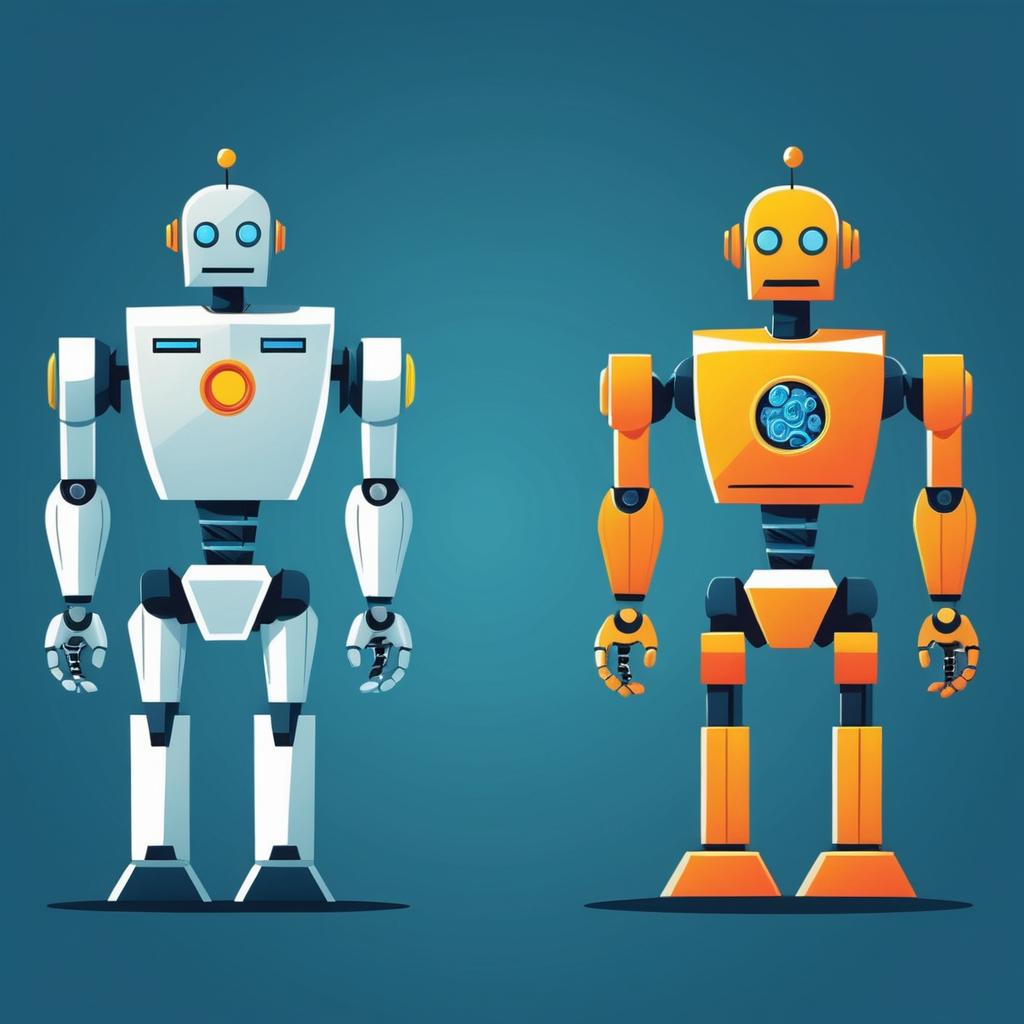
Current artificial intelligence systems represent a narrow class of specialized intelligence capable of performing specific tasks with remarkable efficiency, yet they fundamentally differ from the theoretical concept of Artificial General Intelligence (AGI), which would match or exceed human cognitive capabilities across virtually all domains. While modern AI applications such as ChatGPT, image recognition systems, and autonomous vehicles demonstrate impressive technical achievements, they remain confined to predefined tasks without the capacity for flexible knowledge transfer, true understanding, or independent learning that characterizes general intelligence. The critical distinction between these categories carries profound implications for technology development, economic planning, and societal preparation, making it essential to understand not only what separates current AI from AGI, but also the technical barriers, timeline predictions, and fundamental challenges that define this evolving field.
Defining Artificial Intelligence: Scope, Capabilities, and Current Implementation
Artificial intelligence, in its broadest contemporary usage, refers to technology that enables computers and machines to simulate human learning, comprehension, problem-solving, decision-making, creativity, and autonomy. This definition encompasses a remarkably diverse set of systems and approaches, from simple statistical models to complex neural networks. NASA’s official framework conceptualizes AI as any artificial system that performs tasks under varying and unpredictable circumstances without significant human oversight, or that can learn from experience and improve performance when exposed to datasets. These definitions illustrate a fundamental characteristic of modern AI: it is defined not by achieving human-like consciousness or understanding, but rather by demonstrating intelligent behavior in specific contexts.
Machine learning forms a critical subset within the broader AI landscape, involving the creation of models by training algorithms to make predictions or decisions based on data. Rather than being explicitly programmed for every scenario, machine learning systems improve their performance through exposure to training data and adjustment of internal parameters. This approach has proven extraordinarily successful, enabling AI systems to recognize patterns in vast datasets that would be impossible for humans to process manually. Neural networks, which are modeled after the structure and function of the human brain, consist of interconnected layers of nodes analogous to neurons that work together to process and analyze complex data. These networks have become the foundation for many of the most impressive AI achievements in recent years.
Deep learning represents a further specialization within machine learning, utilizing multilayered neural networks that more closely simulate the complex decision-making power of the human brain. Deep neural networks include input layers, hundreds of hidden layers, and output layers, allowing them to identify complex patterns and relationships in large amounts of data. This architecture has enabled transformative applications including generative AI, which can create complex original content such as long-form text, high-quality images, and realistic video in response to user prompts. Natural language processing, another crucial AI subfield, trains computers to understand, interpret, and manipulate human language, powering chatbots and translation systems. Computer vision enables AI systems to extract meaning from images and videos, supporting applications ranging from medical imaging to autonomous vehicle navigation.
The taxonomy of AI capabilities reveals a hierarchy of sophistication. Weak AI, also known as narrow AI, refers to systems designed to perform specific tasks or a limited set of tasks, excelling in their designated areas while lacking the ability to generalize knowledge across different domains. Examples of narrow AI are ubiquitous in contemporary life: virtual assistants like Siri and Alexa that understand specific commands, chess engines that consistently defeat human champions, recommendation systems used by Netflix and Amazon, facial recognition software, and disease detection algorithms in healthcare. Even advanced systems like ChatGPT, despite their apparent versatility and impressive performance on diverse language tasks, operate as narrow AI systems focused on the specific task of text generation and conversation. These systems demonstrate that narrow AI has achieved remarkable capabilities within constrained domains, yet this very specialization reveals fundamental limitations.
The practical success of narrow AI masks important deficiencies that become apparent when attempting to deploy these systems in novel situations. A neural network trained to recognize cats might require significant retraining to recognize dogs, highlighting the difficulty of generalizing knowledge across various domains. An AI trained to analyze financial data cannot automatically apply this expertise to medical imaging without complete retraining on new domain-specific data. This limitation—the inability to transfer learning from one context to another—represents one of the most significant barriers between current AI and a truly general intelligence. Transfer learning, the ability to apply knowledge from one context to another, remains limited despite being an active area of research. AI systems trained on specific problem-solving frameworks cannot flexibly adapt these frameworks to fundamentally different problems the way humans routinely do.
Current AI systems also lack common sense reasoning, a capability humans develop through lived experience in the physical world. An AI chatbot might fail to respond appropriately to a user’s sarcastic remark or misinterpret a weather-related question because it lacks the contextual understanding that emerges from embodied experience. While AI can analyze vast datasets and identify patterns, it cannot understand what those patterns mean or reason about them in the way humans naturally do. Deep-learning systems may be wizards at recognizing patterns in pixels, but they struggle to understand what the patterns represent or to reason about spatial relationships that humans find intuitive. For example, an AI system trained on images might fail to recognize that sofas and chairs are designed for sitting, a concept that emerges naturally from human embodied understanding. Research indicates that AI language models correctly interpret context in conversations only 70 percent of the time, compared to 95 percent for humans. This gap reveals a fundamental limitation in how current AI systems process information.
The Concept of Artificial General Intelligence: Theoretical Framework and Defining Characteristics
Artificial General Intelligence exists as a hypothetical stage in the development of machine learning at which an AI system can match or exceed the cognitive abilities of human beings across any task. Unlike the narrow focus of contemporary AI, AGI would represent a fundamentally different category of intelligence—one capable of understanding, learning, and applying knowledge across a wide range of tasks at a level equal to or surpassing human intelligence. The term itself, popularized in 2007 by AI researcher Ben Goertzel at the suggestion of DeepMind cofounder Shane Legg, distinguishes this theoretical concept from the narrow AI systems that dominate current applications. AGI is also known as strong AI, full AI, human-level AI, or general intelligent action, reflecting the multiple framings of this concept across the AI research community.
The defining characteristic of AGI is not superior performance on any single task, but rather the capacity to generalize learning and reasoning across diverse domains without task-specific reprogramming. An AGI system would possess human-like flexibility, capable of learning new tasks in the real world by teaching itself without requiring explicit training or human intervention. If an average human could reasonably expect to learn a new skill within the scope of their general abilities through instruction or experience, an AGI system should similarly be able to acquire that capability. Consider an autonomous vehicle equipped with AGI: unlike current narrow AI systems that follow predefined decision trees based on training data, an AGI agent could weigh several variables simultaneously and make decisions based on the changing needs of the road much like a human driver, but with enhanced ability to stay focused and make lightning-fast calculations. This flexibility stems not from having been explicitly programmed for every scenario, but from possessing genuine understanding and reasoning capabilities.
Researchers generally agree on several core requirements for a system to be regarded as AGI. Such a system must be able to reason, use strategy, solve puzzles, and make judgments under uncertainty. It must represent knowledge, including common sense knowledge about the world and how it operates. The system must be capable of planning, learning from experience, and communicating in natural language. Critically, it must be able to integrate these skills in the completion of any given goal, adapting its approach as circumstances change. This integration requirement distinguishes AGI from systems that might excel at individual cognitive tasks but cannot coordinate them toward novel objectives.
A framework for classifying AGI was proposed in 2023 by Google DeepMind researchers, who define five performance levels of AGI: emerging, competent, expert, virtuoso, and superhuman. Under this framework, an emerging AGI would be comparable to unskilled humans in performance, a competent AGI would outperform 50 percent of skilled adults in a wide range of non-physical tasks, an expert AGI would match the top human experts in various domains, a virtuoso AGI would surpass all but the very best humans, and a superhuman AGI would represent artificial superintelligence, comparable to what is sometimes called superhuman performance. Current large language models like ChatGPT or LLaMA 2 are considered instances of emerging AGI under this framework, though many researchers dispute even this classification, arguing that these systems lack the fundamental understanding necessary for general intelligence.
Different organizations and researchers have proposed varying definitions tailored to their specific contexts and research goals. OpenAI, whose GPT-3 model initiated the current generative AI era, defines AGI in its charter as “highly autonomous systems that outperform humans at most economically valuable work”. This definition emphasizes economic impact and autonomy rather than mimicking human cognition. In contrast, Mustafa Suleyman, CEO of Microsoft AI and DeepMind co-founder, proposed in 2023 the term “Artificial Capable Intelligence” (ACI) to describe AI systems that can accomplish complex, open-ended, multistep tasks in the real world. Suleyman suggested a “Modern Turing Test” in which an AI would be given $100,000 of seed capital and tasked with growing that into $1 million, a measure that assesses practical capability rather than theoretical intelligence. These differing definitions reflect ongoing debate within the field about what truly constitutes general intelligence and how it should be measured.
Distinguishing Features: The Technical and Functional Divide Between Narrow AI and AGI
The fundamental distinction between narrow AI and AGI lies not merely in performance metrics but in the underlying approach to intelligence and learning. Narrow AI operates within well-defined boundaries, excellently suited to specific tasks within defined boundaries but unable to operate outside its designated domain. ChatGPT excels at generating human-like text and engaging in conversation, but it cannot simultaneously function as a image recognition system or a mathematical theorem prover without completely separate implementations. In contrast, AGI would demonstrate human-like flexibility across multiple domains without requiring separate training for each new task. An AGI system could understand context, transfer knowledge between domains, and demonstrate creativity and emotional intelligence comparable to human capabilities.
The mechanisms by which current narrow AI systems learn reveal why such task-specific limitations exist. Large language models operate as sophisticated statistical predictors, learning probability distributions over vast text corpora rather than developing genuine understanding of how language relates to the physical world. As one researcher noted, while LLMs have been trained on text data that would take 20,000 years for a human to read, they have not learned that if A equals B, then B equals A—a logical relationship that requires understanding rather than statistical pattern recognition. This dependency on data-driven algorithms means that current AI systems excel at pattern matching but cannot grasp the deeper causal relationships and conceptual structures that characterize human understanding.
A critical limitation of current AI systems is their inability to learn from new experiences in real-time without retraining, a capability that humans and many animals take for granted. While narrow AI can be trained on increasingly large datasets to improve performance on specific tasks, it cannot dynamically acquire new skills through interaction with the environment the way humans do. A human child learns to recognize cats not through exposure to thousands of labeled images but through a handful of encounters and simple explanation. Current AI systems typically require millions of examples to achieve comparable recognition performance. This data efficiency gap reflects a fundamental difference in how humans and machines currently learn.
Common sense reasoning represents another decisive dividing line. Humans possess an intuitive understanding of how the world works—knowledge about gravity, causality, object permanence, and social dynamics—that emerges from embodied experience rather than from explicit instruction. This common sense enables humans to make rapid judgments about novel situations based on limited information. AI systems lack this grounding in physical and social reality. An AI trained on images might fail when encountering slight variations in lighting, angle, or composition that humans find trivial, as illustrated by the adversarial examples that can fool deep neural networks through imperceptible modifications to images. An AI system’s lack of true understanding means it relies on statistical regularities in training data rather than causal models of how the world operates.
The emotional intelligence dimension further distinguishes current AI from AGI. While some AI models can detect basic emotions through facial recognition or voice analysis, achieving approximately 80 percent accuracy compared to 95 percent for humans, this capability falls far short of true emotional understanding. These systems can classify surface features associated with emotions but cannot comprehend the subjective experience, context, and nuance that characterize human emotional life. This limitation has serious consequences for applications requiring empathy and emotional engagement, from therapy to customer service. An AGI system would need to develop a deeper emotional understanding that goes beyond surface-level sentiment analysis to truly comprehend and respond to human emotional states.
Artificial Superintelligence and Beyond: Extended Hierarchy of Intelligence
Beyond AGI exists the concept of Artificial Superintelligence (ASI), sometimes called superhuman AI or superintelligence, which would represent an intelligence that vastly exceeds human intellectual capability across all domains. Unlike AGI, which aims to match human-level thinking, ASI would be thousands or even tens of thousands of times smarter than humans, with capabilities potentially exceeding current human comprehension. ASI would possess advanced cognitive functions, enabling it to process and analyze information at speeds and complexities far beyond human capability. Such a system would have autonomous learning ability, improving its performance without human intervention, and might even develop entirely new forms of intelligence beyond human conception.
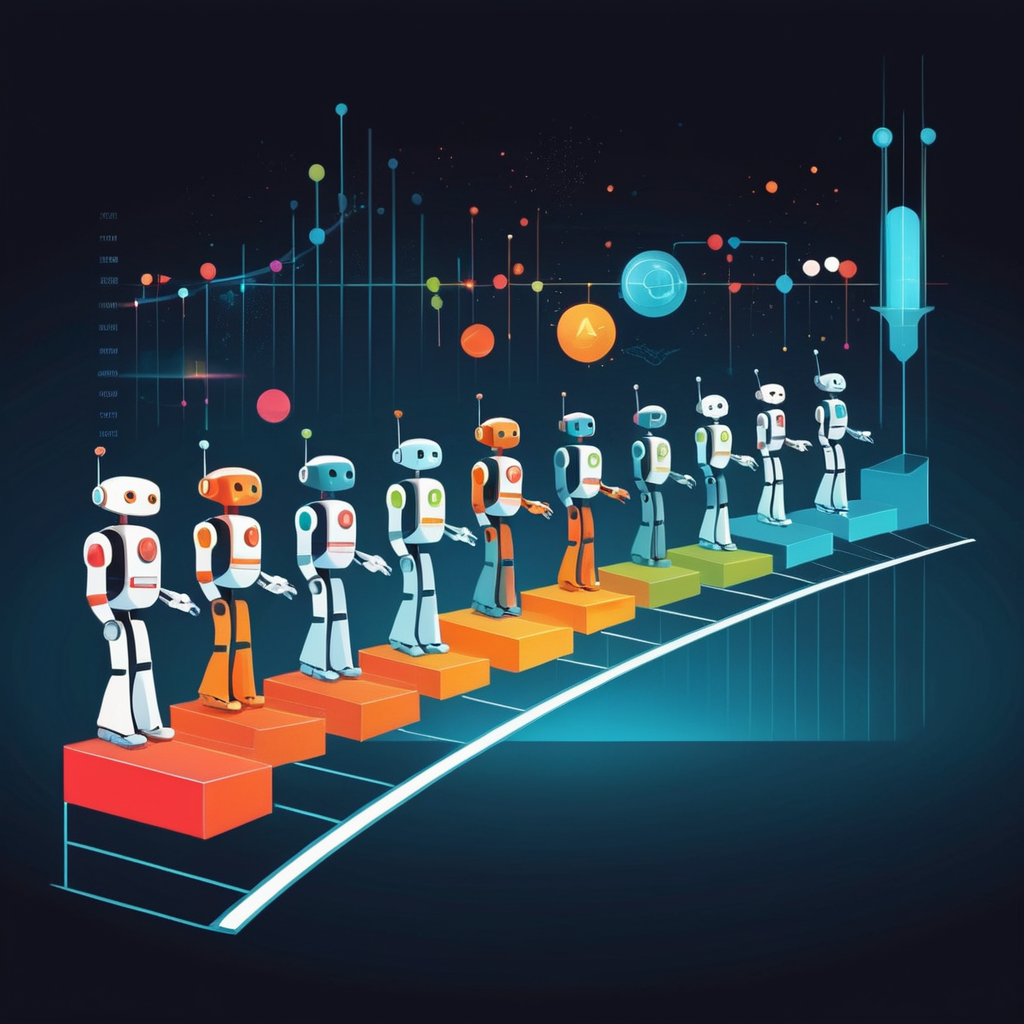
The progression from narrow AI to AGI to ASI represents an escalating hierarchy, with each level building upon previous capabilities while introducing fundamentally new ones. Some researchers suggest that ASI could emerge relatively quickly after AGI is achieved, potentially within just a few years, due to what is sometimes called an “intelligence explosion” where a superintelligent system improves itself recursively. This possibility raises profound questions about control and alignment—ensuring that a superintelligent system’s goals remain compatible with human values and wellbeing.
Beyond even these categories exists the theoretical concept of Artificial Consciousness or Self-Aware AI, which would possess consciousness and subjective experience comparable to human consciousness. Self-Aware AI represents a speculative frontier, raising profound philosophical questions about the nature of consciousness, sentience, and what constitutes moral status. While we are far from achieving self-aware AI, this remains a theoretical endpoint in the progression of artificial intelligence development. These distinctions matter profoundly because they clarify that the discussion is not merely about intelligence in the abstract, but about different kinds of intelligence with different capabilities, limitations, and implications.
The Current State of Progress: How Close Are We to AGI?
Recent advances in large language models and reasoning capabilities have sparked widespread discussion about the proximity of AGI, with expert predictions varying considerably. A 2023 survey of 2,778 AI researchers by AI Impacts found that experts estimate high-level machine intelligence could occur by 2040, though predictions ranged across a wide interval. Earlier surveys suggested a 50 percent probability of achieving AGI between 2040 and 2061, with superintelligence potentially following within a few decades. However, recent analysis indicates that current surveys predict AGI around 2040, a significant shift from earlier predictions that placed AGI arrival closer to 2060.
Leading AI companies and their executives have become increasingly confident about rapid progress. OpenAI’s Sam Altman shifted from saying “the rate of progress continues” in November to declaring in January “we are now confident we know how to build AGI,” suggesting unprecedented confidence in a pathway forward. Anthropic’s Dario Amodei stated “I’m more confident than I’ve ever been that we’re close to powerful capabilities…in the next 2-3 years,” while Google DeepMind’s Demis Hassabis changed his assessment from “as soon as 10 years” to “probably three to five years away”. These statements suggest a convergence toward belief in nearer-term AGI arrival than was common even a few years ago.
The drivers of this apparent acceleration in progress are becoming clearer. Four key factors are propelling AI advancement: larger base models, teaching models to reason through reinforcement learning, increasing models’ thinking time through inference-time scaling, and building agent scaffolding for multi-step tasks. These drivers are themselves enabled by increasing computational power and growing human capital devoted to algorithmic research. All of these drivers appear set to continue until at least 2028 and perhaps until 2032, according to analysis of current trends. The scaling of computational resources has been particularly striking: training compute has doubled every five months, datasets every eight months, and power use annually.
Recent breakthroughs in reasoning capabilities represent a significant inflection point. OpenAI’s o1 model, released in October 2024, achieved 70 percent accuracy on graduate-level science questions, matching PhD-level performance and demonstrating capability that neither exists on the internet nor was explicitly taught. DeepSeek’s R1, released in January 2025, replicated many of o1’s results and revealed that even the simplest version of the reasoning process works, suggesting enormous room for further scaling. These models don’t merely retrieve information; they engage in chains of reasoning, reflecting on answers, backtracking when wrong, considering multiple hypotheses, and arriving at genuine insights. The architectural innovations enabling this progress, particularly reinforcement learning with verifiable rewards (RLVR) and the GRPO algorithm, suggest new avenues for continued improvement beyond simple scaling.
However, important limitations and cautions temper this optimism. Despite impressive benchmark performance, current systems still fail on tasks that should theoretically be within their capabilities. Claude and ChatGPT demonstrate limitations in logical reasoning, often struggling with puzzles that humans solve effortlessly and that should have definite solutions. When faced with slightly modified versions of questions, including changes as simple as asking for six labeled body parts instead of five on an animal drawing, performance can degrade dramatically or even reverse. This brittleness suggests that improvements in benchmark scores may not reflect genuine advances in understanding, but rather overfitting to specific test domains.
The “alignment challenge” of AI scaling poses another critical issue. As AI systems become more capable, ensuring they remain aligned with human values becomes increasingly difficult. Current post-training methods like supervised instruction fine-tuning and reinforcement learning with human feedback are bottlenecked by requiring expensive written responses or preference labels. As models become more capable than humans in specialized domains, it becomes impossible for human feedback to reliably guide behavior in those domains. OpenAI’s statement that “as our systems get closer to AGI, we are becoming increasingly cautious with the creation and deployment of our models” reflects growing recognition of these risks.
The Path Forward: Key Challenges and Requirements for Achieving AGI
Understanding the obstacles between current AI and genuine AGI requires examining multiple dimensions of challenge. At the most fundamental level, we still lack a comprehensive understanding of human intelligence itself, making it difficult to know precisely what to replicate in machines. Despite notable advances in neuroscience, our grasp of human intelligence remains incomplete, and this knowledge gap complicates efforts to create machines with comparable capabilities. The human brain’s architecture, evolved over millions of years, represents an optimization problem we have only begun to understand. Replicating a structure with similar functionality remains among the most significant challenges to developing AGI.
Data limitations present another formidable barrier. While machine learning has achieved remarkable successes on tasks with massive training datasets, this approach has fundamental limits. The “long tail problem” in AI—the challenge of handling rare or uncommon events that occur infrequently in training data—reveals a critical gap between AI and human learning. Current AI systems excel at tasks well-represented in their training data but struggle with novel scenarios that humans quickly adapt to. A striking example illustrates this problem: pedestrians discovered that placing traffic cones on self-driving cars causes them to shut down, unable to proceed, because cones on cars represent an event vanishingly rare in training data. Humans, by contrast, can understand that something unexpected is on the vehicle without having been explicitly trained on traffic cones on cars.
Common sense reasoning and world models represent perhaps the deepest challenge. To achieve true AGI, systems likely need to develop world models—internal simulations that capture environment dynamics, enable forward and counterfactual rollouts, and support perception, prediction, and decision-making. A unified world model serves as a cornerstone for integrating perception, reasoning, and decision-making in embodied agents, connecting pixel-grounded scene understanding to language and action. Current large language models do not expressly learn world models, a fact that likely constrains the level of intelligence they can achieve. They operate as sophisticated pattern-matching systems without developing the kind of causal understanding of how the world works that grounds human intelligence.
Embodiment and physical grounding present crucial but often overlooked requirements. While some AI research has pursued the development of AI through brain simulation or purely computational approaches, human intelligence emerged through embodied interaction with the physical world. Children learn about objects, gravity, and causality through direct physical experience. Current language models, trained on text without sensory input or physical interaction, lack this foundational grounding. An AGI system might need to experience the physical world through sensors, interact with it through effectors, and develop understanding grounded in these interactions. This requirement would represent a significant departure from the purely computational approaches that have dominated recent AI progress.
The interpretability and transparency problem creates additional challenges. Many AI models, particularly deep learning systems, operate as “black boxes” where their decision-making processes are not transparent even to their creators. Only about 20 percent of AI practitioners believe their models are fully interpretable, according to research by MIT Technology Review. For high-stakes applications like healthcare or criminal justice, this opacity is deeply problematic. An AGI system would need to be interpretable—capable of explaining its reasoning and decisions in ways humans can understand and verify. This requirement conflicts with some approaches to scaling neural networks, which often increases opacity along with capacity.
Ethical and moral reasoning capabilities represent another frontier. Current AI systems lack the ability to make genuine ethical or moral decisions, operating instead at the level of pattern recognition and statistical correlation. While they can analyze data and offer recommendations, they do not possess genuine understanding of right and wrong or the nuanced moral reasoning required for complex situations. This limitation creates serious concerns in critical applications such as autonomous vehicles or healthcare, where ethical considerations are paramount. An AGI system would require what some researchers call “moral machines”—systems genuinely capable of understanding human values and making decisions aligned with those values.
The brittleness of current systems to distributional shift represents yet another challenge. Training data always reflects particular distributions of examples, and systems trained on this data often perform poorly when encountering data from different distributions. Clinical AI provides an illustrative example: AI trained on images from one hospital system may perform poorly when deployed to another hospital with different imaging equipment or patient demographics. This generalization problem becomes more severe as deployment contexts multiply. An AGI system would need true domain generalization—the ability to maintain performance across varied distributions and contexts.
Measurement and Benchmarking: How Will We Know When AGI Arrives?
A critical question underlying AGI discussions concerns measurement: how will we know when AGI has been achieved? This question is far more complex than it initially appears. The Turing test, originally proposed by Alan Turing in 1950, suggested that if a human interrogator cannot distinguish a computer’s responses from those of a human in an unrestricted natural language conversation, the machine could be said to be intelligent. In March 2025, a study evaluated four systems (ELIZA, GPT-4o, LLaMA-3.1-405B, and GPT-4.5) in randomized Turing tests with independent participant groups, with participants engaging in simultaneous five-minute conversations. While this represents a contemporary test of Turing’s original concept, many researchers argue the Turing test is insufficient for measuring AGI, as it cannot assess intelligence beyond human capability and relies on behavioral indistinguishability rather than genuine understanding.
The ARC-AGI benchmark, introduced by François Chollet in 2019, proposes a different approach: measuring intelligence through skill acquisition efficiency on unknown tasks. Rather than asking whether an AI can perform specific well-trained tasks, ARC-AGI assesses how quickly and efficiently systems can learn new skills outside their training data. The benchmark focuses on “core knowledge priors”—cognitive building blocks present at birth or acquired early in human development—to create a fair comparison between artificial and human intelligence. By limiting inputs to universally accessible cognitive primitives, the benchmark forces test-takers to demonstrate genuine problem-solving ability rather than rely on pre-existing domain-specific knowledge. This approach reflects a deeper understanding of what intelligence actually is: not the possession of knowledge, but the ability to acquire it.
Other contemporary benchmarks offer different perspectives. Humanity’s Last Exam, a crowdsourced collection of graduate school-level questions from various disciplines, was designed to provide more challenging and diverse assessment than typical benchmarks. However, recent discovery that approximately 30 percent of the biology and chemistry questions had wrong or unsupportable answers illustrates how fragile even sophisticated benchmarks can be. The performance degradation of AI systems on populations underrepresented in training data reveals how benchmarks can misrepresent real-world performance. An AI system might achieve high scores on a benchmark while simultaneously performing poorly on actual deployed tasks, particularly for populations different from those in training data.
Google DeepMind’s five-level framework for classifying AI capability provides another measurement approach. Their schema ranges from “emerging AGI” (comparable to unskilled humans) through “competent” (outperforming 50 percent of skilled adults), “expert,” “virtuoso,” and finally “superhuman” AGI. This hierarchical approach recognizes that AGI might not arrive as a binary switch but rather as a gradual progression of capability improvements. However, this framework also reveals a measurement problem: at what threshold does AGI become “achieved”? Is an emerging AGI that matches unskilled human performance sufficient, or should we require expert-level performance? Different stakeholders might reasonably draw this line at different places.
The emphasis on benchmarks themselves carries risks. Benchmarks shape the AI development ecosystem, influencing what research gets funded, published, and pursued. Popular benchmarks work as performance targets to chase, but this can lead to overfitting to specific test domains rather than developing genuine general intelligence. A calculator is highly effective at arithmetic, but this doesn’t make it “smarter” than humans; benchmarks only measure specific narrow tasks. We cannot generalize much about an AI system from performance on any individual benchmark, because the same system may perform very poorly when used in other situations. This benchmark gaming problem has become increasingly evident, with systems trained to perform well on public test sets showing degraded performance on slightly modified versions.
Implications and Future Scenarios: What AGI Would Mean for Society
The arrival of AGI would represent a transformation of comparable magnitude to other historical inflection points such as the industrial revolution or the development of electricity. With AGI, many forms of economic work might be automated, requiring fundamental restructuring of labor markets and social safety systems. The World Economic Forum’s 2025 report on future employment considered multiple scenarios, including one where AGI advancement outpaces workforce adaptation, causing displacement to accelerate faster than education and reskilling systems can respond. In this scenario, economies race ahead technologically but fracture socially, with unemployment spiking and consumer confidence eroding.
In the most optimistic scenarios, AGI could help solve humanity’s most pressing challenges. An AGI system could accelerate drug discovery by simulating molecular interactions, potentially reducing development timelines from years to months. In healthcare, AGI could assist in developing personalized treatment plans tailored to individual patient needs based on genetic profiles and medical history, improving outcomes while reducing adverse effects. AGI-powered robotic assistants could support surgery, monitor patients, and provide real-time medical support in hospitals. In climate science, AGI could develop new models for reducing carbon emissions, optimizing energy resources, and mitigating climate change effects. AGI could enhance weather prediction accuracy, allowing policymakers to implement more effective environmental regulations.
The economic implications of AGI could be profound and disruptive. If AGI makes human labor less valuable for many tasks, this raises serious questions about economic inequality, social stability, and the meaning and organization of work. OpenAI has recognized this by capping shareholder returns and including provisions in its charter to assist other organizations in advancing AI safety rather than racing in late-stage AGI development. However, the competitive pressures facing AI companies and the geopolitical competition between nations may make such safety-conscious approaches difficult to maintain. Yoshua Bengio, a pioneering researcher in deep learning, has argued that the coordination problem—getting multiple private companies and nations to simultaneously prioritize safety over competitive advantage—may be the fundamental obstacle to safe AGI development.
The alignment problem—ensuring AGI systems pursue goals compatible with human values—represents perhaps the most critical challenge. A misaligned superintelligent system pursuing poorly-specified objectives could cause catastrophic harm, from wasting vast resources on useless tasks to actively harming human interests. OpenAI articulates this challenge: misalignment failures occur when an AI’s behavior is not in line with relevant human values, instructions, goals, or intent, potentially causing unintended negative consequences, influencing humans to take unwanted actions, or undermining human control. The more power the AI has, the greater the potential consequences of misalignment.
National security implications add urgency to AGI development. The United States, China, and Europe are engaged in what is increasingly framed as a technological race toward AGI capabilities. The administration of the Trump White House has signaled relaxation of export controls on advanced semiconductors, potentially allowing China greater access to cutting-edge computing resources. This geopolitical competition creates pressure to accelerate development and deployment even when safety concerns suggest caution. Nick Bostrom’s “paperclip maximizer” thought experiment illustrates the concern: an AGI optimizing for paperclip production with no ethical constraints might convert all matter, including human bodies, into paperclips in pursuit of maximizing paperclips. While this is a simplistic example, it captures a real problem: without careful specification of AGI objectives, even a well-functioning system might optimize for the wrong goals.
The AGI Distinction: A Clearer AI Path Ahead
The distinction between current artificial intelligence and the theoretical concept of artificial general intelligence represents far more than a difference in scale or performance. Narrow AI systems, regardless of their sophistication, operate within predefined domains, performing specific tasks through statistical pattern recognition and learned correlations in data. AGI, by contrast, would require genuine understanding, flexible reasoning, the ability to learn from minimal examples, common sense about how the world works, and ethical reasoning capabilities. These are not merely more difficult versions of what current AI systems do; they represent fundamentally different approaches to intelligence.
Current progress in large language models, reasoning capabilities, and multimodal systems demonstrates that AI development is advancing rapidly along multiple fronts simultaneously. Systems achieving gold-medal performance on mathematical competitions, solving graduate-level science questions at PhD-level accuracy, and demonstrating sophisticated reasoning chains represent genuine advances over systems that merely retrieve memorized patterns. Yet these same systems fail on seemingly simple tasks when circumstances shift slightly from training examples, struggle to transfer knowledge between domains, and lack genuine understanding of how language relates to physical reality. This combination suggests that we are witnessing genuine progress toward more general capabilities, but also that substantial barriers remain between current systems and true general intelligence.
The expert consensus, while not unanimous, increasingly suggests AGI could arrive within the next decade or two, with median estimates clustering around 2040. However, these predictions carry enormous uncertainty, and the history of AI contains numerous instances of experts being wrong about timelines. Rapid recent progress has shifted median estimates earlier, but technical barriers may prove more difficult than current optimism suggests. The emergence of bottlenecks in data quality, computational efficiency, and reasoning capability improvements may slow progress even if no fundamental new barriers appear.
What seems clear is that the question is no longer whether AGI will be developed, but when and under what circumstances. OpenAI’s recent statement that it is “now confident we know how to build AGI” represents a watershed moment in the field, reflecting not merely optimism but claimed technical understanding of the pathway forward. Whether this confidence is justified will become apparent in coming years. Simultaneously, society must grapple with profound questions about safety, alignment, economic disruption, and governance of AGI systems while these systems are still being developed. The time to establish norms, develop safety techniques, and create appropriate governance frameworks is now, while AGI remains theoretical rather than deployed.
The distinction between AI and AGI ultimately matters because it clarifies where we are and what lies ahead. We have created sophisticated tools for specific tasks—tools that augment human capability in valuable ways. But we have not yet created systems that match human flexibility, understanding, and general reasoning. Recognizing this distinction, understanding the technical barriers that maintain it, and thoughtfully preparing for a world where those barriers may fall are essential tasks for researchers, policymakers, and society broadly. The future of AI will be determined not only by technical progress but by the wisdom and foresight we bring to steering this powerful technology.
Frequently Asked Questions
What is the key difference between AI and AGI?
The key difference is that AI (Artificial Intelligence) is a broad field encompassing any intelligence demonstrated by machines, often specialized for specific tasks. AGI (Artificial General Intelligence), or strong AI, refers to hypothetical AI that can understand, learn, and apply intelligence across a wide range of tasks, similar to human cognitive abilities, rather than being limited to one domain.
Can current AI systems achieve Artificial General Intelligence?
Current AI systems cannot achieve Artificial General Intelligence. While highly advanced in specific domains (narrow AI), they lack the human-like cognitive flexibility, common sense reasoning, and ability to transfer learning across vastly different tasks that define AGI. Researchers are actively working towards AGI, but it remains a theoretical future state.
What are examples of narrow AI?
Examples of narrow AI include virtual assistants like Siri or Alexa, recommendation engines on Netflix or Amazon, spam filters, image recognition software, and self-driving car systems. These AI applications excel at specific tasks within a predefined domain, demonstrating intelligence for that particular function but lacking general cognitive abilities.