







Optimizing your sales process starts with leveraging the right ai sales agent tools to book more meetings. These intelligent platforms automate the entire appointment-setting workflow, from initial lead qualification to final confirmation, ensuring greater efficiency and faster response times. This post dives into specific AI tools designed to streamline your sales calendar, secure more qualified appointments, and empower your team to focus on closing deals.
The Evolution and Current State of AI-Powered Meeting Booking Solutions
The meeting booking automation space has matured significantly from its origins as basic calendar-sharing tools to become a cornerstone component of comprehensive sales technology stacks. The fundamental premise driving this evolution is straightforward yet powerful: sales teams waste enormous amounts of time on administrative work that artificial intelligence can now handle more efficiently than humans. Research consistently shows that sales representatives spend approximately 64% of their day on non-selling tasks, with scheduling and follow-ups representing substantial portions of this administrative burden. When this administrative overhead is combined with slow response times to inbound leads, the result is predictable—prospects move on to competitors who engage them more quickly, opportunities slip through the cracks, and pipeline generation stalls.
The current generation of AI meeting booking tools operates on three core principles that differentiate them from their predecessors. First, they employ genuine artificial intelligence rather than rules-based automation, meaning these systems can adapt to changing circumstances, handle edge cases, and make intelligent decisions about trade-offs in real time rather than simply following predetermined logic sequences. Second, they integrate deeply with existing sales technology ecosystems, pulling context from customer relationship management systems, email threads, Slack conversations, and engagement data to make informed decisions about scheduling and routing. Third, they operate as autonomous agents that take action on behalf of sales teams rather than merely suggesting options, reducing the cognitive load and manual intervention required from sales professionals.
The market expansion of these tools reflects strong organizational demand driven by measurable business outcomes. Organizations implementing AI meeting booking solutions report lead-to-booking conversion rates ranging from 15-52% depending on implementation specifics and tool selection. Smith.ai, a company providing virtual receptionist services, demonstrated a 26% increase in website bookings and a 20% improvement in sales meetings held after implementing Calendly Routing, while also achieving a remarkable 360% increase in partner calls by more effectively directing qualified leads to the appropriate sales teams. These metrics underscore the significant revenue impact that properly implemented meeting booking automation can deliver.
Core Categories of AI Meeting Booking Solutions
Conversational AI and Chatbot-Based Appointment Setting
One primary category of AI meeting booking tools leverages conversational artificial intelligence to engage prospects through natural language interactions. These systems are designed to handle two-way conversations that feel human-like while efficiently qualifying prospects and securing meeting commitments. Unlike rigid chatbots that follow predetermined response trees, these conversational AI agents understand intent, handle clarification requests, and adjust their approach based on the prospect’s communication style and expressed needs.
Exceed.ai exemplifies this category, operating as a conversational AI platform that engages leads through email, chat, and SMS channels. The system automatically asks qualification questions, evaluates prospect fit against company criteria, and schedules meetings directly into sales representatives’ calendars. By conducting these interactions asynchronously across multiple channels, Exceed.ai ensures that prospects receive immediate engagement regardless of time zone or availability, while sales teams benefit from pre-qualified, appointment-ready leads. The platform integrates bidirectionally with CRM systems like HubSpot and Salesforce, ensuring that meeting commitments automatically populate sales calendars and trigger appropriate follow-up workflows.
Conversica represents another sophisticated approach within this category, providing a Revenue Digital Assistant that handles email outreach, lead qualification, and meeting scheduling throughout the full lead lifecycle. The system uses AI to engage unresponsive leads, qualify hot prospects, and coordinate meeting times between prospects and sales representatives, significantly reducing the manual effort required to nurture large lead pipelines. Importantly, Conversica can send personalized scheduling links that connect with individual sales representatives’ calendars, creating a seamless experience where prospects can directly book time with the specific rep they’ve been communicating with.
Email and Calendar Integration Meeting Booking
A second major category focuses specifically on email-based meeting coordination through tools designed to work natively within existing email and calendar workflows. These solutions recognize that many sales professionals live in their email clients and calendar applications, making it inefficient to require them to switch contexts to a separate meeting booking interface.
Clara exemplifies this category as an AI scheduling assistant currently in beta that functions as a carbon copy recipient on email threads. When a sales professional writes “Clara can help find a time” and includes Clara’s email address, the AI agent takes over the entire coordination process—proposing meeting times based on both parties’ availability, following up until a meeting is confirmed, and handling nuanced instructions like rescheduling full days when plans change. This approach reduces the manual back-and-forth that traditionally characterizes meeting coordination, transforming what might normally require five to ten email exchanges into an automated process managed by intelligent AI.
Chili Piper’s Instant Booker represents another sophisticated solution within this category, allowing sales professionals to suggest specific meeting times directly within Gmail or Outlook emails. When activated, Instant Booker displays potential meeting times that recipients can select with a single click, and recipients can also view the full calendar to find alternative times if none of the suggested options work. The system supports both one-on-one meetings and group meetings with multiple attendees, making complex scheduling scenarios dramatically simpler. Importantly, Chili Piper includes intelligent features like rescheduling links within meeting invitations and the ability to reassign meetings to different team members, significantly reducing the friction that emerges when circumstances change.
Autonomous Voice AI Appointment Setters
A rapidly growing category of meeting booking solutions leverages voice-based artificial intelligence to handle phone call-based meeting scheduling, particularly valuable for businesses where voice remains a primary communication channel. These systems automate the entire phone-based appointment setting process, from answering incoming calls through confirming meeting times and sending reminders.
Synthflow’s approach to voice AI for appointment booking demonstrates this category’s capabilities and potential. Their system handles full appointment booking workflows through natural voice conversations, allowing customers to call and schedule meetings through a human-like interaction that feels fundamentally different from traditional automated phone systems. The platform includes intelligent availability checking that integrates with Google Calendar, real-time meeting confirmation, and automated reminder systems that reduce no-show rates. According to Synthflow’s case studies, organizations implementing voice-based AI appointment booking achieve significant operational improvements, including 60% increases in scheduling efficiency, 30% reductions in no-show rates, and 2.5x improvements in booked qualified appointments.
ServiceAgent represents another approach within this category, specifically designed for service-based businesses and trained on over a billion industry conversations to understand context and nuances specific to home services, healthcare, and similar industries. The system prioritizes capturing every incoming call with real-time booking directly into the business’s calendar, freeing team members from the administrative burden of answering phones while ensuring zero calls go to voicemail. Importantly, these voice AI systems can integrate with existing CRM and calendar systems, ensuring that all booking interactions automatically populate the appropriate systems without requiring duplicate data entry.
Standalone Meeting Scheduling Platforms with AI Enhancement
A fourth category encompasses dedicated meeting scheduling platforms that have evolved to incorporate AI capabilities that enhance the core booking experience. These tools began as simple calendar synchronization solutions but have evolved to include intelligent features that optimize scheduling, predict optimal meeting times, and integrate with broader sales workflows.
Calendly stands as the dominant platform in this category, serving over 100,000 organizations including 86% of Fortune 500 companies. While known for its straightforward scheduling link approach, Calendly has evolved to include sophisticated features like Calendly Routing, which automatically qualifies leads and routes them to appropriate sales representatives based on predefined criteria including industry, company size, and sales team availability. Through round-robin distribution, Calendly ensures that leads are evenly distributed across available team members, preventing situations where certain reps become bottlenecked while others remain underutilized. The platform’s routing capabilities have proven particularly effective for demand generation teams, with one customer achieving 70% form-to-demo conversion rates through intelligent routing that connects prospects with the right sales representative immediately rather than requiring manual follow-up.
Pipedrive’s scheduling solution demonstrates how traditional CRM platforms have integrated sophisticated meeting booking capabilities into their broader product offerings. The system allows sales professionals to set their availability, create templates for different meeting types, and share booking pages that automatically sync with their calendars while remaining connected to their pipeline data. Pipedrive’s scheduler automatically links booked meetings to deals and contacts, ensuring that scheduling data flows seamlessly into the sales process rather than existing in an isolated tool. The platform also integrates meeting scheduling with workflow automation, enabling organizations to trigger email campaigns, task assignments, or multi-channel outreach based on meeting bookings.
HubSpot’s meetings scheduler represents another sophisticated approach within this category, providing AI-powered capabilities that go beyond simple scheduling to include automated meeting preparation and follow-up. The system automatically handles prep work by surfacing relevant prospect information, generates follow-up messages after meetings conclude, and logs all interactions directly to the CRM, giving sales representatives back hours each week while maintaining complete visibility into every prospect interaction.
Intelligent Lead Routing and Qualification for Meeting Scheduling
AI-Powered Lead Routing Systems
The challenge of efficiently directing leads to the most appropriate sales representative represents a critical optimization point that significantly impacts meeting conversion rates. Leading organizations have implemented sophisticated AI-powered lead routing systems that make intelligent routing decisions based on multiple factors including sales representative availability, expertise, territory assignment, historical performance, and lead characteristics.
Default’s routing platform represents a sophisticated approach to this challenge, automating lead and account routing workflows while providing visibility into the routing logic that determined each lead’s journey. The system uses AI fuzzy matching to handle edge cases like misspelled domains, ensuring that leads meant for existing customers reach the correct sales representative even when manual matching might fail. Default can route leads based on real-time enrichment data without requiring technical API configuration, making it accessible to revenue operations teams that lack deep technical expertise. Importantly, the system integrates with both Salesforce and HubSpot simultaneously, a capability few platforms offer, enabling organizations using multiple CRM systems to maintain unified routing logic.
Qualified’s Piper Meetings system uses artificial intelligence and CRM data to automatically determine which leads qualify for immediate meeting booking opportunities versus which should be placed in a sales queue for later follow-up. The system evaluates visitor data against ideal customer profile criteria, considering factors like company size, industry, recent activity, and whether the organization already maintains relationships with the visiting prospect. This intelligent qualification prevents tire-kickers and low-intent prospects from consuming sales representatives’ valuable time while ensuring that high-value opportunities receive immediate attention.
Contextual Meeting Recommendations and Optimization
Beyond simple routing, advanced AI meeting booking systems employ sophisticated algorithms to recommend optimal meeting times based on historical success patterns, prospect characteristics, and sales representative availability. Motion exemplifies this approach, adapting to changing circumstances in real-time by automatically recalculating schedule optimization when meetings run longer than expected or unexpected events occur. Rather than requiring sales professionals to manually rearrange their schedules, Motion adjusts other activities accordingly, maintaining schedule integrity while minimizing disruption.
Reclaim represents another approach to intelligent meeting optimization, working with existing calendar applications to add meeting buffers, optimize meeting placement to minimize context switching, and prevent calendar overload. The system considers working hours, meeting length requirements, and individual preferences like “no meetings after 4 p.m.” to suggest optimal meeting times that minimize disruption to focused work blocks. Analytics provided by these systems help sales teams understand their meeting loads, identify patterns where excessive scheduling creates bottlenecks, and make strategic adjustments to improve overall productivity.
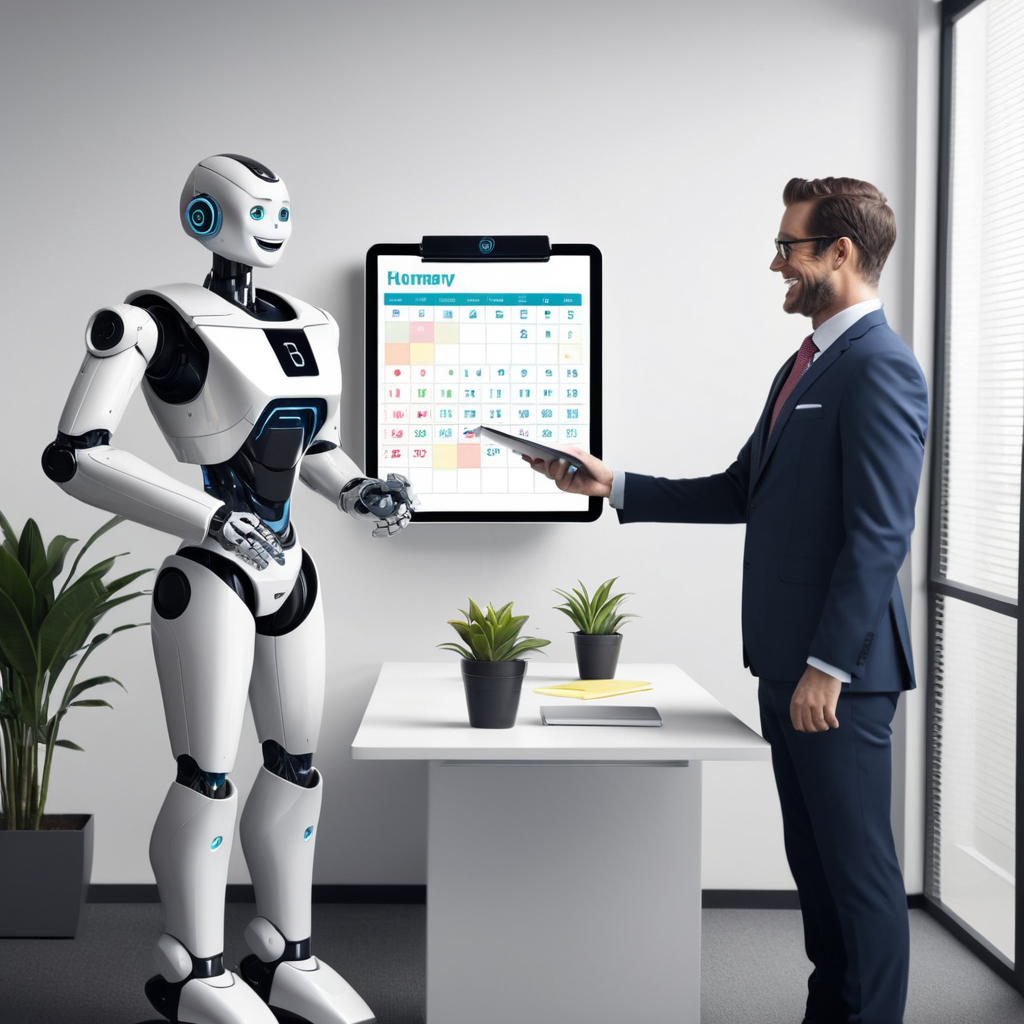
AI Sales Agents and the Meeting Booking Workflow
Comprehensive AI Agent Platforms with Meeting Booking Capabilities
Leading revenue orchestration platforms now position meeting booking within a broader context of AI-powered sales workflows that span from initial prospect identification through deal closure and customer expansion. These platforms recognize that meeting booking represents just one component of a more comprehensive sales process automation opportunity.
Lindy operates as an autonomous scheduling agent that coordinates meeting scheduling through email, Slack, or workflow integration, going well beyond calendar sharing to manage ongoing communication about scheduling and adjust meetings when circumstances change. The system reads context from email threads and conversation history to understand scheduling constraints, personal preferences, and specific requirements, then autonomously identifies suitable meeting times, contacts participants, and secures confirmations without human intervention. Importantly, Lindy can manage the full lifecycle of meeting coordination, including follow-up sequences to unresponsive participants, rescheduling when conflicts arise, and ensuring that meetings actually occur at the scheduled times.
Outreach positions meeting scheduling within its broader AI Revenue Workflow Platform that connects conversation intelligence, deal management, and revenue forecasting into a unified system. The platform recognizes that intelligent meeting booking requires understanding where prospects stand in the buying journey, what objections or questions they hold, and what follow-up actions will most effectively move opportunities forward. Outreach integrates meeting scheduling automation with broader sales engagement workflows, ensuring that meeting confirmations automatically trigger appropriate follow-up campaigns and that meeting content is recorded and analyzed to improve future interactions.
Salesloft similarly positions meeting scheduling within a comprehensive revenue orchestration platform that includes conversation intelligence, cadence automation, forecasting, and coaching capabilities. The platform’s approach recognizes that effective meeting booking requires seamless integration with outbound prospecting cadences, ensuring that when prospects express interest and agree to meet, the system automatically confirms the meeting, logs it to the CRM, and triggers appropriate follow-up workflows. Salesloft’s meeting scheduler integrates with sales professionals’ outbound communications, allowing recipients to book time directly from email invitations without needing to navigate to a separate scheduling link.
Specialized AI Agents for Specific Meeting Booking Scenarios
Beyond platform-wide meeting booking capabilities, specialized AI agents have emerged to handle specific meeting booking scenarios with particular sophistication. These purpose-built agents recognize that different meeting types and prospect situations benefit from tailored approaches rather than one-size-fits-all solutions.
Gong, now merged with Clari to form a “Revenue AI powerhouse,” provides conversation intelligence that analyzes sales calls to surface coaching opportunities and identify deal risks that might impact upcoming meetings. By understanding what conversations reveal about prospect sentiment and deal health, Gong-powered systems can recommend whether certain meetings should proceed, be rescheduled for better timing, or require additional preparation.
Rembre’s Copilot provides real-time support during sales interactions by recommending products based on customer behavior and identifying trends that suggest optimal timing for follow-up meetings. By surfacing these insights at the moment of customer interaction, rather than after the fact, sales professionals can immediately book follow-up meetings when prospects demonstrate highest engagement.
Advanced Capabilities and Differentiating Features
Multi-Channel Appointment Setting and Omnichannel Coordination
Sophisticated AI meeting booking tools have expanded beyond email and calendar integration to operate across multiple communication channels, recognizing that prospects interact with organizations through diverse channels including WhatsApp, SMS, website chat, LinkedIn, and traditional phone. This multi-channel approach ensures that organizations can engage prospects where they already communicate rather than forcing them into a specific channel.
Setter AI demonstrates this multi-channel capability through WhatsApp and SMS appointment setting that achieves industry-leading 15-52% lead-to-booking conversion rates. The system connects WhatsApp Business directly with Calendly, allowing prospects to receive appointment suggestions through familiar messaging channels and confirm meetings without leaving the platform they’re already using. Importantly, Setter AI accomplishes this while responding to leads within ten seconds of initial inquiry, a critical timeframe that research suggests significantly impacts conversion probability.
Exceeded.ai operates across email, website chat, and SMS, ensuring that organizations can meet prospects at their point of engagement. The platform’s multi-channel approach recognizes that different prospects have different communication preferences, and forcing communication into a single channel creates friction that reduces conversion likelihood.
Compliance, Security, and Data Protection
As meeting booking automation handles increasingly sensitive information including prospect details, meeting confirmations, and calendar access, compliance and security have become critical differentiating capabilities. Leading platforms have implemented enterprise-grade security measures including SOC 2 Type II compliance, HIPAA support for healthcare organizations, and GDPR/CCPA compliance for organizations operating in regulated markets.
Conduit’s approach to compliance demonstrates the sophistication now expected in enterprise meeting booking systems, with the platform supporting HIPAA-regulated workflows while implementing end-to-end encryption, role-based access controls, and audit logging to maintain security and compliance across all AI-powered support and sales operations.
Real-Time Analytics and Performance Monitoring
Advanced meeting booking systems provide sophisticated analytics that help organizations understand conversion patterns, identify bottlenecks, and optimize their processes based on actual performance data. Rather than operating as black-box automation, these systems expose visibility into how meetings are being booked, which routing rules prove most effective, and where prospects tend to drop off.
Smith.ai’s implementation of Calendly Routing demonstrates the analytical sophistication now available, allowing teams to track metrics like MQL-to-demo conversion rates, show rates for initial consultations, and the number of meetings booked from different sources. By analyzing these metrics, Smith.ai identified that their previous manual routing process was losing qualified leads and discovered that automated routing dramatically improved outcomes. The company ultimately achieved 104% year-over-year meeting growth and saved 10-12 hours monthly on manual scheduling administration.
Meeting Booking Integration with Broader Sales Operations
Connection to Sales Engagement Platforms
Effective meeting booking automation integrates seamlessly with broader sales engagement platforms that manage prospecting, outreach sequencing, and follow-up workflows. This integration ensures that meeting bookings trigger appropriate next actions, that booking information flows into customer relationship management systems, and that sales professionals receive immediate notification when critical meetings are scheduled.
Reply.io’s integration of meeting scheduling with its broader sales engagement platform demonstrates this approach, allowing sales professionals to eliminate scheduling headaches by automating meeting booking through AI that learns from engagement patterns. When prospects respond to outreach campaigns indicating interest in meeting, Reply.io’s system can automatically propose times and book meetings on behalf of sales professionals, compressing the time between initial interest and actual conversation.
Lemlist similarly integrates meeting booking with multi-channel outreach campaigns, recognizing that cold email sequences work best when they create immediate booking opportunities rather than requiring prospects to initiate separate scheduling conversations. By embedding booking capabilities within cold outreach messages, lemlist helps organizations maintain conversion momentum rather than losing prospects during multi-message sequences.

CRM Integration and Data Synchronization
The degree to which meeting booking systems integrate with customer relationship management platforms significantly impacts their utility and adoption. Leading solutions ensure that meetings scheduled through AI booking systems automatically populate CRM systems, that relevant prospect information flows from the CRM into booking interfaces, and that all booking activity remains visible to appropriate team members.
Cirrus Insight demonstrates sophisticated CRM integration, syncing every email, calendar event, and meeting to Salesforce automatically while using AI to prepare for meetings and analyze engagement patterns. This automatic synchronization eliminates manual data entry, ensures that sales managers have accurate visibility into team activity, and enables CRM-based workflows to trigger based on meeting bookings. The platform’s approach recognizes that sales professionals strongly prefer tools that don’t require duplicate data entry—a common complaint about solutions that operate separately from sales professionals’ primary tools.
Emerging Trends and Evolution in Meeting Booking Automation
Voice AI and Conversational Interfaces
Voice-based artificial intelligence represents an emerging frontier in meeting booking automation, particularly valuable for organizations where phone conversations remain a primary sales channel. Unlike chatbot and email-based approaches, voice AI can engage prospects through natural conversations that feel fundamentally different from automated systems, reducing prospect friction and increasing meeting confirmation likelihood.
This evolution addresses a significant market opportunity, as many prospects continue to prefer phone conversations for initial conversations, particularly in industries like professional services, healthcare, and financial services. Voice AI systems that can understand natural speech patterns, handle interruptions gracefully, manage complex scheduling scenarios through conversation, and transfer to human representatives when necessary represent a more natural interaction than text-based alternatives.
Integration of Buyer Intelligence and Intent Data
Advanced meeting booking systems increasingly incorporate buyer intelligence and intent data to determine optimal timing for meeting requests and to personalize meeting proposals based on prospect circumstances. Rather than treating all prospects identically, these systems recognize that a prospect actively researching competitive solutions represents a different booking opportunity than someone casually exploring options.
ZoomInfo Copilot exemplifies this integration, applying AI to buyer intent signals and real-time data to surface which prospects represent optimal meeting opportunities at specific moments. The system identifies buying signals including job changes, funding rounds, and hiring activity that correlate with heightened buying intent, then automatically recommends optimal timing for outreach and meeting requests. This intelligence-driven approach helps sales teams focus their efforts on prospects most likely to engage rather than attempting to book meetings with all prospects uniformly.
Autonomous Agents Operating Across Full Sales Cycles
The trajectory of AI meeting booking evolution points toward autonomous agents that manage full segments of the sales process rather than just scheduling components. These broader agents would handle prospect identification, qualification, initial engagement, meeting scheduling, meeting follow-up, and deal progression with minimal human intervention for routine interactions.
Lindy’s positioning as an autonomous agent that can handle support, outreach, and automation across email, Slack, and workflow contexts represents this trend, as the tool manages not just meeting scheduling but the full context around meeting coordination including ongoing communication, rescheduling, and follow-up. As these systems mature, the distinction between “meeting booking tools” and “broader sales automation platforms” will likely blur, with meeting scheduling becoming just one component of comprehensive autonomous sales workflows.
Selecting and Implementing Meeting Booking Solutions
Evaluation Criteria for Organizational Selection
Organizations evaluating AI meeting booking solutions should consider multiple factors beyond surface-level features when determining which platform best serves their specific needs. The evaluation framework should encompass real AI behavior that adapts to changing circumstances rather than simply applying fixed rules, calendar intelligence that understands time zones and working hours without constant manual correction, effective meeting coordination that reduces back-and-forth across multiple participants, and reliable execution that consistently delivers committed functionality.
Integration requirements represent another critical evaluation dimension, as poorly integrated solutions create duplicate work for sales professionals who must manage information in multiple systems. Solutions that integrate deeply with existing CRM systems, email clients, and calendar applications, and that operate as native components within these systems rather than requiring constant context switching, prove significantly more likely to achieve high adoption rates.
Support and implementation quality represent additional factors that organizations often underestimate but that significantly impact success. Solutions with responsive customer service, clear implementation timelines, and training resources that help teams adopt the platform effectively tend to deliver substantially better outcomes than technically superior but poorly supported solutions.
Pricing Models and Scalability Considerations
Meeting booking solutions employ diverse pricing models ranging from freemium offerings that support individual users with limited features, through per-user subscriptions that scale with team size, to enterprise pricing based on volume and usage. Organizations should evaluate whether the pricing model aligns with their growth trajectory, as per-user models often prove expensive for large teams while freemium models limit functionality for growing organizations.
The choice between best-of-breed solutions that excel at meeting booking specifically versus broader platform approaches that integrate meeting booking with other sales functions represents a strategic consideration that should align with organizational appetite for managing multiple tools versus maintaining a more unified technology stack.
Your Strategic Edge: AI for Unrivaled Meeting Generation
The emergence of sophisticated AI sales agent tools for meeting booking represents a fundamental transformation in how sales organizations operate. These solutions have moved beyond simple calendar synchronization to become intelligent systems that understand prospect context, manage complex multi-person scheduling, integrate with broader sales workflows, and deliver measurable improvements in pipeline velocity, conversion rates, and sales team productivity.
The practical impact is substantial and documented across diverse organizations. Sales teams are responding to leads in ten seconds rather than hours, achieving lead-to-booking conversion rates between 15-52% depending on implementation specifics, reducing administrative time by 10-12 hours monthly, and recovering previously lost qualified leads through automated follow-up workflows. For organizations implementing these solutions effectively, the result is predictable: more pipeline generated from similar lead volumes, faster sales cycles, improved prospect experience, and sales teams able to focus on relationship building and deal management rather than administrative busywork.
The continued evolution of these solutions points toward increasingly autonomous systems that manage broader segments of the sales process with minimal human intervention. Voice AI capabilities are expanding the channel diversity through which organizations can offer meeting booking, buyer intelligence integration is improving timing and targeting precision, and platform consolidation is creating unified systems where meeting booking integrates seamlessly with prospecting, engagement, deal management, and forecasting.
For sales organizations seeking competitive advantage through efficiency, responsiveness, and pipeline velocity, implementing appropriate AI meeting booking solutions represents one of the highest-impact investments available. The technology has matured to the point where effective solutions are accessible to organizations of all sizes, from solo professionals to large enterprises. The primary challenge is no longer whether these solutions work—the evidence clearly demonstrates they do—but rather selecting the right solution for specific organizational needs and committing to thorough implementation that drives adoption and maximizes value realization across the sales team.
Frequently Asked Questions
What are the core principles of modern AI meeting booking tools?
Core principles of modern AI meeting booking tools include automated outreach, intelligent lead qualification, and seamless calendar integration. These tools leverage natural language processing to understand prospect interactions and dynamically schedule meetings based on availability. Their goal is to streamline the sales development process, reduce manual effort, and ensure timely follow-ups, ultimately boosting efficiency and conversion rates for sales teams.
How do conversational AI tools like Exceed.ai automate meeting scheduling?
Conversational AI tools like Exceed.ai automate meeting scheduling by engaging prospects through personalized email or chat dialogues. They qualify leads based on set criteria, answer common questions, and then proactively suggest meeting times by accessing sales reps’ synced calendars. Upon agreement, the AI automatically sends calendar invitations, maintaining continuous engagement to nurture leads until they are ready to book.
What measurable business outcomes can AI meeting booking solutions deliver?
AI meeting booking solutions can deliver measurable business outcomes such as increased meeting booked rates through better lead qualification, reduced sales cycle times due to accelerated follow-ups, and improved sales development representative (SDR) productivity. They also contribute to higher meeting show-up rates via automated reminders and provide valuable data insights for optimizing sales processes and lead nurturing strategies.