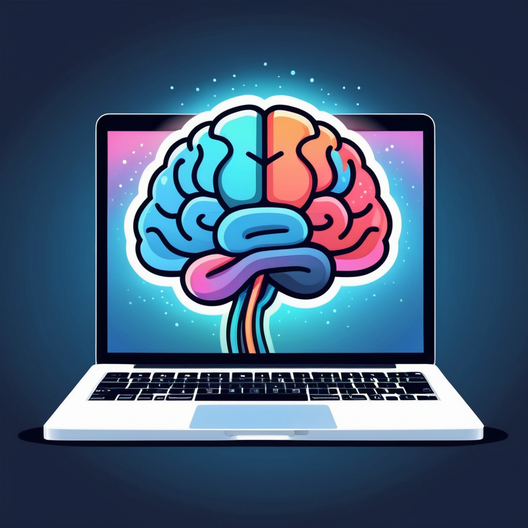




Quantum AI represents a transformative convergence of two of the most powerful computational paradigms of our time—quantum computing and artificial intelligence—that promises to revolutionize problem-solving across industries. This emerging field merges the exponential processing power of quantum systems, which leverage superposition and entanglement to explore vast computational spaces simultaneously, with the pattern-recognition and learning capabilities of artificial intelligence algorithms. Rather than simply applying quantum speedups to existing AI problems, Quantum AI fundamentally reimagines how machines can learn, optimize, and make decisions by exploiting quantum mechanical phenomena in novel ways. As of 2025, while large-scale, fully operational quantum and AI models remain on the horizon, early-stage applications are already being explored across drug discovery, finance, optimization, and scientific research, with industry forecasts suggesting that 18% of quantum algorithm revenue will derive from AI applications by 2026 and the global quantum technology market could reach up to $97 billion by 2035.
Understanding the Quantum AI Paradigm
Quantum AI is fundamentally a research domain that explores how quantum computing technologies can enhance and accelerate artificial intelligence systems, while simultaneously investigating how classical AI can optimize and improve quantum computing itself. Unlike classical AI systems that process information using traditional binary bits—which exist as either 0 or 1—quantum AI systems harness quantum bits, or qubits, which exploit quantum mechanical principles to process information in fundamentally different ways. This distinction is not merely technical; it represents a paradigm shift in how computational problems can be approached and solved. The field envisions AI advancement and enhanced capabilities due to the exponential processing speed that quantum computing is theoretically capable of achieving, though it remains important to acknowledge that quantum AI is still in the research phase, and most AI workloads continue to require traditional computing resources to operate effectively.
At its core, quantum AI attempts to address fundamental limitations that plague classical AI systems. Traditional AI models require immense computational power and infrastructure resources to run efficiently, particularly as they scale to handle increasingly complex datasets and sophisticated learning tasks. By replacing or supplementing the underlying AI infrastructure with quantum computing resources, quantum AI aims to enable AI models to process data faster and more cost-efficiently. This represents not merely an incremental improvement but potentially an exponential leap in computational capability for specific classes of problems. The potential impact is so significant that major technology corporations including IBM, Google, Microsoft, and Amazon have established dedicated quantum research divisions and committed billions of dollars to quantum development initiatives.
The synergy between quantum computing and AI operates in both directions. Quantum computing could theoretically supercharge AI’s capabilities by removing limitations caused by data size, complexity, and computational time, thereby accelerating problem-solving across domains from drug discovery to financial modeling. Conversely, artificial intelligence and machine learning have become essential tools for advancing quantum computing itself, helping researchers optimize quantum algorithms, design more efficient quantum circuits, correct quantum errors, and even discover new approaches to quantum hardware design. This mutual enhancement creates what researchers term “AI for Quantum” and “Quantum for AI,” representing a virtuous cycle where progress in each field accelerates progress in the other.
Quantum Computing Foundations
To understand quantum AI, one must first grasp the fundamental principles that distinguish quantum computers from their classical counterparts. Quantum computing harnesses the unique qualities of quantum mechanics to solve problems beyond the ability of even the most powerful classical computers. Rather than relying on the binary logic gates that underpin classical computing, quantum computers operate using quantum gates that manipulate qubits in ways that exploit quantum mechanical phenomena including superposition, entanglement, and interference.
Qubits represent the fundamental unit of quantum information. Physically, qubits are based on atoms and their electrons, and the principles of quantum mechanics govern their operations. The first key distinction is that unlike classical bits, qubits can exist simultaneously in a state of 0, 1, or both—a phenomenon known as superposition. This means that a single qubit can represent multiple states at once, and a system of n qubits can represent 2^n states simultaneously. Theoretically, a quantum computer with just 300 qubits could represent more states than there are atoms in the observable universe. This massive parallelism forms the foundation of quantum computing’s potential computational advantage.
The second crucial quantum phenomenon is entanglement, which means the state of one qubit is directly related to another, even across distance. When qubits become entangled, measuring the state of one qubit instantaneously reveals information about the state of its entangled partner. This correlation enables quantum computers to process information in ways that have no classical equivalent, allowing them to explore relationships and patterns in data that would be computationally intractable for classical systems. Entanglement also allows quantum computers to scale the computational resources needed—100 entangled qubits would be 100 times as sensitive as 100 unentangled qubits in certain sensing applications, compared to only 10 times more sensitive for classical systems.
The third key principle is interference, which serves as the engine of quantum computation. Interference allows quantum computers to amplify the probability amplitudes of correct solutions while canceling out incorrect ones. When quantum computations run, they prepare a superposition of computational states, and quantum circuits use operations to entangle qubits and generate interference patterns governed by quantum algorithms. Through interference, many possible outcomes are canceled out, while others are amplified, and the amplified outcomes represent the solutions to the computation.
Qubits allow quantum computers to process millions of operations simultaneously, and theoretically, quantum AI running on quantum computing resources could solve complex problems beyond the reach of classical AI. However, current quantum computers face significant practical limitations. Today’s quantum computers are “noisy,” meaning they suffer from high error rates—currently around one error in every few hundred operations, though recent breakthroughs have achieved error rates as low as 0.000015% per operation. This noise arises from the extreme fragility of quantum states; any environmental disturbance, such as temperature fluctuations or electromagnetic radiation, can cause qubits to lose their quantum properties through a process called decoherence. These limitations mean that while the theoretical promise of quantum computing is enormous, practical quantum advantage for real-world problems remains largely on the horizon.
Classical Artificial Intelligence and Machine Learning
Classical artificial intelligence represents a complementary computational paradigm that has achieved remarkable success over the past several decades. AI models are systems trained to perform tasks that typically require human intelligence, such as recognizing images, translating languages, or predicting future trends. These models learn patterns from large datasets and use that learning to make decisions or generate outputs. Two main categories of AI models exist: predictive models that analyze existing data to forecast future outcomes, such as predicting stock prices or customer behavior, and generative models that create new content based on their learning, such as generating realistic images, text, or music.
Classical machine learning relies primarily on linear algebra and optimization techniques running on classical bits. Neural networks, which form the backbone of modern deep learning systems, consist of interconnected layers of artificial neurons that collectively learn to recognize patterns in data through iterative adjustment of connection weights. The training process typically involves backpropagation, a algorithm that efficiently calculates gradients to update model parameters in directions that reduce prediction errors. This approach has proven remarkably effective for many applications, from natural language processing to computer vision.
However, both AI models are restricted in their ability to analyze data at scale because of the fundamental limitations of classical computers that power them. Training large AI models requires enormous computational resources. For instance, contemporary large language models require massive parallel computing infrastructure with thousands of graphics processing units (GPUs) running for extended periods to achieve performance comparable to human intelligence. Modern AI systems also face challenges with certain classes of problems—particularly those involving complex optimization in high-dimensional spaces, simulation of quantum systems, or pattern recognition in extremely large datasets where the dimensionality and complexity scale exponentially. These limitations create the motivation for exploring quantum approaches to AI.
Quantum Machine Learning: The Convergence Point
Quantum Machine Learning (QML) represents the primary intersection of quantum computing and artificial intelligence, exploring how quantum computing principles can enhance machine learning algorithms and how machine learning can advance quantum technologies. QML algorithms use qubits and quantum operations to try to improve the space and time complexity of classical machine learning algorithms. This includes hybrid methods that involve both classical and quantum processing, where computationally difficult subroutines are outsourced to quantum devices. These routines can be more complex in nature and executed faster on a quantum computer, while classical processors handle optimization and post-processing tasks.
The fundamental approach to QML involves three stages: quantum data encoding, quantum processing, and measurement and interpretation. In the first stage, classical data must be transformed into quantum states through techniques such as amplitude encoding, where data is represented by amplitudes of quantum states, or angle encoding, in which classical features are encoded in complex phases of the states. This encoding step enables quantum circuits to process information in parallel across the quantum state space. In the second stage, quantum circuits composed of parameterized quantum gates manipulate the encoded quantum states. Parameters are optimized via classical algorithms using feedback from measurement outcomes, creating a hybrid quantum-classical loop where quantum and classical processors work together iteratively. In the third stage, quantum measurements collapse the quantum state, translating quantum information back into classical data that can be analyzed or further processed classically.
A key realization in quantum machine learning is that quantum computers do not simply process classical data faster—rather, they process information in fundamentally different ways that exploit quantum mechanical phenomena to gain computational advantages for specific problem classes. One promising area involves quantum classifiers, which are algorithms that leverage quantum computing principles to solve classification problems by assigning labels to data based on learned patterns. The Variational Quantum Classifier (VQC), for example, is being explored as a proof-of-concept for nonlinear decision making, though so far VQC has been demonstrated only on small-scale datasets and quantum hardware with limited qubit counts, primarily to benchmark its performance against classical classifiers under controlled conditions.
Another important category comprises quantum kernel methods, which have emerged as particularly promising approaches for near-term applications. Large-scale benchmarking studies encompassing over 20,000 trained models have provided comprehensive insights into the effectiveness of fidelity quantum kernels (FQKs) and projected quantum kernels (PQKs) across diverse classification and regression tasks. These studies have revealed universal patterns that guide effective quantum kernel method design, suggesting that this approach may achieve practical quantum advantage sooner than other QML techniques.
Quantum Neural Networks and Quantum Optimization
Quantum neural networks (QNNs) represent one of the most extensively researched areas within quantum machine learning, aiming to integrate quantum computing principles with neural network structures inspired by classical artificial neural networks. While classical neural networks utilize interconnected layers of artificial neurons to model complex data relationships, QNNs employ qubits and quantum gates, leveraging quantum phenomena such as superposition, entanglement, and interference to potentially enhance computational efficiency and representational capacity. A typical QNN architecture involves three primary steps: quantum encoding of classical data into quantum states, quantum processing through circuits composed of parameterized quantum gates, and measurement and interpretation of quantum information back into classical data.
Quantum neural networks can potentially perform numerous calculations in parallel thanks to the massive parallelism afforded by quantum superposition. Since qubits can exist in superposed quantum states, quantum neural networks can perform many calculations simultaneously, creating much larger network structures with multiple quantum layers than classical neural networks. This creates a promise of significant computational power gains—quantum neural networks could potentially solve problems within seconds that would take years for classical supercomputers to address. Experts believe that quantum neural networks can solve problems that conventional systems cannot, like three-dimensional modeling of the complex interactions within proteins or virtual screening of millions of molecules to discover new medicinal compounds.
However, QNNs face significant theoretical and practical challenges. One major problem that has plagued QNN development is the “barren plateau” phenomenon, where the optimization landscape becomes exponentially flat and featureless, making it impossible for gradient-based training algorithms to find meaningful solutions. Barren plateaus were a little-understood but common problem in quantum algorithm development—sometimes, after months of work, researchers would run their algorithm and it would unexpectedly fail. Recent breakthroughs have provided unified theories explaining why and when barren plateaus occur in variational quantum algorithms, offering guidelines for creating new quantum algorithms that avoid these dead ends. This represents a crucial advance, as quantum computers scale in power from a maximum of 65 qubits three years ago to machines with more than 1,000 qubits in development today.
Closely related to quantum neural networks are variational quantum algorithms (VQAs), which represent another major class of quantum machine learning approaches. In a variational quantum algorithm, a classical computer optimizes the parameters used to prepare a quantum state, while a quantum computer is used to do the actual state preparation and measurement. VQAs are considered promising candidates for noisy intermediate-scale quantum (NISQ) computers, which represent the current state of quantum technology. Variational quantum circuits (or parameterized quantum circuits) are a popular class of VQAs where parameters are those used in a fixed quantum circuit. Researchers have studied VQCs to solve optimization problems and find the ground state energy of complex quantum systems, which were difficult to solve using classical computers.
The Quantum Approximate Optimization Algorithm (QAOA) has emerged as a key algorithm in this field, briefly achieving better approximation ratios than any known polynomial-time classical algorithm for certain problems. QAOA consists of defining a cost Hamiltonian such that its ground state encodes the solution to an optimization problem, defining a mixer Hamiltonian, and defining quantum circuit operations that manipulate these Hamiltonians. The relative speed-up of the QAOA compared to classical algorithms remains an open research question, but the algorithm demonstrates how quantum circuits can be harnessed for practical optimization tasks.
Real-World Applications and Use Cases
The potential applications of quantum AI span virtually every major industry, though most remain in the early experimental stage rather than full deployment. The applications can be categorized by the types of problems they address: optimization problems, simulation problems, and machine learning problems.
Drug Discovery and Healthcare
One of the most compelling application domains for quantum AI is drug discovery and personalized medicine. Pharmaceutical research currently takes years of simulation and testing, with quantum computers able to analyze molecular structures at subatomic levels, reducing R&D costs and bringing life-saving medicines to market faster. Quantum computers could design drugs in weeks rather than years, simulate chemical reactions with extreme accuracy, and predict how a compound will behave before physical testing. By accurately modeling how potential drugs interact with human proteins, researchers can eliminate unpromising candidates early, focusing resources on the most likely successes. Boehringer Ingelheim, a global pharmaceutical company, initiated experiments with Google Quantum AI in 2021 to simulate drug candidate molecules, recognizing that quantum computing could fundamentally change how they discover and develop new medications.
Beyond drug discovery, quantum AI could revolutionize genomics and disease prediction. Quantum-powered genomics will help identify genetic risks early and enable hyper-personalized treatment plans. Doctors will use quantum-enhanced predictive models to detect diseases long before symptoms appear, shifting healthcare from treatment-focused to prevention-focused approaches. Additionally, Quantum AI could simulate complex biological systems with unprecedented accuracy, potentially enabling breakthroughs in understanding protein folding, molecular dynamics, and disease mechanisms.
Financial Services and Optimization
The financial sector represents another major application domain where quantum AI is expected to deliver significant value. Data is the lifeblood of financial institutions, and quantum AI could analyze market data while considering countless variables simultaneously. Quantum-enhanced machine learning can address complex optimization and probabilistic modeling challenges such as portfolio optimization, risk management, and fraud detection. Financial services institutions could harness quantum optimization to build optimized investment portfolios with better returns and lower risk by evaluating countless investment scenarios at once. Moreover, quantum AI could detect fine-grained behavioral patterns in transactions, identifying fraudulent activities within milliseconds, making financial systems safer and more trustworthy.
Companies in the financial sector have begun exploring quantum computing applications through strategic partnerships rather than building quantum capabilities in-house. This targeted approach allows financial institutions to build expertise without overcommitting to a still-maturing technology.
Supply Chain, Logistics, and Manufacturing
Modern supply chains are incredibly complex, and traditional logistics optimization methods struggle to handle the scale and intricacy of the data involved. Quantum AI would lift those roadblocks, making it possible to analyze vast datasets with ease. Businesses in the logistics and supply chain sectors could harness quantum AI to improve efficiency, limit waste, and reduce costs. Quantum computing could provide real-time optimization for delivery routes, air traffic management, fleet scheduling, and public transportation efficiency.
In manufacturing, quantum computers could test product designs in virtual quantum environments, reducing the time needed for prototyping and leading to faster innovation cycles and reduced production costs. Factories equipped with quantum-enhanced sensors could predict failures before they occur, preventing costly downtime and ensuring continuous operations. Manufacturing optimization represents one of the most frequently cited use cases for quantum computing, with survey respondents indicating manufacturing as a primary area where they expect to benefit from quantum computing investments.

Climate and Energy
As the world moves toward renewable energy, quantum computing will help solve some of the industry’s biggest challenges. Quantum algorithms could balance energy loads, forecast consumption, and improve grid reliability, which is crucial for managing renewable sources like wind and solar that fluctuate unpredictably. Quantum simulations could accelerate the development of longer-lasting batteries, more efficient energy storage, and sustainable materials that fuel electric vehicles and renewable systems. Additionally, quantum AI could create more accurate climate change predictions and map out the likely effects, enabling better strategies to mitigate negative impacts.
Other Emerging Applications
Beyond these primary domains, quantum AI is being explored for applications in agriculture, where quantum algorithms could analyze environmental data to more accurately predict crop yields and optimize resource allocation. In cybersecurity, quantum AI could detect anomalies more effectively while also supporting the development of quantum-resistant encryption protocols. Smart cities represent another intriguing application, where quantum AI integrated with the Internet of Things could lead to instant analysis of complex city systems such as public transportation, energy grids, and urban design, greatly improving quality of life for residents.
Technical Challenges and Limitations
Despite the promise of quantum AI, significant technical obstacles remain before this technology can deliver transformative practical benefits. Understanding these challenges is essential for realistic assessment of quantum AI’s near-term potential.
The Quantum Hardware Noise Problem
The most immediate challenge for quantum computing is the presence of noise in quantum hardware, which causes errors in calculations. Current quantum computers have error rates around one error in every few hundred operations, though recent breakthroughs have demonstrated error rates as low as 0.000015% per operation. However, to run useful quantum algorithms, error rates must be reduced to one in a million (referred to as the MegaQuOp regime), and larger algorithms requiring truly useful applications need error rates of one in a billion or even one in a trillion. This represents an enormous challenge, as further reductions in error rates through hardware improvements alone will likely be insufficient. Instead, quantum error correction—using multiple physical qubits to protect information and create logical qubits—will be necessary, but this introduces additional overhead and complexity.
Quantum decoherence, the tendency for quantum states to decay due to environmental disturbances, limits computation time and accuracy. The fundamental problem is that qubits are extremely sensitive to external noise from thermal fluctuations, electromagnetic fields, and mechanical vibrations. Most current quantum computers require cooling to near absolute zero to maintain qubit coherence, making them impractical for on-site deployment. While researchers are making continuous progress in increasing coherence times of qubits, reducing error rates, and developing new quantum algorithms, the technical barriers remain formidable.
The Input/Output Bottleneck
Another significant limitation emerges when considering the practical data I/O constraints of quantum computers. Experts increasingly recognize that quantum computers will likely remain very slow when it comes to input and output of data. To give a concrete example, we expect that a quantum computer that could exist five years from now—if being optimistic—will have the same speed to read and write as an average computer from 1999 or 2000. If attempts are made to run quantum computers faster to increase the amount of data injected, errors begin to accumulate more rapidly, and the result deteriorates. This creates a fundamental tension: the speed limit for operation of these machines appears to be at a point where noise and errors are too strong to be corrected, even when considering projections about 20 years into the future.
This I/O bottleneck represents a particular challenge for machine learning applications, where large volumes of training data must be loaded into the quantum processor. Encoding classical data into quantum states efficiently remains non-trivial, and many quantum machine learning benchmarks still involve only toy problems. The data loading bottleneck and the lack of scalable datasets present ongoing challenges for practical QML implementations.
The Output Interpretation Challenge
Unlike classical computers that give deterministic results, quantum computers produce probabilistic outputs. Every time a quantum algorithm is run, the output will potentially be different due to the quantum measurement process. The result must be extracted from the distribution of outputs—how many times specific measurement outcomes occur. To reconstruct the distribution accurately, calculations must be repeated many times, which increases the overall overhead and can eliminate theoretical speedups in practical applications. This probabilistic nature of quantum computing requires new approaches to algorithm design and verification compared to classical computing.
Scalability and Coherence Issues
Building quantum processors with more qubits is critical to solving practical problems, yet current devices operate in the range of tens to low hundreds of qubits, while ongoing efforts aim to scale up to thousands and eventually millions of qubits. However, scaling introduces new challenges in error correction and system complexity. The connectivity graph of the underlying quantum computing platform can severely restrict the unitary gates that quantum developers can implement in practice. In classical neural networks, sparsely-connected layers are used among other reasons because doing so empirically boosts performance; conversely, for parameterized quantum circuit designs to remain realistic, developers should only consider unitary gates that act on at most two qubits at once, and ideally they should be adjacent.
Protecting qubits from decoherence and maintaining entanglement across many qubits remains difficult. Current error correction requires many physical qubits for one logical qubit, making large-scale machines resource-intensive. The “QEC overhead”—the ratio between the number of physical and logical qubits—represents a critical constraint on scalability.
The Synergistic Relationship: AI for Quantum and Quantum for AI
A crucial insight emerging from recent research is that the relationship between quantum computing and artificial intelligence is genuinely synergistic—each field can substantially advance the other, creating a positive feedback loop that accelerates progress in both domains.
AI Enhancing Quantum Computing
Artificial intelligence and machine learning have become essential tools for advancing quantum computing itself in multiple ways. First, AI can help optimize quantum algorithms and circuit design. The design of efficient quantum circuits is challenging, especially when dealing with superpositions, entanglement, and interference, which are counterintuitive to human intuition. Large language models can now serve as resources for quantum algorithm discovery, helping researchers identify parameter optimization strategies and develop more efficient quantum heuristics. In one proof-of-concept study, researchers demonstrated that AI-driven algorithm discovery can generate efficient quantum heuristics, achieving a 234x speed-up in generating training data for complex molecules using a transformer-based approach.
Second, AI significantly improves quantum error correction and mitigation. In fault-tolerant quantum computing, extra qubits are used to protect information and correct errors through decoders—software that identifies and fixes mistakes. The most precise decoders today are AI-powered, and researchers are developing deeper learning models, such as transformer models, to predict and correct errors in quantum computations. This AI-driven approach could dramatically speed up quantum algorithms by handling error correction before users even run their computations, since quantum systems have access to vast amounts of quantum data for training AI models.
Third, AI can improve chip design and qubit quality. AI helps improve the quality and performance of quantum processing units (QPUs) by discovering better error-correcting codes that minimize the number of qubits needed and reduce computation time. Furthermore, AI enables auto-calibration, making quantum computers easier to use and maintain by applying machine learning in calibration routines.
Quantum Computing Enhancing AI
Conversely, quantum computing holds tremendous potential to accelerate and enhance AI systems in several ways. Quantum computers could potentially provide exponential speedups for certain machine learning problems, particularly those involving optimization and probabilistic sampling. For optimization problems that are ubiquitous in machine learning—from training neural networks to feature selection to hyperparameter tuning—quantum algorithms might offer substantial advantages. Quantum computers could explore vast solution spaces simultaneously through superposition, potentially finding optimal or near-optimal solutions much faster than classical methods.
The synergy is perhaps most powerful in the context of hybrid quantum-classical systems. Rather than replacing classical AI systems entirely, quantum computers handle specific computational bottlenecks where they offer advantages—such as solving complex optimization subproblems or simulating quantum systems—while classical processors handle the broader learning and inference tasks. This trinity of quantum computing, high-performance classical computing, and AI provides a long-term, synergistic approach where each component complements and enhances the others. Real-world examples demonstrate this approach: Microsoft’s Azure Quantum Elements used a combination of Microsoft Azure HPC (high-performance computing) and AI property-prediction filters to reduce 32 million candidates for efficient rechargeable battery materials to just 18 candidates for further testing.
Industry Investment and Recent Developments
The quantum computing and quantum AI sector has experienced explosive growth in investment and activity, particularly during 2024 and 2025. This acceleration signals that the industry is transitioning from largely speculative prototypes to more industrial-scale deployments and real-world applications.
Global Investment Trends
In just the first five months of 2025, global quantum investment reached nearly 75% of 2024’s total investment volume, even though deal volume was roughly 25% of the previous year, indicating fewer but significantly larger investment rounds. In 2024, quantum companies secured around $2 billion in investment, up 50% year-on-year from 2023. McKinsey reports that quantum computing companies generated $650 million to $750 million in revenue in 2024 and are expected to surpass $1 billion in 2025.
Public funding has accelerated dramatically, rising 19 percentage points between 2023 and 2024 to make up 34 percent of total investment in quantum startups. By April 2025, global public quantum commitments exceeded $10 billion, including $7.4 billion from Japan, $900 million from Spain, $620 million from Australia committed to creating the world’s first utility-scale, fault-tolerant quantum computer, and $222 million from Singapore. This substantial government investment reflects the strategic importance nations place on quantum computing for defense, cryptography, and technological leadership.
Major Technology Companies Leading Innovation
Large technology companies continue to drive most innovation in quantum computing. IBM, with its century-long track record of technology innovation, leads this group. In 2024, IBM expanded its infrastructure and software capabilities by opening its first European Quantum Data Center in Germany and launching new tools such as Qiskit Code Assistant and Guardium Quantum Safe. The company also introduced fractional gate operations to reduce quantum circuit depth and improve algorithm performance. IBM’s long-term roadmap stretches to 2033, with milestones targeting scalable, fault-tolerant quantum systems enabled through modular and hybrid system designs. IBM announced in April 2025 that it will spend $30 billion in R&D in the US as part of a broader $150 billion spend, with quantum computing receiving significant focus.
Google Quantum AI’s new 105-qubit Willow chip represents a major milestone in the company’s quantum computing journey, showcasing enhanced computational power, scalable error correction, and a clear path toward commercially viable systems. In benchmark testing, Willow completed in minutes a calculation that would take the fastest classical supercomputer an astronomical timeframe, highlighting the exponential advantage quantum computing holds over classical methods. Most importantly, Willow demonstrated that increasing qubit numbers can actually reduce errors, validating a fundamental approach to quantum error correction and paving the way toward large-scale, fault-tolerant quantum machines.
Microsoft has pursued a different approach, focusing on topological quantum computing using a Topological Core architecture with Majorana qubits. In February 2025, Microsoft launched its Majorana 1 quantum computing chip featuring topological qubits that can be digitally controlled, offering potentially more stable qubits than superconducting approaches. Microsoft collaborated with Quantinuum in February 2025 to achieve high-fidelity entanglement of 12 logical qubits and is co-developing a 24-logical-qubit commercial system with Atom Computing, the largest number of entangled logical qubits ever demonstrated. The company also introduced AI-powered quantum chemistry tools and added post-quantum cryptography capabilities to its core cryptographic library.
Recent Breakthroughs and Milestones
The year 2025 saw unprecedented progress in quantum computing development. In March 2025, NVIDIA announced the establishment of the Accelerated Quantum Research Center (NVAQC) in Boston, dedicated to developing quantum computing architectures and algorithms by integrating quantum hardware with AI supercomputers. This initiative reflects the growing recognition that quantum computing and classical computing must work together in hybrid systems.
In April 2025, D-Wave released its Advantage2 annealing quantum computer as commercially available, with CEO Alan Baratz stating it can “solve hard problems outside the reach of one of the world’s largest exascale GPU-based classical supercomputers”. IonQ expanded its quantum networking portfolio and raised more than $372 million via an equity offering, expanding its commercial capabilities. In November 2025, Quantinuum launched its Helios quantum computer with emphasis on fidelity and enterprise customer support.
A particularly significant achievement came with Q-CTRL’s demonstration of true commercial quantum advantage in GPS-denied navigation using quantum sensors in real-world flight tests, achieving 100X performance improvement over the best classical alternatives. This accomplishment earned recognition as one of TIME Magazine’s Best Innovations of 2025, representing the first credible demonstration of practical quantum advantage.
Realistic Assessment of Near-Term Prospects
Despite the extraordinary progress and investment, realistic assessment suggests that widespread quantum AI applications remain several years away. The technology is transitioning from experimental benchmarks to real-world applications, but most use cases remain in early stages. Quantum advantage—providing reliable, accurate solutions to problems beyond the reach of brute-force classical computing—has only recently been demonstrated for narrow applications. IBM first demonstrated quantum utility in 2023, representing an important milestone toward broader quantum advantage.
Current quantum computers fall into the Noisy Intermediate-Scale Quantum (NISQ) era, where systems operate with limited qubits (tens to low hundreds) and significant error rates. Most realistic applications in this era involve hybrid quantum-classical algorithms where quantum processors handle specific computational bottlenecks while classical systems manage broader learning and optimization. Industry experts anticipate that significant breakthroughs in quantum AI will emerge by the end of this decade and beginning of the next, as the field transitions from today’s noisy devices to error-corrected quantum computers with tens to hundreds of logical qubits. These machines will allow the field to move beyond purely experimental NISQ quantum algorithms, unlocking practical and potentially unexpected advantages for AI applications.
Future Outlook and Strategic Implications
The convergence of quantum computing and artificial intelligence is widely recognized as potentially one of the most significant technological developments in human history. The implications span organizational, economic, and societal dimensions across timeframes from the immediate to the transformative.
The Phases of Impact
Organizational impact is likely to evolve through three distinct phases. The first phase, spanning 2025 to 2030, represents incremental integration where AI continues driving efficiency gains across sectors while quantum computing remains limited to pioneering organizations in pharmaceuticals, materials science, and financial services. During this period, classical computing continues to provide the bulk of computational infrastructure while quantum systems handle specific optimization and simulation problems where quantum approaches offer advantages.
The second phase, spanning 2031 to 2035, represents disruptive transformation where advanced AI systems may automate significant portions of current job tasks, potentially transforming organizational structures and business models. Quantum computing is expected to reach commercial viability for a broader range of applications including materials design, logistics optimization, and financial modeling. This phase likely represents when quantum advantage becomes demonstrable for a meaningful range of commercially important problems.
The third phase, spanning 2036 to 2045, represents systemic reconceptualization where AI systems approaching or exceeding human-level general intelligence could fundamentally redefine organizational boundaries and purposes, while mature quantum computing enables previously impossible computational tasks. Traditional management hierarchies may evolve toward more fluid structures leveraging both human and technological capabilities.
Strategic Imperatives for Organizations
Organizations seeking to position themselves for the quantum AI era should pursue specific strategic initiatives. First, they should assess quantum potential within their industry by identifying areas where classical computing struggles—complex optimization problems, molecular simulations, pattern recognition in high-dimensional data, or cryptographic challenges. Not every business problem benefits from quantum computing, so identifying relevant use cases is crucial.
Second, organizations should prepare hybrid infrastructure that seamlessly integrates quantum and classical computing, allowing each to handle the problems it solves best. This infrastructure must balance cost-effectiveness with access to quantum resources, potentially through quantum computing as a service (QCaaS) platforms provided by major technology companies. Organizations should also begin quantum-specific workforce development, building internal expertise or forming strategic partnerships with quantum specialists.
Third, companies must establish clear links between quantum AI investments and business objectives, ensuring that quantum initiatives are connected to measurable business value rather than pursued for their own sake. A survey found that only about 10% of benefits from AI implementations come from the algorithmic model, 20% from the data used, and 70% from new behaviors and ways of working. The same principles likely apply to quantum AI—technical capability alone is insufficient without organizational readiness and process transformation.
Quantum AI: From Theory to Tomorrow
Quantum AI represents a genuine paradigm shift in computational capability, merging quantum computing’s exponential exploration of solution spaces with artificial intelligence’s pattern recognition and learning abilities. Rather than simply applying quantum speedups to existing AI problems, quantum AI fundamentally reimagines how machines can compute, learn, and optimize by exploiting quantum mechanical phenomena in novel ways. The field demonstrates that quantum computing and AI exist in a synergistic relationship where progress in each domain accelerates progress in the other—artificial intelligence helps optimize quantum algorithms and error correction, while quantum computing promises to solve machine learning problems currently intractable for classical systems.
The convergence of these technologies is already producing tangible results in carefully selected applications. Real-world demonstrations of quantum advantage have emerged in quantum sensing for GPS-denied navigation, quantum chemistry simulations for molecular discovery, and optimization problems in financial and logistics domains. Industry investment has accelerated dramatically, with quantum companies generating over $1 billion in revenue in 2025 and major technology corporations committing tens of billions of dollars to quantum research and development. Government strategic investment now exceeds $10 billion annually, reflecting recognition of quantum computing’s geopolitical importance.
However, realistic assessment requires acknowledging that quantum AI remains in its early stages. Current quantum computers suffer from significant noise and error rates, limited qubit counts, and input/output bottlenecks that constrain practical applications. Most quantum AI applications today involve hybrid classical-quantum systems where quantum processors handle specific computational bottlenecks while classical systems manage broader learning and optimization tasks. True quantum advantage for commercially important problems remains largely on the horizon, with most experts anticipating major breakthroughs by the end of this decade and beginning of the next as fault-tolerant quantum computers with logical qubit arrays become available.
The strategic imperative for organizations is clear: begin exploring quantum AI now while recognizing that significant practical benefits likely remain several years away. This involves assessing quantum potential within specific business domains, preparing hybrid computational infrastructure, developing internal quantum expertise through training and strategic partnerships, and establishing clear links between quantum investments and measurable business value. Organizations that successfully implement these strategies will position themselves to capture competitive advantages as quantum AI matures from experimental technology to practical computational capability. Those that delay until quantum advantages are universally proven will likely find themselves permanently behind in adopting this transformative technology.
The fusion of quantum computing and artificial intelligence holds transformative potential for solving previously intractable problems across drug discovery, financial services, logistics optimization, materials science, climate modeling, and countless other domains. While the full impact remains to be seen, the combination of technological progress, massive investment, and demonstrated early successes suggests that quantum AI will play an increasingly important role in shaping the computational landscape of the coming decades.
Frequently Asked Questions
How does Quantum AI differ from classical AI systems?
Quantum AI differs from classical AI by leveraging principles of quantum mechanics, like superposition and entanglement, to process information. While classical AI uses bits (0 or 1), Quantum AI uses qubits, allowing for exponential computational power for specific problems. This enables it to tackle complex tasks intractable for even the most powerful classical computers, such as advanced optimization.
What are the main benefits of Quantum AI?
The main benefits of Quantum AI include the potential to solve currently intractable problems in fields like drug discovery, materials science, and financial modeling. It offers significantly faster processing for certain algorithms, enhanced optimization capabilities, and the ability to handle larger, more complex datasets, leading to breakthroughs in various scientific and industrial applications.
Which major companies are investing in Quantum AI research?
Major companies investing in Quantum AI research include Google, IBM, Microsoft, and Amazon. These tech giants are developing quantum hardware, software platforms, and algorithms, pushing the boundaries of quantum computing and its integration with AI. Other notable players include Honeywell, Intel, and various startups focused on specific quantum applications.