







Manus AI represents a paradigm shift in artificial intelligence development, emerging as what many consider the world’s first general-purpose autonomous AI agent capable of executing complex, multi-step tasks with minimal human intervention. Launched on March 6, 2025, by the Chinese startup Butterfly Effect Technology (also known as Monica), Manus fundamentally departs from traditional large language models and chatbots by functioning as an action-oriented system rather than merely a conversational interface. The system integrates multiple advanced language models, including Anthropic’s Claude 3.5 Sonnet and fine-tuned versions of Alibaba’s Qwen models, within a sophisticated multi-agent architecture that enables autonomous planning, execution, and verification of complex workflows. Operating entirely within cloud-based sandboxed environments, Manus can navigate websites, execute code, analyze data, and generate comprehensive outputs ranging from detailed research reports to fully functional websites, all without continuous human guidance. The arrival of this technology has sparked widespread excitement in the artificial intelligence community, with some observers drawing comparisons to significant technological breakthroughs, while simultaneously raising critical questions about data privacy, workforce disruption, ethical accountability, and the trajectory toward artificial general intelligence.
The Emergence and Evolution of Autonomous AI Agents
The development of Manus AI must be understood within the broader context of the rapidly evolving field of autonomous artificial intelligence agents. For years, the AI community focused on developing increasingly sophisticated language models, with systems like ChatGPT, GPT-4, and DeepSeek establishing themselves as powerful conversational tools capable of answering questions, generating content, and assisting with various cognitive tasks. However, these systems fundamentally operated within a reactive paradigm, responding to user inputs with textual outputs but lacking the ability to autonomously execute actions in the digital environment. Manus AI emerged as a response to a significant gap in AI capabilities: while large language models demonstrated remarkable linguistic and reasoning abilities, they could not independently plan and execute complex, multi-step tasks that required interaction with external systems, data retrieval, code execution, and real-time decision-making.
The founding team at Butterfly Effect, led by CEO Xiao Hong and Chief Scientist Peak Ji Yichao, recognized that the path forward required moving beyond single-model architectures and into a more complex, orchestrated system of specialized agents. Rather than attempting to build proprietary foundational language models from scratch—a costly and time-intensive endeavor that would require competing with established players like OpenAI and Anthropic—the Manus team adopted a strategic approach focused on sophisticated integration and orchestration. This decision reflected a broader recognition within the Chinese AI ecosystem that application-level innovation could potentially create more immediate value than pursuing foundational technological breakthroughs in chip design or base model architecture. The timing of Manus’s launch in early 2025 positioned it at the intersection of several converging trends in AI development: the maturation of multimodal language models, advances in agent architectures inspired by academic research on autonomous systems, and growing interest in moving AI from theory to practical, executable action.
Technical Architecture: Engineering Autonomy Through Multi-Agent Systems
At its core, Manus AI employs a sophisticated multi-agent software architecture that fundamentally distinguishes it from traditional single-model AI systems. Rather than relying on a monolithic language model to handle all aspects of task execution, Manus orchestrates a collaborative system of specialized sub-agents, each with distinct responsibilities and capabilities. The architecture comprises four primary agent types that work in concert: the Planner Agent, which analyzes user requests and creates detailed step-by-step execution plans; the Execution Agent, which carries out instructions by directly interacting with web browsers, databases, and code environments; the Knowledge Agent, which handles information retrieval and maintains contextual understanding throughout the task lifecycle; and the Verification Agent, which reviews completed work for quality assurance and identifies any errors or inconsistencies requiring correction.
This multi-agent design enables parallel subtask processing, which significantly improves efficiency compared to monolithic systems that must sequentially process each component of a complex task. When presented with a complex request, the Planner Agent decomposes the high-level objective into manageable subtasks and develops a structured execution strategy. These subtasks are then distributed across specialized agents that can operate simultaneously, with the Execution Agent managing interactions with external tools and systems, the Knowledge Agent ensuring relevant information is available and properly contextualized, and the Verification Agent continuously monitoring output quality. This parallel architecture allows Manus to tackle compound problems with a speed and efficiency that sequential processing could never achieve.
The system operates within a carefully controlled sandboxed cloud-based virtual environment, creating what the creators call “Manus’s Computer“—a digital workspace where the AI can freely interact with web browsers, shell commands, code execution environments, and file systems without risk of affecting the host system or compromising security. Users can observe this process in real-time through the transparent interface, watching as the agent navigates websites, writes code, and executes commands. This transparency addresses a critical concern in autonomous AI systems: users need visibility into the decision-making processes and actions taken by agents, particularly when those actions could have significant consequences. Beyond real-time observation, Manus offers session replay functionality, allowing users to review the complete sequence of steps the agent took to complete a task, which proves invaluable for debugging, learning, and auditing purposes.
The foundation of Manus’s intelligence rests on a multi-model approach rather than a single proprietary language model. According to Chief Scientist Ji Yichao, the system primarily utilizes Anthropic’s Claude 3.5 Sonnet (with plans to upgrade to Claude 3.7 Sonnet) and fine-tuned versions of Alibaba’s Qwen models. Rather than viewing this reliance on existing models as a limitation, the Manus team strategically positioned it as an advantage, implementing what they describe as “dynamic model selection” based on subtask requirements. For complex logical reasoning, the system might invoke Claude; for coding tasks, it might prioritize Qwen; for broader knowledge queries, it could employ Google’s Gemini or other specialized models. This orchestration strategy draws inspiration from how consumer electronics manufacturers employ various suppliers’ components to create superior end products, maximizing the strengths of each component while minimizing individual weaknesses.
The operational methodology underlying Manus’s autonomous execution is grounded in what researchers call the “CodeAct” architecture—a distinctive approach that differentiates Manus from other agent frameworks. Rather than relying on a fixed set of predefined tool functions or JSON-formatted function calls, CodeAct equips the AI agent with a Python interpreter, enabling it to write and execute arbitrary Python code as its primary action mechanism. This approach provides extraordinary flexibility and power: instead of being constrained by whatever tools the developers explicitly implemented, Manus can leverage the vast Python ecosystem, combining tools in novel ways, maintaining state across operations, and performing complex data transformations within a single coherent action. Research has demonstrated that this approach achieves up to 20 percent higher success rates in benchmark tests compared to traditional tool-calling approaches, while simultaneously simplifying debugging and error recovery through built-in Python error handling and logging.
The core task execution cycle follows an iterative loop that mirrors human problem-solving: Analyze, Plan, Execute, and Observe. When given a task, Manus enters this continuous cycle, assessing the current state of the problem, determining appropriate next steps, executing actions through code or tool interactions, observing outcomes, and then feeding that information back into analysis for the next iteration. This continuous feedback loop enables the system to self-correct, adjust strategies when approaches prove ineffective, and persist through obstacles without requiring human intervention. The system maintains memory of past interactions and preferences, allowing it to adapt its performance over time and provide increasingly personalized responses as it learns from user patterns.
Core Capabilities and Diverse Applications
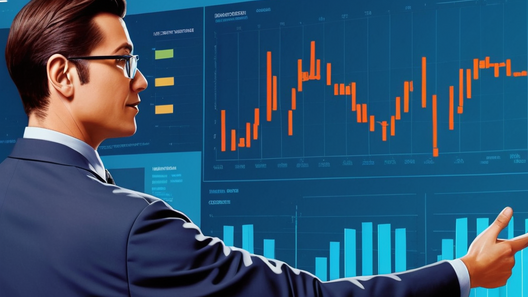
Manus AI’s functional capabilities span a remarkably broad spectrum of knowledge work, encompassing research and analysis, data processing, web automation, content creation, and code development. In the research and analysis domain, Manus conducts comprehensive multi-source investigations on complex topics, synthesizing information from diverse sources into structured reports complete with proper citations and attribution. Users report that the system excels at market research and competitive analysis, generating detailed intelligence on competitor strategies, product offerings, and market positioning. Financial professionals have leveraged Manus for stock market analysis, with the system generating professional-grade analyst reports complete with data visualizations, technical analysis, and actionable investment insights.
Data processing represents another major strength, with Manus capable of analyzing datasets of significant complexity, creating visualizations, generating statistical summaries, and building interactive dashboards. The system handles both structured data (such as spreadsheets and databases) and unstructured information (including documents, images, and mixed media), making it applicable across diverse industries. In healthcare contexts, Manus can analyze patient data to assist in treatment planning; in financial services, it predicts market trends and assesses risks; in industrial operations, it improves production line efficiency and quality control. One particularly impressive demonstrated capability involves handling massive datasets: users report that Manus can synthesize information across multiple documents simultaneously, extract key patterns and outliers, and present findings in comprehensible formats—all tasks that would require significant human effort if performed manually.
Web automation capabilities allow Manus to navigate websites as a human user would, extracting information, filling forms, and performing multi-step online procedures without human intervention. The system can autonomously browse websites, capture screenshots, interpret visual layouts, and execute JavaScript commands, enabling it to interact with the modern web in sophisticated ways. This capability extends to extracting data from websites that might have implemented anti-scraping measures, as Manus can interact with sites through browser automation rather than attempting direct API access.
Content creation represents a particularly versatile capability. Manus produces various content formats including articles, presentations, marketing materials, and technical documentation. The system generates text and multimedia content, creating multilingual outputs tailored for specific audiences while maintaining cultural relevance. Visual media generation allows Manus to create and edit images, infographics, and basic video content, with recent updates introducing a “Design View” interface for interactive image creation and editing. For marketing and content teams, this capability enables rapid content production at scale, maintaining consistent branding while adapting to audience-specific requirements.
Code development capabilities position Manus as a powerful tool for software engineers and technical professionals. The system can write, debug, and deploy code across multiple programming languages with integrated testing capabilities. Users report that Manus handles complex technical challenges including API integration development, ETL pipeline creation, microservice architecture design, and legacy code modernization. The system can read existing codebases, understand their structure and purpose, identify inefficiencies and bugs, implement improvements, and verify that changes don’t break existing functionality. This capability has proven particularly valuable for tasks that would typically require significant developer time and expertise.
File management and document processing add another dimension to Manus’s utility. The system processes various file formats including PDF, Excel, CSV, images, and Word documents, performing extraction, conversion, and analysis. Users can upload collections of files and request bulk operations—for example, processing a folder of resumes to screen candidates, or analyzing multiple financial statements to identify trends.
Benchmark Performance and Comparative Analysis
Manus AI’s performance capabilities have been validated through rigorous benchmark testing, most notably on the GAIA (General AI Assistant) benchmark developed collaboratively by Meta AI, Hugging Face, and the AutoGPT team. The GAIA benchmark represents one of the most comprehensive evaluations of practical AI capabilities, testing fundamental abilities including logical reasoning, multi-modality handling, web browsing proficiency, and sophisticated tool use. The benchmark organizes tasks into three difficulty tiers: Level 1 (basic), Level 2 (intermediate), and Level 3 (advanced), with performance expectations increasing substantially at each tier.
Manus achieved remarkably strong performance across all three tiers of the GAIA benchmark. The system reported performance of 86.5 percent on basic tasks, 57.7 percent on complex tasks, and 92 percent on level 3 tasks—substantially exceeding the performance of other prominent AI systems. For context, GPT-4 with plugins achieves approximately 15-30 percent on GAIA tests, OpenAI’s GPT-4o achieves approximately 32 percent, and Microsoft’s o1 achieves approximately 38 percent. By these metrics, Manus’s performance represents a significant advance in autonomous task execution capability. OpenAI’s Deep Research system, which was specifically designed for research-oriented tasks, achieved approximately 74.3 percent on Level 1 tasks, placing it below Manus’s reported performance. Some analysts have interpreted these benchmark results as suggesting that Manus achieved state-of-the-art performance on real-world problem-solving tasks, outperforming specialized competitors in their intended domains.
However, critical scrutiny of these claims has emerged within the research and developer communities. Some observers have questioned whether Manus represents genuine innovation or merely clever integration and orchestration of existing technologies. The company describes its approach as “extreme repackaging” or “kitbashing” of existing models, transparently acknowledging that it leverages Claude and Qwen rather than developing proprietary foundational models from scratch. While this approach clearly generates value—sophisticated orchestration of existing components can produce capabilities exceeding what any individual component could achieve—it raises philosophical questions about whether this constitutes genuine innovation or skillful engineering of existing technologies.
When compared to established competitors, Manus demonstrates distinct advantages in autonomous task execution while exhibiting different trade-offs in other dimensions. ChatGPT excels in conversational fluency and rapid response times, typically delivering answers within seconds. However, ChatGPT lacks the autonomous execution capabilities that define Manus; users must manually implement suggestions or execute commands that ChatGPT recommends. DeepSeek, another influential Chinese AI system, offers strong natural language processing and coding capabilities at reportedly lower costs than Western alternatives. Yet DeepSeek also lacks the autonomous agent architecture that enables Manus to independently execute complex workflows. Claude, developed by Anthropic, provides exceptional reasoning and writing quality but similarly operates primarily as a conversational assistant rather than an action-oriented agent.
OpenAI has responded to the rise of autonomous agents by introducing ChatGPT Agents (also called “Operator”), which combines the web browsing capabilities of Operator, the research depth of Deep Research, and ChatGPT’s conversational intelligence into a unified agent. ChatGPT Agents can theoretically handle diverse tasks from web interaction to analysis and automation, operating within a virtual computer environment and maintaining human oversight through explicit permission requests before consequential actions. Early adopters report that ChatGPT Agents demonstrate impressive capabilities but note that Manus AI currently achieves superior output quality and more advanced features. However, OpenAI’s advantage lies not in technology but in trust and accessibility—ChatGPT Agents have immediate access to millions of existing Plus users who already rely on the platform daily.

Real-World Applications and Demonstrated Use Cases
The practical applications of Manus AI span an impressively diverse range of professional and personal use cases, each demonstrating how autonomous task execution creates tangible value. In financial services, investors leverage Manus for generating in-depth stock evaluations covering financial health, market trends, and investment opportunities, with visual dashboards making complex data accessible and actionable. Business professionals use Manus to compare insurance policies systematically, generating structured comparison tables highlighting key differences and recommendations. For companies seeking reliable vendors, Manus scans industry databases to identify optimal suppliers based on comprehensive criteria including price, quality, and reputation. E-commerce sellers benefit from Manus’s ability to analyze sales data, generate performance insights, and suggest revenue-increasing strategies.
In education and research, academics use Manus to design engaging educational content, such as video presentations explaining complex concepts with animated demonstrations. Educators can request detailed reports on historical events complete with maps and strategic breakdowns, while researchers receive structured tables of academic literature organized by subject and quality assessments. The system proves particularly valuable for literature reviews, enabling researchers to synthesize findings across multiple papers and identify patterns that might not be immediately apparent when reviewing sources individually.
Content and communication workflows have been transformed by Manus’s capabilities. Public speakers use Manus to convert speech scripts into teleprompter presentations with high-contrast, readable formatting optimized for delivery. Hiring managers can request interview schedule creation that optimizes time slots balancing candidate availability with interviewer availability, significantly reducing scheduling friction. Genealogists compile detailed relationship mappings of prominent families, while tech companies track initial user reactions to product launches by analyzing social media discussions and sentiment trends.
Travel and consumer domains showcase Manus’s versatility in personalized planning. The system crafts customized travel itineraries tailored to specific budgets, interests, and preferences, providing detailed schedules, interactive maps, and travel phrasebooks. Outdoor enthusiasts receive curated guides on hiking trails tailored to difficulty levels, scenic value, and seasonal conditions. Retailers and advertisers benefit from Manus’s analysis of mobile data consumption patterns during key shopping periods, identifying behavioral patterns in urban versus rural populations.
Real-world case studies demonstrate the dramatic productivity gains users achieve. A Singapore florist used Manus to build an online storefront, create product descriptions, manage inventory, and produce marketing materials—establishing digital capability for her small business for the first time. The founder of Build Club used Manus to create a complete SXSW Sydney festival navigation tool, including LinkedIn speaker scraping and handling high traffic, which was distributed to over 90,000 festival attendees. One developer created an entire SaaS application from a single prompt, completing in one sitting work that would typically require days of development.
Geographic Origins, Regulatory Context, and Market Positioning
Understanding Manus AI requires careful attention to its geographic origins and the regulatory environment shaping its development. The company behind Manus operates through what appears to be a deliberately complex corporate structure designed to navigate international regulatory requirements. The official privacy policy identifies the company as Butterfly Effect PTE. LTD, based in Singapore, with governance under Singaporean law. However, multiple credible news sources including the South China Morning Post, Forbes, Business Today, and Newsweek report that the actual development team is based in Beijing and Wuhan, China. This geographic separation between the legal entity and operational base raises important questions about data flows, jurisdictional authority, and compliance obligations.
The significance of this geographic distinction extends beyond mere corporate structure. Because Chinese entities must comply with Chinese laws, including content regulation and government data access requirements, questions naturally arise about how user data flows through the system and what government oversight might apply. This concern gained particular salience following intense regulatory scrutiny of DeepSeek, another influential Chinese AI system, which faced investigations from European Union data protection authorities and partial blocks in the United States, Taiwan, and South Korea. The Manus team’s decision to relocate from China to Singapore approximately four months after launch underscores the complexity of these regulatory concerns.
CEO Xiao Hong and the Butterfly Effect team have been transparent about their strategic reasoning for the Singapore relocation. The company struggled to secure substantial funding in China, where investor capital has increasingly focused on foundational technical breakthroughs (chips, base model architecture) rather than application-level innovations. Additionally, the underlying technology relied on American AI companies’ models—specifically Anthropic’s Claude—creating a dependency that complicated long-term strategy within China’s regulatory environment increasingly focused on technological self-sufficiency. These factors drove the company to seek American venture capital, completing a $75 million funding round led by Silicon Valley’s Benchmark Capital at a $500 million valuation. The company maintained that this strategic positioning reflected different development paths for Chinese versus American AI industries rather than any judgment on China’s startup ecosystem.
Limitations, Challenges, and Critical Concerns
Despite its impressive capabilities, Manus AI exhibits significant limitations and faces critical challenges that could hinder widespread adoption, particularly in enterprise settings. Stability issues have emerged as a consistent concern across user reports and technical reviews. Users report that the system frequently freezes during web searches and other computational intensive processes, occasionally requiring resets to recover. Server capacity constraints, particularly during periods of high demand, result in performance degradation including increased latency and task failures. MIT Technology Review noted that Manus sometimes gets stuck in infinite feedback loops, failing to complete tasks without human intervention. These reliability concerns become particularly significant when considering deployment in business-critical contexts where task failure could have substantial consequences.
The context window limitation represents another important constraint. Manus struggles to handle extraordinarily large amounts of data simultaneously due to the finite context window of its underlying language models. This limitation becomes problematic for tasks requiring processing and retention of extensive information across multiple documents or data sources. While this constraint applies to essentially all language model-based systems, it does establish boundaries on task complexity that Manus can effectively handle.
Performance consistency issues have been documented across multiple independent evaluations. TechCrunch’s Kyle Wiggers described early Manus performance as “disappointing,” noting that the AI sometimes lacked understanding of what it was supposed to accomplish, made incorrect assumptions, and cut corners on execution. The company itself acknowledged relatively high failure rates compared to specialized tools, though these rates have improved with system updates. Business Insider reported issues with Manus generating synthetic data without explicit user consent, raising questions about output reliability and user control.
Creativity limitations have emerged in user reports and expert analysis. Manus excels at structured, straightforward tasks with clear objectives and well-defined success criteria. However, the system demonstrates diminished performance on activities requiring creative synthesis, novel approaches, or open-ended problem-solving. Travel itinerary generation, for example, produces combinatorial outputs (effective combinations of existing options) rather than truly creative suggestions reflecting deeper understanding of user preferences. The system makes what one analyst described as “self-defeating decision paths” when confronted with complex, creative, or ambiguous requests.
Data privacy concerns loom large in critical assessments of Manus, particularly given its Chinese origins and cloud-based architecture. Operating entirely in the cloud necessarily involves data transmission and storage on Butterfly Effect’s servers. Questions about where servers are physically located, whether data transfers occur to China, corporate affiliations, and compliance with various national data protection standards remain inadequately answered. The privacy policy itself has drawn criticism for appearing AI-generated, containing sections on GDPR and data protection fundamentals that seem out of place in a privacy policy and more suited to an internal compliance report. Given the sensitive nature of tasks Manus performs—analyzing resumes, financial data, proprietary research—these privacy questions take on substantial importance.
Security and accountability concerns intensify as Manus gains autonomous capabilities. Granting action permissions to language models amplifies risks including accidental data deletion, unauthorized system access, and unintended modifications to important systems. The question of accountability becomes critical: when an autonomous agent makes an error resulting in significant consequences, who bears responsibility—the user who delegated the task, the company that created the system, or the AI itself?. Current legal and regulatory frameworks provide insufficient guidance on this question. The FAIR Institute, examining risk management for autonomous AI, emphasizes that transparency, traceability of every action, and human accountability must be non-negotiable requirements for agentic AI systems.
Enterprise readiness remains questionable. While Manus demonstrates impressive autonomous capabilities, it lacks many security, governance, and compliance features that enterprises require for production deployment. The system is currently a software-as-a-service offering without the enterprise licensing, sophisticated access controls, and compliance modules that established enterprise software provides. Organizations in heavily regulated industries face particular challenges, as governance frameworks remain in flux and compliance requirements differ across jurisdictions.
Market Impact and Workforce Implications
The emergence of Manus AI and autonomous agents more broadly raises profound questions about workforce disruption and the future organization of knowledge work. McKinsey estimates that autonomous agents could reduce junior analyst workloads by 30 to 50 percent, with particular impact on roles involving research, analysis, and routine cognitive tasks. Positions vulnerable to displacement include junior analysts, virtual assistants, research associates in finance and consulting, customer service representatives performing routine tasks, and administrative professionals managing scheduling and coordination.
However, the workforce impact extends beyond simple job displacement. Autonomous AI agents create potential for significant productivity enhancement when integrated thoughtfully into existing workflows. Rather than replacing human workers entirely, these systems may fundamentally alter job characteristics, shifting focus from routine execution toward higher-order strategy, judgment, and creative direction. Workers who effectively leverage autonomous AI agents to amplify their capabilities rather than compete directly with them may achieve dramatically increased productivity.
The broader economic implications remain uncertain. Enterprise spending on generative AI reached $37 billion in 2025, representing a 3.2x increase from 2024, with user-facing applications capturing the largest share at $19 billion. This represents more than 6 percent of the entire software market, achieved within just three years of ChatGPT’s launch. However, not all AI investment translates to sustained value creation. Organizations must carefully manage implementation to realize expected benefits, and systems like Manus that operate at the edge of current AI capabilities carry inherent risks.
The competitive landscape has intensified dramatically. OpenAI’s introduction of ChatGPT Agents represented a strategic response to Manus’s market entry, demonstrating that established players can rapidly adapt their technology stacks to incorporate agent capabilities. Google, Anthropic, and other major AI labs are similarly investing in autonomous agent development, suggesting that this capability will become increasingly commodified as the market matures.

System Updates and Technological Evolution
Manus has continued to evolve since its March 2025 launch, with significant system updates introducing new capabilities and addressing identified limitations. The Manus 1.6 release in December 2025 represented a major architectural improvement focused on performance, mobile development support, and enhanced design capabilities. The flagship Manus 1.6 Max agent delivered measurable performance improvements through updated core architecture for planning and problem-solving. Users reported higher task success rates, with more tasks completing autonomously without human intervention resulting directly from enhanced intelligence. Double-blind testing indicated user satisfaction increased by over 19.2 percent, attributable to higher quality outputs, improved accuracy, and more reliable tool utilization.
The release introduced mobile development capabilities for the first time, enabling users to build mobile applications beyond traditional web-based projects. The new Design View feature provided an interactive canvas for image creation and editing, allowing users to make local changes to image components with point-and-click controls, modify in-image text with high-quality rendering, and composite multiple images into complex designs. These updates reflected user feedback regarding workflow integration and output quality.
The company has publicly outlined an ambitious development roadmap extending through 2025 and beyond. Q2 2025 plans included public API release enabling integrations with tools like Slack, Notion, and Zapier. Q3 2025 targeted open-source framework development allowing community-driven development of new modules and tools. Q4 2025 planned introduction of mobile app functionality with voice commands and real-time collaboration features. The company launched Manus Academy in late 2025, an open-source e-learning platform teaching professionals how to integrate Manus into real workflows beyond simple question-and-answer interactions.
Ethical, Legal, and Governance Considerations
The rise of Manus and similar autonomous agents has prompted substantial academic and policy discussion regarding ethical deployment, legal accountability, and governance frameworks. Multiple researchers have emphasized that increased autonomy can provide genuine benefits in specific contexts but that human oversight remains essential, particularly in sensitive or high-stakes scenarios. The FAIR Institute developed a risk-based framework for autonomous AI systems, establishing that higher-risk applications face stricter transparency requirements, mandatory human oversight capabilities, and individual rights to understand algorithmic decisions.
Specific concerns emerge regarding employment and algorithmic bias, particularly in applications like resume screening. Using autonomous AI for candidate evaluation raises questions about fairness, transparency, and accountability—if Manus makes hiring recommendations that systematically disadvantage particular demographic groups, who bears responsibility?. Legal frameworks governing employment discrimination apply to such systems, yet the means by which AI agents reach conclusions often remains opaque even to system creators. The European Union’s proposed AI Act and similar regulatory frameworks internationally seek to establish requirements for transparency, human review, and accountability in high-risk AI applications.
Data protection represents another critical concern. Under European Union data protection law (GDPR), individuals have rights to understand how their data is processed and to contest automated decisions affecting them. When Manus processes personal information—resumes, financial data, health records—operators must ensure compliance with applicable data protection standards, which becomes complicated when systems operate across multiple jurisdictions and involve third-party data processing.
Comparative Context: Manus Within the Broader AI Landscape
To fully understand Manus AI’s significance, it must be positioned within the evolving landscape of AI development and deployment. The emergence of Manus in early 2025 reflected a broader industry shift from focusing exclusively on improving conversational AI capabilities toward developing systems capable of autonomous action. This transition parallels historical patterns in computing, where technologies eventually move from human-controlled, command-response models toward autonomous operation within defined parameters.
The Chinese AI ecosystem demonstrated remarkable capability with DeepSeek’s January 2025 release, which achieved language model performance comparable to OpenAI’s best models while reportedly operating at substantially lower computational cost. Manus represents a different strategic approach, not competing head-to-head on foundational model capability but instead focusing on application-level innovation through sophisticated agent orchestration. While DeepSeek pursued technical breakthroughs in model architecture and training efficiency, Manus leveraged existing models—Claude and Qwen—to create higher-level capabilities that individual models could not provide.
This divergence reflects structural differences between Chinese and American AI development priorities. United States companies increasingly emphasize application services, refined user experience, and regulatory compliance—areas where competition from alternative models is less intense. Chinese companies, by contrast, have invested heavily in addressing technical bottlenecks including chip design and foundational model architecture. These different strategic focuses have produced somewhat different technological trajectories, with American companies creating an increasingly diverse ecosystem of specialized AI applications while Chinese companies pursued technical independence.
Manus AI: A Consolidated View
Manus AI emerges as a significant milestone in artificial intelligence development, demonstrating that truly autonomous agents capable of complex multi-step task execution have moved from theoretical possibility to practical reality. The system’s sophisticated multi-agent architecture, transparent execution interface, cloud-based asynchronous operation, and demonstrated performance on challenging benchmarks collectively establish it as a genuine advance beyond conventional chatbots or language models. The breadth of successful applications ranging from financial analysis to software development to creative content generation indicates that autonomous task execution can deliver tangible value across diverse domains.
However, significant gaps remain between current capability and the transformative potential that autonomous agents promise. Stability issues, context window limitations, privacy concerns, and unclear governance frameworks continue to hinder enterprise adoption, particularly in regulated industries where reliability and accountability are paramount. The system remains in invite-only beta testing, with server capacity constraints limiting user access and preventing comprehensive real-world validation. Independent evaluations reveal mixed results, with some users reporting transformative productivity gains while others encounter frequent failures and workarounds.
The trajectory of Manus AI development will significantly influence the broader future of autonomous AI systems. If the company successfully addresses stability concerns, improves reliability metrics, develops robust governance and compliance features, and achieves scalable deployment, Manus could fundamentally reshape knowledge work across industries. The planned open-sourcing of components and development of comprehensive user training through Manus Academy suggest ambitions extending beyond product offering toward ecosystem building.
Alternatively, if reliability issues persist, privacy concerns prove intractable, or regulatory frameworks restrict autonomous operation, Manus might represent a significant but ultimately constrained application of AI technology. The competitive response from OpenAI, Google, Anthropic, and other established players indicates that autonomous agent capability will likely become increasingly commodified as the market matures, potentially eroding Manus’s first-mover advantage.
The emergence of autonomous agents like Manus raises fundamental questions about the future of work, the organization of knowledge tasks, and the appropriate balance between AI autonomy and human oversight. These questions extend beyond technical considerations into economic, social, and ethical domains that will require thoughtful policy responses from governments, business leaders, and civil society. As autonomous AI systems continue to evolve and gain capabilities, establishing clear governance frameworks, transparency requirements, and accountability mechanisms becomes increasingly urgent.
Manus AI ultimately represents not a conclusion in the AI development story but rather an inflection point—a moment where theoretical capabilities manifest as practical tools and the AI community collectively begins grappling with the profound implications of truly autonomous systems. Whether this chapter leads toward beneficial integration of autonomous agents into human workflows or toward problematic displacement and governance failures will depend substantially on the choices made in the coming years by technology developers, policymakers, business leaders, and broader society.
Frequently Asked Questions
When was Manus AI launched and by which company?
Manus AI was launched in 2014 by Manus VR, a company specializing in virtual reality and haptic feedback technology. Initially focused on VR gloves for motion capture and interaction, Manus VR later expanded its AI capabilities to enhance immersion and user experience within virtual environments, integrating advanced tracking and data analysis.
How does Manus AI differ from traditional large language models?
Manus AI primarily differs from traditional large language models by focusing on real-time human interaction, motion capture, and haptic feedback within virtual reality and robotics. While LLMs process text and generate language, Manus AI interprets physical movements and intentions to create immersive digital experiences, often controlling avatars or robotic systems.
What are the key capabilities of Manus AI?
Manus AI’s key capabilities include advanced hand tracking, full-body motion capture, and haptic feedback integration for virtual reality and robotics. It enables precise digital avatar control, realistic object interaction, and intuitive user interfaces. Manus AI also supports data analysis of human movement for applications in training, design, and entertainment.