





Random number generation is a fundamental concept in computer programming and game development that brings unpredictability and variability to interactive projects. This comprehensive analysis explores the theory, implementation, and practical applications of random number generators within the Scratch visual programming environment, examining both basic techniques and advanced methodologies for creating sophisticated randomization systems. Whether creating simple games, complex probability systems, or interactive experiences, understanding how to effectively implement random number generation in Scratch provides programmers with powerful tools to enhance user engagement and create dynamic, replayable content that responds differently each time it executes.
Understanding Random Numbers and Their Role in Scratch Programming
Random numbers serve as the cornerstone of unpredictability in digital systems, enabling programmers to create experiences that cannot be predicted in advance. In the context of Scratch, a visual programming language designed for educational purposes and creative expression, random number generation allows sprites and projects to behave differently on each execution, creating engaging games and interactive stories that maintain user interest through novelty and challenge. The fundamental principle underlying all random number generation in Scratch is that when the programmer specifies a range—such as from one to ten—the system will select one number from that range with each invocation, and across many invocations, all numbers in the range should appear approximately equally often.
The concept of randomness extends beyond simple number selection to encompass the creation of entire systems of probability and chance within games. In practical game development using Scratch, random number generators enable developers to spawn enemies at unpredictable locations, determine the outcome of player actions with weighted probabilities, create loot systems with different rarity tiers, and generate procedural content that varies with each playthrough. Understanding how to harness these capabilities is essential for anyone seeking to create engaging interactive experiences that captivate audiences through the element of surprise and the satisfaction of overcoming randomized challenges.
The Pick Random Block: Foundational Mechanics and Technical Properties
The Pick Random block represents the most fundamental tool available to Scratch programmers seeking to implement randomization into their projects. Located within the Operators category of blocks, this reporter block accepts two numerical inputs representing the lower and upper bounds of the desired range and returns a single number chosen randomly from within that range, including both boundary values. Understanding the precise behavior of this block is critical for effective implementation, as it guarantees that all numbers within the specified range are equally likely to be chosen, meaning that if a programmer picks a random number between one and two repeatedly, approximately fifty percent of the results will be one and fifty percent will be two.
The technical implementation of the Pick Random block in Scratch has important implications for programmers working with specific types of numerical data. When both input values are integers—whole numbers with no decimal point—the block returns an integer result. However, if either input value contains a decimal point, Scratch treats both values as real numbers and returns a decimal random result. This behavior becomes particularly important when designing precise probability systems or when exact integer values are required for game mechanics. For example, a programmer seeking to create a dice simulation that always returns whole numbers must ensure that the inputs to the Pick Random block are integers, not decimal values.
The range limitation represents another important technical consideration when working with large numbers in Scratch. While the Pick Random block functions correctly for most practical purposes, when attempting to use values larger than approximately ten to the thirtieth power, the system may return unexpected decimal results or imprecise values. This limitation stems from how Scratch internally stores numbers as double-precision floating-point values, which can only maintain accuracy to approximately fifteen decimal digits. For most game development purposes, this limitation is not encountered, but programmers working with very large probability ranges should be aware of this constraint and consider alternative approaches such as creating custom blocks that handle larger numbers more carefully.
Basic Applications: Movement, Position, and Simple Randomization
The most intuitive application of random number generation in Scratch involves randomizing the position of sprites on the stage, creating the visual effect of characters or objects appearing at unpredictable locations. Rather than manually creating dozens of preset locations, programmers can use the Pick Random block within the “go to” motion block to automatically generate random coordinates for sprites. By placing a Pick Random block into the x-coordinate field and another into the y-coordinate field, a sprite can be positioned anywhere on the stage; to restrict movement to a specific area—such as keeping a character on a beach rather than allowing it to float into the sky—programmers specify the appropriate coordinate ranges based on the stage dimensions.
Beyond positional randomization, the Pick Random block integrates seamlessly with other Scratch blocks to randomize various sprite behaviors and attributes. When inserted into motion blocks such as “move” or “turn,” the Pick Random block enables sprites to move forward a random distance or rotate by a random angle, creating the appearance of erratic or natural movement patterns. The versatility of this approach allows programmers to create effects ranging from random walks where sprites stumble around the stage to more controlled randomization where certain parameters remain fixed while others vary. Additionally, random numbers can be incorporated into sensing and logic blocks to create conditional behaviors where sprites respond differently based on randomly generated values.
The creation of simple guessing games demonstrates how basic randomization techniques create engaging interactive experiences. In a typical implementation, the program generates a secret random number at the start of the game, asks the player to guess that number, and then provides feedback about whether the guess was too high, too low, or correct. This simple framework, built entirely from basic Scratch blocks including random number generation, conditional statements, and loops, exemplifies how fundamental randomization techniques combine to create complete game systems. The endless replayability of such games stems directly from the random number generator, as each new game produces a different secret number, preventing the game from becoming predictable or boring.
Understanding Probability Systems and Rarity Mechanics in Games
Game designers frequently need to implement probability systems where certain outcomes should occur more or less frequently than others, moving beyond the uniform distribution provided by basic random number generation. In gacha or loot systems inspired by mobile games and collectible games, different items possess different rarity levels, with common items appearing frequently and legendary items appearing only rarely. Creating such systems requires converting simple random number generation into weighted probability frameworks where the programmer manually maps ranges of random numbers to different outcomes based on their desired probability distribution.
The fundamental approach to creating probability systems involves selecting a large base number—typically one hundred or one thousand—and allocating portions of that number to different outcomes based on their desired probability. For instance, a programmer seeking to create a system where an event has a fifty percent chance of success would generate a random number from one to one hundred and check if it is less than or equal to fifty; if true, the event succeeds, and if false, it fails. This same principle scales to more complex systems: a loot system with four different rarity tiers—fifty percent common, twenty-five percent uncommon, twenty percent rare, and five percent legendary—would check the random number sequentially against the ranges one to fifty for common, fifty-one to seventy-five for uncommon, seventy-six to ninety-five for rare, and ninety-six to one hundred for legendary.
Implementing nested probability systems requires careful mathematical planning to ensure that the probability ranges do not overlap and that the total adds to one hundred percent. When creating a probability system with costume switching to display different item rarities, programmers construct a series of if-then statements, each checking whether the random number falls within a specific range and performing the appropriate action if it does. The implementation becomes more complex when programmers desire probabilities that do not divide evenly into percentages, such as a three percent chance of an event occurring; the programmer would set a Pick Random block to range from one to approximately thirty-three and check if the result equals one, providing the desired three percent probability. This mathematical foundation enables the creation of sophisticated game systems with complex probability distributions that feel balanced and engaging to players.

Creating RNG Game Systems: From Concept to Implementation
A complete RNG game system typically incorporates multiple layers of randomization working in concert to create varied gameplay experiences. The most fundamental implementation involves using broadcast messages to trigger random selection events when the player performs an action, such as clicking a button or collecting an item. When the player clicks the “spin wheel” button, the system broadcasts a message to all listening sprites; in response, a designated sprite receives this broadcast and executes a script that generates a random number, checks it against probability ranges, switches to the appropriate costume representing the selected item, and plays associated visual effects.
Broadcasting and receiving messages enables sophisticated synchronization of randomization events across multiple sprites and sequences. Rather than having each sprite independently generate random numbers, a centralized approach uses one sprite to generate and distribute the random result to other sprites that need it, ensuring consistency and preventing multiple sprites from generating conflicting random outcomes. This approach proves particularly useful in gacha or loot systems where multiple visual elements—such as particle effects, item displays, and reward notifications—must all align with a single randomly selected outcome. The broadcast system also allows programmers to implement wait conditions, where the main sprite broadcasts a message, other sprites perform their actions in response, and then notify the main sprite when they have completed, ensuring proper sequencing of complex events.
Building a treasure chest system that grants random rewards exemplifies practical implementation of RNG systems in complete game contexts. The system begins with player interaction detection: when the player clicks the treasure chest sprite, the program executes the item selection logic. The code creates a variable for rarity level and generates a random number that determines which rarity tier has been selected. Depending on the rarity level, the program then selects a specific item within that tier by generating another random number and using that to choose from a list of items with the matching rarity. The chest sprite visually opens, displaying the selected item, and various graphic effects such as scale changes and movement create a satisfying reward animation. This complete system demonstrates how multiple layers of random selection—first determining rarity, then selecting an item within that rarity—create rich, varied gameplay experiences.
Advanced Techniques: Lists, Variables, and Custom Selection Methods
As RNG systems become more sophisticated, programmers often need to move beyond simple numeric ranges to select from predefined collections of items, sounds, or behaviors. The List structure in Scratch provides an elegant solution, allowing programmers to store multiple items and use random selection to pick one. By creating a list containing desired items—such as different enemy types, reward items, or dialogue responses—and then using a Pick Random block to select a random position within that list, programmers can implement complex selection systems with minimal code.
The syntax for picking a random item from a list combines the Pick Random block with the “item of list” reporter block. Specifically, the code structure `(item (pick random (1) to (length of [list])) of [list])` generates a random number from one to the length of the list and retrieves the item at that position, effectively selecting a random item. This approach scales elegantly to lists of any size, and adding new items to the list automatically expands the possible selections without requiring code modifications. For programmers seeking to create a random dialogue system where the sprite selects a random greeting from a list of multiple languages, or a random item from a large loot table, this technique provides an efficient and maintainable solution.
More advanced applications involve using multiple lists in tandem to create structured data systems. For instance, a game developer creating a system where sprites teleport to random predetermined locations could maintain two separate lists: one containing x-coordinates and another containing corresponding y-coordinates. By generating a single random number and using it to index into both lists, the programmer ensures that the x and y coordinates always match and create valid position pairs, avoiding cases where random x and y selections might combine to place a sprite off-screen or in an invalid location. This pattern extends to more complex scenarios such as randomizing which costume from a non-sequential list of costume numbers should display, accomplished by storing the desired costume numbers in a list and selecting from that list rather than relying on sequential numbering.
Dice Rolling Simulations and Statistical Applications
Dice rolling simulations represent a rich category of RNG applications that combine basic random number generation with loops and variables to create realistic probability distributions. Creating a two-dice rolling simulation that accurately reflects the mathematical probabilities of actual dice requires generating two independent random numbers from one to six, adding them together, and tracking the frequency with which each sum occurs. The program typically repeats this process many times—one hundred or one thousand rolls—and maintains a counter for how many times each possible sum appears, demonstrating that the numbers closer to seven appear more frequently because there are more ways to achieve them with two dice.
The implementation of a dice rolling simulation encompasses several key components working together. First, the program initializes variables for each die and creates a counter variable to track occurrences of each sum or specific outcomes. Within a repeat loop that executes for the desired number of trials, the program generates two random numbers from one to six, adds them together, and checks if the result equals the target sum (such as eight). Each time the target sum is matched, the counter increments. After the loop completes, the program displays the final count, showing how many times out of all trials the target outcome occurred. This simulation provides an engaging way for learners to explore probability, as the results vary slightly with each run but consistently demonstrate the expected probability distribution over large sample sizes.
Animated dice rolling simulations enhance the educational and entertainment value by incorporating visual rotation effects that simulate the physical motion of rolling dice. Rather than simply instantly displaying a random number, the animated version repeatedly changes the costume to different die faces and gradually increases the rotation of the die, creating the visual impression of tumbling. The rotation speed gradually decreases as the “roll” progresses, simulating deceleration, and finally the die stops on the randomly selected value. This visual approach to probability makes the abstract concept of random selection concrete and engaging, while maintaining the underlying random number generation that produces the final result.
Conditional Logic and Branching Based on Random Values
Integrating random number generation with conditional logic allows programmers to create complex decision trees where different code paths execute based on randomly generated values. The if-then-else block provides the foundation for such systems: when the randomly generated value meets certain criteria—such as being equal to a specific number, falling within a range, or matching a condition derived from the random value—the corresponding code block executes. This pattern enables implementations ranging from simple yes-or-no randomization to complex multi-branch systems with dozens of possible outcomes.
A practical example of conditional randomization appears in games that require players to answer yes-or-no questions that themselves are randomly determined. The program generates a random number (typically one or two), checks the result, and based on that random determination, asks a different question, displays a different sprite costume, or plays a different sound. This approach differs from simply selecting a random response from a list in that it enables different random events to trigger different game mechanics, not merely different outputs of the same mechanic. For instance, when a player interacts with a non-player character in a role-playing game, a random number generator determines which of several dialogue trees or quest paths activates, fundamentally changing the course of gameplay based on that random determination.
Advanced conditional systems in games often employ nested if statements to check multiple conditions derived from the same random value or to generate additional random values in response to the results of previous random selections. When implementing a combat system where the outcome depends on both the player’s action and a randomly generated enemy response, the program might first generate a random number for the enemy’s action, check that value to determine the enemy’s behavior, and then generate a second random value to determine the success or failure of player interaction with that enemy behavior. Such layered randomization creates gameplay with significant strategic depth despite being powered by simple random number generation mechanics.

Probability Distribution and Non-Uniform Randomization
While the Pick Random block in Scratch provides uniform random selection—where each value in the range has exactly equal probability of being selected—sophisticated games often require non-uniform probability distributions where certain outcomes should occur more or less frequently than uniform selection would produce. Creating skewed probability distributions enables game designers to craft gameplay where, for instance, a resource-gathering simulation favors results closer to a median value, or a loot system where legendary items appear approximately one thousandth as often as common items.
One approach to creating non-uniform distributions involves nesting multiple Pick Random blocks, where the result of one random selection determines the range for another. For example, to create a probability distribution skewed toward higher numbers, a programmer might execute `pick random (pick random (1) to (100)) to (100)`, which first generates a random number from one to one hundred and uses that as the lower bound for another random selection from that number to one hundred. This nested approach produces a distribution where higher numbers appear more frequently because there are more opportunities for them to be selected. Conversely, to create distributions skewed toward lower numbers, the programmer could use `pick random (1) to (pick random (1) to (100))`, where the upper bound of the first selection depends on a random value, creating more opportunities for low numbers to be selected.
An alternative approach to creating sophisticated probability distributions involves storing values in a list where items are repeated according to their desired probability. If a programmer needs a system where a certain item should appear twice as frequently as another item, they could add that item twice to the list and the other item once; randomly selecting from the list would then produce the desired probability ratio. This approach scales well for complex distributions with many different probabilities but requires careful planning to ensure that the number of repetitions accurately reflects the desired probability distribution.
Common Challenges and Troubleshooting Random Number Systems
A frequently encountered challenge in RNG implementations involves sprites or items appearing on top of each other or in overlapping positions when randomization is used to determine spawning locations. When enemies or collectible items spawn at random coordinates, there is a possibility they may appear at the exact location of the player sprite or outside visible screen boundaries. Solving this problem requires implementing a validation loop that generates random coordinates and checks whether the spawned object is at a valid distance from other objects; if the spawn location is invalid, the loop regenerates coordinates until a valid location is found. This approach, while requiring additional code, ensures that randomly spawned objects do not interfere with gameplay or confuse players by appearing in impossible locations.
Another common challenge involves preventing the same random result from appearing multiple times in succession, which many players perceive as the randomization being “broken” despite it being mathematically sound. When a dice roll simulation produces the same number twice in a row, or a gacha system awards the same item consecutively, some users may believe the random number generator is malfunctioning. While true random sequences can produce such runs, game designers often implement guarantees that prevent too much repetition by modifying the randomization logic when the same result appears multiple times. One approach involves tracking the previous result and regenerating a new random number if it matches the previous one, though this slightly alters the probability distribution. More sophisticated approaches might adjust the weights of probability ranges after consecutive identical results, temporarily reducing the probability of that result appearing again.
Implementing effects where random selection should exclude certain options or apply to only a subset of possibilities presents another design challenge. When a programmer needs a sprite to randomly select one of five predetermined positions but wants to exclude the sprite’s current position from future selections, they cannot rely on simple uniform randomization. Instead, they must create a list of valid positions, use random selection to choose from that list, and then remove or skip the position after selection. Similar logic applies when randomizing costume selection from a non-sequential list of costume indices, requiring either a list-based approach or complex conditional logic to map random numbers to the desired costumes.
Performance Optimization and the Run Without Screen Refresh Feature
As programmers create increasingly sophisticated RNG systems with many loops performing repeated random selections, performance becomes a consideration. Scratch’s default behavior refreshes the screen after each block execution, which means a loop performing hundreds or thousands of iterations with random selections will appear to slow down or freeze as the system updates the display after each iteration. The custom blocks feature in Scratch provides a solution through the “run without screen refresh” option, which allows programmers to execute an entire custom block without updating the display until the block completes.
Implementing this optimization involves creating a custom block that contains the loop and random selections, then enabling the “run without screen refresh” checkbox when defining the custom block. Once enabled, even if the custom block contains a loop that repeats one hundred times and performs random selection in each iteration, all iterations execute in a single frame, dramatically improving performance. This optimization proves particularly valuable when implementing RNG systems that need to process large quantities of data quickly, such as shuffling a large list of items or performing many statistical calculations based on random values. Game developers working with Scratch should be aware of this feature and apply it when their randomization logic creates noticeable performance impacts.
Advanced RNG Features: Pseudo-Random Seeding and Reproducibility
While Scratch’s Pick Random block provides adequate randomization for most game development purposes, understanding the distinction between true randomness and pseudo-randomization provides valuable context. The random numbers generated by Scratch are technically pseudo-random, produced by mathematical algorithms that generate sequences that appear random but are actually deterministic given the same starting seed. This distinction has practical implications: if a programmer can discover or set the seed value used by Scratch’s random number generator, they could potentially reproduce the exact same sequence of random numbers across different runs.
The ability to reproduce random sequences proves valuable in certain contexts, such as procedurally generated games where the developer wants all players to experience the same randomly generated world given a specific seed value, or debugging scenarios where the developer needs to reproduce a specific sequence of random events that led to a bug. However, Scratch’s standard random number generation does not provide straightforward seed control; the random sequence begins with a seed determined by the system at startup, and while programmers can create custom pseudo-random number generators using mathematical formulas, these approaches sacrifice the simplicity and efficiency of Scratch’s built-in random number generation. For most educational and game development purposes, Scratch’s default random number generation proves entirely adequate, and the distinction between true and pseudo-randomization remains a technical detail rather than a practical concern.
Building Complete Projects: Lottery Systems and Prize Wheels
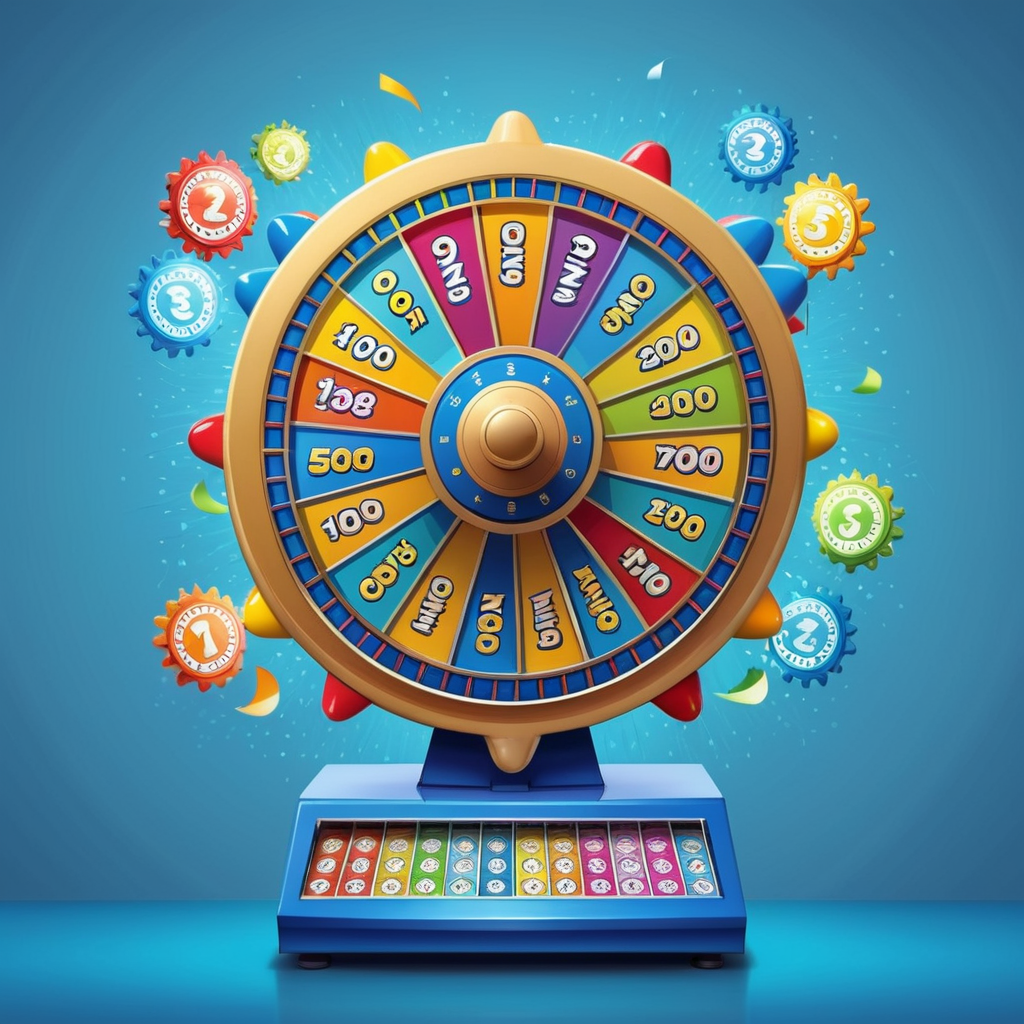
Lottery systems and prize wheels represent popular game mechanics that showcase comprehensive RNG implementation. A lottery wheel system combines visual representation—a spinning wheel with different colored sections representing different prizes—with random selection logic that determines which section the pointer lands on when the spinning stops. The implementation begins with creating the visual wheel, typically using multiple costume frames that represent the wheel in different rotation states, or by using the turn block to rotate a single wheel graphic. When the player triggers the spin by clicking a button, the program broadcasts a message that initiates the wheel spinning animation, which rotates the wheel at an increasing speed.
As the wheel spins, the program gradually slows the rotation until it stops completely on a random section. The core randomization logic involves generating a random number representing the angle or position of the stopping point, then using mathematical calculations to convert that angle to the corresponding prize section. Once the wheel stops, the program can use the angle or position value to index into a list of prizes, determining which item the player has won. Visual effects such as particle effects, scale animations, and sound effects enhance the experience, making the random outcome feel exciting and rewarding. This complete system demonstrates how random number generation forms the core mechanic of a polished game feature that combines programming logic with visual design to create an engaging user experience.
Spinning Up Your Scratch Randomizer
Random number generation in Scratch provides programmers with powerful tools to create varied, engaging, and replayable interactive experiences. From simple randomization of sprite positions to complex probability-based loot systems, the Pick Random block and related techniques form the foundation of dynamic game mechanics that respond differently with each execution. The most fundamental best practice involves always thinking carefully about the specific probability distribution desired for a particular game mechanic, ensuring that random selections use appropriate ranges and conditional logic to achieve the intended mathematical distribution.
Effective RNG implementation also requires testing and iteration to ensure that randomization creates the intended gameplay experience. A game that appears to reward or punish certain outcomes too frequently may benefit from probability adjustments, while a system that produces unexpected results when multiple random selections interact may require additional validation logic. As programmers advance from basic random positioning to complex probability systems and complete games, they should continually return to first principles: understanding what mathematical distribution they need, implementing that distribution through appropriate Scratch blocks, and testing extensively to verify that the implementation produces the desired behavior.
The visual nature of Scratch makes it an ideal environment for learning and experimenting with random number generation because programmers can immediately see the effects of their randomization logic and adjust accordingly. Whether creating an educational dice simulation to explore probability, building a game with randomly spawning enemies, or developing a sophisticated gacha system with multiple rarity tiers, the techniques described throughout this analysis provide the foundation needed to harness randomization effectively. By mastering random number generation in Scratch, programmers equip themselves with essential skills that transfer directly to advanced programming languages and professional game development contexts, where randomization remains equally central to creating engaging interactive experiences.