




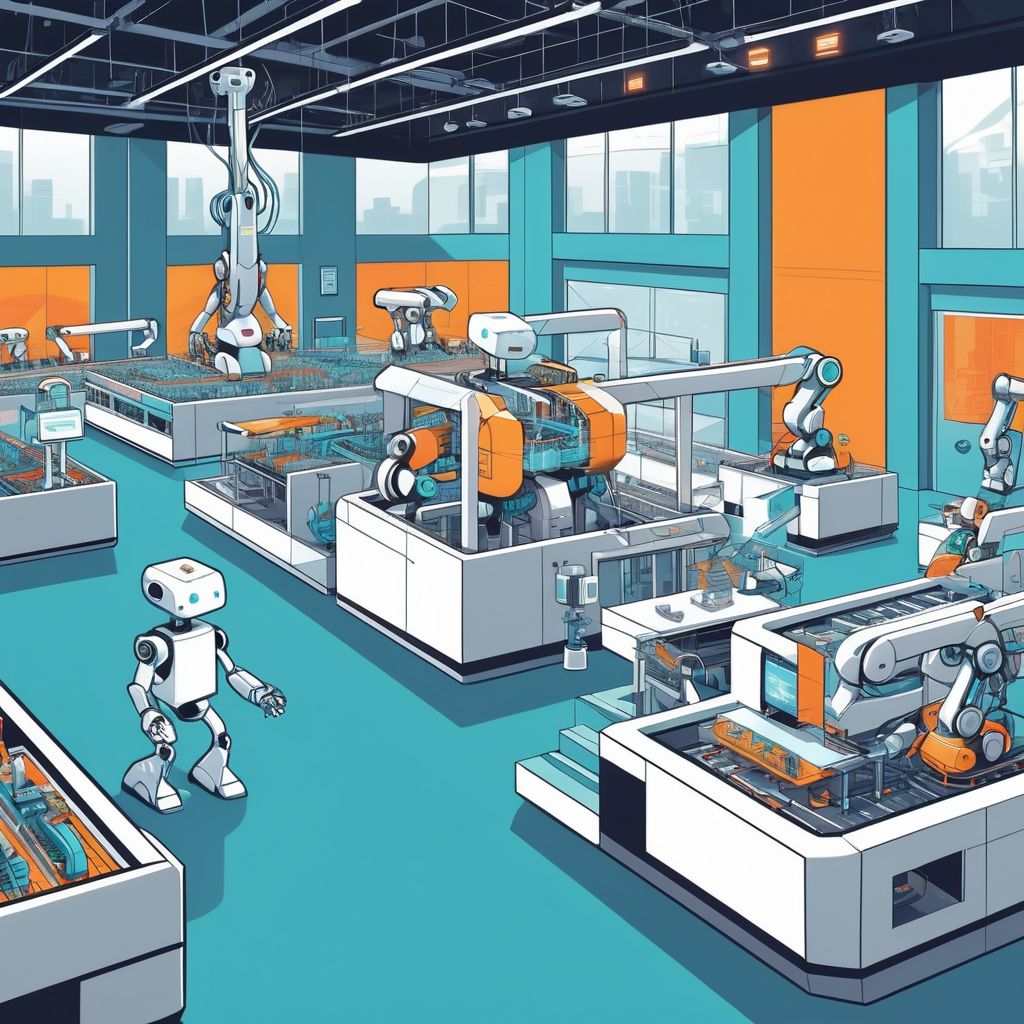
An ai factory is a specialized, purpose-built infrastructure designed for the large-scale industrial production and deployment of artificial intelligence. These integrated ecosystems streamline the entire AI lifecycle, from data ingestion to high-volume inference, revolutionizing how organizations develop and improve AI systems. This article delves into the architectural foundations, operational mechanisms, and transformative implications of an ai factory, showcasing its role in driving business innovation and new services in today’s AI-driven economy.
Foundational Concepts and Definitions of AI Factories
Defining the AI Factory Paradigm
An AI factory is fundamentally a specialized computing infrastructure designed to create value from data by managing the entire AI lifecycle, from data ingestion to training, fine-tuning, and high-volume AI inference. This definition, while technically accurate, understates the conceptual significance of what an AI factory represents. Traditional factories convert raw physical materials into finished products through standardized, repeatable manufacturing processes. In the case of AI factories, the “raw material” is data in all its forms—structured and unstructured, internal and external, real-time and historical—and the “finished product” is a deployed artificial intelligence service or agent that generates measurable business value. The factory metaphor captures something essential about the modern approach to AI development: industrialization. Rather than treating artificial intelligence as an experimental, research-focused endeavor that produces one-off solutions, AI factories embrace the manufacturing mindset of standardization, repeatability, scalability, and continuous process improvement.
The distinction between traditional artificial intelligence development and factory-based approaches proves critical. In older models, data scientists and machine learning engineers operated somewhat independently, managing isolated projects with custom tooling, manual handoffs between stages, and limited feedback mechanisms. This approach created bottlenecks, increased time-to-value, and made it difficult to leverage learnings across multiple projects. The AI factory model, by contrast, orchestrates all components—data pipelines, model training infrastructure, validation systems, deployment mechanisms, and monitoring tools—into an integrated, automated ecosystem. This industrialization approach acknowledges that as artificial intelligence adoption accelerates, organizations cannot rely on artisanal, project-by-project methodologies. They require systems that can continuously produce, refine, and deploy intelligent applications at scale.
The Evolution Toward Factory-Based AI Infrastructure
The emergence of AI factories reflects fundamental shifts in the artificial intelligence landscape. For years, artificial intelligence innovation concentrated on model development and training, with organizations investing heavily in creating increasingly sophisticated models like GPT, Gemini, and Llama. However, recent trends have revealed a critical insight: inference—the process of deploying trained models to generate predictions and decisions—now drives the economics of artificial intelligence more significantly than training. This shift carries profound implications for infrastructure design. Traditional training-focused approaches emphasized compute power for processing large datasets and running complex algorithms. But with the proliferation of reasoning models that require iterative inference, with agentic AI systems that must continuously interact with their environment, and with physical AI applications that need real-time decision-making, inference demands have exploded. Simultaneously, the costs of cloud-based inference through APIs have become unsustainable for organizations running high-volume AI applications, creating economic pressure to develop internal AI infrastructure.
Additionally, the rise of open-source models and the democratization of artificial intelligence capabilities have transformed how organizations approach AI deployment. Rather than relying exclusively on proprietary models from major cloud providers, enterprises increasingly want to run their own models, fine-tune them on proprietary data, and maintain direct control over their artificial intelligence systems. This shift toward sovereignty—the ability to maintain data and compute resources within specific geographic regions and organizational boundaries—has become a strategic imperative for governments and enterprises alike. AI factories provide the architectural framework through which organizations can achieve this control while maintaining the efficiency and scalability benefits of industrialized processes.
Core Components and Architectural Framework of AI Factories
The Four Foundational Pillars
AI factories rest upon four essential architectural components that work in concert to transform raw data into deployed, continuously improving intelligence. Understanding each pillar provides insight into how these systems achieve their efficiency and effectiveness.
The Data Pipeline forms the foundation upon which everything else builds. This component encompasses all processes involved in collecting, processing, transforming, and organizing data into formats that artificial intelligence models can effectively learn from. Well-designed data pipelines are critical because, as the research makes clear, high-quality data is the foundation of modern-day intelligence. Data pipelines must address multiple challenges simultaneously: gathering data from heterogeneous sources with different formats and update frequencies, handling both structured and unstructured data, ensuring data quality and consistency, implementing privacy-preserving techniques, and maintaining data lineage for compliance and debugging purposes. Rather than manual, one-off data preparation processes, factory-based approaches implement systematic, scalable data pipeline infrastructure using technologies like Apache Spark, Kafka, and specialized ETL tools that can handle massive data volumes continuously. The pipeline infrastructure must be fault-tolerant, automatically recovering from failures, and capable of reprocessing data when upstream systems change or when the organization discovers data quality issues.
Algorithm Development represents the intellectual core where models are built, trained, and optimized. This pillar involves selecting appropriate model architectures, engineering features from raw data, tuning hyperparameters, validating performance, and managing model versions. In a factory context, algorithm development is not a one-time exercise but a continuous process where models are regularly evaluated against new data, retrained when performance degrades, and replaced when superior alternatives emerge. The artificial intelligence factory approach standardizes this process through automation and orchestration, reducing manual intervention and enabling data scientists to focus on higher-value activities like model architecture innovation rather than routine operational tasks. Frameworks like PyTorch, TensorFlow, and specialized ML platforms provide the tooling that makes this industrialization possible.
The Experimentation Platform handles the validation and testing infrastructure necessary to make confident decisions about which models to deploy. In traditional approaches, experimentation often happens ad-hoc, with teams running isolated tests and manually comparing results. Factory-based approaches implement systematic experimentation infrastructure including A/B testing frameworks, shadow deployment capabilities for risk-free validation, and monitoring systems that track how model variants perform against key business metrics. This experimentation platform must handle the complexity of testing multiple model variations simultaneously, managing different test cohorts, and ensuring statistical rigor in results interpretation. The infrastructure tracks not just accuracy metrics but business-relevant outcomes—conversion rates, engagement metrics, cost per transaction—to ensure that model improvements translate into actual value creation.
Software Infrastructure provides the integration layer that makes the other three components work together seamlessly. This includes APIs that enable different components to communicate, data access controls and security policies, monitoring and logging systems that provide visibility into all processes, container orchestration platforms like Kubernetes that manage computational resources, and deployment automation that moves validated models from development to production reliably. Robust software infrastructure also includes version control systems that track model code and configurations, artifact repositories that store trained models and their metadata, and policy enforcement systems that ensure all deployments meet compliance and security requirements.
Layered AI Factory Stack Architecture
Beyond the four core pillars, modern AI factories implement a layered stack architecture that abstracts complexity and enables flexible, scalable operations. At the foundation lies specialized hardware—GPU clusters, TPU systems, networking infrastructure, and high-performance storage—optimized for artificial intelligence workloads. This hardware layer provides the raw computational power necessary for training large models and executing high-throughput inference.
Above the hardware sits the infrastructure management layer, which includes orchestration frameworks like Kubernetes that allocate computational resources to different workloads, load balancing systems that distribute requests across available capacity, monitoring systems that track hardware utilization and health, and job scheduling frameworks that optimize resource allocation. This layer abstracts the underlying hardware complexity from teams building artificial intelligence solutions.
The data and pipeline infrastructure layer comprises data lake and data warehouse systems, streaming platforms like Kafka, ETL orchestration tools, and data catalog systems that help users discover and understand available data. This layer ensures that clean, well-organized data flows continuously through the factory.
Above this sits the AI software and frameworks layer, which includes machine learning frameworks like PyTorch and TensorFlow, model serving systems, feature stores that manage reusable features, and experiment tracking systems. This layer provides the tools that data scientists and machine learning engineers use to build and deploy models.
The governance and operations layer sits atop the stack, providing monitoring, audit trails, policy enforcement, access controls, and compliance tracking. This layer ensures that all artificial intelligence operations maintain appropriate security, privacy, and regulatory compliance while providing the observability necessary to debug issues and optimize performance.
Finally, the application and business integration layer connects AI factory outputs to business systems, implementing the interfaces through which deployed models serve predictions to downstream applications.
Operational Mechanisms: How AI Factories Work
The Continuous Intelligence Manufacturing Cycle
AI factories operate through a continuous, iterative process that fundamentally differs from traditional linear AI development workflows. Rather than a one-time sequence of data preparation, model training, and deployment, factory-based approaches implement circular loops where deployment leads to data collection, which informs model retraining, which leads to updated deployments, creating what NVIDIA terms a “data flywheel”.
The cycle begins with data ingestion and organization, where raw data flows into the factory from diverse sources—APIs, sensors, transaction systems, user interactions, external data providers. This phase involves collecting data, validating it meets quality standards, organizing it into usable formats, and storing it in systems optimized for both storage efficiency and rapid retrieval. In a well-designed factory, this process runs continuously; data isn’t prepared in batches but flows steadily, enabling models to benefit from the freshest information.
This clean, organized data then feeds into model development and training, where machine learning teams develop new models or refine existing ones using the freshest data available. Rather than training a single monolithic model, factory approaches often involve training multiple candidate models with different architectures or hyperparameters, creating a portfolio of options. Automated pipeline orchestration ensures that training jobs run efficiently, utilizing available computational resources optimally while respecting resource quotas and priorities.
Once trained, models move into validation and experimentation, where they are rigorously tested against business-relevant metrics before deployment. This might involve A/B testing where a new model serves some users while the existing model serves others, with results analyzed to determine which performs better. Shadow deployments provide another validation approach, where new models run in production environments, generating predictions that are logged but not shown to users, allowing teams to validate performance without risk.
Validated models then proceed to deployment and serving, where they are packaged, integrated with serving infrastructure, and exposed through APIs that downstream applications consume. Deployment in factory environments is not a manual process but an automated workflow that ensures consistency, captures deployment metadata, and establishes monitoring from day one.
Once deployed, models enter continuous monitoring and optimization, where their performance is tracked against key metrics, and if performance degrades, alerts notify operations teams. Monitoring captures not just technical metrics like latency and throughput but business metrics like conversion rates, customer satisfaction, or fraud detection accuracy. When monitoring reveals that a model’s performance has degraded—often due to changes in input data distribution or user behavior—automated retraining pipelines trigger, updating the model with fresh data. This continuous feedback loop represents the core innovation of the factory approach: instead of static models that degrade over time, factory-based systems maintain continuously improving intelligence.
The Data Flywheel Effect
The data flywheel concept proves central to understanding how AI factories create compounding advantages. Unlike traditional systems where the value of an application is relatively static, the data flywheel creates a self-reinforcing cycle of continuous improvement. As more data flows through the system, models improve, producing better predictions and decisions, which drive higher engagement and usage, generating even more data, which enables further model improvements.
Consider a concrete example: a recommendation engine deployed to an e-commerce platform. Initially, the model provides recommendations based on training data, generating predictions for users browsing the site. Users interact with these recommendations—some click through, some ignore them, some purchase. This interaction data is captured and fed back into the system. Over time, as more interaction data accumulates, the recommendation model retrains, learning increasingly accurate patterns about which users prefer which products. This improved model generates better recommendations, driving higher click-through rates and conversion rates, attracting more users to the platform, generating even more interaction data. The flywheel spins: better models attract more users, more users generate more data, more data enables better models.
The flywheel effect extends beyond improved accuracy. As models improve, users trust them more, adopt them more widely, and generate higher quality data through their interactions. Additionally, improved models often enable new use cases; a recommendation system that becomes highly accurate might expand from product recommendations to personalized content, upsells, and cross-sells.
However, maintaining a healthy data flywheel requires careful infrastructure design. The system must capture high-quality feedback indicating how users actually used predictions—not just whether they clicked a recommendation, but whether they were satisfied with the result. The feedback must be captured quickly enough that retraining pipelines can incorporate it into updated models. Models must be evaluated not just on historical accuracy but on whether improvements in offline metrics translate to improvements in online business metrics. And critically, the flywheel must operate sustainably; if retraining becomes too frequent or computationally expensive, it undermines the benefits.
Infrastructure and Technologies Powering AI Factories
Specialized Hardware and Compute Architecture
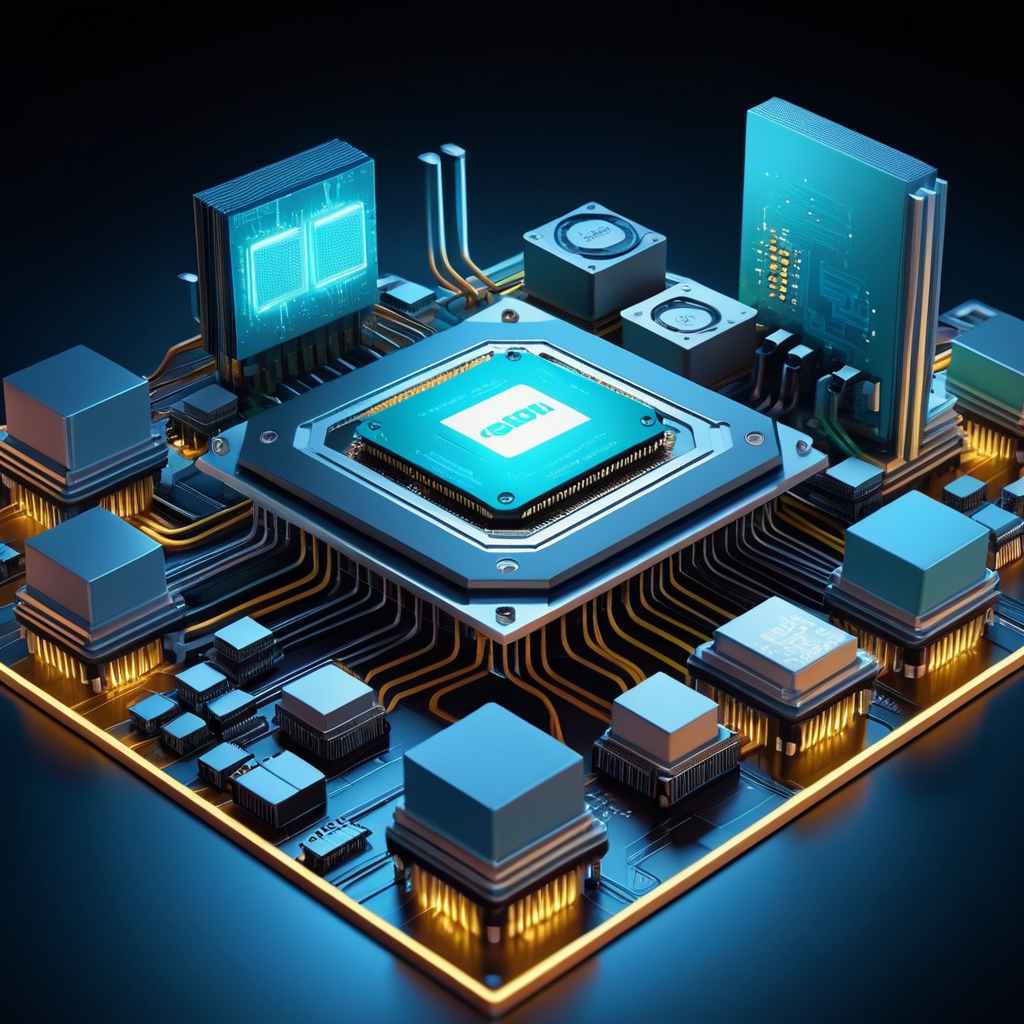
AI factories demand specialized hardware optimized for artificial intelligence workloads, fundamentally different from traditional data center equipment. Graphics Processing Units (GPUs) form the computational backbone, providing massive parallelism ideal for the matrix operations that underlie deep learning. Modern AI factories deploy GPU clusters with thousands of devices working in concert, connected through high-speed networking that minimizes latency during distributed training and inference. NVIDIA’s H100 and newer Blackwell architecture GPUs exemplify the specialized hardware driving modern AI factories, with each generation providing substantial improvements in both performance and energy efficiency.
Beyond GPUs, AI factories incorporate other specialized processors. Tensor Processing Units (TPUs) developed by Google provide alternative acceleration tailored to specific workloads, while Data Processing Units (DPUs) optimize networking and data movement, critical bottlenecks in large-scale AI systems. The heterogeneous hardware landscape means AI factories must support workload placement that directs different jobs to the processor type most suited for the task.
Advanced cooling systems prove essential given the tremendous heat generated by dense compute clusters. Liquid cooling has become standard in modern AI factories, replacing air cooling for improved efficiency and enabling higher compute density. Some facilities implement innovative cooling approaches like direct-chip liquid cooling or utilizing waste heat for other purposes, extracting maximum efficiency from their physical infrastructure.
High-speed networking infrastructure connecting all these components represents another critical element. NVLink interconnects enable rapid GPU-to-GPU communication, essential for distributed training where gradients must flow between devices during model training. Switch fabrics providing low-latency, high-bandwidth connections between compute nodes, storage systems, and networking infrastructure ensure that data flow doesn’t become the bottleneck limiting overall system performance.
Storage infrastructure must balance competing requirements: providing sufficient storage capacity for massive datasets, enabling high throughput to feed compute resources rapidly, supporting low-latency access for inference workloads, and maintaining multiple copies of critical data for reliability. Modern AI factories employ tiered storage approaches, with frequently accessed hot data residing on high-performance NVMe storage, warm data on high-capacity hard drives, and cold archived data in cost-optimized systems.
Software and Orchestration Stack
The specialized hardware provides raw computational power, but software and orchestration layers determine whether that power is utilized effectively. Container orchestration platforms like Kubernetes have become industry standard for managing AI factory resources, abstracting the underlying hardware and enabling flexible workload scheduling. Kubernetes handles the complexity of launching training jobs across dozens or hundreds of GPUs, ensuring that resources are allocated efficiently and jobs can be automatically restarted if they fail.
Machine learning frameworks like PyTorch and TensorFlow provide the programming abstractions that data scientists use to define models. These frameworks abstract low-level GPU programming details, enabling researchers to express models at higher levels of abstraction while automatically optimizing execution on specialized hardware.
Model serving infrastructure deploys trained models into production, exposing them through APIs that applications consume. Serving frameworks like NVIDIA Triton Inference Server optimize model execution for production scenarios where latency and throughput matter critically. These systems implement techniques like batching that group multiple requests together for more efficient execution, caching that stores frequently accessed inference results, and dynamic batching that adjusts batch sizes based on incoming request rates to balance latency against throughput.
Workflow orchestration platforms like Airflow, Prefect, or custom orchestration systems manage the complex dependencies inherent in AI development. They schedule data processing jobs to run when input data arrives, trigger model training when sufficient new data has accumulated, execute validation steps once training completes, and automate deployments when validation passes. These systems provide critical observability, enabling teams to understand why a job failed, which upstream dependencies haven’t yet completed, and whether the overall pipeline is running on schedule.
Monitoring and observability platforms track the health of every component in the AI factory, from underlying hardware through data pipelines to deployed models. These systems collect metrics about GPU utilization, network throughput, storage I/O, job latency, model prediction latency, and thousands of other signals, providing the visibility necessary to diagnose problems and optimize performance.
Data platforms that organize data into lakes, warehouses, or lakehouse architectures, coupled with ETL orchestration tools, manage the flow of data through the factory. These systems ensure data quality, manage access controls, track data lineage, and support the real-time and batch processing needed for training and inference workloads.
AI Factories Versus Traditional Data Centers
Fundamental Architectural Differences
While AI factories might appear superficially similar to traditional data centers—both involve computing infrastructure, storage, and networking—fundamental differences distinguish them. Traditional data centers are engineered for workload diversity, handling a broad range of computing tasks—web servers, databases, transactional systems, analytics—each with different performance characteristics and resource requirements. They prioritize general-purpose performance, cost-effectiveness across diverse workloads, and balanced allocation of compute, memory, storage, and networking resources.
AI factories, by contrast, are purpose-built for artificial intelligence workloads, which differ fundamentally from traditional computing tasks. Artificial intelligence workloads are intensely compute-dense, requiring massive numbers of floating-point operations but often modest amounts of data per computation. Training deep learning models involves iterating through enormous datasets thousands of times, computing gradients, and updating model parameters—patterns that benefit from specialized hardware like GPUs. Inference workloads, while often latency-sensitive, involve executing the same computational graph repeatedly with different input data, which benefits from optimization strategies like batching.
Hardware optimization represents the first major difference. Traditional data centers use general-purpose CPUs optimized for scalar performance, handling diverse workload types efficiently. AI factories deploy specialized accelerators—GPUs, TPUs, DPUs—optimized for the specific patterns that artificial intelligence workloads exhibit. This specialization enables dramatically higher performance for AI workloads but reduces flexibility for non-AI applications.
Cooling and power consumption differ substantially. Traditional data centers are designed for relatively balanced power draw across computing resources. AI factories concentrate tremendous power consumption in GPU clusters, generating proportionally more heat. This drives innovations in cooling—liquid cooling becomes essential rather than optional—and influences facility design fundamentally. A gigawatt-scale AI factory consumes power comparable to small cities, requiring careful power management and sophisticated infrastructure planning.
Networking architecture differs significantly. Traditional data centers implement general-purpose switching fabrics optimized for diverse traffic patterns. AI factories optimize networking for the specific patterns of distributed training—high-bandwidth GPU-to-GPU communication within training clusters, and high-throughput data movement between storage and compute. This drives the adoption of specialized switch fabrics like NVIDIA NVLink switches that provide lower latency and higher bandwidth between GPUs than general-purpose Ethernet networks.
Storage and data architecture reflects different priorities. Traditional data centers emphasize data durability and availability across diverse applications. AI factories optimize for data throughput and low latency—the factory must feed data to GPUs fast enough that compute resources remain utilized. This drives adoption of high-performance parallel file systems, sophisticated caching strategies, and tiered storage approaches that balance cost against performance.
Workload patterns are fundamentally different. Traditional data centers handle thousands of diverse, relatively short-lived workloads—web requests, database queries, transactional updates. AI factories run a smaller number of long-lived, intensive workloads—training jobs that might run for days or weeks, or inference workloads that serve millions of requests continuously. This difference drives different optimization strategies, resource allocation policies, and operational practices.
Optimization Implications
These architectural differences drive distinct optimization approaches. Traditional data centers optimize for average case performance—balancing responsiveness across diverse applications while maintaining reasonable cost. AI factories optimize for peak throughput in the specific domain of artificial intelligence workloads, with metrics like token throughput per GPU, data feeding bandwidth, and model convergence time driving optimization decisions. The two approaches represent fundamentally different optimization philosophies.
Industry Applications and Transformative Use Cases
Manufacturing and Industrial Optimization
Manufacturing represents one of the most impactful domains for AI factories, where the technology enables dramatic improvements across production processes. Predictive maintenance uses AI factory infrastructure to analyze sensor data from manufacturing equipment in real-time, identifying emerging failures before they occur. Rather than following predetermined maintenance schedules or waiting for equipment to fail, AI-powered predictive maintenance systems continuously monitor vibration patterns, temperature, pressure, and dozens of other signals, using trained models to forecast failure risk. Organizations implementing predictive maintenance report downtime reductions exceeding 50% alongside significant equipment lifespan extensions. The financial impact extends beyond maintenance cost savings to include increased production capacity from reduced unplanned downtime and improved delivery reliability.
Quality control and defect detection leverages computer vision and deep learning to identify manufacturing defects with superhuman consistency. Traditional quality inspection relied on visual inspection by human workers, introducing inconsistency and fatigue effects. AI-powered visual inspection systems operating in real-time can identify surface defects, dimensional variations, and assembly errors that humans might miss, while maintaining perfect consistency across shifts. A global automaker implementing AI-based robotic weld inspection reduced inspection time by 70% while simultaneously improving weld quality by 10%.
Process optimization harnesses AI factories to continuously refine manufacturing parameters, identifying optimal operating conditions that maximize efficiency and quality while minimizing waste. Manufacturing processes involve hundreds of interdependent variables, and subtle adjustments to temperature, pressure, speed, or timing can dramatically impact output quality and efficiency. AI factory infrastructure analyzes historical data on how different parameter combinations affect outcomes, and supplies real-time guidance to manufacturing systems about optimal settings. Organizations report productivity improvements of 25-35% through process optimization, alongside quality enhancements and reduced material waste.
Supply chain optimization extends AI factory capabilities beyond the factory floor to encompass procurement, inventory management, and logistics. Demand forecasting models trained within AI factory infrastructure analyze historical sales patterns, seasonal trends, market signals, and external data to predict future demand with increasing accuracy. These forecasts feed into production planning and procurement systems, optimizing inventory levels and ensuring that materials arrive when needed without excessive buildup. Amazon’s demand forecasting during the COVID-19 pandemic, when toilet paper demand surged 213%, demonstrates the value of robust AI factory infrastructure—the system quickly adapted to unprecedented demand patterns, ensuring product availability while preventing excessive stockpiling.
Healthcare and Life Sciences Innovation
Healthcare and pharmaceutical development represent high-stakes domains where AI factory infrastructure enables transformative advances. Drug discovery traditionally required researchers to systematically test millions of molecular compounds against disease targets, a process consuming years and billions of dollars. AI factories enable computational approaches that screen vast chemical libraries in silico, identifying promising candidates with far greater speed and efficiency. Pharmaceutical companies like Pfizer deploy AI factory infrastructure to analyze massive biological datasets, identifying molecular compounds with high therapeutic potential while predicting potential adverse effects. This acceleration of drug discovery reduces both the time and capital required to bring new treatments to patients.
Personalized medicine and treatment planning leverages AI factories to analyze patient-specific genetic, demographic, and clinical data alongside vast datasets of treatment outcomes to recommend therapies optimized for individual patients. Rather than one-size-fits-all treatment protocols, AI factory infrastructure enables medical providers to tailor interventions based on patient-specific factors, improving efficacy while reducing adverse effects.
Medical imaging analysis and diagnostic support employ deep learning models deployed through AI factory infrastructure to analyze medical images—X-rays, MRIs, CT scans—identifying abnormalities, predicting disease progression, and supporting clinical decision-making. These systems operate at scale, enabling diagnostic support across healthcare networks without dramatically increasing radiologist workload.
Financial Services and Risk Management
Financial institutions deploy AI factory infrastructure for applications requiring real-time decision-making on high-volume transactional data. Fraud detection systems analyze transaction patterns, identifying suspicious activity in real-time before fraudulent transactions complete. These systems must balance sensitivity and specificity—catching fraud without generating excessive false positives that block legitimate transactions—and must adapt continuously as fraudsters develop new tactics. AI factory infrastructure enables this through continuous retraining on updated transaction data, maintaining defense against evolving fraud patterns.
Algorithmic trading represents another high-stakes application where AI models analyze market data, news sentiment, and economic indicators to inform trading decisions. The speed advantage from deploying these models on specialized AI factory infrastructure directly translates to financial advantage.
Credit scoring and lending decisions leverage AI factories to analyze applicant data, predicting default risk more accurately than traditional scoring models. This enables lenders to expand access to credit to underserved populations while maintaining appropriate risk management.
Real-World Success Stories and Measurable Impact
The theoretical benefits of AI factories translate into concrete results across organizations. Lilly, a global pharmaceutical leader, deployed the pharmaceutical industry’s most powerful AI factory built on NVIDIA DGX SuperPOD technology specifically for drug discovery applications. This infrastructure enables the organization to accelerate the identification of promising drug candidates, compressing timelines and reducing development costs.
Netflix leverages sophisticated AI factory infrastructure to power recommendation engines serving hundreds of millions of users globally. The system continuously processes viewing history, ratings, and behavioral signals to personalize content recommendations, optimizing both user engagement and content discovery. The complexity of maintaining recommendation accuracy across such massive scale—with constantly changing content libraries and evolving user preferences—requires the industrialized approach embodied in Netflix’s AI factory infrastructure.
Uber operates one of the most sophisticated real-time AI factories in existence, processing continuous streams of location data, historical demand patterns, and real-time availability to optimize ride matching, pricing, and delivery routing. The system must update recommendations literally in milliseconds to maintain low wait times and user satisfaction, driving infrastructure optimization for minimal latency.

Implementation Pathways and Strategic Considerations
Starting Small: Pilot Programs and Iterative Expansion
Organizations beginning their AI factory journey face a critical choice: build comprehensive infrastructure upfront or adopt an iterative approach starting with focused pilots. The evidence strongly favors iterative approaches, where organizations identify specific high-impact use cases, validate that AI factory infrastructure delivers measurable benefits, and gradually expand. This strategy reduces financial risk, allows organizations to build internal capabilities and expertise, and creates early wins that build organizational momentum.
Successful pilot programs typically focus on problems where artificial intelligence can deliver clear, measurable value—reducing downtime through predictive maintenance, improving defect detection, optimizing inventory levels. Pilots should be contained in scope—perhaps targeting a single production line or limited product category—enabling rapid iteration and failure recovery if the approach proves ineffective. Once validated at limited scale, successful pilots can expand incrementally to additional lines, plants, or product categories.
Organizational Readiness and Change Management
The most sophisticated AI factory infrastructure will underperform if the organization lacks readiness to use it effectively. Organizational readiness encompasses five critical dimensions: strategic alignment ensuring AI initiatives connect to business objectives, data governance establishing how data is collected and managed, technical capabilities including infrastructure and tools, talent availability with necessary skills, and cultural transformation preparing people to work differently. Organizations failing to address these dimensions often see AI initiatives stall despite significant infrastructure investment.
Strategic alignment requires clear articulation of how AI initiatives connect to business goals and metrics. When employees understand that a predictive maintenance system directly reduces unplanned downtime and improves on-time delivery, adoption accelerates dramatically compared to technical solutions viewed as isolated experiments. Executive leadership must actively communicate this alignment and demonstrate personal commitment to AI-driven transformation.
Data governance proves foundational; organizations with fragmented data silos, inconsistent data quality, and unclear data ownership struggle to implement effective AI factories. Establishing a unified data strategy, implementing data quality frameworks, and clarifying data ownership and usage rights provides the foundation for AI factory success.
Workforce readiness extends beyond technical training to encompass mindset shifts and new ways of working. AI factory tools and approaches may fundamentally change how teams structure their work, collaborate across functions, and make decisions. Effective change management programs address resistance to these changes, build capabilities through training, and create psychological safety for experimentation and learning from failures.
Governance, Compliance, and Risk Management
Operating AI factories at scale introduces governance and compliance complexities that organizations must address systematically. Data privacy and regulatory compliance are paramount; artificial intelligence systems process increasingly sensitive personal information, and regulations like GDPR, CCPA, and LGPD impose strict requirements on data usage. AI factories must implement privacy-preserving techniques, maintain audit trails demonstrating compliance, and incorporate privacy requirements into data pipeline design from inception rather than as afterthoughts.
AI bias and fairness represent critical governance concerns. Machine learning models can perpetuate or amplify societal biases present in training data, leading to discriminatory outcomes—loan applications denied to protected groups, hiring algorithms exhibiting gender bias, medical treatment recommendations varying inappropriately by demographic characteristics. AI factories must implement governance frameworks ensuring that models are evaluated for bias, that fairness is measured alongside accuracy, and that problematic models are retired rather than deployed.
Security and adversarial resilience must be engineered into AI factories rather than addressed as afterthoughts. Adversarial attacks where malicious actors provide carefully crafted inputs designed to cause models to make incorrect predictions represent an emerging threat. AI factories must implement defenses, including adversarial training and robustness testing. Additionally, the intellectual property embedded in trained models requires protection; organizations must implement access controls preventing model theft and monitoring for unauthorized usage.
Model transparency and explainability, particularly for high-stakes applications like lending, hiring, and healthcare decisions, drive governance requirements. Regulators increasingly require that organizations can explain why an AI system made a particular decision, pushing deployment of more interpretable models or explanation methods alongside powerful but less transparent models.
Economic and Financial Implications
Return on Investment and Cost Structures
The financial case for AI factories hinges on translating infrastructure investment into measurable business benefits. Organizations implementing AI initiatives report diverse financial outcomes depending on use case maturity, technical execution quality, and organizational readiness. Successful implementations report return on investment within 12-24 months, driven by cost reductions, productivity improvements, and revenue enhancements. Manufacturing organizations implementing predictive maintenance and quality control report cost savings of 15-25% in targeted processes, plus quality improvements valued at 10-50% depending on industry.
However, infrastructure costs are substantial. A gigawatt-scale AI factory requires capital investment in the billions of dollars for hardware, facility construction or retrofitting, cooling systems, and power infrastructure. Additionally, operational costs including electricity consumption (a 1 gigawatt AI factory consumes power comparable to a small city), personnel for operations and maintenance, and software licensing add up rapidly.
Total cost of ownership depends critically on infrastructure utilization—idle GPUs that aren’t processing workloads represent pure waste. Well-operated AI factories maintain GPU utilization rates of 90-99%, compared to industry averages of 40-60% for organizations without sophisticated orchestration and workload management. This difference directly translates to financial performance; a 10,000-GPU AI factory with utilization improvement from 50% to 95% generates 257 million dollars in additional ROI over three years compared to similar infrastructure with lower utilization.
On-premise infrastructure investment can be justified through cost-per-token calculations. While cloud-based inference APIs offer convenience, per-token costs remain high. Organizations comparing on-premise AI factories to cloud APIs report cost reductions of up to 87% when amortizing hardware investment over three years. This dramatic cost advantage drives adoption of on-premise infrastructure for high-volume inference workloads.
Sovereign AI and Economic Resilience
The emergence of sovereign AI initiatives reflects economic and geopolitical considerations driving demand for AI factory infrastructure outside traditional cloud provider ecosystems. Nations and enterprises increasingly view control over AI infrastructure as strategic, ensuring that critical decision-making systems remain under local control and that sensitive data doesn’t traverse international borders. This drives investment in regional AI factories owned and operated by governments or localized enterprises rather than relying on global cloud providers.
From an economic perspective, sovereign AI initiatives aim to capture value within regional economies—developing local expertise, supporting regional technology companies, creating high-skill jobs in infrastructure operation, and enabling innovations tailored to local needs. These initiatives acknowledge that artificial intelligence capability increasingly determines economic competitiveness, justifying public investment in AI factory infrastructure.
Future Directions: Agentic AI and Physical AI
The Emerging Era of Agentic AI
Agentic AI represents a fundamental evolution beyond the generative AI systems that have dominated recent years. While generative AI systems respond to prompts with generated content—text, images, code—agentic AI systems make autonomous decisions and take actions within defined boundaries. Rather than merely answering questions, agentic AI agents book meetings, draft responses, generate reports, monitor systems, and execute multistep tasks autonomously. This transition from answering to acting has profound implications for AI factory design and operation.
Agentic systems require substantially different infrastructure compared to traditional generative models. Reasoning capability becomes critical—agents must reason through multistep problems, evaluate alternative approaches, and adapt plans based on environment feedback. This drives demand for models incorporating chain-of-thought reasoning, longer context windows enabling agents to maintain complex state, and iterative inference where models explore multiple reasoning paths before selecting the best action. The computational demands of agentic systems prove much higher than traditional inference; test-time scaling where models engage in extended reasoning consumes up to 100x more compute than traditional inference.
AI factory infrastructure must evolve to support agentic systems efficiently, implementing optimizations for iterative inference, managing state across extended agent interactions, and coordinating between multiple agents solving collaborative tasks. Additionally, governance complexity increases substantially; autonomous agents making real-world decisions require robust safeguards, audit trails, and human-in-the-loop mechanisms ensuring that autonomous behavior remains aligned with organizational values and constraints.
Physical AI and Embodied Intelligence
Physical AI extends artificial intelligence beyond digital systems to robotic and autonomous systems that interact with the physical world. Warehouse robots adapting on-the-fly to optimize task completion, autonomous vehicles navigating complex environments in real-time, manufacturing robots collaborating with human workers, and home assistants performing physical tasks all exemplify physical AI applications. These systems require fundamentally different capabilities compared to purely digital AI—they must perceive physical environments through sensors, reason about physics and safety constraints, generate motor commands for actuators, and continuously adapt based on real-time feedback.
Physical AI imposes severe hardware constraints currently limiting deployment scale. Robots require massive amounts of memory to store world models and prediction systems, deterministic low-latency networking to coordinate multiple agents, advanced sensor fusion for real-time perception, specialized AI chips for on-device computation, and reliable battery technology for sustained operation. Additionally, physical systems require precise actuators and control algorithms enabling safe manipulation—the same force that performs assembly must avoid harming human coworkers.
These constraints drive research into novel hardware architectures. 3D-stacked semiconductor architectures combining multiple specialized processing layers with advanced memory in compact packages, network-on-chip designs enabling flexible reconfiguration of computational resources, and heterogeneous computing with different processor types optimized for specific functions represent emerging approaches. The hardware challenges of physical AI prove substantial—developing specialized processors for each emerging model risks stranded assets as rapidly evolving models outpace hardware design timelines.

Environmental and Sustainability Considerations
As AI factory deployment accelerates, environmental impact becomes increasingly significant. Training large models and executing high-volume inference consume substantial electrical power, driving data center energy consumption upward. Additionally, cooling massive compute clusters requires substantial water consumption, creating tensions in water-stressed regions. Organizations deploying AI factories must address sustainability systematically.
Google’s analysis of Gemini inference carbon footprint reveals both the scale of the challenge and the potential for improvement. A single Gemini text prompt generates measurable environmental impact through electricity consumption and associated emissions. However, efficiency improvements through hardware-software co-design have achieved remarkable results; over a 12-month period, Google reduced the median Gemini text prompt’s energy consumption by 33x while improving response quality. These gains resulted from custom-designed TPU hardware optimized for the specific computational patterns of Gemini, software optimizations reducing unnecessary computation, and improved data center energy efficiency through better cooling and power management.
Organizations deploying AI factories should adopt comprehensive sustainability practices: investing in renewable energy sources powering facilities, implementing advanced cooling technologies minimizing water consumption, optimizing algorithms and hardware-software combinations for energy efficiency, and measuring environmental impact across the full lifecycle of AI systems. The trend toward increasingly efficient AI systems—delivering improved quality while consuming less energy—suggests that environmental concerns need not prohibit beneficial AI applications, but rather drive optimization toward sustainable deployment approaches.
The AI Factory: Manufacturing Tomorrow’s Intelligence
AI factories represent a watershed moment in artificial intelligence adoption, signaling the transition from experimental, project-based approaches to industrialized, continuously-improving systems for intelligence manufacturing at scale. The transformation from viewing artificial intelligence as an isolated technology to recognizing it as an industrial capability that must be engineered for reliability, scalability, and continuous improvement marks a fundamental shift in how organizations approach technology implementation.
The comprehensive framework encompassing specialized hardware, software infrastructure, data pipelines, model serving systems, and governance mechanisms enables organizations to realize benefits that isolated AI projects cannot achieve. Rather than developing individual models for specific problems, AI factory infrastructure provides platforms for continuously producing, validating, and deploying intelligent systems across entire organizations. The data flywheel effect—where improved systems attract usage, generate data, enable further improvements—creates compounding advantages for early adopters.
Yet significant challenges remain. Organizations must navigate substantial infrastructure investment, develop expertise across hardware, software, data engineering, and operations, build organizational readiness spanning culture, governance, and talent development, and address ethical considerations around bias, fairness, transparency, and environmental impact. The evidence suggests that organizations succeeding with AI factories approach them not as technology initiatives but as comprehensive transformations touching strategy, organization, culture, and operations.
Looking forward, emerging capabilities in agentic AI and physical AI will further evolve AI factory infrastructure, demanding even more sophisticated support for iterative reasoning, extended autonomy, physical perception and actuation, and multi-agent coordination. Simultaneously, economic pressures toward sovereign AI will drive development of regional AI factory infrastructure outside traditional cloud provider control. And the imperative toward sustainability will drive continued optimization toward delivering more capability with less environmental impact.
For organizations and nations investing in AI factory infrastructure today, the stakes are substantial. Those building effective AI factories position themselves to lead in competitive landscapes increasingly determined by artificial intelligence capability. Those hesitating risk falling behind at accelerating pace, as competitors deploy continuously-improving systems generating compounding advantages. The AI factory is not merely a technology evolution—it represents the infrastructure of intelligent enterprise, and the competitive advantage it enables will define winners and losers across industries for years to come.
Frequently Asked Questions
How do AI factories differ from traditional data centers?
AI factories differ from traditional data centers by specializing in the entire lifecycle of AI development, from data ingestion and model training to deployment and continuous improvement. They feature highly optimized hardware, such as powerful GPUs and custom AI chips, and specialized software stacks designed for parallel processing of massive datasets, unlike general-purpose data centers.
What is the ‘raw material’ and ‘finished product’ in an AI factory?
In an AI factory, the “raw material” consists of vast amounts of diverse data, including text, images, audio, and video, used for training AI models. The “finished product” is a trained, optimized, and deployable AI model or system, ready to perform specific tasks, integrate into applications, or generate insights, along with continuous model updates.
Why is the industrialization of AI development important?
The industrialization of AI development is crucial for scaling AI solutions efficiently and reliably. It enables faster iteration, reduces development costs, and democratizes access to advanced AI capabilities. By standardizing processes and leveraging specialized infrastructure, AI factories accelerate innovation and ensure that AI models can be developed and deployed at an enterprise scale.