



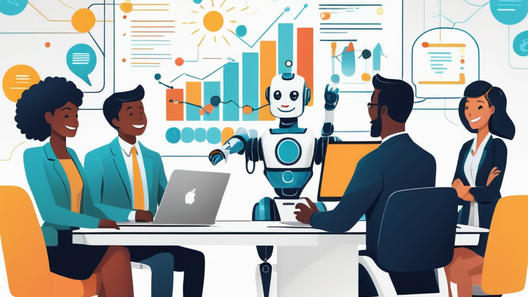

Artificial intelligence represents one of the most transformative technologies of our era, fundamentally reshaping how humans work, learn, and interact with the world. AI encompasses the creation of computer systems capable of simulating human cognitive functions including learning, reasoning, problem-solving, perception, and decision-making, all without requiring explicit step-by-step programming for every task. At its core, artificial intelligence enables machines to process vast amounts of data, identify complex patterns, and generate insights that would be impossible or impractical for humans to discover through manual analysis. The technology has evolved dramatically from theoretical concepts proposed decades ago to practical systems that now permeate nearly every sector of society—from healthcare and finance to transportation and entertainment. This comprehensive report explores the multifaceted nature of artificial intelligence, examining its foundational principles, underlying technologies, diverse applications, critical ethical dimensions, and trajectories for future development. Understanding AI requires not merely grasping its technical underpinnings, but also comprehending its societal implications, regulatory challenges, and the fundamental changes it represents in how organizations and societies harness information to create value.
Foundational Definitions and Core Concepts of Artificial Intelligence
Artificial intelligence, in its broadest definition, represents the ability of a digital computer or computer-controlled robot to perform tasks commonly associated with intelligent beings. However, this seemingly simple definition conceals considerable complexity regarding what constitutes “intelligence” and what capabilities define an AI system. Intelligence itself encompasses multiple interconnected abilities including learning from experience, reasoning about novel situations, perceiving and interpreting sensory information, understanding and generating human language, and exercising creativity and autonomy in decision-making. What distinguishes modern AI systems from traditional computer programs is their capacity to learn and improve from experience without being explicitly programmed for every possible scenario or contingency. Traditional software operates according to predetermined rules written by programmers, whereas AI systems discover patterns within data and adapt their behavior based on these discovered patterns.
The relationship between artificial intelligence and machine learning represents a crucial distinction that often generates confusion in popular discourse. Machine learning is not synonymous with AI; rather, it is a subset and method through which AI systems achieve their capabilities. Machine learning involves training algorithms on data to make predictions or decisions without explicit programming for specific tasks, enabling machines to improve their performance through iterative learning processes. An AI system might employ machine learning techniques to accomplish its goals, but not all AI systems depend exclusively on machine learning. Some AI systems employ knowledge representation, rule-based reasoning, and symbolic approaches to process information and make decisions. Nevertheless, machine learning has become the dominant paradigm in contemporary AI development, particularly with the emergence of deep learning and neural networks that enable AI systems to process increasingly complex, unstructured data.
Deep learning represents a particularly significant evolution within machine learning, distinguishing itself through the use of multilayered neural networks that more closely simulate the complex decision-making power of the human brain. Unlike traditional machine learning models that typically employ only one or two hidden layers, deep learning models utilize dozens, hundreds, or even thousands of layers of interconnected artificial neurons. This architectural complexity enables deep learning systems to automatically extract sophisticated features from large, unlabeled, and unstructured datasets without requiring humans to manually engineer these features. Deep learning has proven exceptionally effective for tasks involving the identification of complex patterns and relationships in vast amounts of data, making it particularly valuable for natural language processing, computer vision, speech recognition, and content generation.
The emergence of foundation models and large language models (LLMs) represents perhaps the most consequential recent development in AI technology. Foundation models are deep learning models trained on massive volumes of broad, unstructured data—often encompassing terabytes or petabytes of text, images, and video from diverse internet sources—enabling them to perform an extraordinarily wide range of downstream tasks. Large language models, which represent the most common type of foundation model today, have been trained on billions of textual parameters, allowing them to generate human-like responses to open-ended prompts and engage in sophisticated conversational exchanges. These models demonstrate remarkable versatility, capable of translation, summarization, question-answering, creative writing, coding, and numerous other language-based tasks. The capabilities of foundation models have sparked both tremendous enthusiasm about AI’s potential and significant concerns about appropriate governance and risk mitigation.
Essential Machine Learning Paradigms and Training Methodologies
Understanding artificial intelligence necessitates grasping the fundamental machine learning paradigms through which AI systems acquire knowledge and capabilities. These paradigms represent fundamentally different philosophical approaches to how machines should learn from data, each with distinct advantages, limitations, and appropriate use cases. Supervised learning, the most straightforward and widely deployed paradigm, involves training algorithms on labeled datasets where each training example has an associated output label or target variable. In supervised learning, the algorithm learns by repeatedly making predictions on training data, comparing these predictions against the known correct answers, and adjusting its internal parameters to minimize prediction errors. This approach proves remarkably effective for well-defined problems where labeled training data exists abundantly, such as email spam classification, medical image diagnosis, credit risk assessment, and countless other applications. The fundamental limitation of supervised learning is its dependency on human-annotated data; creating comprehensive labeled datasets can be extraordinarily time-consuming, expensive, and sometimes impossible when data volume is massive or labeling requires expert knowledge.
Unsupervised learning addresses this constraint by enabling algorithms to discover hidden structures, patterns, and relationships within unlabeled data without requiring human annotation. In unsupervised learning, the algorithm operates independently to find underlying patterns, clustering similar data points together or identifying relationships between variables without being told what to look for. Common unsupervised learning tasks include clustering (grouping similar items together), dimensionality reduction (identifying the most important features or representations), and association rule mining (discovering which items frequently occur together). Unsupervised learning proves invaluable for exploratory data analysis, customer segmentation, anomaly detection, and numerous other applications where the underlying structure or patterns in data are unknown. However, unsupervised learning typically produces less immediately interpretable results than supervised learning, and validating whether discovered patterns are meaningful or useful requires human judgment and domain expertise.
Reinforcement learning represents a fundamentally different paradigm where agents learn by interacting with environments, receiving rewards or punishments for actions taken, and progressively discovering strategies that maximize cumulative rewards. In reinforcement learning, an agent begins in an initial state and must learn which actions to take in each state to maximize long-term rewards, without being explicitly told what the correct action should be. The agent explores the environment, maintains a record of which actions yielded positive versus negative outcomes, and gradually refines its decision-making strategy through trial and error. Q-learning represents one of the most influential reinforcement learning algorithms, employing a table (Q-table) that stores estimated reward values for each action in each state, enabling the agent to make increasingly informed decisions as it accumulates experience. Reinforcement learning has proven remarkably effective for training AI systems to play complex games, control robotic systems, optimize resource allocation, and solve problems where the optimal solution path is not immediately apparent.
A sophisticated variant called transfer learning has emerged as a powerful technique for improving machine learning efficiency and effectiveness, particularly when working with limited labeled data. Transfer learning involves taking a pre-trained model that was previously trained on a large dataset for one task, and adapting it to perform a related but distinct task on a smaller dataset. Rather than training a model entirely from scratch, transfer learning leverages the general features and patterns learned during the initial training phase, dramatically reducing the computational resources and data required to develop effective models for new domains. Fine-tuning, a related approach, goes beyond simple transfer of learned features by unfreezing portions of the pre-trained model and allowing those layers to adapt to the new task, enabling models to learn more task-specific features while retaining the general knowledge from initial training. Transfer learning has become particularly important in natural language processing and computer vision, where training large models from scratch requires prohibitive computational resources.
Architectural Foundations: Neural Networks and Deep Learning Systems
Neural networks represent the fundamental computational architecture upon which most contemporary AI systems are built, with their structure inspired by biological neural systems found in animal brains. A neural network consists of interconnected layers of nodes (artificial neurons) that work together to process and analyze data by passing information through multiple layers of transformation. Each neuron receives inputs from previous layers, multiplies these inputs by learned weights, adds a bias term, and passes the result through an activation function to produce outputs that feed into subsequent layers. The weights and biases represent the “knowledge” learned by the neural network during training; through iterative exposure to training data and adjustment of these parameters to minimize prediction errors, the network gradually learns to perform increasingly complex tasks.
The architectural organization of neural networks has evolved significantly over decades, with convolutional neural networks (CNNs) proving particularly effective for visual tasks, and recurrent neural networks (RNNs), long short-term memory (LSTM) networks, and attention-based transformer architectures proving effective for sequential and language data. Convolutional neural networks employ specialized layers that perform convolution operations, applying learned filters across spatial dimensions to identify local patterns, making them exceptionally efficient for image classification, object detection, and video analysis. Transformer architectures, which rely on attention mechanisms enabling the network to focus on different parts of the input sequentially, have revolutionized natural language processing and enabled the development of large language models by making the training process more efficient and enabling models to process longer sequences of data.
The backpropagation algorithm represents the foundational training mechanism for neural networks, enabling the computation of gradients (partial derivatives) that indicate how to adjust weights and biases to reduce training errors. During training, forward propagation computes network outputs based on current weights and biases; backpropagation then computes gradients indicating how each weight contributes to prediction errors; and optimization algorithms (such as stochastic gradient descent or adaptive moment estimation) use these gradients to adjust weights in directions that reduce errors. This process repeats across many training iterations until the network’s performance plateaus or reaches satisfactory accuracy levels. The Universal Approximation Theorem establishes that neural networks with sufficient hidden layers and neurons can approximate virtually any continuous function, providing theoretical justification for their widespread application to diverse problems.
Conceptualizing Different Types and Levels of Artificial Intelligence
The field of artificial intelligence employs several complementary taxonomies for categorizing AI systems based on their capabilities, sophistication, and potential. The most widely referenced classification divides AI into narrow (weak) AI, general (strong) AI, and superintelligence (super AI), categories representing a progression from current reality to increasingly speculative future possibilities. Artificial Narrow Intelligence, also termed weak AI, represents the only form of artificial intelligence that currently exists. Narrow AI systems are trained to excel at specific, well-defined tasks but cannot transfer their capabilities to unrelated domains. Siri, Alexa, ChatGPT, self-driving cars, medical diagnostic systems, and recommendation engines all exemplify narrow AI—each performs specific tasks remarkably well but lacks the general-purpose problem-solving flexibility of human intelligence. Even the most advanced contemporary AI systems, including ChatGPT, which demonstrates remarkable language capabilities, remain fundamentally narrow in that they cannot accomplish tasks far outside their training domain without significant additional training.
Artificial General Intelligence (AGI), also referred to as strong AI or deep AI, remains purely theoretical despite decades of AI research and recent advances. AGI would represent a machine capable of understanding, learning, and applying knowledge across an essentially unlimited range of domains, matching or exceeding human-level intelligence across any cognitive task. An AGI system would possess the mental flexibility to tackle novel problems in unfamiliar domains without specific retraining, transferring knowledge from one context to radically different contexts much as humans routinely do. Theoretical arguments about AGI’s feasibility diverge sharply; some researchers believe AGI remains fundamentally impossible or would require transformative advances in computing and AI architecture, while others argue the path to AGI involves primarily engineering challenges of scaling existing techniques. Researchers debate whether the emergence of increasingly capable narrow AI systems—particularly foundation models trained on vast datasets—represents progress toward AGI or merely demonstrates the capabilities of increasingly sophisticated narrow specialists.
Artificial Superintelligence (ASI), also termed super AI, represents an even more speculative concept wherein machines would not merely match human cognitive abilities but would dramatically exceed them across essentially all dimensions of intelligence. A superintelligent AI would be orders of magnitude better than humans at problem-solving, reasoning, learning, and potentially at understanding and simulating emotions and social dynamics. Superintelligence has long occupied a central place in science fiction, generating both utopian visions of AI enabling the solution of previously intractable problems and dystopian concerns about machines operating beyond human control or comprehension. Most AI researchers, while taking existential risk concerns seriously, consider superintelligence far more distant than narrow AI applications, if achievable at all.
Another complementary typology classifies AI based on functional characteristics and memory capabilities. Reactive machine AI represents the most basic form, possessing no memory and operating solely based on current inputs, making decisions according to pre-programmed rules or learned patterns without reference to past experience. Chess engines performing individual moves and simple recommendation systems exemplify reactive AI. Limited memory AI, comprising the vast majority of current AI systems, incorporates the ability to access and utilize historical data to inform current decisions. Most contemporary machine learning systems fall into this category, employing training data from the past to make predictions about future scenarios. Theory of Mind AI represents a hypothetical next level of sophistication where systems would understand human mental states, motivations, emotions, and beliefs, enabling them to respond appropriately to human needs and contexts. Emotion AI, currently in early development, represents one form of theory of mind AI attempting to recognize, interpret, and respond to human emotional cues. Self-aware AI, the most sophisticated theoretical category, would possess the capacity to understand its own mental states, consciousness, emotional experiences, and intrinsic motivations—capabilities whose theoretical feasibility remains debated.
Natural Language Processing and Understanding: Enabling Human-Machine Communication
Natural language processing (NLP) represents a particularly consequential subfield of artificial intelligence focused on enabling computers to understand, interpret, and generate human language in both written and spoken forms. Natural language processing addresses a fundamental challenge in AI: human language, with its ambiguity, context-dependence, irregular patterns, and figurative expressions, represents one of the most complex systems of communication. NLP combines computational linguistics (the application of computer science to formal linguistic structures), rule-based modeling of language patterns, statistical analysis of large text corpora, machine learning techniques, and increasingly deep learning approaches to help machines comprehend linguistic meaning. Natural language understanding (NLU), a subset of NLP, focuses specifically on enabling computers to comprehend the semantic and pragmatic meaning behind linguistic input, converting language into logical representations that computer algorithms can process. Natural language generation (NLG), another NLP subset, addresses the reverse problem: generating coherent, grammatically correct, contextually appropriate natural language text from underlying data or logical representations.
The development of transformer architectures and attention mechanisms has revolutionized NLP by enabling models to selectively focus on different parts of input sequences, capturing long-range dependencies and contextual relationships that previous architectures struggled with. These innovations directly enabled the development of large language models like GPT-3, GPT-4, and comparable systems trained on hundreds of billions of textual parameters extracted from diverse internet sources. Large language models, through exposure to vast textual diversity, develop remarkable capabilities in language understanding and generation, including the ability to recognize complex linguistic patterns, engage in multi-step reasoning tasks, perform translation between languages, and generate coherent long-form text. The instruction-tuning process, where LLMs are further trained on examples of humans providing instructions and desirable responses, dramatically improves their ability to follow user requests and provide helpful, harmless, honest outputs.
Conversational AI represents an important application area where NLP techniques enable natural dialogue between humans and machines. Conversational systems must parse user utterances to identify underlying intent, extract relevant entities and contextual information, maintain coherent context across multi-turn conversations, and generate contextually appropriate, grammatically correct responses. Early chatbots employed relatively simple pattern-matching approaches, but modern conversational AI powered by large language models demonstrates remarkable sophistication, including the ability to acknowledge limitations, ask clarifying questions when user requests are ambiguous, and provide nuanced responses that account for conversational context. The emergence of systems like ChatGPT that can engage in extended conversations covering diverse topics has demonstrated the practical power of large language models for creating conversational experiences that many users find remarkably human-like.
Computer Vision and Multimodal AI: Processing and Understanding Visual Information
Computer vision represents another critical subfield of AI focused on enabling machines to analyze, interpret, and generate visual information from images and videos. Computer vision addresses the computational challenge of extracting meaningful information from visual data—determining not merely that an image contains certain visual patterns, but understanding what objects are present, where they are located, how they relate to one another, and what actions are occurring. Deep learning, particularly convolutional neural networks, has transformed computer vision capabilities, enabling systems to achieve or exceed human-level performance on numerous visual recognition tasks. Object detection, a fundamental computer vision task, involves identifying and localizing objects within images, computing bounding boxes around detected objects, and classifying these objects into categories. Modern object detection systems like YOLO (You Only Look Once), R-CNN variants, and Vision Transformers can process images in real-time, identifying multiple objects with remarkable accuracy despite occlusion, varying scales, and complex backgrounds.
The intersection of natural language processing and computer vision has yielded powerful multimodal AI systems capable of processing and connecting information across both textual and visual modalities. Visual question answering systems employ computer vision to analyze images and NLP to understand questions about those images, generating textual answers that demonstrate understanding of both the visual content and linguistic query. Image captioning automatically generates textual descriptions of visual content by combining computer vision features with language generation, enabling applications from accessibility assistance to content organization. Multimodal foundation models trained on aligned pairs of images and text develop the capacity to understand and generate information across both modalities, enabling applications like translation of text from images, visual search, and sophisticated image understanding tasks. Optical character recognition (OCR), one of the earliest successful applications of computer vision, continues to advance, enabling digital extraction and processing of text from physical documents, signs, and other visual sources.
Practical Applications Across Industrial and Social Domains
The transformation of artificial intelligence from academic research topic to practical technology deployed at scale has generated numerous applications that reshape how organizations and individuals accomplish tasks. In healthcare, AI applications span diagnostic assistance, treatment planning, drug discovery, and personalized medicine. AI algorithms trained on medical imaging data can assist radiologists in identifying suspicious findings in X-rays, CT scans, and MRIs, sometimes achieving or exceeding human radiologist performance in detecting specific pathologies. Clinical decision support systems analyze patient data including medical history, laboratory results, vital signs, and demographic information to generate diagnostic suggestions and treatment recommendations. AI-driven drug discovery systems can screen millions of molecular compounds far more efficiently than traditional laboratory-based screening, accelerating the identification of promising drug candidates. Personalized treatment planning systems analyze individual patient characteristics and genetic information to recommend customized treatment approaches tailored to individual patient profiles rather than applying uniform population-based protocols.
Autonomous vehicles represent one of the most visible and technologically complex applications of AI, requiring the integration of computer vision, sensor fusion, real-time decision-making, and sophisticated control systems. Waymo and other autonomous vehicle manufacturers employ deep learning for perception tasks including object detection, semantic segmentation, and tracking of other vehicles and pedestrians. These perception systems must operate reliably under diverse environmental conditions including varying lighting, weather, and traffic scenarios. Real-time decision-making systems must predict the behavior of other road users and plan trajectories that are both efficient and safe, employing reinforcement learning and planning algorithms. The extreme safety criticality of autonomous vehicles has spurred development of interpretable AI systems and extensive validation methodologies to ensure system reliability before deployment.
Manufacturing and industrial automation represent rapidly growing domains where AI enables predictive maintenance, quality assurance, and process optimization. Predictive maintenance systems monitor equipment condition through sensors measuring vibration, temperature, acoustic emissions, and other signals, employing machine learning to predict equipment failures before they occur. These systems can reduce unplanned downtime, lower maintenance costs, and improve overall equipment effectiveness. Computer vision systems inspect manufactured products for defects with consistency and speed exceeding human inspection, improving quality while reducing labor requirements. Robotic systems increasingly employ AI for task planning and execution, enabling robots to collaborate safely with human workers by predicting human intentions and adjusting their behavior accordingly.
Financial services extensively employ AI for fraud detection, risk assessment, trading strategies, and customer service. Fraud detection systems analyze transaction patterns to identify suspicious behavior deviating from established customer baselines, employing machine learning to distinguish legitimate transactions from fraudulent attempts despite the continuous evolution of fraud tactics. Credit risk assessment models predict loan default probability, informing lending decisions and interest rates. Algorithmic trading systems analyze market data to identify trading opportunities and execute trades at speeds and scales impossible for human traders. Chatbots and virtual assistants provide customer service, answering inquiries about accounts and products while escalating complex issues to human agents.
Recommendation systems employed by Netflix, Spotify, Amazon, and numerous other platforms represent perhaps the most economically significant AI application at global scale. These systems analyze user behavior including viewing history, purchase history, ratings, and browsing patterns to predict items likely to match user preferences. Collaborative filtering techniques identify users with similar preferences and recommend items preferred by similar users. Content-based filtering recommends items similar to items the user has previously liked. Hybrid systems combining multiple recommendation approaches achieve superior performance compared to any single approach. By personalizing user experiences and highlighting content likely to match individual preferences, recommendation systems substantially increase engagement, conversion, and user satisfaction while generating enormous economic value.
Ethical Considerations, Governance, and Responsible AI Development
The increasing deployment of AI systems across society has generated profound ethical concerns requiring careful attention from developers, deployers, policymakers, and society broadly. AI systems trained on historical data can perpetuate or amplify existing societal biases and discriminatory patterns, resulting in algorithmic decisions that disadvantage particular groups. Facial recognition systems have demonstrated higher error rates for individuals with darker skin tones, potentially leading to discriminatory law enforcement applications. Hiring algorithms trained on historical employment data can perpetuate gender or racial discrimination if the training data reflects historical hiring biases. Medical algorithms trained predominantly on data from particular demographic groups may perform poorly for underrepresented populations, potentially leading to disparities in healthcare quality.
Algorithmic bias arises from multiple sources including biased training data, problematic design choices by algorithm developers, and feedback loops where biased algorithmic outputs influence future training data in ways that amplify initial biases. Addressing bias requires diverse development teams capable of recognizing potential bias sources from varied perspectives, careful analysis of training data for representation issues and historical biases, rigorous testing of algorithm performance across demographic groups, and ongoing monitoring of deployed systems for performance disparities. Fairness-aware machine learning techniques employ various approaches including reweighting training data, adding fairness constraints to optimization objectives, and post-processing algorithm outputs to achieve more balanced treatment across groups.
Transparency and explainability represent crucial ethical requirements, particularly for AI systems making consequential decisions affecting individuals’ lives in domains like healthcare, criminal justice, and financial services. Black-box AI systems where the decision-making process remains opaque to users and stakeholders generate legitimate concerns about accountability, trustworthiness, and the possibility of hidden biases. Interpretable AI and explainable AI (XAI) approaches address this challenge by either developing inherently interpretable models (such as decision trees or linear models whose logic can be understood by examining model parameters) or by applying post-hoc interpretation methods that provide explanations for black-box model predictions. Interpretation methods including SHAP (SHapley Additive exPlanations) values, LIME (Local Interpretable Model-agnostic Explanations), and attention visualization techniques help users understand which input features most strongly influenced particular predictions. However, genuine understanding of AI reasoning remains challenging, and interpretation methods can themselves introduce bias or mislead users who misinterpret explanations.
Privacy represents another critical ethical dimension, particularly as AI systems process increasingly sensitive personal data. Machine learning models can inadvertently memorize sensitive information from training data and subsequently reveal this information in their outputs. Differential privacy techniques add carefully calibrated noise to training data or query results to prevent inference of individual-level information while preserving overall dataset statistics useful for training. Data minimization principles argue for collecting, retaining, and processing only the personal data necessary for specified purposes. Federated learning enables training AI models across decentralized data sources without centralizing sensitive information, though coordination challenges limit its applicability.
Accountability for AI system outcomes remains unsettled across most legal and regulatory systems. When AI systems make erroneous decisions causing harm, determining which party bears responsibility—the AI developers, system deployers, end users, or AI trainers—involves complex questions spanning technology, law, and ethics. Establishing clear governance structures defining roles and responsibilities throughout the AI lifecycle, from initial conception and data collection through deployment and ongoing monitoring, represents a crucial component of responsible AI development. The European Union’s AI Act represents the most comprehensive regulatory framework to date, classifying AI systems by risk level and imposing specific requirements including conformity assessments and ongoing monitoring for high-risk systems. The NIST AI Risk Management Framework and ISO 42001 standards provide structured approaches to identifying and mitigating AI risks across the development and deployment lifecycle.
The Evolution of AI: Historical Development and Breakthroughs
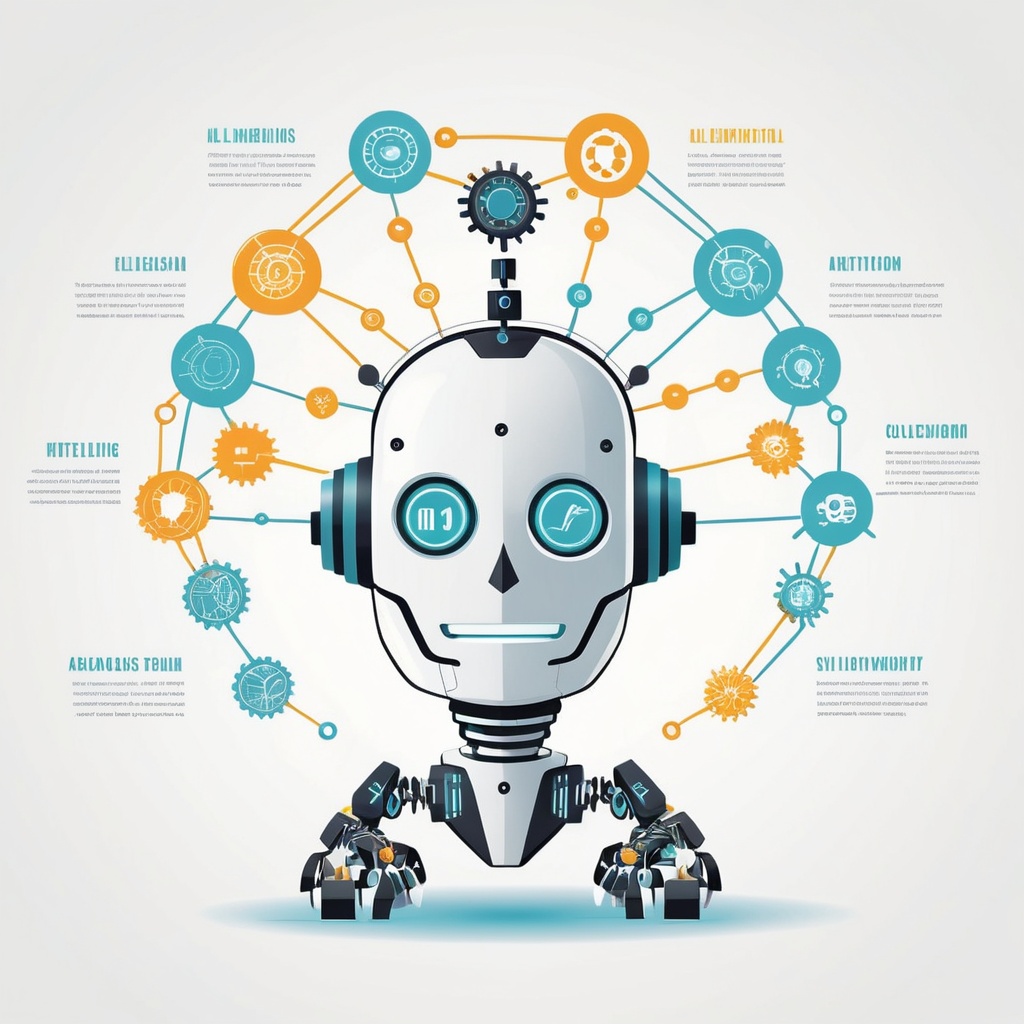
The history of artificial intelligence encompasses roughly seven decades of research, marked by periods of tremendous optimism and significant setbacks before accelerating progress in recent years. The field originated in the 1950s when early computing pioneers including John McCarthy, Marvin Minsky, and others envisioned the possibility of creating thinking machines. The Dartmouth Summer Research Project on Artificial Intelligence, convened in 1956, formally established AI as an academic field and generated tremendous optimism about the prospects for rapidly achieving human-level machine intelligence. Early AI research employed symbolic approaches, representing knowledge as formal logical statements and employing automated reasoning to manipulate these symbols. These symbolic systems achieved notable successes including game-playing programs and the development of expert systems that captured human domain expertise in formal rules for medical diagnosis, equipment configuration, and other specialized tasks.
However, initial optimism gradually gave way to disappointment as the limitations of symbolic AI became apparent. Symbolic systems proved brittle, requiring extensive manual knowledge engineering and struggling with ambiguity and novel situations not explicitly covered by their rule bases. The “AI winters” of the 1970s-1980s and again in the late 1980s-1990s saw reduced funding, publication, and enthusiasm as the gap between early promises and actual capabilities became evident. During these dormant periods, researchers pursuing neural networks and alternative approaches persevered despite limited resources, laying theoretical and technical groundwork that would enable subsequent breakthroughs.
The resurgence of AI research beginning in the 1990s and accelerating dramatically in the 2010s reflected multiple convergent developments. The exponential increase in computing power—particularly through graphics processing units (GPUs) optimized for parallel computation—enabled training neural networks far larger than previously feasible. The emergence of massive labeled datasets including ImageNet transformed supervised learning from data-constrained to data-abundant, enabling training of increasingly sophisticated deep learning models. Geoffrey Hinton’s 2012 demonstration that deep convolutional neural networks could achieve remarkable accuracy in large-scale image recognition tasks sparked renewed enthusiasm for deep learning approaches. This “deep learning revolution” has continued accelerating, with successive breakthroughs including the development of transformer architectures enabling increasingly capable natural language models.
The trajectory from GPT-2 to GPT-3 to GPT-4 to current frontier models demonstrates the remarkable progress enabled by scaling both datasets and model size. GPT-2, released in 2019, demonstrated impressive language capabilities but remained limited in its ability to follow complex instructions and engage in multistep reasoning. GPT-3, released in 2020 with 175 billion parameters (more than 100 times larger than GPT-2), exhibited dramatic capability improvements including the ability to perform few-shot learning, adapting to novel tasks from just a few examples without extensive retraining. ChatGPT, launched in November 2022 and refined through reinforcement learning from human feedback (RLHF), demonstrated the potential for conversational interfaces to bring advanced AI capabilities to mainstream users, garnering tens of millions of users in record time. The development of multimodal models like GPT-4o capable of processing and generating information across text, images, audio, and video further extends AI capabilities.
Current Limitations and the Path Forward
Despite extraordinary recent progress, contemporary AI systems possess significant limitations that remain important to recognize and address. Current narrow AI systems lack the flexibility and transfer learning capabilities of human cognition; a system excelling at medical image analysis cannot readily apply this expertise to financial data analysis or other distinct domains. Language models, despite their sophistication, sometimes generate plausible-sounding but factually incorrect responses (a phenomenon termed “hallucination”), and their knowledge reflects only information available in training data, with no ability to access current information without explicit retraining. AI systems often prove sensitive to minor input changes, with small perturbations to queries potentially generating substantially different outputs. Robustness to adversarial inputs—intentionally crafted inputs designed to fool AI systems—remains inadequate for many high-stakes applications.
Data quality and availability present continuing challenges for AI development. Machine learning practitioners report spending approximately 80 percent of project time on data acquisition, cleaning, preprocessing, and validation rather than on model development itself. Biases present in training data cannot be compensated for through improved algorithms alone; systems trained on biased data will produce biased outputs regardless of algorithmic sophistication. For specialized domains including medicine, legal proceedings, and autonomous vehicle operation, obtaining labeled training data sufficient for training production systems proves extremely challenging and expensive.
The computational requirements of frontier AI systems raise sustainability and equity concerns. Training large language models requires enormous quantities of electrical power and specialized hardware, generating substantial carbon emissions. The computational infrastructure required for training frontier models remains accessible primarily to large well-resourced organizations, potentially concentrating AI development power and limiting the diversity of perspectives shaping AI systems. While smaller, more efficient models increasingly enable deployment of capable AI systems on edge devices and low-power infrastructure, the development of frontier models continues pushing toward greater computational intensity.
Emerging Frontiers and Future Directions
Several emerging research directions and applications suggest the trajectory of AI development over coming years. Agentic AI, representing AI systems that can autonomously plan and execute multistep workflows toward specified goals, has emerged as a major focus of recent research and investment. Unlike current narrow AI systems that respond to individual queries or perform predefined tasks, agentic systems would independently determine necessary actions, execute them, observe outcomes, and adapt their strategies based on results. Agentic AI could transform workflow automation, scientific discovery, and numerous other domains by enabling AI systems to accomplish complex, multistep objectives without continuous human direction.
Efficient AI and edge computing represent areas where impressive capabilities increasingly run on lightweight hardware with low power consumption. Quantization techniques reduce model size by representing weights and activations with lower precision. Knowledge distillation transfers capabilities from large models to smaller models more suitable for deployment on edge devices. These efficiency improvements democratize access to AI capabilities while reducing the computational infrastructure and energy requirements of widespread AI deployment.
AI safety and alignment research has intensified, focused on ensuring that increasingly capable AI systems pursue objectives aligned with human values and remain controllable by human operators. Constitutional AI represents one approach where AI systems are trained with a set of principles or constitutive values guiding their behavior. Interpretability research seeks to understand how increasingly complex models arrive at decisions. Robustness testing systematically identifies failure modes and adversarial vulnerabilities. These safety research efforts aim to address the observation that more capable systems that are misaligned with human values could cause significant harms.
Quantum computing represents a transformative technology that could dramatically accelerate certain AI computations, though practical quantum computers capable of meaningful speedups for common AI tasks remain years away. Quantum algorithms could accelerate optimization problems, molecular simulation, and other computations central to some AI applications. However, quantum computing also poses risks by potentially compromising some encryption-based security systems, necessitating development of quantum-resistant cryptography.
Beyond “What Is AI?”: A Summary
Artificial intelligence has evolved from theoretical concept to practical technology fundamentally reshaping how humans and organizations process information, make decisions, and accomplish complex tasks. The field encompasses diverse approaches including supervised learning, unsupervised learning, reinforcement learning, knowledge representation, and hybrid systems combining multiple paradigms. Contemporary AI systems demonstrate remarkable capabilities in language understanding and generation, visual perception, game-playing, medical diagnosis, scientific discovery, and numerous other domains. The development of foundation models and large language models trained on vast datasets has enabled dramatic capability improvements and demonstrated the potential for increasingly general-purpose AI systems capable of performing well across diverse downstream tasks.
However, realizing AI’s tremendous potential while mitigating its significant risks requires sustained attention from researchers, developers, policymakers, and society broadly. The concentration of AI development power in organizations with massive computational resources raises equity and democratization concerns. Algorithmic bias, lack of transparency, privacy risks, and accountability questions demand ongoing research and regulatory attention. The prospect of increasingly powerful AI systems raises existential risk considerations that merit serious engagement despite remaining speculative. The emergence of agentic AI systems with greater autonomy and goal-directed behavior necessitates development of robust governance frameworks before widespread deployment.
Artificial intelligence ultimately represents a tool whose societal impact will reflect the values, priorities, and governance structures shaping its development and deployment. With thoughtful attention to ethical considerations, diverse perspectives in development teams, transparent governance structures, and commitment to responsible innovation, AI systems can contribute substantially to addressing significant challenges in healthcare, climate, scientific discovery, education, and numerous other domains. The challenge facing contemporary society involves realizing AI’s tremendous potential for beneficial applications while establishing robust safeguards against misuse and unintended harms. This challenge requires not merely technical innovation but also sustained dialogue between technologists, ethicists, policymakers, and broader society to shape the trajectory of AI development toward futures that reflect our collective values and aspirations.
Frequently Asked Questions
What is the core difference between AI and machine learning?
The core difference is that Artificial Intelligence (AI) is a broad concept encompassing machines that can simulate human intelligence, including reasoning, problem-solving, and learning. Machine Learning (ML) is a subset of AI that focuses specifically on enabling systems to learn from data without explicit programming. ML provides the algorithms and techniques that allow AI systems to improve performance over time through experience.
How does deep learning contribute to modern AI systems?
Deep learning significantly contributes to modern AI systems by enabling them to process vast amounts of complex data, like images, audio, and text, more effectively. Using multi-layered neural networks, deep learning models can automatically learn intricate patterns and representations, leading to breakthroughs in areas such as natural language processing, computer vision, and speech recognition. This capability powers advanced AI applications.
What cognitive functions can artificial intelligence systems simulate?
Artificial intelligence systems can simulate various cognitive functions, including learning from data, problem-solving, pattern recognition, and decision-making. They also mimic perception through computer vision and process language via natural language understanding and generation. Advanced AI can even exhibit forms of reasoning and planning, enabling machines to perform tasks traditionally requiring human intellect, such as strategic game playing and medical diagnosis.