



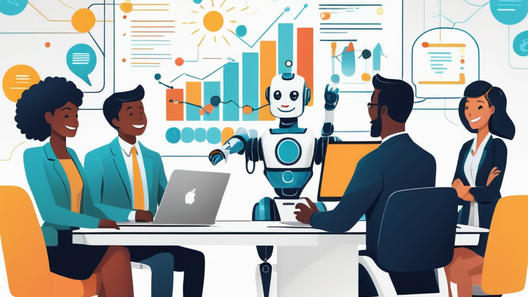
Artificial intelligence machine learning are fundamental technologies transforming how systems learn, reason, and operate. Artificial intelligence (AI) broadly describes machines simulating human cognitive abilities, including problem-solving and decision-making. Machine learning (ML), a core subset of AI, enables systems to learn and improve from data without explicit programming. This post defines these interconnected fields, explaining their differences, foundational concepts, and widespread applications across various sectors.
Foundational Concepts and Definitions of Artificial Intelligence and Machine Learning
Understanding Artificial Intelligence: Scope and Capabilities
Artificial intelligence represents a comprehensive field focused on creating computer systems capable of performing complex tasks that historically required human intelligence. The breadth of AI encompasses a wide range of technologies and approaches designed to enable machines to reason, learn, act, and solve problems in ways that mimic or exceed human cognitive abilities. According to formal definitions, artificial intelligence refers to computer systems that can perform complex tasks normally done by human reasoning, decision-making, creation, and perception. This definition is necessarily broad because AI systems can accomplish vastly different objectives through fundamentally different mechanisms, ranging from game-playing algorithms to medical diagnostic systems to autonomous vehicles navigating unpredictable environments.
The capabilities that characterize AI systems extend across multiple cognitive domains. These systems can see and identify objects in images, understand and respond to human language in both written and spoken forms, learn from new information and experiences to improve their performance, and make detailed recommendations to users and experts based on complex analyses. Moreover, AI systems can increasingly act independently, replacing the need for human intelligence or intervention in specific tasks—a characteristic exemplified by autonomous vehicles that navigate roads and make driving decisions without human control. This independence is crucial to understanding modern AI: rather than requiring constant human direction, contemporary AI systems can perceive their environment, make decisions based on that perception, and execute actions with minimal or no human oversight.
The scope of artificial intelligence is intentionally expansive because it encompasses multiple technological approaches and methods. An AI system might be rule-based, following predetermined logical sequences established by programmers. Alternatively, it might be entirely data-driven, learning patterns from examples rather than following explicit rules. Still others employ hybrid approaches combining rules with learning mechanisms. This diversity of methods means that AI is best understood not as a single technology but as a collection of technologies, techniques, and approaches unified by the common goal of creating machines that can perform intelligent tasks previously requiring human capabilities.
Machine Learning: The Data-Driven Subset
Machine learning represents a more specialized domain within artificial intelligence, focusing specifically on algorithms that enable computers to learn from data and improve their performance without explicit programming for every possible scenario. Rather than a programmer writing rules for every situation a system might encounter, machine learning systems are given data examples and learn to identify patterns within that data, which they then apply to new, unseen situations. This represents a fundamental shift in how we approach computing: instead of encoding all knowledge into a program explicitly, we create systems that acquire knowledge through exposure to data.
The process of machine learning involves training algorithms on datasets where the system iteratively adjusts its internal parameters to minimize errors in its predictions. The more data a machine learning system is trained on, the better it generally becomes at making accurate predictions, making it particularly suited for domains where large volumes of data exist but where encoding all relevant rules would be impractical or impossible. This scalability and adaptability distinguish machine learning from traditional programming approaches and explain why machine learning has become the dominant form of artificial intelligence in practical applications today.
Machine learning operates through several distinct learning paradigms, each suited to different types of problems. Supervised learning involves training algorithms on labeled datasets where each training example is paired with a correct output label, allowing the system to learn the relationship between inputs and outputs. Unsupervised learning, by contrast, works with unlabeled data and attempts to discover hidden patterns, groupings, or structures within the data without predefined correct answers. Reinforcement learning represents a third paradigm where systems learn through interaction with an environment, receiving rewards or penalties for their actions and learning to maximize cumulative rewards over time. Semi-supervised learning combines aspects of supervised and unsupervised approaches, using both labeled and unlabeled data to improve learning accuracy when large quantities of labeled data are unavailable.
The Hierarchical Relationship Between AI and ML
The relationship between artificial intelligence and machine learning can be most clearly understood through the lens of hierarchical categorization, where machine learning sits as a specialized subset within the broader domain of artificial intelligence. Artificial intelligence functions as the overarching umbrella under which multiple distinct approaches and technologies operate, including machine learning, deep learning, robotics, expert systems, and natural language processing. This conceptualization is critical for avoiding the common misconception that AI and machine learning are synonymous terms; they are related but distinct, with machine learning representing one important pathway to achieving artificial intelligence.
The distinction manifests in the scope and objectives of each field. While artificial intelligence pursues the broad goal of creating machines that can perform intelligent tasks generally requiring human reasoning, machine learning specifically focuses on creating algorithms that can learn patterns from data to perform specific tasks. An AI system might employ machine learning algorithms as part of its solution, but it might also use rule-based systems, expert systems, computer vision algorithms, or other techniques that fall outside machine learning. Conversely, all practical implementations of machine learning are fundamentally AI applications, but not all AI applications rely on machine learning.
To illustrate this distinction with concrete examples, consider the Google Nest smart speaker system. When a user asks “How long is my commute today?”, the overall goal of the AI system is to perform a task successfully—answering the user’s question about commute time—a task the user would normally perform themselves. Multiple AI technologies likely work together: natural language processing understands the spoken question, the system accesses traffic data, and various algorithms synthesize this information into a useful answer. However, the machine learning component within this system specifically addresses identifying patterns in transit and traffic data to make accurate predictions about commute time. The machine learning system doesn’t aim to understand the meaning of the question or process natural language; those are handled by other AI technologies. Instead, it focuses narrowly on analyzing historical traffic patterns and current conditions to predict travel time with reasonable accuracy.
Core Technologies and Architectural Approaches in AI and ML
Neural Networks and Deep Learning: Computational Foundations
Neural networks represent one of the most important technological foundations underlying modern artificial intelligence and machine learning, particularly because they have enabled the breakthrough advances in deep learning that characterize contemporary AI systems. Neural networks are modeled after the structure and function of biological neural systems in the human brain, consisting of interconnected layers of nodes (analogous to neurons) that work together to process and analyze complex data. These mathematical structures enable machines to recognize patterns and solve problems in ways inspired by how biological brains process information, though the specific implementations differ substantially from actual biological neural networks.
The architecture of neural networks involves organizing computational units into layers, with each layer receiving input from the previous layer and passing its output to the next layer. In simple neural networks used in classical machine learning, a model typically contains an input layer, one or two hidden layers where computation occurs, and an output layer that produces results. Deep learning, by contrast, uses multilayered neural networks called deep neural networks that contain dozens, hundreds, or even thousands of hidden layers, enabling the system to learn increasingly abstract and complex representations of data at successive levels. This depth allows deep learning systems to capture complex patterns and relationships that shallow networks would struggle to learn, making deep learning particularly effective for tasks involving large, unstructured datasets such as images, text, and speech.
During training, neural networks adjust their parameters—the weights and biases connecting neurons—through mathematical optimization processes designed to minimize prediction errors. This training process, typically using algorithms like gradient descent and backpropagation, gradually moves the network’s parameters toward values that allow it to make accurate predictions on training data while still generalizing well to new, unseen data. The effectiveness of this approach has proven remarkable: modern deep neural networks have achieved superhuman performance on numerous tasks including image recognition, language translation, and game-playing, demonstrating the power of this learning paradigm.
Several specialized types of neural networks have emerged to address specific problem domains. Convolutional neural networks (CNNs) excel at processing visual data by using specialized layers that preserve spatial information in images, making them particularly effective for image classification, object detection, and computer vision tasks. Recurrent neural networks (RNNs), including variants like Long Short-Term Memory (LSTM) networks, are designed to process sequential data where the order of elements matters, making them suitable for language processing, time series analysis, and speech recognition. Transformer-based models, which introduced the self-attention mechanism, have revolutionized natural language processing and power most contemporary large language models, enabling systems to efficiently process long sequences of text and capture complex relationships between distant elements.
Types and Categories of Machine Learning Approaches
Machine learning encompasses several distinct paradigms, each suited to different types of problems and data scenarios, and understanding these distinctions is essential for comprehending how machine learning systems are applied across different domains. Supervised learning involves training algorithms on datasets where both inputs and desired outputs are provided, allowing the algorithm to learn the mapping between them. Classification and regression represent the two primary supervised learning tasks: classification predicts which discrete category an example belongs to (such as determining whether an email is spam or legitimate), while regression predicts continuous numerical values (such as predicting house prices from features like location and square footage).
Unsupervised learning approaches operate on unlabeled data and seek to discover inherent structures, patterns, or relationships within that data. Clustering algorithms, such as k-means clustering, partition data into groups of similar items without predefined labels, discovering natural groupings that may not have been obvious to human analysts. Association rule mining identifies relationships between variables in large datasets, such as discovering which products tend to be purchased together in grocery transactions. Dimensionality reduction techniques like Principal Component Analysis (PCA) reduce the number of features in a dataset while preserving important information, helping with data visualization and improving computational efficiency.
Reinforcement learning represents a fundamentally different paradigm where an agent learns through interaction with an environment, receiving rewards or penalties for its actions and learning to maximize cumulative rewards over time. Unlike supervised learning with labeled examples or unsupervised learning discovering patterns, reinforcement learning involves trial-and-error learning where the correct action often isn’t known in advance but must be discovered through experimentation. This approach has proven particularly effective for applications like game-playing (famously used to train systems that defeated world champions in chess and Go), robotics (training robots to perform complex physical tasks), and autonomous systems (where decisions must be optimized over long sequences of actions in uncertain environments).
Semi-supervised learning bridges supervised and unsupervised approaches, using combinations of labeled and unlabeled data to improve learning performance when large quantities of labeled data are expensive or difficult to obtain. This approach recognizes that in many real-world scenarios, some data is labeled (perhaps through human annotation) while much more data exists without labels, and combining these two types of data can improve model performance beyond what supervised learning on labeled data alone could achieve. Transfer learning and fine-tuning represent meta-approaches that leverage knowledge learned on one task to improve performance on a different but related task, enabling models to learn effectively even with limited data for the target task by building on knowledge acquired from larger source datasets.

Specialized Domains and Real-World Applications
Natural Language Processing: Understanding and Generating Human Language
Natural language processing (NLP) represents a crucial subfield of artificial intelligence dedicated to enabling computers to understand, interpret, and generate human language in both written and spoken forms. This domain addresses one of the most distinctive capabilities that humans possess—the ability to communicate through language—and represents an essential component of many contemporary AI applications from chatbots and virtual assistants to machine translation and sentiment analysis systems. Natural language processing combines computational linguistics, machine learning, and deep learning to accomplish its objectives, bringing together rule-based linguistic analysis with data-driven pattern recognition.
The techniques employed in natural language processing must address multiple levels of language complexity, from the surface level of individual characters and words to the deep semantic meaning of entire documents. Tokenization breaks text into meaningful units like individual words or phrases, stemming and lemmatization reduce words to their root forms (transforming “running,” “runs,” and “run” all to their common root “run”), and stop word removal eliminates common words that contribute little meaning to analysis. Named entity recognition identifies and classifies specific entities like names of people, organizations, locations, and dates within text, enabling systems to understand what a text is discussing at a granular level.
Modern natural language processing increasingly relies on transformer-based architectures and large language models that can process entire documents or even collections of documents as sequences of tokens (where a token might be a word, subword, or individual character). These systems learn through pre-training on vast amounts of text data to predict missing or masked tokens, developing an implicit understanding of language patterns, facts, and concepts that prove useful for downstream tasks. After pre-training, these models can be fine-tuned or adapted for specific applications like question-answering, text summarization, translation, or sentiment analysis, often achieving state-of-the-art performance on these specialized tasks despite having never been explicitly trained on task-specific data.
Computer Vision: Interpreting and Analyzing Visual Information
Computer vision represents another essential domain of artificial intelligence focused on enabling computers and systems to interpret and analyze visual data including images, videos, and other visual inputs, deriving meaningful information and insights from this visual information. This field addresses the challenge of extracting useful information from visual data in ways that mimic or exceed human visual perception, enabling applications from medical image analysis to autonomous vehicle navigation to quality control in manufacturing. Computer vision tasks range from relatively simple image classification (determining what category an image belongs to) to complex tasks like three-dimensional reconstruction, object tracking, and scene understanding.
Deep learning and particularly convolutional neural networks have revolutionized computer vision by enabling systems to automatically learn visual features without requiring manual feature engineering. Rather than requiring human experts to manually define features like edges, shapes, or textures to extract from images, CNNs learn these features automatically through training on large labeled datasets, discovering increasingly abstract representations at successive layers of the network. This capability has driven dramatic improvements in accuracy across numerous computer vision tasks and enabled applications that were previously infeasible, from real-time object detection in video streams to accurate medical diagnosis from imaging data to autonomous vehicle perception systems.
Contemporary computer vision applications extend far beyond simple image classification. Object detection systems identify and localize multiple objects within images, useful for applications like surveillance, autonomous driving, and retail analytics. Semantic segmentation assigns a category label to each pixel in an image, useful for applications like medical image analysis where precise identification of anatomical structures is critical. Pose estimation determines the positions and orientations of people or objects in images and video, enabling applications in sports analytics, fitness tracking, and human-computer interaction. These specialized applications demonstrate how computer vision technology has matured from a research topic into a practical technology deployed across diverse industries.
Cross-Industry Applications of AI and Machine Learning
The practical applications of artificial intelligence and machine learning have proliferated across virtually every sector of the economy, with organizations deploying these technologies to increase efficiency, reduce costs, improve decision-making, and enable entirely new capabilities. In healthcare, machine learning algorithms analyze medical images to detect signs of disease like cancer from X-rays, CT scans, and MRI scans, often achieving diagnostic accuracy matching or exceeding human radiologists for specific tasks. AI-powered systems analyze electronic health records to forecast patient health risks, identify patients likely to experience adverse events, and recommend preventive interventions. Robotic surgical systems use AI to enhance precision during complex procedures, enabling minimally invasive approaches that reduce patient recovery times and complications.
In retail and e-commerce, machine learning powers recommendation engines that analyze customer behavior and preferences to suggest products likely to interest each customer, substantially increasing average order value and customer satisfaction. Demand forecasting systems analyze historical sales patterns, market trends, and other factors to predict future demand for products, helping retailers maintain optimal inventory levels and reduce both stockouts and overstock situations. Computer vision systems in physical stores use cameras to monitor shelf inventory in real-time, automatically alerting staff when products need restocking or identifying missing items for investigation.
Manufacturing employs AI and machine learning for predictive maintenance, where sensors on equipment collect operational data that machine learning algorithms analyze to predict when equipment is likely to fail, enabling maintenance before failures occur rather than after, substantially reducing unplanned downtime and production disruptions. Quality control systems use computer vision to inspect manufactured products for defects with greater speed and consistency than human inspectors, improving quality and reducing waste. Robotics in manufacturing increasingly employ machine learning to enable robots to learn new tasks, adapt to variations in their environment, and collaborate effectively with human workers.
Financial services use machine learning extensively for fraud detection, analyzing transaction patterns to identify suspicious activity, for credit risk assessment, predicting the likelihood that borrowers will repay loans, and for algorithmic trading, making automated investment decisions based on market data and economic indicators. Supply chain optimization uses machine learning to predict demand, optimize inventory locations, and plan efficient routes for transportation, helping companies reduce costs and improve delivery times.
Challenges, Limitations, and Ethical Considerations
Bias, Fairness, and Discrimination in AI Systems
A persistent and serious challenge facing artificial intelligence and machine learning systems concerns bias and discrimination: AI systems trained on historical data that reflects societal biases can perpetuate and amplify those biases, leading to discriminatory outcomes affecting hiring, lending, criminal justice, and other consequential domains. The problem arises because machine learning systems learn patterns from training data, and when training data reflects historical discrimination (such as hiring data showing past gender bias in hiring decisions), the algorithms learn to replicate those biased patterns when making predictions about new job applicants. This creates a vicious cycle where historical injustice becomes baked into algorithmic decision-making systems that might be considered more “objective” than human judgment.
The consequences of biased AI systems can be severe. Hiring algorithms trained on historical employment data might systematically discriminate against women or minorities if past hiring showed bias against these groups. Loan approval systems might unfairly deny credit to applicants from certain demographics if training data reflected historical lending discrimination. Criminal justice systems using AI might recommend harsher sentences for certain groups if training data reflected patterns of systemic bias in the criminal justice system. These harms are particularly concerning because they occur at scale—a biased algorithm can affect millions of people—and because the algorithmic nature of the decisions might make the bias less visible and thus harder to identify and correct than explicit human discrimination.
Addressing bias in AI systems requires intervention at multiple stages of development and deployment. During data collection and preparation, practitioners must carefully examine datasets to identify and document potential biases, considering what groups might be underrepresented or misrepresented in the data. During model development, fairness assessment tools can evaluate whether models make systematically different predictions for different demographic groups, and models can be adjusted to improve fairness even if this means accepting some reduction in overall accuracy. During deployment, systems should include monitoring to detect when bias emerges in real-world performance, with mechanisms to address detected bias and improve fairness.
Transparency, Explainability, and the Black Box Problem
Machine learning models, particularly deep neural networks, often operate as “black boxes”—systems that produce predictions or decisions but in ways that even the designers of the system cannot fully explain or interpret. This opacity creates significant challenges for trust and accountability, particularly in high-stakes domains like healthcare and autonomous vehicles where understanding the reasoning behind decisions is critical for safety and for ensuring appropriate human oversight. A model might achieve high accuracy on predicting medical diagnoses, for example, but if we cannot understand what features the model is using to make its predictions, we cannot verify that it is reasoning correctly, identify potential biases, or troubleshoot when it makes errors.
Explainable artificial intelligence (XAI) represents an emerging field dedicated to developing methods that make AI systems’ reasoning more transparent and interpretable to human users. These methods seek to answer critical questions about AI decision-making: What features of the input did the model attend to when making its prediction? Why did the model choose one output over alternatives? What types of inputs would lead to different outputs (counterfactual explanations)? Various techniques have been developed to address these questions, from relatively straightforward approaches like analyzing the importance of input features to more sophisticated methods like attention visualization in neural networks that highlight which parts of an image the model focused on when making a classification decision.
Transparency in AI systems extends beyond technical explainability to include broader disclosure about how AI systems are trained, what data they are trained on, how they are evaluated, and what their limitations are. Organizations deploying AI systems have a responsibility to help stakeholders understand what to expect from these systems and what their limitations are, enabling more informed decision-making about when and how to trust AI recommendations. This requires not just technical documentation but communication adapted to the knowledge level of different stakeholders—explaining to healthcare professionals how a diagnostic AI system works requires different language and emphasis than explaining the same system to patients relying on its recommendations.

Hallucinations, Inaccuracy, and Reliability in AI Systems
A particularly notable limitation of contemporary large language models and generative AI systems is their tendency to “hallucinate”—to generate plausible-sounding but factually incorrect information with confidence, creating false information including nonexistent citations, invented quotes, and fabricated data. These hallucinations represent a fundamental characteristic of how large language models work: they are essentially sophisticated pattern-matching systems trained to predict the next token (word or subword) in a sequence based on the previous tokens, without built-in mechanisms to verify that generated text is factually accurate. A language model might generate text that sounds authoritative and well-reasoned but contains substantial inaccuracies because its training objective rewards generating text that matches patterns in training data, not necessarily text that is true.
The consequences of hallucinations can be severe when large language models are deployed in contexts where accuracy is critical. A notable legal case exemplified the problem: a lawyer used ChatGPT to research legal citations for a court filing, and the AI system generated citations to nonexistent cases that the lawyer included in his brief, leading to embarrassment and professional consequences when the judge pointed out that the citations did not exist. In scientific research, studies have documented that large language models frequently cite research that does not exist or misattribute quotes to researchers who never said them, posing serious risks to the integrity of academic research if researchers rely on these systems for literature review. In healthcare, medical professionals using language models for assistance could receive confident but incorrect information about diagnoses or treatments, potentially leading to harm to patients.
Researchers have identified hallucinations as resulting from how language models are trained and evaluated: systems that guess even when uncertain are rewarded more highly during training than systems that acknowledge uncertainty, leading models to generate confident false information rather than expressing appropriate uncertainty. Various mitigation strategies have been proposed and are in development, including having multiple AI systems debate each other until reaching consensus on answers, actively validating information generated by language models using web search or external knowledge bases, and training systems to better estimate their confidence levels and express uncertainty when appropriate. Despite these efforts, hallucination remains a significant limitation of current large language models, making these systems unsuitable for applications requiring high reliability without substantial human oversight and verification.
Privacy, Security, and Surveillance Concerns
The effectiveness of many artificial intelligence and machine learning systems depends on access to large volumes of personal and sensitive data, raising important questions about privacy, security, and appropriate use of this information. Training machine learning models often requires massive datasets that may contain personal information including medical records, financial data, browsing history, and behavioral data collected through digital devices and services. This creates risks that sensitive personal information could be exposed through data breaches, inappropriately used for purposes beyond what individuals consented to, or employed for surveillance and monitoring that violates human rights and privacy.
The concentration of data collection by large technology companies raises particular concerns, as does the use of facial recognition and other biometric identification technologies for surveillance purposes, particularly by authoritarian governments that may use these technologies to monitor and control specific populations. China’s use of facial recognition technology to monitor and enforce control over ethnic minorities has been documented as a form of mass surveillance enabling discrimination and human rights abuses. Even in more democratic societies, facial recognition systems deployed for law enforcement can amplify existing biases and disproportionately affect marginalized communities if the underlying training data reflects demographic biases in historical law enforcement data.
Addressing privacy and security concerns requires multiple approaches. Data minimization principles suggest collecting only data necessary for specific purposes, and data retention limits reduce the amount of sensitive information stored. Differential privacy techniques add carefully calibrated noise to datasets so that machine learning models trained on these datasets provide accurate aggregate statistics while making it difficult to extract information about specific individuals. Privacy-preserving machine learning approaches like federated learning train models on decentralized data without centralizing sensitive information, and encryption techniques can enable computation on encrypted data without decrypting it. Regulatory frameworks like the European Union’s General Data Protection Regulation establish legal requirements for how personal data can be used and require organizations to implement appropriate privacy protections.
Recent Advances and Emerging Directions in AI and ML
Generative AI and Large Language Models: A New Paradigm
Generative artificial intelligence represents a significant shift in how AI systems are developed and deployed, moving from systems trained for specific narrow tasks toward foundation models that learn general patterns from vast amounts of data and can then be adapted to numerous downstream applications. Large language models like GPT-3, GPT-4, and their competitors form the technological foundation of contemporary generative AI, trained on hundreds of billions of parameters and vast amounts of text data to learn patterns in language that enable them to generate new text, answer questions, summarize documents, translate between languages, and accomplish numerous other tasks without task-specific training.
The transformer architecture and self-attention mechanism introduced in 2017 revolutionized how language models are trained and enabled the development of these large-scale systems. Rather than processing text sequentially word-by-word in ways that made parallel computation difficult, transformers process entire sequences at once and use self-attention to weight the importance of different words in relation to each other, enabling efficient training on massive datasets using modern parallel computing hardware. This architectural innovation, combined with the discovery that larger models trained on more data consistently outperform smaller models, initiated an era of rapid scaling where model size and training dataset size increased by orders of magnitude.
Generative AI systems produce novel content in response to user inputs rather than simply classifying or predicting labels from inputs. Given a text prompt, large language models generate text by repeatedly predicting the most likely next word based on all previous words, a process called autoregressive generation that creates fluent, coherent text but also enables hallucinations when the model assigns high probability to plausible-sounding but false tokens. Image generation models like DALL-E use diffusion processes or other generative architectures to create novel images matching text descriptions, while video generation systems extend these capabilities to temporal sequences of images. These generative capabilities enable applications from content creation to code generation to creative assistance, but also raise concerns about misinformation, copyright infringement, and appropriate attribution of work created with AI assistance.
Agentic AI and Autonomous Systems
Agentic AI represents an emerging frontier where AI systems move beyond responding to specific queries to autonomously planning and executing multistep workflows, making decisions, taking actions, and adapting to outcomes with minimal human intervention. Unlike chatbots and other AI models operating within predefined constraints and requiring human intervention to trigger actions, AI agents possess agency—the capacity to act independently and purposefully—setting goals, planning action sequences to achieve those goals, and adapting their plans when circumstances change or outcomes diverge from expectations.
The potential applications of agentic AI are substantial and span numerous domains. In the workplace, AI agents could function as autonomous assistants handling routine administrative tasks, scheduling meetings, managing email, processing documents, and flagging items requiring human attention. In customer service, agents could converse with customers, understand their needs, and autonomously take actions like processing payments, checking fraud, and arranging shipments without human intervention. In software development, agents could autonomously plan and execute complex software engineering tasks, substantially accelerating development cycles. In scientific research, agents could autonomously design experiments, analyze results, and iterate on hypotheses, potentially accelerating scientific discovery.
However, agentic AI also raises important challenges and risks. Autonomous systems taking consequential actions without human oversight create risks of harm if the systems make poor decisions or if their goals become misaligned with human values and intentions. Ensuring that autonomous AI systems remain aligned with human values, maintain appropriate transparency about their decision-making, and maintain some form of meaningful human control remains an unsolved problem requiring ongoing research and development.
The Trajectory Toward Artificial General Intelligence
Artificial general intelligence (AGI), also known as strong AI, represents a theoretical state where AI systems achieve human-level intelligence across a broad range of tasks, possessing the ability to understand, learn, and apply knowledge across domains and contexts with the flexibility and generalization capability that characterizes human intelligence. Unlike contemporary narrow AI systems that excel at specific tasks but lack the ability to transfer learning to substantially different domains, AGI would combine the depth of expertise across numerous domains with the flexibility to address novel problems not encountered during training.
Predictions regarding when AGI might be achieved vary widely among researchers and technologists, reflecting genuine uncertainty about what capabilities are required for AGI and how quickly progress might occur. Some researchers and entrepreneurs predict AGI could emerge in the relatively near term—between 2026 and 2035—driven by rapid advances in large language models and computing power. Others maintain more conservative predictions, placing AGI arrival much further in the future or questioning whether AGI as typically conceived is even possible given fundamental limitations of current approaches. This diversity of opinion reflects both excitement about rapid recent progress and appropriate caution about extrapolating current trends into the future, particularly given that previous predictions of AI capabilities have often been overoptimistic.
What seems clearer is that the trajectory of capabilities has accelerated. Task length measures that track the longest tasks frontier AI models can reliably complete have grown exponentially, with models now capable of completing tasks requiring an hour of human effort while earlier models could barely handle tasks of a few seconds duration. If such exponential improvements continue, AI systems would eventually achieve capabilities approaching human-level general intelligence on many tasks, though substantial gaps and limitations would likely persist, particularly in physical embodiment, true understanding versus pattern matching, and alignment with human values.
The Economic and Workforce Implications of AI and ML
The economic implications of artificial intelligence and machine learning extend to fundamental questions about productivity, growth, and the future of work. Economic analyses suggest that generative AI could increase productivity substantially, with estimates indicating aggregate productivity growth of 1.5 percent by 2035, nearly 3 percent by 2055, and 3.7 percent by 2075 if adoption patterns proceed as historical precedent suggests for transformative technologies. These productivity gains would translate into significant economic growth, as improved productivity enables more output from the same amount of labor and capital.
The distribution of these benefits across workers and sectors matters significantly for social welfare and political stability. Analyses suggest that occupations around the eightieth percentile of earnings—professional and technical roles—are most exposed to AI automation, with roughly half their work potentially susceptible to automation, while the highest-earning occupations face lower exposure and the lowest-earning occupations face the least exposure. This exposure pattern differs from previous waves of automation that disproportionately affected lower-wage workers, suggesting that middle and upper-middle income professionals may face particular disruption in coming years.
The potential exists for AI augmentation rather than simple replacement, where AI systems amplify human capabilities rather than substitute for human workers. Contemporary implementations increasingly feature humans and AI working together, with AI handling specific components of workflows (data analysis, pattern recognition, routine decision-making) while humans maintain oversight, make final decisions on consequential matters, and address novel situations outside the AI system’s training. This augmentation paradigm preserves human agency and control while capturing many of the productivity benefits of AI, though it requires deliberate design choices to implement successfully and conscious organizational decisions to favor augmentation over automation.
AI/ML: Our Concluding Insights
Artificial intelligence and machine learning represent technological innovations of profound significance, transforming how organizations operate, how work is accomplished, and how society addresses complex challenges across healthcare, finance, manufacturing, transportation, and virtually every other domain. Understanding what these technologies are—their capabilities, their limitations, and their appropriate applications—has become essential for business leaders, policymakers, technologists, and informed citizens navigating an increasingly AI-integrated world.
The distinction between artificial intelligence as a broad category of technologies aimed at creating intelligent machines and machine learning as a specialized subset focused on learning from data proves essential for clear thinking about these technologies. While machine learning dominates contemporary AI applications and has driven most recent breakthroughs, other AI approaches including robotics, expert systems, and natural language processing contribute substantially to the AI landscape. The core technological drivers of recent advances—neural networks, deep learning architectures, transformer models, and the availability of massive datasets and computational resources—have enabled systems with remarkable capabilities, from defeating human experts at complex games to generating fluent text to diagnosing diseases from medical images.
Yet current AI and ML systems also face significant challenges and limitations that organizations must understand before deploying these technologies in high-stakes contexts. Bias embedded in training data propagates through algorithms to create discriminatory outcomes. The black-box nature of neural networks creates challenges for trust and accountability. Hallucinations in large language models generate confident false information. Privacy and security risks emerge from dependence on sensitive data. These challenges do not negate the value of AI and ML but rather suggest that responsible deployment requires ongoing attention to fairness, transparency, accuracy, and ethics.
Looking forward, the trajectory of AI and ML suggests continued rapid progress with generative AI and agentic systems pointing toward increasingly autonomous and capable systems. Whether these advances lead toward artificial general intelligence remains uncertain, but the capability frontier continues expanding. The future of work increasingly features human-AI collaboration where humans maintain agency and decision-making authority while AI systems amplify capabilities and handle specific task components. Economic productivity could increase substantially, though the distribution of these benefits across workers and sectors requires deliberate policy attention.
Organizations and individuals developing and deploying AI and ML systems bear responsibility for ensuring these powerful technologies are developed responsibly, deployed fairly and transparently, maintained securely, and directed toward beneficial purposes. Policymakers must develop regulatory frameworks that protect individuals and society while enabling beneficial innovation. Technologists must continue advancing both capability and responsibility, improving algorithms while making them more interpretable, fair, and robust. Society must develop appropriate expectations about what these technologies can reliably do and what risks they pose, enabling informed collective decisions about how to govern their development and deployment. Understanding what AI and ML truly are—their genuine capabilities alongside their real limitations—provides essential foundation for all these efforts.
Frequently Asked Questions
What is the difference between artificial intelligence and machine learning?
AI is a broader field focused on creating intelligent machines that can reason, understand, and learn. Machine Learning (ML) is a subset of AI that enables systems to learn from data without explicit programming. ML focuses on algorithms that allow computers to improve their performance on a specific task over time through experience, making it a key method for achieving AI.
How does machine learning relate to artificial intelligence?
Machine learning is a critical subset and an approach to achieving artificial intelligence. AI encompasses various techniques for making machines intelligent, including reasoning, problem-solving, and perception. ML provides AI systems with the ability to learn from data, identify patterns, and make predictions or decisions autonomously, thus enabling many modern AI applications.
What are the key capabilities of artificial intelligence systems?
AI systems possess capabilities such as learning, reasoning, problem-solving, perception, and understanding human language. They can analyze vast datasets, recognize patterns, make predictions, automate tasks, and adapt to new information. Key applications include natural language processing, computer vision, robotics, expert systems, and decision-making support in various industries.