



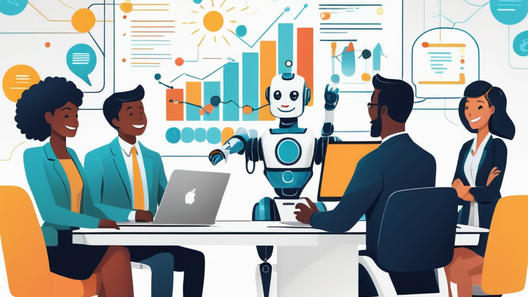

Generative artificial intelligence represents a transformative shift in how machines create and generate new content across multiple modalities. Generative AI refers to deep-learning models that can generate high-quality text, images, videos, audio, software code, and other forms of data based on patterns learned from training data. Since the public release of ChatGPT in November 2022, which popularized generative AI for general-purpose text-based tasks, this field has experienced explosive growth with major tools including chatbots such as ChatGPT, Copilot, Gemini, and Claude; text-to-image models such as Stable Diffusion, Midjourney, and DALL-E; and text-to-video models such as Veo and Sora becoming household names. The generative AI market is projected to reach approximately $85 billion by 2029, marking a compound annual growth rate of 40% from 2024 to 2029, indicating the accelerating commercial viability and adoption of these technologies across industries worldwide. This comprehensive analysis explores the technical foundations of generative AI tools, their diverse applications, the landscape of leading solutions, and the significant challenges organizations must navigate as they implement these transformative technologies.
Fundamental Concepts and Definition of Generative AI
Understanding Generative AI
Generative AI can be fundamentally understood as a machine-learning model trained to create new data rather than making predictions about a specific dataset. Unlike traditional artificial intelligence systems that analyze and classify existing data, generative AI learns the underlying patterns and structures of its training data and uses them to produce new data based on input, which often comes in the form of natural language prompts. This distinction is critical because it represents a paradigm shift from analysis to creation. The technology works by encoding a simplified representation of training data and drawing from it to create new work that is similar but not identical to the original data. For instance, generative AI systems can learn English vocabulary and subsequently create a poem from the words they have processed, demonstrating their capacity to generate entirely novel outputs that maintain the stylistic and semantic characteristics of their training datasets.
The distinction between generative AI and other forms of AI is increasingly important as these systems become more prevalent in business and consumer applications. Foundation models are large generative AI models trained on a broad spectrum of text and image data that are capable of performing a wide variety of general tasks like answering questions, writing essays, and captioning images. These foundation models serve as the basis for many specialized applications, from customer service chatbots to sophisticated research assistants. The emergence of foundation models has democratized AI capabilities, allowing organizations to build specialized applications without training models from scratch on massive datasets.
Historical Development and Evolution
Generative AI did not emerge overnight but rather represents the culmination of decades of machine learning research. Early examples of generative AI include the Markov chain, a statistical method developed by Russian mathematician Andrey Markov in 1906, which was used for next-word prediction tasks like the autocomplete function in email programs. However, these simple models had significant limitations, as they could only look back a few words to generate plausible text. The real transformation began with more sophisticated architectures, particularly in 2014 when researchers at the University of Montreal proposed the generative adversarial network (GAN), and more significantly in 2017 when Google introduced the transformer architecture. Generative AI emerged in the late 2010s with advancements in deep learning, particularly with models like Generative Adversarial Networks and transformers, with advances in cloud computing making generative AI commercially viable and available since 2022.
The transformer architecture proved to be particularly revolutionary for generative AI development. This architecture replaced traditional recurrent and convolutional models by allowing models to process entire sequences simultaneously and capture long-range dependencies more efficiently. The release of GPT-3 in 2020 with 175 billion parameters demonstrated the power of large-scale language models, but the true inflection point for mainstream adoption came with ChatGPT’s public release in November 2022. ChatGPT’s ability to engage in natural conversations, generate creative content, assist with coding, and perform various analytical tasks captured global attention and sparked widespread discussion about AI’s potential impact on work, education, and creativity.
Technical Architectures Underlying Generative AI
Transformer-Based Models and Language Models
Transformer architecture has become the foundation for most modern generative AI systems, particularly those focused on language processing. Transformers allow parallel processing and better context handling, using an attention mechanism to capture relationships between different parts of input sequences. The attention mechanism is crucial to transformer function; it enables the model to weigh the importance of different parts of an input sequence when processing each element. This represents a major advancement over recurrent neural networks, which processed information sequentially and struggled with long-range dependencies.
Large language models (LLMs) are trained on tokenized text from text corpora and include systems such as ChatGPT, Gemini, Claude, LLaMA, and BLOOM. These models use transformer architectures with billions of parameters to perform natural language processing, machine translation, and natural language generation tasks. The way transformer models work can be understood through an analogy: imagine a sentence as a sequence of words where self-attention helps the model focus on the relevant words as it processes each word. The transformer-based generative AI model employs multiple encoder layers called attention heads to capture different types of relationships between words, with each head learning to attend to different parts of the input sequence, allowing the model to simultaneously consider various aspects of the data.
Beyond their application to language, transformers have been extended to other domains including computer vision and code generation. Large language models can be trained on computer code, making it possible to generate source code for new computer programs with prompts, a practice known as vibe coding. Examples include OpenAI Codex, Tabnine, GitHub Copilot, and Microsoft Copilot, which have revolutionized how developers approach software development by offering intelligent code suggestions and completions.
Generative Adversarial Networks
Generative adversarial networks represent an alternative architectural approach to generative AI that has proven particularly effective for image generation and synthesis tasks. Generative adversarial networks (GANs) are a generative modeling technique which consist of two neural networks—the generator and the discriminator—trained simultaneously in a competitive setting. The generator creates synthetic data by transforming random noise into samples that resemble the training dataset, while the discriminator is trained to distinguish the authentic data from synthetic data produced by the generator.
The competitive training process creates what researchers call a minimax game: the generator aims to create increasingly realistic data to fool the discriminator, while the discriminator improves its ability to distinguish real from fake data. This continuous training setup enables the generator to produce high-quality and realistic outputs. GANs excel at generating photorealistic images and have been successfully applied to style transfer, super-resolution, and data augmentation tasks. One key advantage of GANs is their accuracy—if the adversarial process continues long enough, GANs learn nuanced details about training data, which they use to create highly realistic content, with GAN-produced images tending to be sharper and more detailed than those generated by other methods. However, GANs can suffer from mode collapse, where the generator produces limited varieties of outputs, and they have higher training failure rates compared to other generative model types.
Variational Autoencoders and Diffusion Models
Variational Autoencoders (VAEs) represent another important class of generative models that take a probabilistic approach to generation. VAEs work using a process where an encoder processes each training data point and creates a probability distribution that represents a range of potentially relevant features, data is sampled at random from the probability distribution and compared to the original training data, and the model assigns a score that reflects how similar the sampled data and the original data are. A key advantage of VAEs is that they use a quantitative approach to managing uncertainty, using probability distributions and comparison scores to determine the likelihood of relationships existing between two or more data points.
In contrast to the adversarial approach of GANs, diffusion models gradually transform data into noise and subsequently learn to reverse this process to generate new samples. These models have achieved remarkable success in image generation and have become the backbone of models like Stable Diffusion, DALL-E, Midjourney, and Imagen. The core principle of diffusion models involves the gradual transformation of data into noise and subsequently learning to reverse this process to generate new samples through a carefully orchestrated two-phase mechanism involving forward and reverse diffusion processes.
Diffusion models work by adding noise to images iteratively, which the model learns to reverse, ultimately generating new images from pure noise. Strengths of diffusion models include their ability to generate high-quality and realistic data, especially in image synthesis, often surpassing the quality achieved by other generative models like GANs, with generally more stable training processes compared to GANs and lower likelihood of mode collapse. However, they can suffer from slower sampling speeds compared to GANs, requiring many iterative denoising steps to generate high-quality outputs.
Categories and Types of Generative AI Tools
Text Generation and Language Models
Text generation represents the most mature category of generative AI tools, encompassing chatbots, writing assistants, and language models designed for various applications. Generative AI tools are categorized into several types including text generators that produce written copy that is both fluent and intelligible. These tools have become ubiquitous in enterprise environments, with applications ranging from customer service to content creation. ChatGPT from OpenAI is one of the most popular generative AI tools that employs advanced natural language processing to engage in conversational interactions on a broad range of topics and can assist in coding, write content, and answer questions comprehensively.
Beyond ChatGPT, the landscape of text generation tools has expanded significantly. Google Gemini is a generative AI tool developed by Google powered by a family of multimodal models in various sizes that can handle a wide range of tasks including text-based conversations, transcription of audio, creation of artwork, and analysis of videos. Claude, developed by Anthropic, has gained recognition for producing human-like written responses with exceptional eloquence. Meta AI’s latest generative model, Llama 3.3, has notable upgrades over previous versions with deeper understanding and natural language processing generation for a variety of tasks and applications. These tools demonstrate how competition and specialization are driving innovation in the text generation space, with each model offering distinct advantages in different use cases.
Image Generation and Visual Content Creation
Image generation has emerged as one of the most visually impressive and commercially significant categories of generative AI tools. Image generators create visuals based on text-based user prompts, ranging from photorealistic portraits to surreal landscapes. The market leaders in this space include DALL-E 3, Midjourney, and Stable Diffusion, each offering different capabilities and artistic styles. DALL-E 3 is a powerful text-to-image model developed by OpenAI that generates realistic, detailed images based on text prompts and descriptions and is built into ChatGPT, making image generation accessible to everyone, even free users.
Midjourney has established itself as the leader in advanced AI image editing and generation, offering users the ability to create highly detailed and artistic images through iterative refinement. The tool allows users to specify artistic styles, compositions, and specific visual elements through natural language prompts. Stable Diffusion, being open-source, has enabled a broader ecosystem of applications and custom implementations, democratizing access to high-quality image generation capabilities.
The impact of these tools extends beyond consumer applications into professional creative industries. Professionals in graphic design, concept art, product visualization, and marketing now leverage these tools to accelerate their workflows and explore design possibilities more quickly than through traditional methods. However, questions about copyright, artist attribution, and the ethical implications of training on artist works without explicit consent remain active areas of discussion and legal scrutiny.
Video Generation and Animation
Video generation represents a frontier of generative AI, with recent models demonstrating the ability to create coherent, high-quality video sequences from text prompts. Video generators produce unique video clips from scratch when a user inputs a text prompt, with some tools specializing in generating photorealistic visuals while others focus on creating more stylized or animated videos. Synthesia is a generative AI tool that creates AI video content and includes features such as AI video creation, avatar builder, and voice cloning.
Advanced video generation systems like Google’s Veo and OpenAI’s Sora represent significant technical achievements, capable of understanding temporal consistency, physics, and visual coherence across multiple frames. These tools are beginning to transform content creation workflows in entertainment, marketing, and education. Canva AI’s Create a Video Clip allows users to turn text prompts into stunning AI-generated videos in just one click, adding cinematic visuals and synchronized audio including dialogue and sound effects into any project.
Audio and Music Generation
Audio generation capabilities have expanded dramatically, with specialized tools now capable of generating realistic human voices, ambient soundscapes, and original musical compositions. Audio generators compose original music in a variety of styles as well as voices. Suno AI opens up a whole new way of creating music, with the platform taking ideas and turning them into music that sounds professional through its smart AI technology.
ElevenLabs is the clear leader in AI voice generation with text-to-speech and voice cloning capabilities that sound really natural with huge amounts of flexibility. The platform allows users to adjust languages, voices, and numbers of speakers while providing voice tags functionality to control delivery and emotions of speech. Beyond voice synthesis, Suno AI simplifies music creation, making it an accessible and enjoyable process for everyone by using artificial intelligence to translate ideas into original songs. This democratization of music and audio creation has significant implications for content creators, filmmakers, and multimedia producers who previously required specialized skills or expensive equipment.
Code Generation and Development Tools
Code generation represents one of the fastest-growing segments of generative AI, with specialized tools designed to assist developers in writing, debugging, and refining code. Code generators automatically write their own code, fix bugs in existing code, and translate between programming languages. GitHub Copilot is an AI code assistant that helps users write code faster and with less effort by providing code completions and intelligent suggestions.
The competitive landscape includes Tabnine, an AI-powered coding assistant that helps developers write, refactor, and debug code more efficiently with intelligent, context-aware suggestions. The distinction between these tools lies in their training approaches, model architectures, and deployment options. Tabnine emphasizes privacy and customization, allowing organizations to fine-tune models on their own codebases, while GitHub Copilot benefits from deep integration with the GitHub ecosystem. Code generation tools have demonstrated particular efficacy in routine coding tasks, bug fixing, and helping developers learn new programming languages or frameworks more quickly.
Leading Generative AI Tools and Platforms
Chatbot and Conversational AI Platforms
The chatbot category has become the most publicly recognized face of generative AI, with several major players competing for market share and user adoption. ChatGPT, with its latest version GPT-4, connects users in more dynamic and context-aware conversations with enhanced capacity for handling complex queries and producing intricate outputs, making it versatile for numerous applications from creative writing to technical problem-solving. ChatGPT’s multimodal capabilities now include the ability to process both text and images, allowing users to input visual data and receive detailed responses, with image generation available through its DALL-E 3 integration.
Google Gemini is an AI chatbot designed for integration within digital Google tools like Google Docs and Gmail, pulling from Google search data for a wide range of information, supporting multiple languages, and being easily integrated. Gemini’s deep integration with Google Workspace represents a strategic advantage for organizations already invested in Google’s productivity suite. Claude AI, developed by Anthropic, is a GenAI tool with a large context window that lets it interpret extensive messages and can process up to 200,000 words at once, allowing it to have extended conversations while maintaining context.
Microsoft Copilot is a generative AI tool for boosting productivity and streamlining workflows in business environments, especially beneficial for Microsoft applications such as Word, Excel, PowerPoint, and Teams, with the same security as in Microsoft 365. This deep integration within enterprise productivity tools positions Copilot as a compelling option for organizations already committed to the Microsoft ecosystem.
Specialized Writing and Content Tools
Beyond general-purpose chatbots, specialized writing tools have emerged to address specific content creation needs. Jasper is a powerful AI writing assistant that helps users create high-quality content in various formats such as blog posts, marketing copy, social media captions, and even video scripts. Grammarly is a feature-rich AI writing tool that provides comprehensive writing assistance through real-time feedback on grammar, punctuation, and style to produce polished content with generative AI capabilities that can help brainstorm ideas and draft content.
These specialized tools often emphasize brand voice consistency, SEO optimization, and integration with popular platforms to streamline content creation workflows. Copy.ai is a prominent generative AI tool designed to optimize end-to-end marketing and sales with the ability to generate copy and content including blog posts, social media captions, ad copy, and email campaigns.
Enterprise and Integration-Focused Tools
Organizations seeking to integrate generative AI into existing workflows have multiple options depending on their technology stack and requirements. Microsoft Copilot integrates across Microsoft 365 applications, allowing users to draft emails, rewrite documents, summarize web page content, and generate images with compliance with GDPR and European Union Data Boundary requirements. Adobe Firefly generates images and text effects by simply typing key words or descriptions, trained on stock images, openly licensed and public domain content, and is also integrated into Adobe apps.
These enterprise-focused tools recognize that adoption requires seamless integration with existing workflows rather than forcing users to adopt entirely new platforms. The ability to access generative AI capabilities within familiar interfaces significantly lowers the barrier to adoption.
Applications Across Industries and Use Cases
Financial Services and Banking
The financial industry has emerged as one of the most enthusiastic adopters of generative AI, leveraging these tools across multiple functions and departments. In finance, generative AI services help create datasets and automate reports using natural language, automates content creation, produces synthetic financial data, and tailors customer communications while also powering chatbots and virtual agents. These applications translate directly to operational efficiency and cost reduction.
Generative AI is being applied in finance to create automated compliance reports, investment summaries, and fraud detection narratives, with major consulting firms using AI to auto-generate financial insights that once took analysts weeks to compile. An AI-enhanced FP&A approach uses generative AI and machine learning to enhance decision-making by generating rolling forecasts and building predictive models based on historic financials and external data.
The financial sector’s embrace of generative AI extends to customer service, where conversational AI for banking allows customers to interact with AI-powered assistants for financial planning, account management, and credit recommendations. Additionally, generative AI can generate simulations and stress-test scenarios to help financial firms assess market risk in real time.
Healthcare and Medical Applications
Healthcare represents another sector where generative AI is producing measurable improvements in efficiency and quality of care. In the healthcare industry, generative AI is a game-changing technology that uses sophisticated algorithms to combine and evaluate medical data, enabling effective and individualized patient care. Generative AI systems are being used in the pharma industry to generate and optimize protein sequences and significantly accelerate drug discovery.
AI can detect patterns in imaging and clinical data that may be missed by humans, improving early diagnosis of diseases like cancer or stroke, with physicians able to spend less time on paperwork with auto-generated notes, summaries, and reports. More specifically, AI analyzes imaging scans and generates detailed findings and impressions for radiology reports, while generative models like DeepMind’s AlphaFold simulate new drug compounds.
Virtual health assistants provide preliminary health advice and reminders for medication or follow-ups. These applications demonstrate how generative AI can augment healthcare professionals’ capabilities rather than replace them, enabling clinicians to focus on decision-making and patient interaction while AI handles routine documentation and pattern recognition tasks.
Content Creation and Marketing
The marketing and creative industries have rapidly adopted generative AI to accelerate content production and personalization at scale. Generative AI tools efficiently create realistic and engaging marketing copy, product descriptions, social media content, and video scripts, helping organizations streamline their content creation workflows and free up human creativity for higher-level strategic thinking. Generative AI tools help personalize marketing campaigns by tailoring content and generating ad copies resonating with specific target audiences.
Virgin Voyages is using Veo’s text-to-video features to create thousands of hyper-personalized ads and emails in a single go without sacrificing brand voice or style. This demonstrates how generative AI enables enterprises to achieve personalization at previously impossible scales while maintaining brand consistency.
Software Development and Engineering
The software development industry has seen transformative applications of generative AI in accelerating development cycles and improving code quality. Generative AI tools can automate repetitive coding tasks and generate code snippets based on user input, significantly improving developer productivity and reducing the risk of errors. The code-generation sector is projected to grow at a compound annual growth rate of 53% from 2024–2029, surpassing other generative AI modalities.
The adoption of code generation tools has given rise to the concept of “vibe coding,” where non-developers use natural language to instruct AI to write code. This democratization of programming has implications for the structure of development teams and the types of skills organizations prioritize. However, developers still must understand the generated code to integrate it appropriately, review it for quality and security, and maintain it over time.
Education and Training
Educational institutions and corporate training departments are experimenting with generative AI to personalize learning experiences and automate routine administrative tasks. Generative AI is used for generating quiz questions and practice materials aligned with learning objectives, providing real-time tutoring and explanations through generative chatbots, simulating lab experiments or real-world scenarios in vocational training, and translating and localizing content instantly for multilingual classrooms.
Teachers increasingly use generative AI to create personalized lesson plans, generate practice problems tailored to individual student needs, and create diverse explanations of complex concepts to serve different learning styles. These applications have the potential to make high-quality educational content more accessible globally while freeing educators to focus on mentoring and assessment rather than routine content creation.
Technical Challenges and Limitations
Hallucinations and Factual Accuracy
One of the most significant challenges with generative AI systems is their tendency to produce confident but inaccurate information, a phenomenon commonly termed “hallucinations.” Generative AI tools like ChatGPT, Copilot, and Gemini have been found to provide users with fabricated data that appears authentic, with these inaccuracies being so common that they’ve earned their own moniker: hallucinations. The “hallucinations” and biases in generative AI outputs result from the nature of their training data, the tools’ design focus on pattern-based content generation, and the inherent limitations of AI technology.
The fundamental issue stems from how these models function: they operate like advanced autocomplete systems designed to predict the next word or sequence based on observed patterns rather than to verify the truth of what they generate. Generative AI models function like advanced autocomplete tools: they’re designed to predict the next word or sequence based on observed patterns and their goal is to generate plausible content, not to verify its truth. This distinction is crucial for understanding when and how generative AI can be safely deployed. A legal case illustrates the real-world consequences: in Mata v. Avianca, a New York attorney used ChatGPT to conduct legal research, and the federal judge noted that the opinion contained internal citations and quotes that were nonexistent, with the chatbot even stipulating they were available in major legal databases.
Bias and Discrimination
Bias in generative AI outputs represents a critical ethical and practical challenge that extends beyond the technology itself to the broader implications for affected communities. Generative AI tools present similar problems to bias in AI systems, with a 2023 analysis of more than 5,000 images created with the generative AI tool Stable Diffusion finding that it simultaneously amplifies both gender and racial stereotypes. Generative AI can potentially amplify existing bias, as there can be bias in the data used for training LLMs, which can be outside the control of companies that use these language models for specific applications.
The implications of these biases can be severe. For example, adding biased generative AI to “virtual sketch artist” software used by police departments could put already over-targeted populations at even increased risk of harm, ranging from physical injury to unlawful imprisonment. These concerns highlight the importance of diverse representation in model development teams and continuous auditing of model outputs for bias.

Content Moderation and Safety
As generative AI systems become more widely deployed, questions of content safety and moderation have become increasingly important. Content moderation in consumer-facing generative AI products involves analyzing both the user instructions and the responses generated, creating new challenges compared to traditional online communities where only posted content is checked. A study analyzing 14 popular generative AI tools revealed that while most platforms outline what is prohibited, the actual guidance is often buried in a maze of terms, FAQs, and support pages, with few spelling out exactly how users can report issues or appeal a moderation decision.
The research identified a nuanced landscape where users reported that obvious malicious content such as explicit imagery or scams is blocked effectively, but innocent creative tasks frequently get tangled in the filters. Fiction writers lament blocks on violence in historical or fantasy stories, while artists hit brick walls over ambiguous word choices. Additionally, inconsistencies frustrate users, as identical requests could yield different moderation outcomes.
Copyright and Intellectual Property Concerns
The training of generative AI models on massive datasets raises significant questions about copyright and intellectual property protection. Popular generative AI tools are trained on massive image and text databases from multiple sources, including the internet, and when these tools create images or generate lines of code, the data’s source could be unknown, which might be problematic for a bank handling financial transactions or a pharmaceutical company relying on a formula for a complex molecule in a drug.
Tabnine eliminates concerns around IP infringement from the get-go by having trained its proprietary models exclusively on permissively licensed code, ensuring that recommendations from Tabnine never match any proprietary code and removing any concerns around legal risks associated with accepting code suggestions. This approach represents one potential solution to copyright concerns, though it may limit the diversity of training data available to the model.
Environmental and Sustainability Implications
The computational demands of training, deploying, and fine-tuning generative AI models carry significant environmental consequences that warrant serious consideration. The computational power required to train generative AI models that often have billions of parameters, such as OpenAI’s GPT-4, can demand a staggering amount of electricity, which leads to increased carbon dioxide emissions and pressures on the electric grid.
The scale of environmental impact is substantial when examined in concrete terms. Training the larger, more popular AI models like GPT-3 produced 626,000 pounds of carbon dioxide, equivalent to approximately 300 round-trip flights between New York and San Francisco—nearly five times the lifetime emissions of an average car. Furthermore, beyond electricity demands, a great deal of water is needed to cool the hardware used for training, deploying, and fine-tuning generative AI models, which can strain municipal water supplies and disrupt local ecosystems.
The energy demands continue beyond training, as once a generative AI model is trained, the energy demands don’t disappear, with each time a model is used, the computing hardware that performs those operations consuming energy, and researchers estimating that a ChatGPT query consumes about five times more electricity than a simple web search. Looking forward, data centers are predicted to emit triple the amount of CO2 annually by 2030 compared to what would have been without the boom in AI development, with the amount of greenhouse gas emissions predicted equating to roughly 40% of the U.S.’s current annual emissions.
Market Landscape and Growth Projections
Market Size and Commercial Viability
The generative AI market has expanded dramatically since the public release of ChatGPT, with clear indicators that this represents a sustainable, growing market rather than a temporary phenomenon. Aggregate revenue for the generative AI market is projected to reach $85 billion by 2029, marking a substantial increase from the estimated $16 billion achieved in 2024. This represents a compound annual growth rate of 40%, substantially outpacing growth in other software segments.
The market size in the Generative AI market is projected to reach US$59.01 billion in 2025, showing an annual growth rate of approximately 40%. The share of the generative AI market held by the top eight vendors has steadily increased and stands at 63% in the second quarter of 2025, though the market remains competitive. Additionally, the number of vendors with revenue exceeding $10 million has risen from 78 in June 2024 to 138, with a notable increase in the $10 million-$25 million revenue category.
Geographic and Sectoral Trends
While North America currently dominates the generative AI market, geographic competition is intensifying. The US remains the largest market for generative AI, with 63% of 2024 revenue attributed to AI providers based in the United States, with 254 generative AI vendors in the United States representing 56% of the market by count. However, Asia-Pacific is projected to grow at a 53% CAGR from 2024–2029, significantly surpassing the 34% growth forecast for North American companies, and China has seen an increase in vendor count despite taking a more open-source approach that has slowed commercialization.
Different sectors are experiencing varying adoption rates and growth trajectories. Code generation remains the fastest-growing segment, projected to grow at a compound annual growth rate of 53% from 2024–2029, surpassing other generative AI modalities. This trend reflects both the immediate productivity gains developers experience and the expanding interest in “vibe coding” among non-technical users.
Emerging Technologies and Future Directions
Multimodal AI and Vision Language Models
The next frontier of generative AI involves increasingly sophisticated multimodal models that can seamlessly process and generate content across multiple data types. Multimodal AI models that understand and generate images, videos, and even audio alongside text are enabling new AI applications. Gemini 3 is a multimodal AI powerhouse with an innovative Mixture-of-Experts architecture, enormous training breadth, an unprecedented context window of approximately 1 million tokens, and state-of-the-art performance on academic benchmarks.
Qwen 2.5 VL is part of Alibaba Cloud’s Qwen family of large language models, specifically designed to handle both visual and textual data, integrating a vision transformer with a language model, enabling advanced image and text understanding capabilities. Pixtral is Mistral AI’s innovative multimodal model, seamlessly integrating visual and textual data processing with a multimodal decoder combined with a vision encoder.
Agentic AI and Autonomous Systems
Beyond single-turn interactions, agentic AI represents a significant evolution in generative AI capabilities. Autonomous generative AI agents, referred to as “agentic AI,” are software solutions that can complete complex tasks and meet objectives with little or no human supervision. Agentic AI has the potential to make knowledge workers more productive and to automate multi-step processes across business functions, with Deloitte predicting that in 2025, 25% of companies that use gen AI will launch agentic AI pilots or proofs of concept, growing to 50% in 2027.
The distinction between agentic AI and current chatbots is crucial: agentic AI is different from today’s chatbots and co-pilots, which can complete complex tasks and meet objectives with independent action, as single agents or in concert with other agents. These systems can sense their environment, break down complex tasks into series of steps, execute them, work through unexpected barriers, and deliver results based on human-defined goals. Investors have recognized the potential of agentic AI, with over $2 billion invested in agentic AI startups in the past two years.
Retrieval-Augmented Generation and Enterprise Integration
Organizations seeking to deploy generative AI with greater accuracy and access to current information are increasingly adopting retrieval-augmented generation (RAG) approaches. Retrieval-Augmented Generation (RAG) is an AI framework that combines the strengths of traditional information retrieval systems with the capabilities of generative large language models. By combining an organization’s data with generative AI capabilities, RAG systems can provide more accurate, up-to-date, and relevant responses grounded in authoritative knowledge sources.
RAG overcomes this by providing up-to-date information to LLMs, allowing the LLM to present accurate information with source attribution, including citations or references to sources. Organizations can integrate RAG into chatbots and conversational agents that leverage external knowledge to provide more comprehensive, informative, and context-aware responses. This approach addresses many of the hallucination and accuracy concerns that plague vanilla generative AI systems by tethering their responses to verified sources within an organization’s knowledge base.
Diffusion Transformers and Hybrid Approaches
A promising direction in generative AI research involves combining transformer architectures with diffusion processes. Diffusion Transformers (DiT) use transformers in a latent diffusion process, where a simple prior like Gaussian noise is gradually transformed into the target image by reversing the diffusion process guided by a transformer network. Stable Diffusion 3 is an advanced text-to-image generation model developed by Stability AI that combines a diffusion transformer architecture and flow matching, generating high-quality images from textual descriptions and outperforming state-of-the-art text-to-image generation systems.
These hybrid approaches represent an attempt to capture the strengths of multiple generative modeling techniques, combining the efficiency and stability of diffusion processes with the power and flexibility of transformer architectures. The result is improved performance on image generation tasks while maintaining computational efficiency compared to purely transformer-based approaches.
Governance, Privacy, and Regulatory Frameworks
Data Protection and Privacy Considerations
As generative AI systems process increasingly large volumes of personal data, privacy concerns have become paramount for regulators globally. Data protection and privacy principles and current laws, including data protection and privacy laws, bills, statutes and regulations, apply to generative AI products and services. The European Data Protection Supervisor recently updated its guidance on generative AI use by EU institutions, emphasizing practical compliance approaches.
AI systems should collect and use personal data only for specified purposes, for example, in guidance on AI compliance with the GDPR, noting that the learning phase and the production phase of an AI system have distinct purposes and each should be determined, legitimate and clear. Organizations must implement privacy and data protection by default and by design principles at the planning and design stages of any AI project, conduct privacy impact assessments and data protection impact assessments before AI tools are made available for public use, and process personal data only for specific, explicit and legitimate purposes.
Prompt Engineering and Responsible AI Use
As organizations increasingly rely on generative AI, the ability to craft effective prompts has become an essential skill. Prompt engineering is the art and science of designing and optimizing prompts to guide AI models, particularly LLMs, towards generating the desired responses. This skill involves providing the model with context, instructions, and examples that help it understand intent and respond meaningfully.
Best practices for prompt engineering include using specific action verbs to specify desired actions, defining the desired length and format of output, and specifying the target audience. Organizations must also recognize that different prompts can significantly vary in their environmental impact. For instance, queries asking about philosophy or abstract algebra lead to more carbon emissions than simple questions like the well-defined history of a given topic, with some complex prompts leading to 50x the carbon emissions than others.
Unlocking the Potential of Generative AI Tools
Generative AI tools have evolved from theoretical constructs to transformative technologies reshaping how organizations across industries create content, solve problems, and interact with customers and employees. The technical innovations underlying these tools—particularly transformer architectures, diffusion processes, and GANs—represent genuine breakthroughs that enable machines to generate remarkably coherent and contextually appropriate content across text, images, video, audio, and code. The marketplace has responded decisively, with projected market growth to $85 billion by 2029 reflecting widespread recognition of substantial business value.
However, the deployment of generative AI introduces multifaceted challenges that organizations must carefully navigate. Hallucinations and factual inaccuracies remain fundamental limitations rooted in how these systems function, making them unsuitable for applications requiring absolute accuracy without human validation. Bias in training data perpetuates and amplifies existing societal inequities, while environmental implications of computational demands warrant serious consideration in procurement decisions. Privacy and regulatory frameworks are still evolving, and organizations adopting these technologies must maintain awareness of shifting legal landscapes.
Looking forward, the trajectory of generative AI appears poised toward increasingly sophisticated multimodal systems, autonomous agentic AI capable of multi-step reasoning and task execution, and tighter integration of these capabilities into enterprise systems through frameworks like retrieval-augmented generation. Organizations that successfully implement generative AI will be those that view these tools not as replacements for human judgment and creativity but as augmentation mechanisms that enhance human capabilities while maintaining appropriate oversight and governance structures. The most significant opportunities will accrue to organizations that thoughtfully implement these technologies, invest in workforce training to leverage them effectively, and maintain vigilance regarding emerging risks and ethical considerations that continue to evolve alongside the technology itself.
Frequently Asked Questions
What are some examples of popular generative AI tools?
Popular generative AI tools include OpenAI’s ChatGPT and DALL-E 3 for text and image generation, Google’s Bard for conversational AI, Midjourney for advanced artistic image creation, and Stable Diffusion for open-source image and video synthesis. These tools leverage large models to create new, original content across various modalities, from written text to complex visual art.
How does generative AI differ from traditional AI?
Generative AI creates new, original content, such as text, images, or audio, by learning intricate patterns from existing data. Traditional AI, conversely, typically performs specific tasks like classification, prediction, or recognition based on pre-labeled data. Generative AI innovates and produces novel outputs, whereas traditional AI primarily analyzes and categorizes existing information.
What is a foundation model in generative AI?
A foundation model in generative AI is a large AI model trained on an immense, diverse dataset at scale, often without specific labels. This extensive pre-training enables it to learn broad capabilities and adapt to a wide range of downstream tasks, such as text generation, summarization, or image recognition, with minimal fine-tuning. ChatGPT’s underlying GPT models are prime examples.