




Artificial intelligence has emerged as one of the most transformative technologies of the 21st century, fundamentally reshaping how organizations operate and how humans interact with machines. Despite widespread adoption and public awareness following breakthroughs with systems like ChatGPT and other large language models, considerable confusion persists regarding what artificial intelligence actually is and how these systems function at a technical level. This comprehensive report examines artificial intelligence through multiple dimensions, exploring foundational definitions, the technical mechanisms underlying AI systems, various implementation approaches, practical applications across industries, and the ethical considerations that accompany this powerful technology. Through this detailed analysis, readers will develop a nuanced understanding of AI’s capabilities, limitations, and trajectory as it continues to evolve at an unprecedented pace.
Defining Artificial Intelligence and Understanding its Scope
Artificial intelligence refers fundamentally to computer systems that can perform complex tasks normally done by human reasoning, decision-making, and creative thinking. However, this straightforward definition masks considerable complexity. The field lacks a single, universally accepted definition of AI because the tools and systems capable of performing AI tasks span an extraordinarily broad range of capabilities and outputs. To provide greater clarity, NASA and other organizations have adopted more comprehensive definitions that acknowledge the diversity of AI approaches.
According to the National Defense Authorization Act of 2019, artificial intelligence encompasses several distinct conceptualizations. First, AI can be understood as any artificial system that performs tasks under varying and unpredictable circumstances without significant human oversight, or that can learn from experience and improve performance when exposed to data sets. Second, AI includes artificial systems developed in computer software, physical hardware, or other contexts that solve tasks requiring human-like perception, cognition, planning, learning, communication, or physical action. Third, the definition extends to artificial systems designed to think or act like humans, including cognitive architectures and neural networks. Finally, AI encompasses a set of techniques, including machine learning, that approximates cognitive tasks.
These multiple definitions reveal that AI is fundamentally not a single technology but rather a collection of related approaches and methodologies unified by their goal of simulating intelligent behavior in machines. At the broadest level, artificial intelligence is technology that enables computers and machines to simulate human learning, comprehension, problem-solving, decision-making, creativity, and autonomy. Applications and devices equipped with AI can see and identify objects, understand and respond to human language, learn from new information and experience, make detailed recommendations to users and experts, and act independently, sometimes replacing the need for human intelligence or intervention entirely.
The field of AI has evolved significantly over more than seven decades, with several key concepts and subdisciplines emerging as building blocks of modern AI systems. Directly underneath the broad umbrella of AI is machine learning, which involves creating models by training an algorithm to make predictions or decisions based on data. Machine learning encompasses a broad range of techniques that enable computers to learn from and make inferences based on data without being explicitly programmed for specific tasks. Within machine learning, neural networks represent one of the most important and popular algorithm types. Neural networks are modeled after the human brain’s structure and function, consisting of interconnected layers of nodes (analogous to neurons) that work together to process and analyze complex data. These networks are particularly well-suited to tasks that involve identifying complex patterns and relationships in large amounts of data.
The Operational Architecture of AI Systems: How AI Works
Understanding how artificial intelligence actually works requires examining the sequential processes through which data transforms into intelligent decisions and outputs. The operational framework of AI systems typically follows five fundamental steps: inputs, processing, outcomes, adjustments, and assessments. This cycle represents the core mechanism through which AI systems learn and improve over time, forming the foundation for all modern AI applications regardless of their specific implementation.
The input phase begins with data collection from various sources in the forms of text, audio, video, images, and more. Raw data is sorted into categories, distinguishing between data that can be read by algorithms and data that cannot. This critical initial step requires establishing protocols and criteria for determining which data will be processed and used for specific outcomes. In practice, data engineers and scientists invest substantial effort in data preparation, ensuring that information is clean, properly formatted, and suitable for downstream processing. This phase often reveals that data quality and quantity dramatically impact the ultimate performance of AI systems, as garbage input inevitably leads to unreliable outputs.
Once data is gathered and properly inputted, the processing phase allows the AI system to determine what to do with the information. During processing, the AI sorts and deciphers data using patterns it has been programmed to learn, continuing until it recognizes similar patterns in the data being filtered into the system. This recognition of patterns is central to how machine learning models operate. Instead of being explicitly programmed with rules, these systems are trained on examples and learn to identify regularities within data that allow them to make predictions or classifications on new, unseen information.
The outcome phase follows processing, where the AI uses the complex patterns identified to predict outcomes in customer behavior, market trends, or other domains of interest. In this stage, the AI is programmed to decide whether specific data is a “pass” or “fail”—in other words, whether the information matches previous patterns it has learned. These outcomes become the basis for automated decisions, recommendations, or further analysis. For instance, in a medical diagnosis context, the AI might predict the likelihood of a specific disease, while in financial applications, it might assess the probability of loan default or detect fraudulent transactions.
When the AI determines that a data set is a “fail,” meaning it does not match expected patterns, a critical learning opportunity emerges. The system learns from that mistake, and the process repeats under different conditions. This adjustment phase is fundamental to AI improvement. Algorithms may need their rules adjusted to better suit the specific data set in question, or the algorithm itself may require slight alterations to improve performance. This iterative refinement process continues until the model achieves acceptable performance metrics. Machine learning practitioners often return to the outcomes step to better align with the current data set’s conditions, adjusting hyperparameters, changing feature engineering approaches, or even selecting different algorithms entirely.
The final step for AI to complete an assigned task is assessment, where the AI technology synthesizes insights gained from the data set to make predictions based on the outcomes and adjustments. Feedback generated from the adjustments can be incorporated into the algorithm before moving forward. This assessment phase determines whether the model is ready for deployment or requires further refinement. In practice, models are evaluated using various metrics depending on the task—accuracy for classification problems, mean squared error for regression, precision and recall for imbalanced datasets, and many other specialized metrics tailored to specific use cases.
Machine Learning: The Engine of Modern AI
Machine learning represents the fundamental mechanism through which AI systems acquire intelligence from data rather than explicit programming. At its core, machine learning enables computers to learn from experience, identify patterns, and make decisions based on large volumes of data, often at a speed and scale far beyond human capability. Machine learning is not a single tool but rather a collection of algorithms, models, and systems used to solve complex problems, automate tasks, and support better decision-making. The discipline emerged from the recognition that intelligent behavior often cannot be reduced to a set of predetermined rules, but rather must be learned from examples.
To create effective machine learning systems, practitioners must follow a structured approach that begins with problem definition and extends through iterative testing and refinement. The process requires defining the problem, determining the outcomes, organizing the data set, choosing the appropriate technology, and then testing solutions. If the intended solution does not work, experimentation continues to reach the desired outcome. This methodical approach acknowledges that successful machine learning is rarely achieved on the first attempt, requiring instead a disciplined iteration process informed by empirical results.
Supervised Learning: Learning from Labeled Examples
Supervised learning represents one of the two primary paradigms within machine learning. This approach is defined by its use of labeled data sets, where each input example is paired with a corresponding correct output or label. These data sets are designed to train or “supervise” algorithms into classifying data or predicting outcomes accurately. Using labeled inputs and outputs, the model can measure its accuracy and learn over time. In supervised learning, the algorithm “learns” from the training data set by iteratively making predictions on the data and adjusting for the correct answer. While supervised learning models tend to be more accurate than unsupervised learning models, they require upfront human intervention to label the data appropriately.
A practical example illustrates how supervised learning operates. Suppose one wishes to predict how long a commute will be based on the time of day, weather conditions, and other factors. A supervised learning approach would require training on historical data where each commute record includes the known travel time. The model learns the relationship between conditions and travel time, then can predict commute duration for new weather and time combinations. However, the model must first be trained to understand that rainy weather extends driving time—this relationship cannot be intuited by the algorithm but must be learned from examples.
Supervised learning further divides into two primary problem categories: classification and regression. Classification involves assigning data to discrete categories or classes. For instance, classifying emails as spam or not spam, or determining whether a medical image indicates the presence of a tumor. Regression involves predicting continuous numerical values, such as predicting house prices based on square footage or predicting stock prices based on historical data. The distinction between these two approaches affects which algorithms and evaluation metrics are most appropriate.
Unsupervised Learning: Discovering Patterns Without Labels
In contrast to supervised learning, unsupervised learning uses machine learning algorithms to analyze and cluster unlabeled data sets. These algorithms discover hidden patterns in data without the need for human intervention—hence the term “unsupervised”. Unsupervised learning models are used for three main tasks: clustering, association, and dimensionality reduction. This paradigm is particularly valuable when obtaining labels for data is prohibitively expensive or when the goal is exploratory—discovering what patterns naturally exist within a dataset rather than predicting predetermined labels.
Unsupervised learning models work on their own to discover the inherent structure of unlabeled data. Importantly, they still require some human intervention for validating output variables. For instance, an unsupervised learning model can identify that online shoppers often purchase groups of products simultaneously. However, a data analyst must validate that it makes logical sense for a recommendation engine to group baby clothes with diapers, applesauce, and sippy cups—the algorithm discovers the pattern, but humans must determine if the pattern is meaningful and actionable.
The primary advantage of unsupervised learning is that it does not require labeled data, making it possible to work with large datasets more easily and quickly. Unsupervised learning handles large amounts of data and reduces it into simpler forms without losing important patterns, making it manageable and efficient. It discovers patterns and relationships in data that were previously unknown, offering valuable insights. By analyzing unlabeled data, unsupervised learning reveals meaningful trends and groups that help deepen understanding of data. However, unsupervised learning presents distinct challenges. Without labeled answers, it is difficult to determine how accurate or effective the model is. The lack of clear guidance can lead to less precise results for complex problems. After grouping data, validation and labeling of these groupings can be time-consuming. Missing data, outliers, or noise can easily affect the quality of results.
Common unsupervised learning techniques include k-means clustering, which divides data into k clusters based on similarity; hierarchical clustering, which builds tree-like structures of nested clusters; and principal component analysis (PCA), which reduces dimensionality while preserving important variance in the data. These techniques enable organizations to discover customer segments, identify anomalies, or reduce the dimensionality of complex datasets for visualization and analysis.
Neural Networks: The Foundation of Deep Learning
Neural networks represent a particular approach to machine learning that has proven extraordinarily powerful for complex tasks. These networks are modeled loosely on the human brain, consisting of thousands or even millions of simple processing nodes that are densely interconnected. Most modern neural networks are organized into layers of nodes, with a feed-forward architecture where data moves through the network in only one direction. However, neural networks can also be trained through backpropagation, involving movement in the opposite direction from output to input, allowing the calculation and attribution of error associated with each neuron.
Architecture and Component Structure
Within a neural network, an individual node receives data over multiple connections from nodes in the previous layer and assigns a number known as a “weight” to each incoming connection. When the network is active, the node receives different data items—different numbers—over each of its connections and multiplies them by the associated weights. The node then adds the resulting products together, yielding a single number. If that number falls below a threshold value, the node passes no data to the next layer. If the number exceeds the threshold value, the node “fires,” typically sending the resulting number—the sum of the weighted inputs—along all its outgoing connections.
When a neural network is being trained, all its weights and thresholds are initially set to random values. Training data is fed to the bottom layer (the input layer) and passes through succeeding layers, getting multiplied and added together in complex ways, until it finally arrives, radically transformed, at the output layer. During training, the weights and thresholds are continually adjusted until training data with the same labels consistently yield similar outputs. This process of adjustment is accomplished through backpropagation, one of the most important algorithms in machine learning.
The first trainable neural network, the Perceptron, was demonstrated by Cornell University psychologist Frank Rosenblatt in 1957. The Perceptron’s design resembled that of the modern neural network, except that it had only one layer with adjustable weights and thresholds, sandwiched between input and output layers. By the 1980s, researchers had developed algorithms for modifying neural nets’ weights and thresholds efficiently enough for networks with more than one layer, removing many of the limitations that had constrained the field. This breakthrough enabled a renaissance in neural network research that continues to this day.
Deep Learning: Neural Networks with Multiple Layers
Deep learning represents a modern incarnation of neural networks, distinguished by the depth of network layers employed. Modern GPUs (graphics processing units) enabled the one-layer networks of the 1960s and the two- to three-layer networks of the 1980s to evolve into the ten-, fifteen-, or even fifty-layer networks of today. The “deep” in “deep learning” specifically refers to the depth of the network’s layers. Currently, deep learning is responsible for the best-performing systems in nearly every area of artificial intelligence research.
Deep learning is a subset of machine learning that uses multilayered neural networks, called deep neural networks, that more closely simulate the complex decision-making power of the human brain. These deep neural networks include an input layer, at least three but usually hundreds of hidden layers, and an output layer, unlike neural networks used in classic machine learning models, which usually have only one or two hidden layers. These multiple layers enable unsupervised learning: they can automate the extraction of features from large, unlabeled, and unstructured data sets, making their own predictions about what the data represents. Because deep learning does not require human intervention, it enables machine learning at tremendous scale. It is particularly well-suited to natural language processing (NLP), computer vision, and other tasks involving the fast, accurate identification of complex patterns and relationships in large amounts of data.
Backpropagation: The Training Algorithm
Backpropagation (short for backward propagation of errors) represents the most common training algorithm for neural networks. It makes gradient descent feasible for multi-layer neural networks, enabling the optimization of weights throughout the network to minimize prediction errors. Backpropagation works by propagating errors backward through the network, using the chain rule of calculus to compute gradients, then iteratively updating the weights and biases.
The backpropagation process involves a forward pass during which input data is fed into the input layer, with these inputs combined with their respective weights passed to hidden layers. Before applying an activation function, a bias is added to the weighted inputs. For a network with multiple hidden layers, the output from one hidden layer serves as the input to the next hidden layer. Once errors are calculated by comparing predicted outputs to actual targets, the network adjusts weights using gradients computed with the chain rule. These gradients indicate how much each weight and bias should be adjusted to minimize error in the next iteration. The backward pass continues layer by layer, ensuring that the network learns and improves its performance.
However, backpropagation is not without challenges. Vanishing gradients occur when gradients in lower layers become very small during training, hindering their training, and can be mitigated by using the ReLU activation function. Exploding gradients happen when large weights cause excessively large gradients that disrupt convergence, which can be addressed with batch normalization or lowering the learning rate. Dead ReLU units emerge when a ReLU unit’s output gets stuck at zero, halting gradient flow, and can be avoided by lowering the learning rate or using ReLU variants like LeakyReLU.
Specialized AI Architectures for Different Domains
The diversity of AI applications has driven the development of specialized neural network architectures optimized for particular types of tasks and data.
Convolutional Neural Networks for Image Processing
Convolutional Neural Networks (CNNs) form the basis of computer vision and image processing, enabling machines to interpret and analyze visual data at a level often surpassing human performance. CNNs were developed to process image data more effectively and efficiently than standard neural networks, largely due to the use of convolutional operations to extract features from images. This approach incorporates a key feature called parameter sharing, where the same weights are used to process different parts of the input image. This allows detection of feature patterns that are translation-invariant as the kernel moves across the image, improving model efficiency by significantly reducing the total number of trainable parameters compared to fully connected layers.
The convolutional layer can be conceptualized as the “eyes” of a CNN. Neurons in convolutional layers look for specific features. At the most basic level, the input to a convolutional layer is a two-dimensional array (the input image or output from a previous layer). Convolutional layers learn filters during training that detect various structures in images, from simple edges and lines to complex textures and objects. A seminal 2013 paper titled “Visualizing and Understanding Convolutional Networks” revealed that filters in the first layer learn to detect basic structural elements like edges and color blobs, while layers deeper in the network detect more complex compositional structures. This hierarchical feature learning enables CNNs to progressively abstract raw pixel data into meaningful semantic information.
Recurrent Neural Networks for Sequential Data
Recurrent Neural Networks (RNNs) and their advanced variants, such as Long Short-Term Memory (LSTM) networks, represent specialized architectures for processing sequential data and time series. RNNs process information sequentially, with hidden states that carry information from previous time steps to inform processing of current steps. However, vanilla RNNs suffer from vanishing and exploding gradient problems—limitations overcome by LSTM’s specialized gating mechanisms. LSTM cells include a memory cell and a triplet of gates: an input gate, forget gate, and output gate, enabling gradient flow through time by adaptively managing memory and selectively updating the hidden state.
These architectures are widely applied in user behavior analysis, click prediction, and recommendation systems, often enhanced with attention and graph modules. LSTM-based RNNs underpin a spectrum of state-of-the-art sequential prediction architectures for user-click modeling, click-through-rate prediction, and behavioral analysis in temporally structured interaction data.
Transformer Architectures and Self-Attention Mechanisms
Transformer architectures represent a revolutionary development in neural network design, fundamentally reshaping natural language processing and enabling the creation of large language models like GPT-4 and BERT. Traditional Recurrent Neural Networks (RNNs) served as the backbone of language processing for many years but struggled with capturing long-range dependencies in sequences. RNNs process information sequentially, making understanding relationships between words far apart in a sentence difficult. Transformers emerged in 2017 and addressed these limitations by simultaneously processing all words in a sequence, allowing better capture of long-range dependencies and improved performance in complex language tasks.
At the heart of transformer architecture lies the self-attention mechanism, a technique that enables models to analyze all parts of a sequence simultaneously and capture long-range dependencies. Self-attention utilizes three weight matrices, referred to as query (Q), key (K), and value (V) components, which are adjusted as model parameters during training. These matrices serve to project inputs into query, key, and value representations of the sequence. For each token in the sequence, the mechanism calculates attention scores by taking the dot product of the query vector with all key vectors, then normalizes these scores using softmax to obtain attention weights. These attention weights represent how much focus each token should give to other tokens in the sequence. The final output is computed as a weighted sum of value vectors, with weights determined by the attention scores.
Multi-head attention extends this concept by running multiple attention mechanisms in parallel, each with different learned weight matrices. This allows the model to attend to different types of relationships simultaneously—for instance, one attention head might learn to track grammatical dependencies while another tracks semantic relationships. The outputs from all attention heads are concatenated and linearly projected to produce the final output. This architectural innovation proves crucial to transformer performance, enabling the models to capture complex linguistic relationships efficiently.
Transformers employ both encoder and decoder components in many configurations. BERT (Bidirectional Encoder Representations from Transformers) uses encoders exclusively, employing bidirectional training so that the model can grasp word relationships comprehensively, making it an effective tool for various downstream applications including text summarization, sentiment analysis, and question-answering. A 2019 study by Devlin et al. found that BERT achieved state-of-the-art results on 11 different NLP tasks, showcasing its versatility and effectiveness. GPT models, by contrast, use decoders exclusively, training to predict the next word in a sequence. This architectural difference makes BERT suited for tasks requiring understanding of context, while GPT models excel at generation tasks.
Generative AI: Creating Content Through Machine Learning
Generative AI represents a category of artificial intelligence that creates new content—text, images, code, audio, and more—based on what it has learned from existing data. Tools like ChatGPT and Gemini represent well-known examples. These platforms use large language models (LLMs) and deep learning to respond to prompts, summarize documents, generate creative writing, and even debug code. Generative AI tools are becoming essential for professionals in marketing, education, customer service, data analysis, and software development.
Large language models function through a process fundamentally different from traditional machine learning prediction. The text-based machine learning models underlying generative AI rely on what is known as self-supervised learning. This type of training involves feeding a model a massive amount of text so it becomes able to generate predictions. For example, some models can predict, based on a few words, how a sentence will end. With the right amount of sample text—say, a broad swath of the internet—these text models become quite accurate. The success of tools like ChatGPT demonstrates just how effective this approach can be.
Generative AI begins with a “foundation model,” a deep learning model that serves as the basis for multiple different types of generative AI applications. These foundation models are pre-trained on different types of unlabeled datasets through self-supervised learning, allowing them to learn generalized data representations that can be used in multiple downstream tasks. The explosion of generative AI’s scale and value is closely related to recent technological improvements. Developing a generative AI model is extremely resource-intensive, placing it beyond the reach of all but the biggest and best-resourced companies. Organizations seeking to put generative AI to work have the option to either use generative AI out of the box or fine-tune models to perform specific tasks. For example, if a company needs to prepare slides according to a specific style, it could ask the model to “learn” how headlines are normally written based on the data in existing slides, then feed it slide data and ask it to write appropriate headlines.
Natural Language Processing: Machines Understanding Human Language
Natural Language Processing (NLP) represents a specialized domain within AI focused on the interaction between computers and human language. NLP involves enabling machines to understand, interpret, and produce human language in a way that is both valuable and meaningful. OpenAI and other organizations have emphasized the importance of NLP in creating intelligent systems that can understand, respond to, and generate text, making technology more user-friendly and accessible. NLP utilizes various machine learning tools, techniques, and algorithms, as well as symbolic AI, to enable machines to comprehend and process natural language data, including text and speech.
The process of natural language processing involves multiple steps along a machine learning pipeline that enable common NLP tasks. First comes data preparation, pre-processing, reduction, indexing, and encoding, where data consisting of text from websites or other sources must be cleaned, with text broken down into smaller units called tokens. Tokenization represents a critical preprocessing step, breaking text into individual words or meaningful units (tokens) that algorithms can process. Part-of-speech tagging follows, identifying word categories such as nouns, verbs, and adjectives. Once data has been pre-processed, a machine learning algorithm can be developed to train NLP models. This requires feeding the software with large data samples to increase accuracy.
NLP algorithms can then complete tasks that break down text or speech that computer programs can more easily understand, including syntax (the arrangement of words), semantics (meaning of words and sentences), pragmatics (contextual meaning), and discourse (how sentences connect in text). One commonly used tool for NLP is the Natural Language Toolkit (NLTK), an open-source module built using Python. Users do not need to be expert coders to perform natural language processing with Python, as tools such as NLTK contain libraries of datasets and tutorials and provide pre-built functions and models that can be incorporated into common NLP tasks.
The applications of NLP span numerous domains and use cases. Chatbots and virtual assistants such as Siri and Alexa use NLP techniques to interact with users through natural language conversations. Language translation systems can be trained on vast amounts of bilingual data, enabling accurate translation while considering grammar rules and contextual nuances. Search engines and question-answering systems utilize NLP algorithms to understand questions posed by users and provide relevant answers. These systems analyze question context, identify key information, search for relevant documents or knowledge bases, and extract precise answers. Email filtering systems use NLP’s text classification capabilities to scan emails for language indicating spam or phishing, helping protect users from unwanted or malicious messages.
However, NLP faces significant challenges. Models often struggle with limited contextual understanding and memory, hindering their ability to interpret or retain the meaning of words or phrases based on context. Ambiguity and polysemy—where many words and phrases have multiple meanings—make it difficult for NLP models to accurately determine intended use in given contexts. Models often lack common-sense reasoning, struggling to infer implicit information from text using general knowledge. Data quality and bias present ongoing concerns, as the quality of data used for training NLP models plays a crucial role in their performance.
Despite these challenges, NLP stands on the brink of redefining digital communication and enhancing humans’ ability to communicate not only with computers but with each other. Its future promises further integration with other AI fields, enhancing its capabilities. The rise of neural networks in NLP is changing how search works—where results used to be served from databases, neural networks now search for and serve the most relevant results based on user interaction history. This will become even more accurate over time. However, addressing legitimate concerns is crucial to ensure this technology benefits humanity.
Real-World Applications of AI Across Industries
Artificial intelligence has moved from theoretical promise to practical deployment across virtually every sector of the economy. The applications demonstrate both the tremendous potential of AI and the nuances required for effective implementation.
Healthcare: Diagnostics and Treatment Planning
The healthcare sector arguably represents the place where AI brings the most profound real-world value. AI moves beyond administrative tasks in reconfiguring diagnostics, treatment planning, and even surgical procedures. Advanced medical imaging and diagnostics represent a crucial application, where AI algorithms, mostly deep learning models, analyze medical images such as MRIs, computed tomography scans, X-rays, and pathology slides with accuracy that often equals or surpasses that of human specialists. These systems flag subtle abnormalities, detect early-stage tumors, or identify difficult-to-catch fractures within minutes—often before a radiologist reviews a case. This speed saves lives and significantly improves patient prognosis by ensuring timely intervention.
Predictive analytics constitute another vital application, where AI models predict the likelihood of future conditions such as diabetes, strokes, or heart attacks by analyzing patient data including medical histories, lifestyle information, and genetic information. Beyond diagnostics, AI enables personalized treatment plans tailored to individual patient needs, optimizing therapies based on a patient’s unique medical history and genetic profile, improving outcomes and reducing adverse effects. AGI systems could accelerate drug discovery by simulating molecular interactions, reducing the time to develop new medicines for conditions like cancer and Alzheimer’s disease. In hospitals, AGI-powered robotic assistants could assist in surgeries, monitor patients, and provide real-time medical support. Additionally, AGI could be applied to elderly care, helping aging populations maintain independence through AI-powered caregivers and health-monitoring systems.
Financial Services: Risk Assessment and Fraud Detection
The financial sector has embraced AI for numerous applications that enhance decision-making and mitigate risks. Fraud detection systems continuously learn from historical data, enabling the ability to handle and work with datasets and prevent future threats. Risk assessment algorithms help safeguard risk assessment models by using large datasets and identifying potential risks in real time. Financial planning and forecasting leverage AI to create easier opportunities for businesses, achievable by analyzing historical data, market trends, and economic indicators. These systems allow financial institutions to operate more efficiently, reduce losses from fraud, and make better informed investment decisions.
Transportation and Logistics: Autonomous Systems
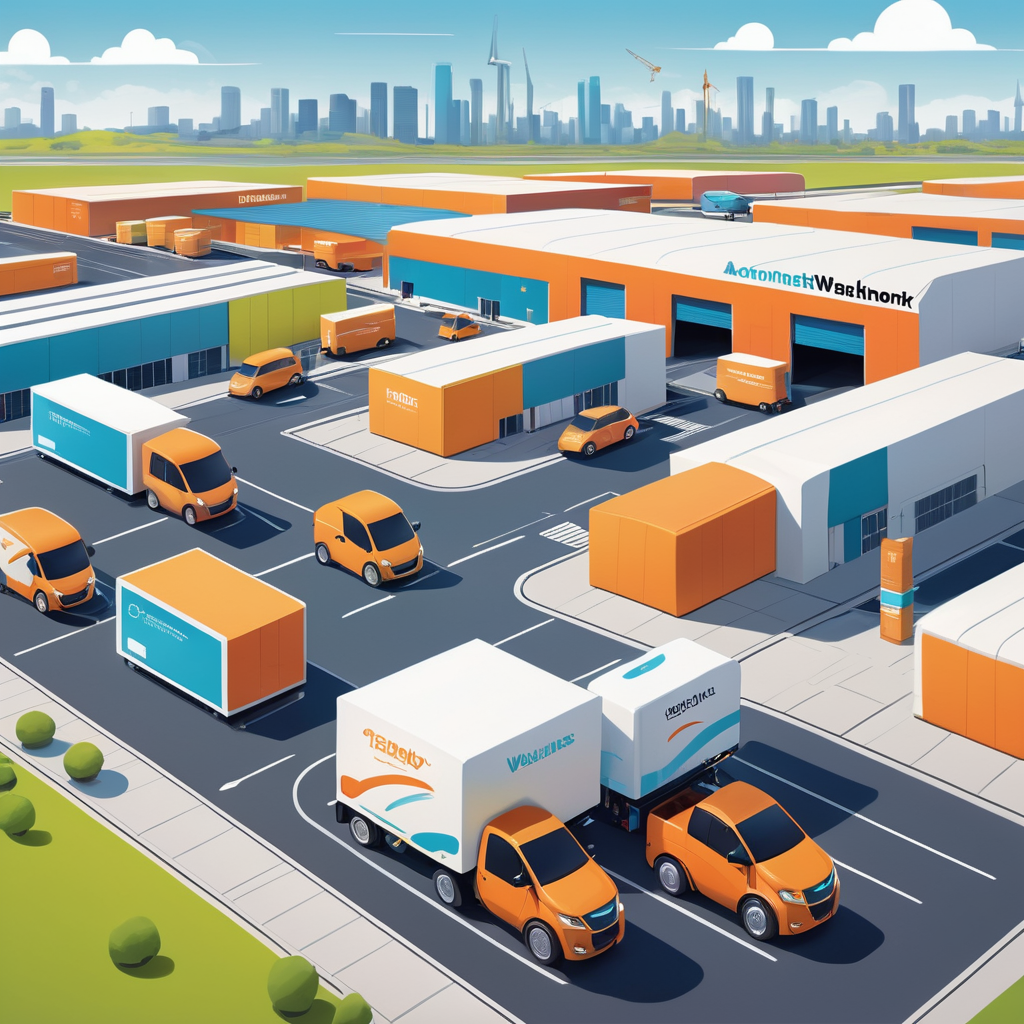
Autonomous vehicles represent a convergence of many AI disciplines, including computer vision, sensor fusion, and reinforcement learning. While the fully autonomous consumer car remains in development stages, applications in closed commercial environments are already common. In logistics and mining, autonomous trucks and industrial vehicles operate around the clock, improving safety in hazardous areas and dramatically increasing transport efficiency. AI-powered pathfinding and obstacle avoidance algorithms route these vehicles to move goods with consistency that human drivers simply cannot match, reshaping supply chain models for major corporations.
Beyond the vehicles themselves, AI systems manage city-wide traffic signals, analyzing real-time data from cameras and sensors to optimize flow and reduce congestion, thus reducing carbon emissions. Such smart integration of AI into urban infrastructure extends well beyond single-vehicle automation to city-level resource management. These applications demonstrate AI’s capacity to enhance safety, efficiency, and sustainability across the transportation ecosystem.
Manufacturing and Predictive Maintenance
One of the oldest and most valuable real-world applications of traditional AI in business is predictive maintenance. Rather than performing scheduled maintenance (which can be costly and sometimes unnecessary) or reactive maintenance (which only addresses catastrophic failures), AI models analyze sensor data from industrial machinery—vibration, temperature, pressure, acoustic signatures—to predict equipment failure before it occurs. This capability enables companies to schedule repairs only when needed, reducing downtime and saving millions in unplanned outages, particularly within oil and gas, manufacturing, and power generation sectors.
Ethical Considerations and Societal Implications
The widespread deployment of AI across critical domains has raised profound ethical concerns that must be addressed to ensure responsible development and deployment of these powerful technologies.
Bias and Fairness in AI Systems
AI systems are trained on massive amounts of data, and embedded in that data are societal biases. Consequently, these biases can become ingrained in AI algorithms, perpetuating and amplifying unfair or discriminatory outcomes in crucial areas such as hiring, lending, criminal justice, and resource allocation. For example, if a company uses an AI system to screen job applicants by analyzing their resumes, that AI system was likely trained on historical data of successful hires within the company. However, if the historical data is biased—containing gender or racial biases—the AI system may learn and perpetuate those biases, thus discriminating against candidates who do not match the historical hirings of the company. Several U.S. agencies have recently issued warnings about how they intend to push back against bias in AI models and hold organizations accountable for perpetuating discrimination through their platforms.
Transparency and Accountability
AI systems often operate in a “black box,” where these systems offer limited interpretability of how they work and how they arrived at certain decisions. In critical domains like health care or autonomous vehicles, transparency becomes vital to ascertain how decisions are made and who bears responsibility for them. Clarifying accountability is particularly important when AI systems make errors or cause harm, ensuring appropriate corrective actions can be taken. To combat the black box challenges, researchers are working to develop explainable AI, which helps characterize the model’s fairness, accuracy, and potential bias.
Explainable AI (XAI) generally overlaps with interpretable AI and represents a field of research exploring methods that provide humans with the ability of intellectual oversight over AI algorithms. The main focus is on the reasoning behind the decisions or predictions made by the AI algorithms, to make them more understandable and transparent. XAI counters the “black box” tendency of machine learning, where even the AI’s designers cannot explain why it arrived at a specific decision. XAI hopes to help users of AI-powered systems perform more effectively by improving their understanding of how those systems reason.
Privacy and Data Security
The effectiveness of AI often hinges on the availability of large volumes of personal data. As AI usage expands, concerns arise regarding how information is collected, stored, and utilized. For example, China is using tools like facial recognition technology to support extensive surveillance networks, which critics argue is leading to discrimination and repression of certain ethnic groups. Preserving individuals’ privacy and human rights becomes paramount, necessitating robust safeguards against data breaches, unauthorized access to sensitive information, and protections from extensive surveillance.
Job Displacement and Economic Impact
The advancement of AI automation has the potential to replace human jobs, resulting in widespread unemployment and exacerbating economic inequalities. Conversely, some argue that while AI will replace knowledge workers (as robots have replaced manual laborers), AI has the potential to create far more jobs than it destroys. Addressing the impacts of job displacement requires proactive measures such as retraining programs and policies that facilitate a just transition for affected workers, as well as far-reaching social and economic support systems. The question of how society will manage this transition remains one of the most pressing challenges accompanying AI’s rapid advancement.
Current Limitations and the Question of Artificial General Intelligence
Despite remarkable progress in specific domains, contemporary AI systems operate within significant constraints that must be acknowledged when assessing their true capabilities and limitations.
What Current AI Systems Cannot Do
Recent claims that humanity has already achieved artificial general intelligence (AGI) have been greatly exaggerated. Such rumors are often fueled by recent advances in large language models (LLMs), whose outputs show strong benchmark performance, high fluency across domains, and, in some cases, correct solutions to open problems in mathematics. However, these developments rest on a fundamental confusion between performance on individual, often well-known tasks and intelligence writ large. Task-level performance, even when impressive, is not sufficient evidence of general intelligence.
The term artificial general intelligence was originally introduced to denote systems capable of robust, flexible competence across a wide range of environments and tasks, emphasizing generality, flexibility, adaptability, and transfer under novelty rather than success on fixed or curated task batteries. A widely cited formal definition by Legg and Hutter (2007) characterized intelligence as an agent’s ability to achieve goals across a broad range of environments, with robustness and generalization at its core. Benchmark-driven progress has been widely recognized as valuable but insufficient to establish abstraction, reliability, or genuine generalization.
By the standards articulated in the original definitions of artificial general intelligence—robustness across environments, reliable generalization under novelty, and autonomous goal-directed behavior—current AI systems remain limited. Despite impressive gains in narrow competence and fluency, today’s large language models lack persistent goals, struggle with long-horizon reasoning, and depend extensively on human scaffolding for task formulation, evaluation, and correction. These limitations are central rather than peripheral, directly concerning reliability under uncertainty, resistance to systematic failure, and cross-domain transfer without task-specific tuning. Current systems remain brittle, sensitive to prompt framing, and inconsistent outside curated evaluation settings.
The Future Trajectory: When Might AGI Emerge?
Despite the current limitations of AI systems, researchers continue to explore the potential for artificial general intelligence to eventually emerge. Artificial general intelligence (AGI) would be a type of artificial intelligence that matches or surpasses human capabilities across virtually all cognitive tasks. Unlike artificial narrow intelligence (ANI), whose competence is confined to well-defined tasks, an AGI system could generalize knowledge, transfer skills between domains, and solve novel problems without task-specific reprogramming.
Mainstream AI researchers have given a wide range of opinions on whether progress toward AGI will be rapid. A 2012 meta-analysis of 95 such opinions found a bias towards predicting that the onset of AGI would occur within 16–26 years for modern and historical predictions alike. More recently, in September 2025, a review of surveys of scientists and industry experts from the last 15 years reported that most agreed that artificial general intelligence (AGI) will occur before the year 2100. A more recent analysis reported that current surveys of AI researchers are predicting AGI around 2040.
If AGI were achieved, the implications would be profound. AGI could improve productivity and efficiency in most jobs. In public health, AGI could accelerate medical research, notably against cancer. It could take care of the elderly and democratize access to rapid, high-quality medical diagnostics. It could offer fun, inexpensive, and personalized education. The need to work to subsist could become obsolete if the wealth produced is properly redistributed. Additionally, AGI could assist in developing personalized treatment plans tailored to individual patient needs, ensuring that therapies are optimized based on each patient’s unique medical history and genetic profile.
Beyond healthcare, AGI can become a tool for scientific research and innovation. In fields such as physics and mathematics, AGI could help solve complex problems that require massive computational power, such as modeling quantum systems, understanding dark matter, or proving mathematical theorems. Problems that have remained unsolved for decades may be solved with AGI. AGI could also drive technological breakthroughs that could reshape society by optimizing engineering designs, discovering new materials, and improving automation.
The AI Decoded: Your Path Forward
Artificial intelligence represents neither a monolithic technology nor a simple tool, but rather a collection of diverse approaches and methodologies unified by their goal of enabling machines to perform tasks that would otherwise require human intelligence. From machine learning algorithms that learn patterns from data to deep neural networks that approximate the complexity of human cognition to specialized architectures designed for specific domains, AI encompasses a remarkable range of technical sophistication and practical application.
The operational mechanisms of AI systems, proceeding through cycles of data input, processing, outcome generation, adjustment, and assessment, reflect a fundamental truth about machine learning: these systems improve through iterative refinement based on empirical feedback rather than explicit programming. The diversity of machine learning approaches—supervised learning from labeled examples, unsupervised learning that discovers hidden patterns, reinforcement learning from reward signals—enables AI systems to tackle an extraordinarily broad range of problems.
The technical innovations that have driven recent progress, particularly the development of transformer architectures and self-attention mechanisms, have unlocked new capabilities in natural language processing and content generation. These advances have captured public imagination and investment, driving exponential growth in AI research and development. However, the undeniable success of large language models and other specialized systems must be understood within the context of their limitations. Current AI systems excel at narrow tasks but struggle with the flexibility, robustness, and generalization that characterize genuine intelligence.
The deployment of AI across industries—from healthcare diagnostics to autonomous vehicles to financial risk assessment—demonstrates the technology’s practical value and its potential to enhance human capabilities and improve outcomes. Yet this same deployment raises profound ethical questions about bias, transparency, privacy, and accountability that society must address thoughtfully. The challenge ahead involves developing AI systems that are not only more capable but also more responsible, explainable, and aligned with human values and societal needs.
As AI continues to evolve at an unprecedented pace, a nuanced understanding of what these systems can and cannot do becomes essential for everyone—technologists, policymakers, business leaders, and citizens. By appreciating both the remarkable capabilities and the real limitations of current AI, society can better navigate the opportunities and challenges that lie ahead, ensuring that artificial intelligence serves humanity’s interests while minimizing potential harms.
Frequently Asked Questions
What is a comprehensive definition of artificial intelligence?
Artificial intelligence (AI) refers to the simulation of human intelligence in machines programmed to think and learn like humans. It encompasses systems capable of perceiving their environment, reasoning, problem-solving, learning from experience, understanding language, and making decisions to achieve specific goals, often outperforming human capabilities in specialized tasks.
How does artificial intelligence typically process information to function?
AI typically processes information through algorithms and models trained on vast datasets. It involves input (data collection), processing (using machine learning algorithms like neural networks to identify patterns and relationships), and output (generating predictions, decisions, or actions). This learning allows AI systems to adapt, improve performance over time, and make informed responses without explicit programming for every scenario.
What are the key subdisciplines within the field of artificial intelligence?
Key subdisciplines within AI include Machine Learning (ML), Deep Learning (DL), Natural Language Processing (NLP), Computer Vision (CV), Robotics, Expert Systems, and Planning. Each focuses on distinct aspects of intelligence, such as pattern recognition, language understanding, visual interpretation, or physical interaction, contributing to the broader capabilities of AI systems.