



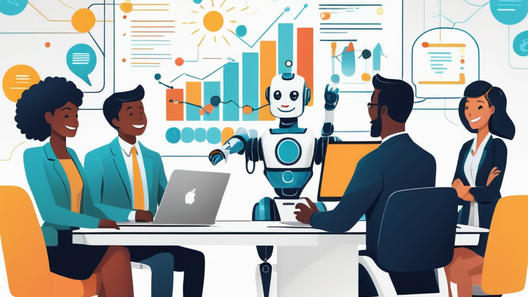
Artificial intelligence chatbots have rapidly emerged as transformative tools that fundamentally reshape how humans interact with technology and access information. An AI chat, commonly referred to as an AI chatbot or conversational AI system, represents a sophisticated software application powered by advanced artificial intelligence technologies, particularly natural language processing and large language models, that enables meaningful exchanges between humans and machines through simulated conversation. Unlike traditional rule-based chatbots that operate within rigid predetermined scripts, modern AI chatbots leverage machine learning, deep learning, and generative AI capabilities to understand nuanced human language, interpret context and intent, and generate dynamic, contextually relevant responses that increasingly resemble natural human conversation. The global chatbot market has experienced remarkable growth, expanding from $4.7 billion in 2022 to $7.76 billion in 2024, with projections indicating the market will surge to $27.30 billion by 2030, growing at a compound annual growth rate of 23.3 percent. This explosive expansion reflects not only technological advancement but also widespread organizational recognition that AI chatbots deliver substantial business value through improved customer experiences, reduced operational costs, enhanced employee productivity, and scalable automation of routine tasks. This comprehensive analysis examines the multifaceted dimensions of AI chatbots, exploring their fundamental definitions, technical architectures, diverse applications, market dynamics, ethical considerations, and the revolutionary trajectory of conversational AI as it evolves toward increasingly sophisticated, multimodal, and agentic systems.
Fundamentals of AI Chatbots: Definition, Evolution, and Core Technologies
Defining AI Chatbots and Related Terminology
The terminology surrounding conversational AI systems can often create confusion, as terms like chatbot, AI chatbot, and virtual agent are frequently used interchangeably, despite possessing distinct technical meanings and capabilities. A chatbot, in its broadest sense, is simply a computer program that simulates human conversation with end users, encompassing everything from basic automated menu systems to sophisticated artificial intelligence-powered conversational agents. The term represents the most inclusive category, capturing any software designed to engage in dialogue regardless of the underlying technology, whether that be traditional decision tree logic or cutting-edge generative AI algorithms. An AI chatbot specifically refers to chatbot systems that employ various artificial intelligence technologies including machine learning composed of algorithms, features, and datasets that optimize responses over time, as well as natural language processing and natural language understanding that enable the system to accurately interpret user questions and map them to specific user intents. These AI-driven systems leverage deep learning capabilities that allow them to become increasingly accurate over time, fundamentally transforming human-bot interactions into more natural, flowing conversations where users need not fear being misunderstood due to imprecise phrasing or colloquial language. Virtual agents represent a further evolution of AI chatbot technology, incorporating conversational AI for dialogue conduct and deep learning for continuous self-improvement, but critically also integrating robotic process automation in a unified interface that empowers these systems to act directly upon user intent without requiring human intervention. This hierarchical distinction matters tremendously for organizations seeking to understand what capabilities they can expect from different chatbot implementations and what business problems each category can address.
Historical Evolution from ELIZA to Modern Language Models
Understanding the trajectory of chatbot development illuminates how contemporary AI chatbots achieved their current sophisticated capabilities through decades of incremental innovation and periodic paradigm shifts. The first chatbot ever created was ELIZA, developed by MIT professor Joseph Weizenbaum in 1966, which employed pattern matching and substitution methodology to simulate conversation. The program mimicked human conversation by accepting words entered by users and pairing them to a list of possible scripted responses, utilizing a psychotherapist script that despite its simplicity had profound implications for natural language processing and artificial intelligence research, spawning copies and variants that proliferated across academic institutions. As the decades progressed, developers building upon Weizenbaum’s foundational model continually pursued more human-like interactions, with the Turing test becoming a common goal that tested new bots’ conversational talents against a board of human judges. Jabberwacky, created by developer Rollo Carpenter in 1988, aimed to simulate natural human conversation in an entertaining way and employed an AI technique called contextual pattern matching, paving the way for increased sophistication in dialogue management. Dr. Sbaitso, created by Creative Labs for MS-DOS in 1992, represented one of the earliest efforts to incorporate artificial intelligence into chatbots and earned recognition for its fully voice-operated chat program, though its responses largely consisted of psychologist-like inquiries rather than genuine complex interaction. The ALICE chatbot, which utilized the XML-based Artificial Intelligence Markup Language specification introduced in 1998 and formalized in 2001, expanded the field’s technical infrastructure, with the specification enabling free and open-source implementations across different programming languages and foreign languages.
The critical technological turning point arrived with the emergence of transformer architectures and large language models. In 2017, a landmark paper titled “Attention Is All You Need” from Google researchers proposed the transformer architecture, which discarded sequential processing entirely and relied exclusively on attention mechanisms. This innovation became the foundational technology for virtually every modern language model, with the acronym GPT itself standing for Generative Pre-trained Transformer, highlighting the central role of this architecture. The transformer’s parallelizability—its ability to process tokens simultaneously rather than sequentially—proved essential for scaling language models to unprecedented sizes. GPT-2 in 2019 scaled up to 1.5 billion parameters and demonstrated zero-shot learning, the ability to perform tasks it wasn’t specifically fine-tuned for. GPT-3 in 2020, with 175 billion parameters, marked a paradigm shift by exhibiting emergent abilities—capabilities not present in smaller models—most significantly in-context learning, where the model could learn new tasks from just a few examples provided within the prompt. The landscape accelerated further when, in October 2019, Google integrated BERT directly into its search engine, representing the biggest leap forward in five years and enabling search engines to understand the intent and nuance behind longer, more conversational queries.
The final transformative step arrived not through algorithmic innovation but through interface design and accessibility. ChatGPT, released in late 2022, was arguably the most profound innovation not its underlying technology but rather its user interface—for the first time, a state-of-the-art language model was offered to the public through a simple, intuitive chat window available free in a web browser. This design choice democratized access on an unprecedented scale, enabling millions who had never written a line of code to interact with advanced AI through natural conversation, eliminating the barriers of APIs and complex prompt engineering. The transformation from a powerful engine into a polished, accessible product was achieved through reinforcement learning from human feedback, wherein human labelers ranked different model outputs to teach a reward model what constitutes good or bad answers, then the language model was fine-tuned using this reward model as guidance, teaching it to prioritize responses that humans found helpful, harmless, and honest. This alignment process, built on OpenAI’s InstructGPT research, became the secret sauce that made ChatGPT feel so much more coherent and cooperative compared to its raw predecessors.
Core Technologies Enabling AI Chatbots
The sophisticated functionality of modern AI chatbots rests upon several foundational technologies that work in concert to enable natural language understanding and generation. Natural language processing, a branch of artificial intelligence designed to improve human-bot communication, enables machines to understand, analyze, and respond to human speech or writing. Within NLP, natural language understanding focuses specifically on machine comprehension, ensuring bots understand the meaning behind linguistic input—whether verbal or written—by converting language into a logical form that computer algorithms can understand. Natural language generation, another crucial NLP subset, refers to the automatic replies created by bots and essentially works like NLU in reverse, converting logical responses back into natural language that humans can easily understand. The process of NLP in chatbots typically begins with normalization, wherein bots remove irrelevant details and convert words to standardized versions like lowercase, followed by tokenization, where chatbots chop language input into pieces or tokens and remove punctuation. With normalized and tokenized text, the bot uses artificial intelligence to identify the issue or intent the customer is asking about through intent classification.
Large language models represent the computational foundation upon which modern AI chatbots operate. An LLM is a language model trained with self-supervised machine learning on a vast amount of text, specifically designed for natural language processing tasks and especially language generation. LLMs like GPT-5.2, GPT-4, and Google’s Gemini consist of billions to trillions of parameters and operate as general-purpose sequence models, generating, summarizing, translating, and reasoning over text. These models acquire predictive power regarding syntax, semantics, and ontologies inherent in human language corpora, but they also inevitably inherit inaccuracies and biases present in the data they are trained on. Transformer models specifically, which form the architecture of most contemporary LLMs, utilize self-attention mechanisms to detect subtle ways that elements in a sequence relate to each other. This enables transformers to understand context—particularly important for human language which is highly context-dependent—and interpret human language even when that language is vague, poorly defined, arranged in novel combinations not encountered during training, or contextualized in entirely new ways.
Attention mechanisms fundamentally transform how chatbots process and prioritize information. The attention mechanism is a neural network component allowing models to focus on specific parts of input data when generating output, enabling chatbots to prioritize relevant words, phrases, or sentences in a conversation to ensure responses remain contextually accurate and meaningful. Unlike traditional models that process all input data equally, attention mechanisms dynamically assign weights to different parts of the input, emphasizing the most critical elements. This targeted focus significantly enhances chatbots’ ability to provide precise and relevant answers—for instance, in a customer service context where a user asks “What are the store hours for your New York location?”, the attention mechanism ensures the chatbot focuses on “store hours” and “New York location” rather than treating the entire sentence uniformly. The foundational components of attention mechanisms include query, key, and value matrices where the query represents the current input or context, the key represents reference points in the input data, and the value contains the actual information to be retrieved. Attention weights are numerical scores determining the importance of each input element, with higher weights indicating greater relevance to the query, allowing chatbots to focus on the most critical parts of input. The softmax function normalizes these attention weights, ensuring they sum to one and helping the model distribute focus proportionally across different input elements. The context vector, representing the weighted sum of values, captures the most relevant information extracted from input and is used to generate the chatbot’s response.
How AI Chatbots Work: Technical Architecture and Processing
The Interaction Flow and Processing Pipeline
Understanding how AI chatbots operate requires examining the step-by-step process through which they receive, interpret, and respond to user input. When a user initiates interaction, they begin a conversation by typing a message or speaking to a chatbot through a user interface. The chatbot then uses natural language processing to analyze the words and phrases in the message to understand the user’s intent. Subsequently, the chatbot searches its database of pre-programmed responses or, more commonly in advanced systems, leverages its language model to generate an appropriate response. The response is then sent back to the user via the user interface. The user can choose to respond further, and the process repeats until the conversation ends. This cyclical interaction pattern appears simple on its surface yet encompasses profound computational complexity when implemented using deep learning models.
The specific processing steps within modern AI chatbots involve several sophisticated substeps that work together to transform raw text into meaningful responses. The first step involves preprocessing the input through techniques like tokenization, lowercasing, stemming, or lemmatization to standardize the user’s message into a form the model can process efficiently. Within this preprocessing stage, the chatbot removes irrelevant details and converts words to standardized versions. Natural language understanding then extracts the semantic meaning from the normalized and tokenized text, with the chatbot identifying the specific intent or purpose behind the message, whether that be asking a question, making a request, or providing feedback. Intent recognition is followed by dialogue management, wherein the chatbot tracks the context and history of the interaction to determine appropriate response based on the current dialogue state and the user’s intent. Once the intent is recognized and context understood, response generation occurs, which can involve retrieving information from a knowledge base, executing commands, or generating a natural language response using text generation and natural language generation techniques. Finally, the system incorporates feedback and learning, with NLP chatbots often incorporating machine learning algorithms to improve performance over time, learning from user interactions and feedback to enhance their understanding of language and the accuracy of their responses.
Comparison of Rule-Based and AI-Powered Architectures
Distinguishing between rule-based chatbots and AI-powered conversational systems illuminates the technological divergence that fundamentally impacts capability and flexibility. Rule-based chatbots, by far the simplest and most common type, are specifically programmed to respond to keywords and commands. This makes them relatively simple to create but severely limits their ability to manage anything beyond the simplest interactions or assist users with complex requests. A typical rule-based chatbot deployed on a company’s website might be programmed with a set of rules that match common customer inquiries to pre-written responses—for example, if a customer says the keyword “open,” the rule-based chatbot might have a pre-programmed rule matching the keyword “What are your opening hours?” and responding with a message providing information on business hours. Often referred to as “click-bots,” rule-based chatbots rely on buttons and prompts to carry conversations and frequently result in longer user journeys since users must navigate predefined menu structures rather than express themselves naturally. The architectural implementation of rule-based systems involves a conditional logic engine that executes if-then statements to verify the presence of specific keywords and deliver corresponding responses based on those conditions.
AI-powered chatbots, by contrast, employ artificial intelligence technologies including machine learning and deep learning to increase their ability to understand and interpret user intent, providing more human-like responses that make conversations feel more engaging and natural. AI chatbots employ machine learning, allowing them to learn from their interactions with users and enable them to build on their knowledge base over time and create better, more personalized experiences. A conversational AI chatbot could handle a user saying “I’m interested in watching a movie this evening,” and the chatbot would use its conversational AI to understand the user’s intent and provide relevant suggestions based on location, preferences, and the user’s previous movie-watching choices. The technical implementation of AI-powered systems differs fundamentally from rule-based approaches, utilizing an NLP engine that extracts intent, entities, and context, combined with a large language model or machine learning classifier that handles more complex language structures and nuances. The architecture recognizes that the NLP engine combined with large language models can handle much more complex language structures and nuances than rule-based systems, better understand user inputs, context, and intent, and generate contextually relevant and human-like responses since LLMs are not reliant on pre-written rules but trained on vast amounts of text data.
The Role of Vector Databases and Retrieval Mechanisms
Contemporary advanced AI chatbots increasingly incorporate retrieval-augmented generation, which combines the strengths of traditional information retrieval systems with the capabilities of generative large language models to enhance accuracy and relevance. Retrieval-augmented generation combines LLMs with external knowledge bases to improve their outputs, ensuring they reference authoritative information sources outside their training data. When implementing RAG, an information retrieval component utilizes user input to first pull information from new data sources, with the user query and relevant information both provided to the LLM so it can create better responses. The retrieval process performs a relevancy search wherein the user query is converted to a vector representation and matched with vector databases. For instance, a smart chatbot answering human resource questions for an organization would retrieve annual leave policy documents alongside an individual employee’s past leave record if an employee searches “How much annual leave do I have?”, with specific documents returned because they are highly relevant based on mathematical vector calculations and semantic similarity. The augmentation step adds relevant retrieved data in context to the user input, using prompt engineering techniques to communicate effectively with the LLM, allowing large language models to generate accurate answers to user queries.
Vector databases store documents as embeddings in high-dimensional space, allowing for fast and accurate retrieval based on semantic similarity. Rather than searching solely on keywords, semantic search technologies can scan large databases of disparate information and retrieve data more accurately—for example, answering questions like “How much was spent on machinery repairs last year?” by mapping the question to relevant documents and returning specific text rather than mere search results. Advanced search engines can leverage both semantic search and keyword search together in what is called hybrid search, combined with re-rankers that score search results to ensure top returned results are most relevant. Modern semantic search engines transform queries and fix spelling mistakes prior to lookup, significantly improving retrieval quality. The critical importance of retrieval mechanisms in RAG systems cannot be overstated—organizations need the best semantic search on top of curated knowledge bases to ensure retrieved information is relevant to input queries or context. If retrieved information is irrelevant, generation could be grounded but off-topic or incorrect. By fine-tuning or prompt-engineering the LLM to generate text entirely based on retrieved knowledge, RAG helps minimize contradictions and inconsistencies in generated text, significantly improving output quality and user experience.
Types and Classifications of Chatbots
The Taxonomy of Chatbot Systems
Chatbots can be classified across multiple dimensions based on their functionality, deployment architecture, and underlying technology. The most fundamental classification distinguishes between traditional chatbots and conversational AI chatbots, with traditional chatbots using rule-based conversation systems designed to answer frequently asked questions and follow scripted flows, relying on user-selected options and simple text for interaction. Traditional chatbots’ underlying technology consists of predefined responses and are ideal for answering FAQs and addressing basic customer issues, handling basic tasks and providing static information with limited flexibility. Conversational AI chatbots represent a significant advancement, employing context-aware interaction systems that understand intent, respond naturally, and comprise machine learning, NLP, and increasingly generative AI technologies. Conversational AI chatbots handle dynamic conversations, adapt to user intent, hold more sophisticated exchanges, and can deliver dynamic conversations that adapt to user intent while collecting actionable data from interactions.
Generative AI chatbots represent the most advanced classification within the taxonomy, creating new content by generating responses from scratch based on learning data utilizing large language models. Generative AI chatbots can take conversations a step further beyond conversational AI by generating new content as output, with new content potentially including high-quality text, images, and sound based on the LLMs they are trained on. Generative AI chatbots create new answers from scratch based on learning data, use large language models like ChatGPT, continuously collect data and expand their knowledge base, and deliver significantly improved user experience via NLP. These generative systems can recognize, summarize, translate, predict, and create content in response to a user’s query without requiring human interaction. Conversational interfaces also vary based on deployment channel, with AI chatbots commonly used in social media messaging apps, standalone messaging platforms, proprietary websites and apps, and even phone calls where they are also known as integrated voice response or IVR.

Specialized Chatbot Implementations and Variants
Beyond the fundamental classification, specialized chatbot implementations have emerged to address specific business requirements and user needs. FAQ chatbots, while potentially using older rule-based approaches, have evolved significantly with generative AI integration, no longer requiring pre-programming with answers to set questions—instead utilizing generative AI in combination with an organization’s knowledge base to automatically generate answers in response to a wider range of questions. Customer service chatbots specifically designed for support functions have become ubiquitous, handling customer inquiries in real-time and providing instantaneous responses to common questions, thereby significantly reducing response times and freeing human agents for more complex tasks. Healthcare chatbots demonstrate how specialized implementations can handle domain-specific requirements, with AI-driven virtual consultations evaluating patient symptoms, offering medical advice, and proposing next steps, thereby easing the burden on healthcare staff while enhancing patient accessibility. Lead generation chatbots serve marketing and sales functions, providing a less-annoying and more engaging way of collecting leads than traditional forms by conducting thoughtful conversations that ask visitors what they would like to do, assess their interests, and present relevant resources in exchange for contact information. Appointment scheduling chatbots allow clients to quickly and easily coordinate their plans by booking services through chat rather than waiting on the telephone or completing cumbersome contact forms. Product recommendation chatbots assist customers in selecting items by providing information on various products, making comparisons, and offering recommendations based on individual customer preferences and previous purchases to create personalized shopping experiences.
The distinction between these specialized implementations matters significantly for organization selection, as the choice between specialized versus general-purpose chatbots determines how well a system can address particular business problems and customer needs. WhatsApp Business chatbots represent a particularly significant implementation category given that more than 60 million people in Germany use the popular messenger WhatsApp, offering enormous potential for businesses to retain customers or generate new target groups. Chatbot integration with WhatsApp can serve to improve customer service and allow companies of all industries to be reachable practically around the clock with 24/7 service and marketing potential.
Applications and Use Cases Across Industries
Customer Service and Support Functions
AI chatbots have fundamentally transformed customer service delivery across virtually every industry, addressing the challenge that modern consumers simply do not want to wait to receive answers to their questions—when they hit a blockade, customers move on to the next business. The primary advantage of having AI customer service chatbots ready and able to answer basic customer queries or escalate issues 24/7 cannot be overstated in today’s competitive landscape. One exemplary implementation is Wembley Stadium’s partnership with Text’s ChatBot solution, where the AI agent specializes in helping customers find relevant information from their vast knowledge base and makes personalized recommendations. This implementation delivered over $1.5 million in revenue in just eight months, while resolving doubts and recommending relevant products in real time, bringing in an average of $11,000 per month in extra revenue and supporting shoppers around the clock. Similarly, Hairlust’s deployment of ChatBot by Text across all 13 of their domains with 800K+ unique monthly visitors enabled them to save 20% of their communication time through customization and scalability features that personalized the experience based on language.
The specific customer service tasks that chatbots handle represent the most common application category. Timely, always-on assistance for customer service remains among the most important use cases, with chatbots available 24 hours daily to help customers, responding quickly to all questions they receive, guaranteeing satisfied customers with immediate responses and resolutions, and allowing human agents to focus on more important tasks without work overload due to excessive consultations during non-working hours. According to Zendesk’s user data, customer service teams handling 20,000 support requests monthly can save more than 240 hours per month by using chatbots. Amtrak deployed a chatbot called Julie on their website to help customers find the shortest routes to their favorite destinations, and by assisting customers in booking tickets, Julie answers on average 5 million questions per year while increasing booking rate by 25% and achieving a 50% rise in user engagement and customer service. Timely automated reminders for time or location-based tasks represent another significant use case, with chatbots capable of proactively engaging customers through personalized greetings tailored to their behavior and initiating conversations at the right moment to transform casual browsing into meaningful interactions. HOAS’s virtual assistant Helmi, available on the page 24/7, independently handles over 59% of customer queries while remaining capable of checking whether customer service agents are available to redirect clients when customer questions are more complicated or when customers want to speak directly to live chat agents.
Marketing, Sales, and Lead Generation Applications
AI chatbots serve increasingly prominent roles in driving revenue generation through marketing and sales functions. Conversational AI chatbots are highly effective at discovering insights into customer engagement and buying patterns to drive more compelling conversations and deliver more consistent and personalized digital experiences across web and messaging channels. Artificial intelligence chatbots available to deliver customer care 24/7 can be powerful tools for developing conversational marketing strategies that enhance customer relationships. Chatbots also serve as excellent lead generation tools on their own, with businesses deploying chatbots on their websites and engaging customers with rich conversations rather than requiring completion of traditional forms. Vainu’s VainuBot exemplifies this approach, asking visitors questions on their website with visitors making quick choices by selecting relevant options, thereby quickly identifying prospective clients. Hiver, a service providing shared-email services, uses chatbots to start thoughtful conversations with visitors asking what they would like to do, offering recommendations based on selections, and presenting case study links visitors can access in exchange for email addresses, fundamentally boosting conversations beyond what forms alone achieve through engaging visitors in meaningful dialogue and securing appropriate responses to their questions.
Beyond lead capture, chatbots drive incremental revenue through sophisticated product recommendation and upselling. American Eagle Outfitters uses chatbots to start casual conversations with their audience, recommending products and services based on customer answers while employing memes, pop references, and other content to keep audience interest among their primarily female age 13+ demographic. MVMT, a fashion brand developing watches and sunglasses targeting millennials, uses a strategy enabling visitors through a series of questions and clickable answers combined with beautiful product pictures to understand exactly what options they can choose, and by the time they reach the end of the quiz, visitors see recommendation lists aligned with their interests, thereby driving sales through the chatbot. Personalized product advice via chatbot has enabled chatbots to assist customers in selecting items by providing information on various products, making comparisons, and offering recommendations based on individual customer preferences and previous purchases, creating personalized shopping experiences. The integration of personalized recommendations with visual appeal and interactive engagement transforms traditional product browsing into dynamic, conversion-oriented dialogue.
Healthcare, Finance, and Specialized Industry Applications
Healthcare represents a vertical where AI chatbots deliver particularly high-impact benefits despite requiring careful implementation to ensure safety and compliance. AI-driven telehealth and virtual consultations have become crucial components of modern healthcare, with AI chatbots and virtual assistants evaluating patient symptoms, offering medical advice, and proposing next steps, thereby easing strain on healthcare staff while enhancing patient accessibility. Predictive analytics powered by chatbot-integrated AI systems provide disease prevention capabilities, enabling organizations to develop more effective, personalized treatment plans while helping providers intervene sooner by forecasting potential adverse health events. The deployment of AI in healthcare operations extends to administrative functions, with generative AI technologies streamlining creation and management of clinical documentation through automation of transcription and coding of patient interactions, optimization of scheduling and resource allocation, and enabling real-time insurance verification and billing.
Financial services institutions have embraced AI chatbots to address specific sector challenges including fraud detection, customer service enhancement, and decision support. Fraud detection and cybersecurity threat analysis represent critical AI applications, with financial fraud becoming increasingly sophisticated, making traditional security measures insufficient. Machine learning models analyzing transaction trends in real time can detect anomalies such as strange spending activity, multiple unsuccessful login attempts, or unexpected cash transfers, alerting to potential dangers before they develop. AI-powered chatbot banking and financial advisory services have transformed customer service, with banks and financial institutions using AI-driven virtual assistants to handle routine inquiries, assist with transactions, and offer financial guidance, providing real-time support for account balance questions, loan applications, and investment options without human intervention. Automated credit approval and risk analysis represent another high-impact use case, with AI systems analyzing vast datasets including credit scores, transaction history, and spending patterns to assess risks instantly, fundamentally transforming the traditionally lengthy manual review process. AI-driven investment and portfolio management leverages algorithms to evaluate market movements, assess risk profiles, and offer optimal investing strategies through robo-advisors that provide personalized solutions, making wealth management more accessible. Predictive analytics for market trends allows traders and investors to forecast market moves based on AI analysis of historical data and identification of developing trends, supporting data-driven decision-making through real-time recommendations based on economic data, interest rates, and geopolitical events.
Advanced Capabilities: From Multimodal to Agentic AI
Multimodal Conversational AI and Sensing Capabilities
The evolution of AI chatbots toward multimodal capabilities represents a fundamental expansion of how these systems interact with users and process information. Multimodal AI enables AI to process text, audio, and images in one system, creating richer, more context-aware applications across domains. Multimodal learning enables AI to process various forms of data simultaneously—text, audio, and images—mimicking how human brains absorb information from multiple modalities simultaneously to understand reality better. By combining these modalities, AI systems make more well-rounded decisions that improve performance in scenarios such as health diagnosis, self-driving cars, and smart personal assistants. Multimodal conversational AI systems can now seamlessly process both spoken words and text inputs simultaneously, leading to more natural, efficient, and resilient user interactions. This hybrid approach allows users to speak naturally and then, when precision is paramount or typing is more convenient, seamlessly switch to text input within the same interaction, empowering users to choose input methods best suited to the information they need to convey.
The technical implementation of multimodal capabilities involves deep learning fusion techniques that enable AI systems to use and process text, audio, and images simultaneously. Different modern architectures used in popular AI technologies incorporate attention components that coherently help learn relations between other modalities. Specialized processing agents handle each data type separately—text analysis for linguistic sentiment, audio analysis for vocal tone and pitch, and visual analysis for facial expressions and body language. Each agent applies domain-specific models such as NLP for text, speech recognition for audio, and facial detection for video, ensuring sentiment from each modality is captured with high precision. The fusion agent then integrates outputs from the text, audio, and visual analysis agents to create a unified sentiment representation, overcoming individual limitations by combining different modalities where text-only analysis might miss vocal tone or facial expressions. This fusion approach significantly improves sentiment classification accuracy and contextual understanding.
OpenAI’s ChatGPT introduced voice and image capabilities enabling more intuitive interfaces that allow users to have voice conversations or show ChatGPT what they’re discussing. Voice capability, powered by a new text-to-speech model capable of generating human-like audio from just text and a few seconds of sample speech, enables back-and-forth conversation with an assistant, making technology more accessible through voice interaction. Image understanding powered by multimodal GPT-3.5 and GPT-4 applies language reasoning skills to a wide range of images, allowing users to snap pictures of landmarks while traveling and have live conversations about what makes them interesting, or troubleshoot why a grill won’t start through visual inspection. Beyond consumer applications, multimodal AI demonstrates transformative potential in healthcare, where clinicians can analyze pixels in medical imaging to identify possible tumors or other abnormalities that might be difficult to find, supporting and validating pathologist work while potentially catching things human eyes might miss or extrapolating to help diagnose rare diseases with limited training data.
Agentic AI and Autonomous Task Execution
Agentic AI represents the next evolution of conversational AI systems, progressing from passive dialogue systems to autonomous agents capable of taking direct action based on user requests. Virtual agents are a further evolution of AI chatbot software that not only use conversational AI to conduct dialogue and deep learning to self-improve over time, but often pair those AI technologies with robotic process automation in a single interface to act directly upon the user’s intent without requiring human intervention. This capability transformation enables complex tasks through the chatbot experience, where conversational AI chatbots can remember conversations with users and incorporate this context into their interactions, and when combined with automation capabilities including robotic process automation, users can accomplish complex tasks through the chatbot experience. The ReAct pattern, a portmanteau of reason and act, constructs an agent from an LLM, using the LLM as a planner that is prompted to “think out loud”. The language model is prompted with a textual description of the environment, a goal, a list of possible actions, and a record of actions and observations so far, generating one or more thoughts before generating an action, which is then executed in the environment. The Reflexion method constructs agents that learn over multiple episodes, where at the end of each episode the LLM receives the record of the episode and is prompted to think up “lessons learned” that would help it perform better at subsequent episodes, with these lessons stored as long-term memory and provided to the agent in subsequent episodes.
In 2026, the rise of what industry experts call the “super agent” is becoming real, with agent control planes and multi-agent dashboards enabling users to kick off tasks from one place with agents operating across environments including browsers, editors, and inboxes without requiring users to manage dozen separate tools. Whoever owns the front door to the super agent will shape the market, with adaptive interfaces and apps capable of adjusting to any scenario expected to emerge, making every user an AI composer capable of orchestrating AI behavior to meet their needs. AI is shifting from individual usage to team and workflow orchestration, with software practice evolving from vibe coding to Objective-Validation Protocol wherein users define goals and validate them while collections of agents autonomously execute, extending human-in-the-loop concepts by requesting human approval at critical checkpoints. These multimodal digital workers capable of perceiving and acting in worlds much like humans will bridge language, vision, and action together, enabling autonomous completion of complex tasks and interpretation of information like healthcare cases.
Market Landscape and Adoption Statistics
Market Size, Growth Projections, and Regional Dynamics
The chatbot market has experienced explosive expansion reflecting both technological maturation and widespread organizational recognition of business value. The global chatbot market experienced a remarkable boost in 2022, reaching $4.7 billion, with that number jumping to $7.76 billion in 2024, projected to grow further at a 23.3 percent CAGR, surpassing $27 billion by 2030. The year-by-year breakdown shows projections of $9.57 billion in 2025, $11.80 billion in 2026, $14.55 billion in 2027, $17.95 billion in 2028, $22.15 billion in 2029, and $27.30 billion by 2030. The generative AI chatbot market specifically shows ChatGPT commanding 79.86% market share, followed by Perplexity with 11%, Microsoft Copilot with 4.83%, and Google Gemini with 2.19%, with Claude, Deepseek, and others comprising the remainder, highlighting OpenAI’s continued dominance in the GenAI space. Regional distribution demonstrates that North America maintains the strongest market foothold with 31.1% in 2024, dominating artificial intelligence and automation technology investments while housing the world’s largest chatbot development companies. Europe shows steady expansion with businesses embracing digital solutions while maintaining strong regulatory focus on data privacy and security. Asia Pacific represents the fastest-growing segment, with China, India, and Japan leading regional chatbot adoption, and between 2026 and 2034, India is projected to lead with a staggering 32.9% CAGR, followed by China at 27.5%, the UK at 22.8%, the US at 22.2%, Germany at 20.5%, and Japan at 17.2%.

Industry-Specific Market Dynamics and Vertical Adoption
Vertical markets demonstrate distinct adoption patterns reflecting industry-specific requirements and value propositions. The automotive AI chatbot market was valued at approximately $60.48 billion in 2024 and is projected to reach $247.1 billion by 2032, growing at a 19.2 percent CAGR from 2026 to 2032. More than 90% of car dealerships in North America now feature chat support on their digital platforms, demonstrating widespread industry adoption. The media and entertainment industry shows particularly aggressive adoption, with the global AI market in this field projected to reach approximately $120 billion by 2032, growing at a 26% CAGR from 2023 to 2032. A remarkable 92% of creators have already experimented with generative AI chatbots, representing a sharp rise from just 34% in late 2023. The retail sector continues to demonstrate significant adoption with consumers anticipated to spend over $142 billion via bots by 2024, a significant increase from $2.8 billion in 2019 according to Insider Intelligence. Gartner predicts that by 2027, digital assistants will become the primary channel for client service in 25% of all businesses. One-third of AI startup founders believe that digital assistants will be the most popular customer technology in the next five years.
User Adoption and Consumer Perception
Consumer adoption of chatbot services has grown substantially, with emerging evidence of positive user experiences supporting expanded deployment. According to market research, 87.2% of consumers rate their interactions with bots as either neutral or positive, indicating strong acceptance of chatbot technology. Notably, 62% of respondents prefer engaging with customer service digital assistants rather than waiting for human agents, reflecting fundamental shifts in customer service preferences. These adoption metrics demonstrate that chatbots have achieved sufficient quality to meet or exceed user expectations in many contexts, particularly when properly designed for specific use cases. The engagement rates when chatbots are deployed effectively range between 50% and 80%, depending on industry and implementation, reflecting strong user interest and participation rates. The research on subscription engagement through chatbot-driven journeys averages an 80% CSAT score, signaling strong user approval and satisfaction with chatbot-powered customer experiences. Data from Gupshup’s WhatsApp bot showed a 270% return over three years, demonstrating substantial financial returns from well-executed chatbot implementations. Lifetime user base growth for chatbot campaigns has shown impressive expansion, with lifetime user base growing by 378% since campaign rollout in some implementations. It is projected that AI bots will power 95% of all customer service interactions by 2026, reflecting expected rapid expansion in automation adoption across customer support functions.
Privacy, Ethics, and Regulatory Considerations
Privacy Risks and Data Collection Practices
A critical concern surrounding AI chatbots involves how leading AI companies handle user data and privacy protections. A Stanford study examining frontier developers’ privacy policies found that six leading U.S. companies feed user inputs back into their models to improve capabilities and win market share, with some giving consumers the choice to opt out while others do not. Anthropic made a quiet change to its terms of service for customers, establishing that conversations with its AI chatbot Claude will be used for training its large language model by default, unless users opt out. This practice raises significant privacy concerns, as Jennifer King, Privacy and Data Policy Fellow at the Stanford Institute for Human-Centered AI and lead author of the Stanford study, emphasizes that users should absolutely worry about their privacy, noting that if you share sensitive information in dialogue with ChatGPT, Gemini, or other frontier models, it may be collected and used for training, even in separate files uploaded during conversations. The Stanford researchers identified several causes for concern, including long data retention periods, training on children’s data, and a general lack of transparency and accountability in developers’ privacy practices.
In the last five years, AI developers have been scraping massive amounts of information from the public internet to train their models, a process that can inadvertently pull personal information into datasets. Hundreds of millions of people are interacting with AI chatbots collecting personal data for training, yet almost no research has been conducted to examine privacy practices for these emerging tools. In the United States, privacy protections for personal data collected by or shared with LLM developers are complicated by a patchwork of state-level laws and a lack of federal regulation. The Stanford study found that all six companies examined employ users’ chat data by default to train their models, and some developers keep this information in their systems indefinitely. Some, but not all, companies state that they de-identify personal information before using it for training purposes, and some developers allow humans to review users’ chat transcripts for model training purposes. When information is very extensive or seeks to expand information, users’ data can reveal sensitive details—for instance, asking an LLM for dinner ideas specifying low-sugar or heart-friendly recipes allows the algorithm to decide you fit a classification as a health-vulnerable individual, a determination that can drip through the developer’s ecosystem, leading to targeted medication ads and information potentially ending up in insurance companies’ hands.
Another red flag the Stanford researchers discovered concerns children’s privacy, where developers’ practices vary significantly but most do not take steps to remove children’s input from data collection and model training processes. Google announced it would train models on teenage data if they opt in, while Anthropic says it does not collect children’s data nor allow users under 18 to create accounts, though it does not require age verification. Microsoft says it collects data from children under 18, but does not use it to build language models. These practices raise consent issues, as children cannot legally consent to data collection and use.
Hallucinations, Accuracy, and Reliability Concerns
A fundamental limitation of generative AI chatbots involves their tendency to produce confident-sounding but completely fabricated information, a phenomenon researchers term “hallucinations.” Generative AI chatbots create new content by predicting the word most statistically likely to appear next based on patterns observed in training data, which contains incorrect and biased information, and post-training fine-tuning using human feedback. These models human language without “knowing” things, and AI chatbot responses can include a mix of correct and incorrect information. A 2024 study examining the reliability of ChatGPT and Bard in conducting systematic reviews found that hallucination rates exceeded 25% across prominent LLMs, with GPT-3.5 showing a 39.6% hallucination rate, GPT-4 a 28.6% rate, and Bard a 91.4% rate. These hallucination rates are particularly concerning given their use in high-stakes domains like academic research and scientific publication. When LLMs are used for systematically searching peer-reviewed literature, the generation of misleading or “hallucinated” references exceeds acceptable thresholds. OpenAI, the developer of ChatGPT, acknowledges this issue, stating that their model “occasionally generates plausible but incorrect or nonsensical responses”.
The “hallucinations” and biases in generative AI outputs result from the nature of their training data, the tools’ design focus on pattern-based content generation, and inherent limitations of AI technology. Generative AI tools can generate content that’s skewed or misleading, having been shown to produce images and text perpetuating biases related to gender, race, and political affiliation. Traditional problems with bias in AI systems predate generative AI tools—the Gender Shades project tested AI-based commercial gender classification systems and found significant disparities in accuracy across different genders and skin types, with systems performing better on male and lighter-skinned faces than others and the largest disparity found in darker-skinned females. Generative AI tools present similar problems, with a 2023 analysis of more than 5,000 images created with Stable Diffusion finding that it simultaneously amplifies both gender and racial stereotypes. These generative AI biases can have real-world consequences—adding biased generative AI to police department “virtual sketch artist” software could put already over-targeted populations at increased risk of harm ranging from physical injury to unlawful imprisonment.
Beyond inaccuracy, AI chatbots exhibit inherent limitations in emotional intelligence and creativity. Even though AI chatbots respond to queries in a conversational manner, they lack the emotional intelligence, empathy, and morality of actual humans, potentially answering in insensitive or disturbing ways that might impact user feelings. AI chatbots are known to fail at out-of-the-box thinking, scoring low on creativity and originality, with limited understanding of language and concepts and potentially providing irrelevant or incorrect answers. Limited creativity constrains chatbots’ ability to handle truly novel situations or provide genuinely innovative solutions to complex problems.
Regulatory Framework and Compliance Requirements
The regulatory landscape surrounding AI chatbots has begun to crystallize, with the European Union leading global efforts through comprehensive frameworks addressing data protection and AI governance. Italy banned ChatGPT in March 2023 due to GDPR violations, specifically that OpenAI wasn’t transparent about data collection, lacked a legal basis for processing personal data, and had no age verification. The ban lifted only after OpenAI scrambled to add consent mechanisms and an opt-out for training data. GDPR fines for chatbot-related violations now range from €35,000 for missing consent to €1.5 million for unreported breaches, with maximum penalties hitting €20 million or 4% of global revenue. Most companies building AI chatbots today are making similar mistakes to those that led to Italy’s ban, with consequences becoming increasingly expensive.
The EU AI Act represents an emerging regulatory framework classifying AI systems by risk level, with most chatbots falling into “limited risk” classification, meaning one main obligation: disclosing AI use clearly and documenting system purpose and limitations. High-risk systems face additional requirements including conformity assessments, technical documentation, human oversight, and accuracy monitoring. August 2026 represents the deadline for full enforcement for high-risk systems. For GDPR compliance specifically, organizations must establish valid legal bases under Article 6, use appropriate data transfer mechanisms like the EU-US Data Privacy Framework, implement data minimization and purpose limitation, obtain explicit consent for training data use when applicable, provide transparent privacy policies, enable user rights including access and deletion, and ensure human oversight for consequential automated decisions. Seven requirements specifically address GDPR compliance for AI chatbots: establishing valid legal basis, collecting minimal necessary data, implementing appropriate data governance, ensuring transparency in data use and AI decision-making, limiting sensitive information, maintaining data retention periods, and preventing solely automated consequential decisions.
Privacy-Preserving Approaches and Best Practices
Across the board, Stanford scholars observed that developers’ privacy policies lack essential information about their practices, recommending that policymakers and developers address data privacy challenges through comprehensive federal privacy regulation, affirmative opt-in for model training, and filtering personal information from chat inputs by default. This foundational shift toward privacy-by-design would transform current practices where data collection is default and opt-out is required into systems where data protection is the default state. Organizations implementing GDPR-compliant chatbots should follow several best practices including mapping all personal data processing activities to identify every piece of personal data chatbots will collect, process, or store, defining specific, lawful bases under GDPR Article 6 for each data type. Data minimization requires chatbots to ensure only necessary personal information is collected, with all conversations anonymized and deleted after defined periods. Implementation requires establishing robust data tagging strategies and investing in appropriate tools to ensure correct responses and predictions. Using critical thinking skills to identify inaccuracies in chatbot responses before they spread misinformation is crucial. Organizations should limit feeding sensitive information to chatbots that could result in data falling into wrong hands, since data provided to chatbots is retained for future responses. Secure integrations require vetting third-party integrations like CRMs or analytics tools for security and GDPR compliance, applying the principle of least privilege by giving only necessary permissions. Privacy policies must be drafted or updated to clearly tell users about chatbot data processing activities, their rights, and how to exercise them. Team training ensures relevant staff understand GDPR requirements, chatbot-specific data handling, and security protocols.
Future Directions and Emerging Trends
Evolution of AI Chatbots Through 2026 and Beyond
The trajectory of AI chatbot development points toward increasingly sophisticated systems that move beyond dialogue to autonomous task execution and seamless multimodal interaction. With advancements in machine learning, artificial intelligence, and natural language processing, chatbots are expected to become more human-like. Smaller reasoning models that are multimodal and easier to tune for specific domains are anticipated to emerge. Smaller, more efficient models achieving equal or greater accuracy when tuned for the right use case will displace the paradigm of one giant model for everything. Instead of relying solely on scaling, developers are expected to move toward smaller, domain-specific, and purpose-built models that demonstrate improved efficiency and specialization. The rise of open-source AI models represents a significant trend, with 2024 ending on a high note for open-source AI as Meta’s Llama models gained traction, followed by ecosystem growth with smaller, domain-specific models achieving impressive results.
Agentic AI systems are expected to come of age and power exponential enterprise growth, with adoption of agentic AI growing faster than generative AI adoption. By 2026, organizations will likely see more cooperative model routing wherein smaller models can do lots of things and delegate to bigger models when needed, with whoever nails that system-level integration shaping the market. Document processing will stop being a one-model job, with synthetic parsing pipelines breaking documents into parts like titles, paragraphs, tables, and images and routing each to models understanding them best. The rise of “super agents” will enable control planes and multi-agent dashboards allowing users to kick off tasks from one place with agents operating across environments including browsers, editors, and inboxes without managing dozen separate tools. Adaptive interfaces and apps will adjust to any scenario, making every user an AI composer. These super agents will bridge language, vision, and action together, enabling autonomous task completion for complex situations like healthcare diagnostics.
Fine-Tuning, Specialization, and Domain Adaptation
Fine-tuning LLMs for specialized business applications has emerged as a powerful approach to optimizing chatbot performance for specific use cases. Fine-tuning AI models is proving itself as a valuable way for organizations to customize model behavior and improve outputs for their specific needs, helping models perform specialized tasks, adapt to specific industries or functions, and improve output formats and styles aligning to organizational needs. During fine-tuning, models learn to perform specialized tasks, adapt to industry or function-specific requirements, and improve output formats aligning with organizational needs. Top tuning use cases include attribute extraction, transforming text and chat logs into organized data by fine-tuning models to identify key attributes and output them in structured formats like JSONL. Classifying long documents into predefined categories enables efficient organization and retrieval of information. Code review utilizes fine-tuning to create models capable of providing insightful reviews, identifying potential issues, and suggesting improvements. Code generation and translation enables models to generate code in various programming languages or domain-specific languages, automating repetitive coding tasks. Summarization generates concise summaries of long texts by fine-tuning models to capture content essence.
Fine-tuning has proven especially effective for improving helpfulness from RAG output and enhancing retrieval-augmented generation system accuracy. For image-based tasks, product catalog enhancement extracts key attributes from images to automatically build and enrich product catalogs. Image moderation fine-tunes models to detect and flag inappropriate or harmful content in images. Visual inspection trains models to identify specific objects or defects within images, automating quality control. Image classification improves accuracy for specific domains like medical imaging or satellite imagery. Table content extraction extracts data from tables within images and converts into structured formats like spreadsheets or databases. A real-world example from NextNet demonstrated that fine-tuning the Gemini Flash model improved accuracy by 80% while reducing cost by 90%, extracting information coherently even with complex linguistic context and incomplete information.
Memory, Context, and Long-Horizon Reasoning Capabilities
Current AI chatbot limitations around memory and context management represent significant constraints that emerging solutions are addressing. A context window is the amount of text an AI model can process at once, functioning as the AI’s working memory—a fixed-size container holding conversations where everything inside the window is visible and everything outside is forgotten completely. Context windows have grown exponentially, with GPT-3.5 starting at 4,096 tokens, GPT-4 reaching up to 128,000 tokens, and Google’s Gemini 1.5 potentially supporting up to 1 million tokens. However, even massive context windows face practical limitations since attention complexity grows quadratically—every token must compare itself to every other token, meaning 1,000 tokens require 1 million attention calculations, 32,000 tokens require 1 billion calculations, and 100,000 tokens require 10 billion calculations. Doubling context window size quadruples computational cost, creating constraints on cost, latency, and accuracy.
Practical solutions involve hybrid architectures combining larger context windows with smart retrieval systems. Organizations should front-load critical information at the beginning of conversations since models pay more attention to start and end of context through the “lost in the middle” phenomenon. Periodic summarization of conversations preserves key points without consuming excessive context through compression. External memory tools store important context outside conversations and inject it when needed. These dedicated solutions outperform built-in features because they fetch only what matters, enabling selective retrieval rather than comprehensive context inclusion. Better patterns keep shared semantics centralized in data catalogs and fetch only what’s needed per question. For agentic workflows with tool spam, where agents call tools, read results, and dump full payloads back into context, refined patterns compress intermediate state and only pass essential information to the next step. Research suggests performance can degrade as relevant facts move further from models’ “focus” even with nominal capacity to handle huge prompts, indicating that larger windows aren’t universally better solutions.
What AI Chat Truly Is: Our Conclusion
The comprehensive analysis of AI chatbots reveals a transformative technology that has fundamentally reshaped human-computer interaction across customer service, marketing, healthcare, finance, and countless other domains. From their origins in ELIZA’s simple pattern matching in the 1960s through the revolutionary emergence of large language models and transformer architectures, chatbots have evolved from rigid rule-based systems into sophisticated conversational agents capable of understanding nuance, context, and user intent with increasing sophistication. The convergence of advances in natural language processing, attention mechanisms, and generative AI has democratized access to powerful language understanding technologies, enabling organizations to deploy AI chatbots that deliver 24/7 support, reduce operational costs by 20-40 percent, improve customer satisfaction scores by up to 37 percent, and generate millions in incremental revenue. The global chatbot market’s trajectory from $7.76 billion in 2024 toward $27.30 billion by 2030 reflects broad organizational recognition that AI chatbots address fundamental business challenges while improving customer experiences.
However, this rapid advancement brings significant challenges demanding thoughtful resolution. Privacy concerns surrounding data collection practices by leading AI companies, hallucination rates exceeding acceptable thresholds in some implementations, persistent bias issues, and emerging regulatory frameworks like the EU AI Act and GDPR require organizations to implement robust safeguards and maintain ethical commitments to responsible AI development. The transition from chatbots toward agentic AI systems capable of autonomous task execution and multimodal interaction introduces both tremendous opportunity and increased responsibility for ensuring these systems operate safely, fairly, and transparently within defined ethical boundaries. Organizations implementing AI chatbots must prioritize data minimization, obtain explicit user consent, maintain transparency about AI capabilities and limitations, implement human oversight for consequential decisions, and commit to ongoing monitoring and improvement of chatbot accuracy and fairness.
The future of AI chatbots extends far beyond text-based dialogue toward integrated systems combining language understanding with vision, audio, and action capabilities—multimodal digital workers capable of perceiving and acting in the world much like humans. These super agents will orchestrate complex workflows, delegate intelligently across smaller specialized models, adapt dynamically to new scenarios, and serve as versatile general-purpose assistants bridging previously isolated tools and channels. Fine-tuning and specialization strategies will enable organizations to customize these systems for domain-specific requirements while maintaining computational efficiency through smaller, focused models rather than massive generalist systems. As these technologies mature and become increasingly integrated into critical business processes and consumer interactions, maintaining unwavering focus on privacy protection, ethical development, bias mitigation, and transparent operation becomes not merely a regulatory necessity but a fundamental prerequisite for building user trust and ensuring AI chatbots fulfill their potential to enhance human capability rather than compromise human values. The chatbot revolution is not ending but accelerating toward new frontiers of capability, and the responsibility falls on developers, organizations, policymakers, and users to ensure this powerful technology serves humanity’s highest aspirations.
Frequently Asked Questions
What is the definition of an AI chat or AI chatbot?
An AI chat or chatbot is a computer program designed to simulate human conversation through text or voice. It uses artificial intelligence, particularly natural language processing (NLP), to understand user input, process information, and generate relevant, human-like responses. These systems can range from simple rule-based programs to advanced models capable of complex interactions and learning.
What is the difference between a traditional chatbot and an AI chatbot?
The primary difference is intelligence and adaptability. Traditional chatbots operate on predefined rules and scripts, offering limited responses to specific keywords or commands. AI chatbots, conversely, leverage machine learning and natural language processing to understand context, learn from interactions, and generate more dynamic, nuanced, and human-like conversations, even with unexpected inputs.
When was the first chatbot created and what was it called?
The first chatbot was created in 1966 by Joseph Weizenbaum at MIT and was named ELIZA. ELIZA simulated a Rogerian psychotherapist by identifying keywords in user input and responding with pre-programmed phrases or by rephrasing the user’s own statements as questions. It demonstrated the potential for human-computer interaction in a conversational format.